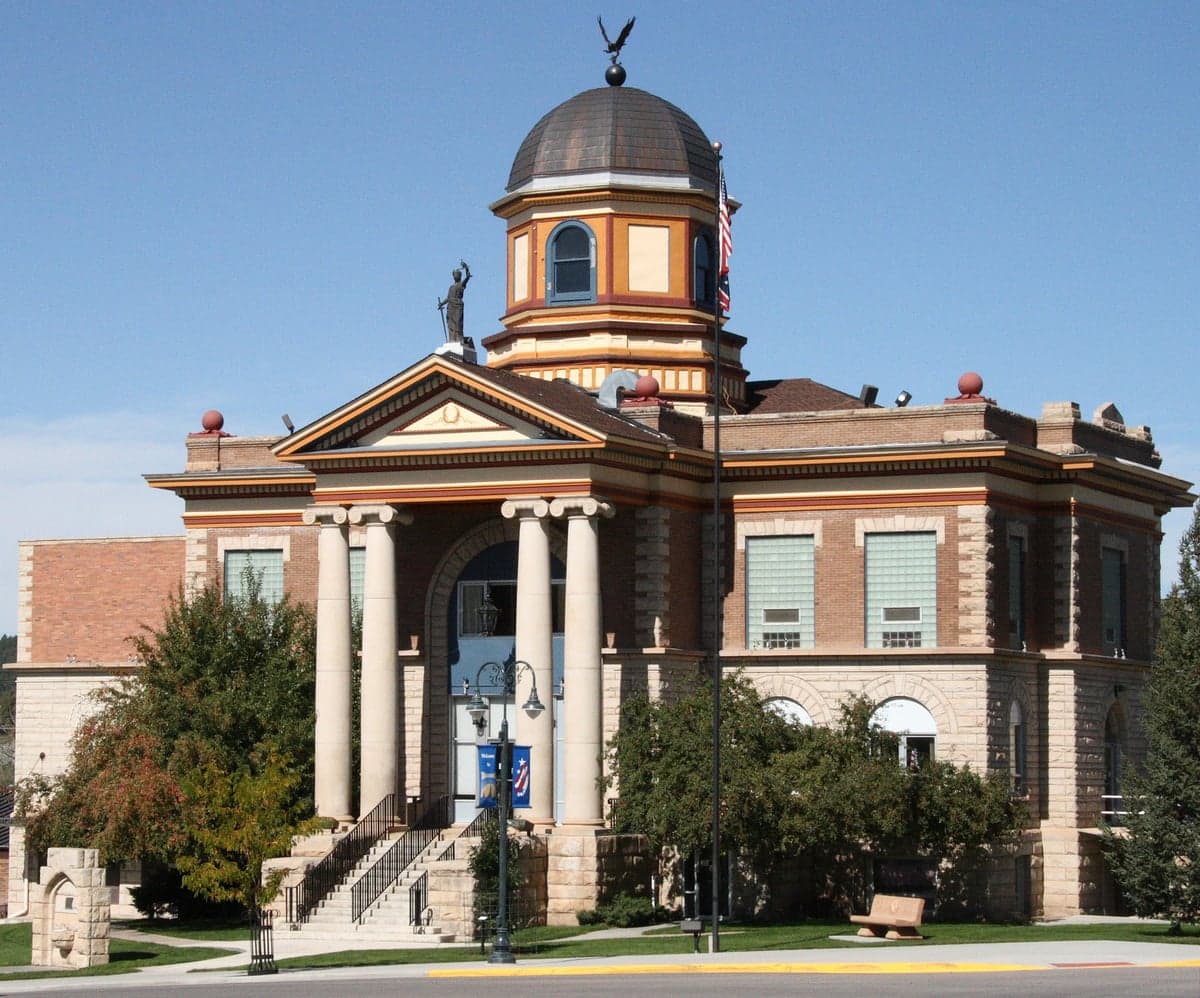
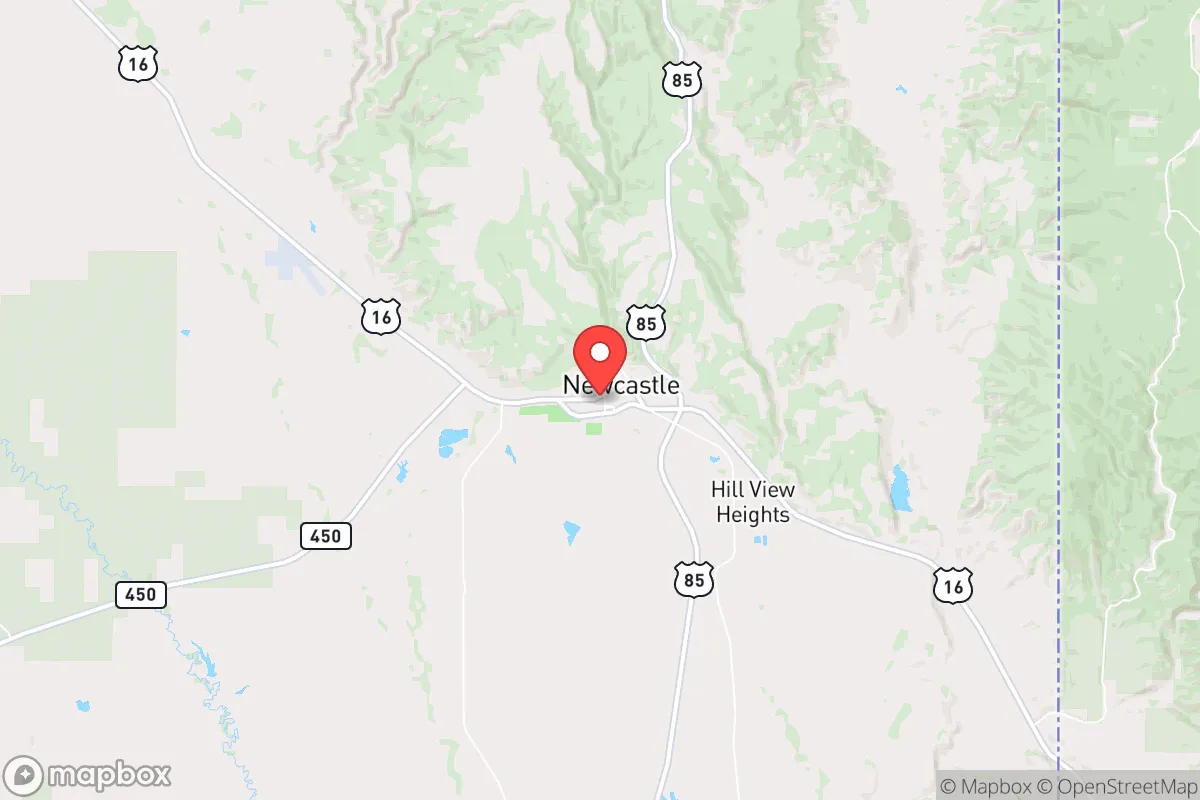
Photo: Wikipedia
Demographics of Newcastle, WY
Affluence Level in Newcastle, WY
A middle-class area roughly in line with national averages across income, home values, education, and employment.
People of Newcastle, WY
The people of Newcastle, Wyoming, today number 3,348, forming a tight-knit, predominantly white community with a distinctly rural character. With 88.2% of residents identifying as white and a foreign-born population of just 1.6%, the city remains one of the most ethnically homogeneous in the Black Hills region. A low college attainment rate of 17.0% reflects a workforce rooted in energy, agriculture, and local services, giving Newcastle a practical, self-reliant identity that appeals to those seeking a slower pace and lower cost of living.
How the city was settled and grew
Newcastle’s human history begins not with colonial settlement but with a classic Western resource boom. Founded in 1889 as a coal mining camp for the Chicago, Burlington and Quincy Railroad, the city drew its first wave of residents—mostly Anglo-American miners, railroad workers, and merchants—from the Midwest and the eastern Rockies. The original town site, now known as Old Town Newcastle around the railroad depot, was built by these laborers in rough-hewn frame houses and boarding houses. A second wave arrived in the 1910s and 1920s as the coal industry expanded, bringing a small number of Italian and Eastern European immigrants who settled in the West End neighborhood, near the mines along the Burlington line. By 1930, the population had reached roughly 2,500, and the city’s character was set: a working-class, overwhelmingly white community dependent on extractive industry. The South Side, developed in the 1940s and 1950s, housed the families of post-war oil and gas workers who diversified the local economy beyond coal.
Modern era (post-1965)
The post-1965 era brought little demographic change to Newcastle. Unlike many Western towns that saw Hispanic or Asian in-migration after immigration reform, Newcastle’s foreign-born share remained negligible—just 1.6% today. The city’s Hispanic population, at 4.9%, is the largest minority group, but it is largely composed of long-established families rather than recent arrivals. These residents are concentrated in the North Newcastle area, a modest residential district near the fairgrounds that developed in the 1970s and 1980s. East and Southeast Asian communities account for only 0.5% of the population, with no Indian subcontinent presence recorded. Domestic in-migration has been the primary driver of change: retirees and remote workers from Colorado and the Front Range have trickled into the Pine Ridge Estates subdivision, a newer development on the city’s eastern edge, seeking affordable housing and proximity to outdoor recreation. However, this inflow has been modest, and the city’s population has remained essentially flat since 2000, hovering around 3,300–3,400.
The future
Newcastle’s demographic future points toward continued homogeneity and slow decline. The city is not tribalizing into distinct ethnic enclaves; rather, it is homogenizing as younger residents leave for college and jobs in larger cities, and the remaining population ages. The Hispanic share, while stable, is not growing rapidly, and the foreign-born population shows no sign of increasing. The Downtown District, once the commercial heart, is seeing a slow conversion of storefronts to service businesses catering to an older, less mobile population. Over the next 10–20 years, Newcastle is likely to become slightly older, slightly whiter, and more dependent on tourism and energy cycles. The lack of significant immigration or domestic in-migration means the city will not diversify in the foreseeable future.
For someone moving in now, Newcastle offers a stable, predictable community where neighbors know each other and change comes slowly. It is not a place of rapid growth or cultural flux, but rather a quiet, affordable Western town where the past still shapes daily life. Those seeking ethnic diversity or a dynamic, expanding population should look elsewhere; those wanting a safe, low-key environment with strong local ties will find Newcastle a comfortable fit.

* Values derived from national, state, county, city and local statistics and may differ in a specific area. Last updated: 2026-04-21T10:55:21.000Z
Narrative content on this page is AI-generated and may contain mistakes. Verify any details that matter before acting on them.
ReloMaps may earn a commission from affiliate links at no extra cost to you.

