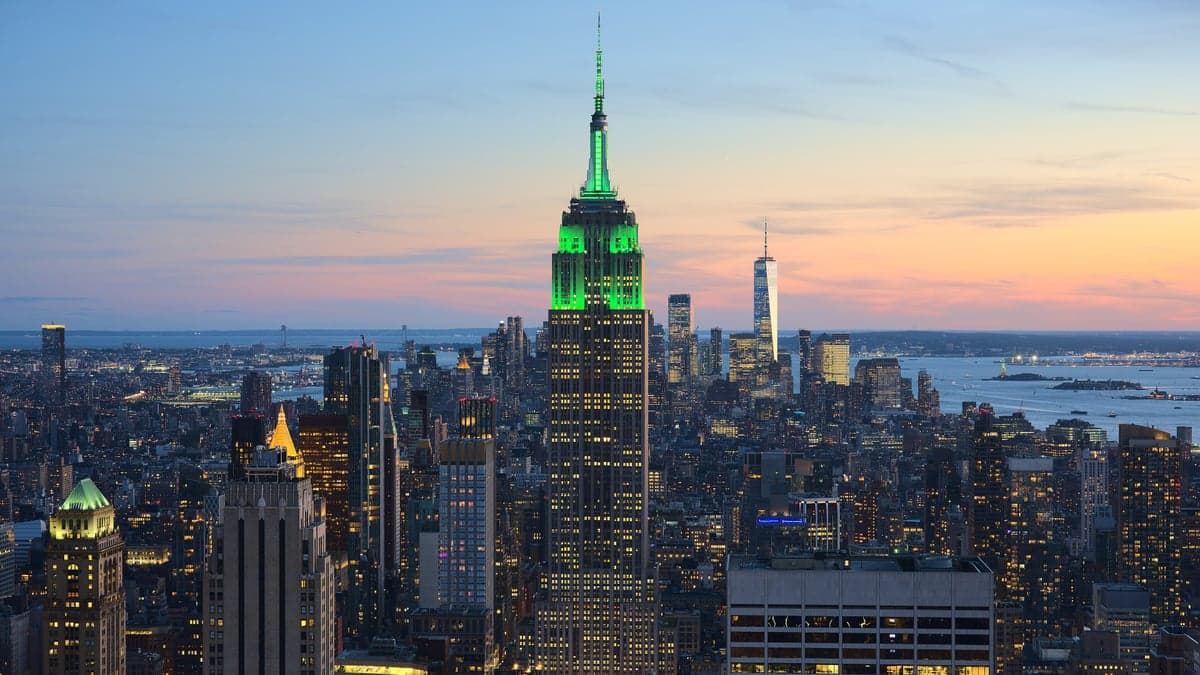
Photo: Wikipedia
Personal Sovereignty in New York County
Moderate friction. Expect trade-offs in some aspect of personal liberty and independence.
What does Personal Sovereignty tell us?
Personal Sovereignty measures your capacity for self-reliance and independence with minimal government friction. Higher scores mean fewer barriers between you and the way you want to live... but it assumes you have the space you need and good neighbors.
What does this tell us?
Personal Sovereignty measures your capacity for self-reliance and independence with minimal government friction. Higher scores mean fewer barriers between you and the way you want to live... but it assumes you have the space you need and good neighbors.
State Policy
Energy independence: Importer (12% of energy produced in-state)
Personal Liberty
Homesteading

Personal Liberty Analysis
New York County (Manhattan) presents one of the most constrained personal sovereignty environments in the United States, with dense regulation, high taxes, and limited individual autonomy in self-defense, property use, and daily life. For a conservative-leaning individual or family, the trade-offs are stark: unparalleled urban amenities and economic opportunity come at the cost of heavy government oversight and minimal room for self-reliance. The county's 1.7 million residents operate within a web of state and city rules that touch nearly every aspect of personal decision-making, from housing to healthcare to personal safety.
Tax burden and regulatory posture in New York County: what residents actually pay and face
New York County residents face the highest combined state and local tax burden in the nation. Property taxes are high, though somewhat moderated by the city's assessment system; income taxes include a progressive state rate up to 10.9% and a city rate up to 3.876%. Sales tax is 8.875%. Regulatory posture is heavy: zoning laws are strict, rent stabilization covers many apartments, and business licensing is burdensome. Neighborhoods like the Financial District and Midtown have commercial zoning that limits residential conversions, while areas like Harlem and Washington Heights have more mixed-use but still under city-wide rules. The city's regulatory environment leaves little room for entrepreneurial experimentation without significant compliance costs. For a family considering relocation, the effective tax rate on a $1 million income can exceed 50% when combining federal, state, and city taxes, making New York County one of the least tax-friendly jurisdictions in the country.
Self-defense and gun law specifics in New York County: what the Second Amendment looks like on the ground
New York County is subject to the state's restrictive gun laws, further tightened by the NY SAFE Act and the 2022 CCIA. Concealed carry is extremely difficult to obtain; the county's licensing office (NYPD License Division) has a de facto may-issue policy despite the Bruen decision. Handgun licenses require a "proper cause" statement, and even then, permits are rarely granted for self-defense outside the home. Long guns require a permit as well. In practice, self-defense options are limited to non-lethal means. Neighborhoods like the Upper East Side and Greenwich Village have low violent crime rates, but property crime is common. The lack of firearm access is a major sovereignty concern for conservative residents. New York County issued fewer than 1,000 new concealed carry permits in 2024, compared to counties in upstate New York that issued tens of thousands. For those who prioritize the right to self-defense, this is a significant limitation.
Self-reliance and homesteading viability in New York County: lot sizes, zoning, and off-grid feasibility
Homesteading and off-grid living are virtually impossible in New York County. Lot sizes are tiny (average 2,500 sq ft for a townhouse), zoning is dense residential, and building codes are stringent. No property allows for private wells or septic systems; all utilities are grid-tied. Rooftop solar is possible but requires permits and is often limited by shading. Community gardens exist in neighborhoods like the Lower East Side and East Harlem, but they are city-regulated. For those seeking self-reliance, the county offers no viable path. Even backyard chickens are illegal in most of Manhattan. The only "homesteading" is urban agriculture in designated spaces, heavily regulated. Zoning in areas like SoHo and the Upper West Side restricts even minor structural changes, and historic preservation laws add another layer of control. A family looking to grow their own food or reduce reliance on municipal services will find no practical option within the county.
Personal liberties in New York County: parental rights, medical autonomy, speech, and property
Parental rights are constrained by state mandates on vaccination and education; homeschooling is legal but requires annual paperwork and curriculum approval. Medical autonomy is limited: New York has strict vaccine mandates for school attendance and healthcare workers, and the state's emergency powers during COVID were broad. Free speech is protected but subject to time-place-manner restrictions; the city has enforced mask mandates and gathering limits. Property rights are weak: rent stabilization limits landlords' ability to set market rates, and historic preservation laws restrict alterations in neighborhoods like SoHo and the Upper West Side. Approximately 45% of Manhattan's rental units are rent-stabilized, meaning property owners cannot freely set or adjust rents. For a homeowner, the city's Landmarks Preservation Commission can veto exterior changes, even on private property. Overall, personal liberties are subordinate to collective regulation, and residents should expect limited individual discretion in medical, educational, and property decisions.
Compared to other US counties, New York County ranks near the bottom for personal sovereignty. For a conservative-leaning individual or family, the trade-off is clear: you gain access to a global economic hub with unmatched cultural and professional opportunities, but you surrender significant control over your own life, property, and safety. Those who prioritize autonomy would find far more freedom in rural or suburban counties across the country, where tax burdens are lower, gun laws are more permissive, and zoning allows for genuine self-reliance. New York County is a place to live if you value density and convenience

* Values derived from national, state, county, city and local statistics and may differ in a specific area. Last updated: 2026-10-12T10:37:03.000Z
Narrative content on this page is AI-generated and may contain mistakes. Verify any details that matter before acting on them.
ReloMaps may earn a commission from affiliate links at no extra cost to you.

