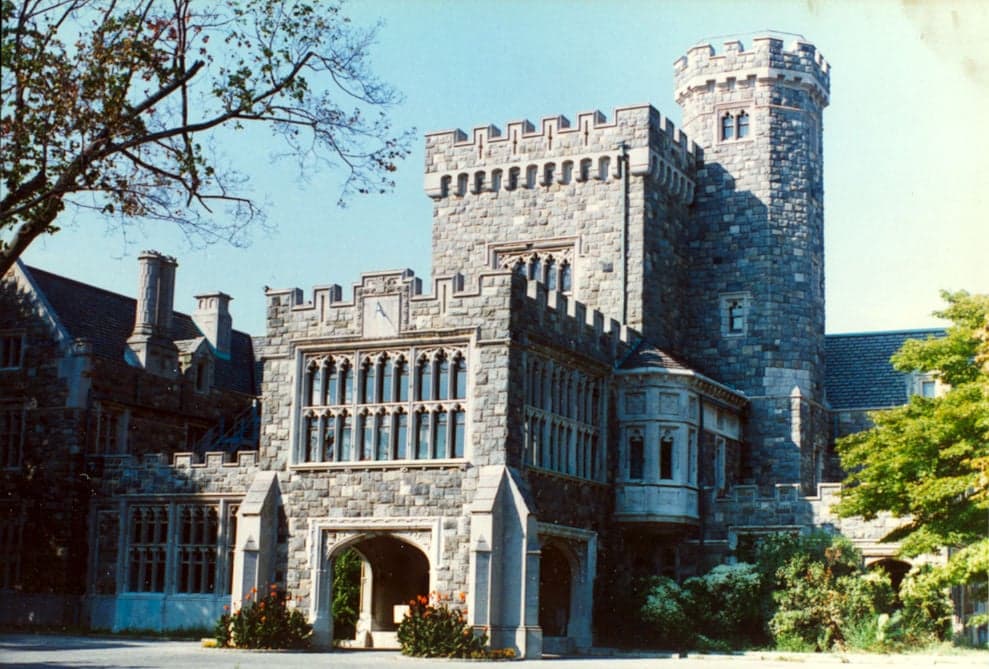
Photo: Wikipedia
Demographics of Nassau County
Affluence Level in Nassau County
An upper-middle-class area. Household wealth, education levels, and homeownership run ahead of national benchmarks.
People of Nassau County
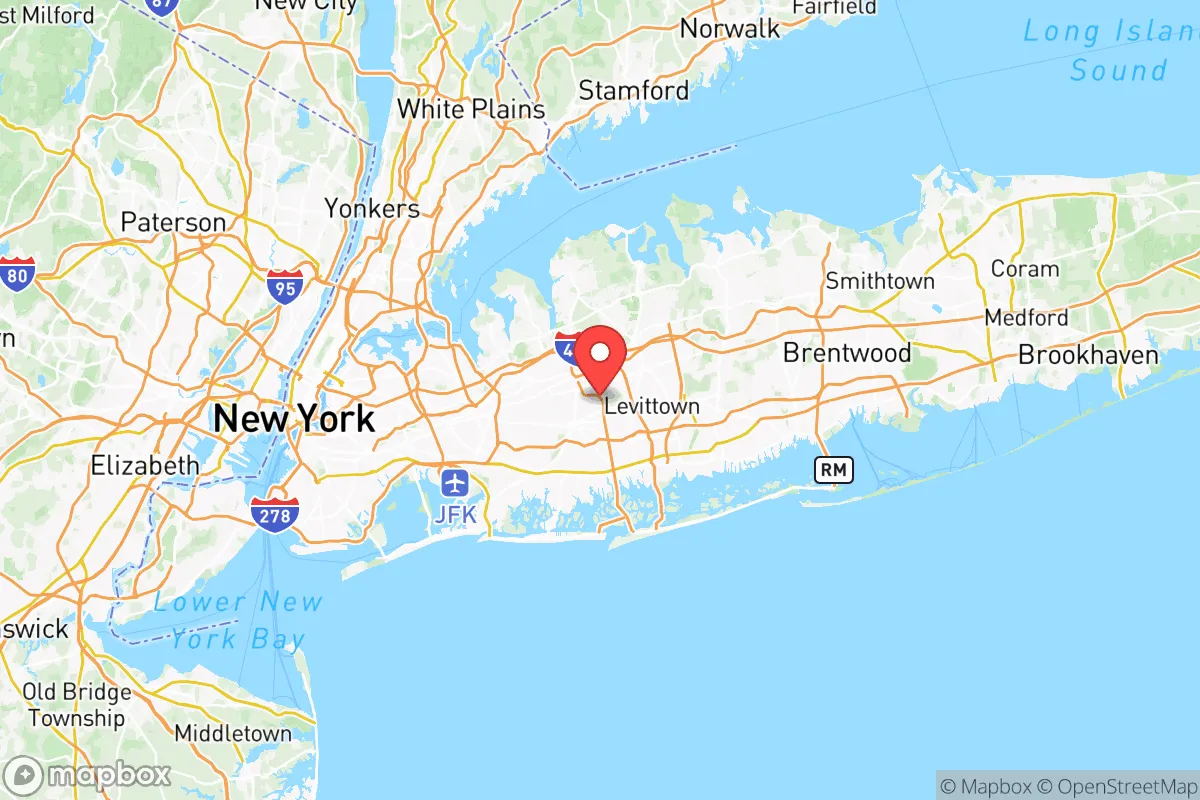
Nassau County’s 1.39 million residents form a densely populated, suburban powerhouse on Long Island, distinct from New York City’s five boroughs yet deeply tied to them by commuter rail and history. The county is majority-white (55.4%) but increasingly diverse, with a Hispanic population of 18.5%, a Black population of 10.9%, and significant East/Southeast Asian (6.2%) and Indian-subcontinent (5.2%) communities. Its identity is shaped by a legacy of post-war suburbanization, strong public schools, and a political tilt that has shifted from reliably Republican to a competitive swing county in recent decades.
Settlement & growth (pre-1960)
Before European contact, the area now known as Nassau County was inhabited by the Lenape people, specifically the bands of the Matinecock, Rockaway, and Merrick tribes, who lived in seasonal villages along the coast and inland waterways. Dutch colonists from New Netherland began settling western Long Island in the 1630s and 1640s, founding towns like Hempstead (1644) and Flushing (1645, now in Queens) under the patroon system. The English took control in 1664, and the region became part of the Province of New York, with English settlers establishing farming communities such as Oyster Bay (1653) and Huntington (1653, now in Suffolk County).
After the American Revolution, Nassau County remained largely rural and agricultural through the 19th century, with small villages like Glen Cove and Roslyn serving as market towns. The arrival of the Long Island Rail Road in the 1830s and 1840s began to transform the area, enabling wealthy New York City families to build summer estates in communities like Old Westbury and Locust Valley. The first major wave of suburbanization came in the 1890s through the 1920s, as German, Irish, and Italian immigrants—many of them second- and third-generation New Yorkers—moved east from Brooklyn and Queens. They settled in developing villages such as Mineola, Hicksville, and Levittown (the latter famously built after World War II). These groups worked in construction, manufacturing, and the growing service economy of New York City.
The post-World War II boom was transformative. Levittown, built between 1947 and 1951, became the archetypal American suburb, attracting hundreds of thousands of white, middle-class families—mostly of German, Irish, Italian, and Eastern European Jewish descent—who left New York City for affordable single-family homes. This period cemented Nassau County’s reputation as a white, suburban, Republican-leaning stronghold. By 1960, the county’s population had exploded to over 1.3 million, and its character was defined by sprawling subdivisions, shopping centers, and a car-dependent lifestyle.
Modern era (post-1965)
The 1965 Hart-Cellar Immigration Act fundamentally reshaped Nassau County’s demographics, though the effects were slower to arrive than in New York City proper. The first post-1965 wave brought East/Southeast Asian immigrants—primarily Chinese, Korean, and Filipino professionals—who settled in communities with strong school systems and existing ethnic infrastructure. Great Neck and Manhasset became magnets for Chinese and Korean families, drawn by top-ranked public schools and proximity to Manhattan. Jericho and Syosset followed a similar pattern, with East/Southeast Asian populations now exceeding 20% in some school districts.
Indian-subcontinent immigration accelerated in the 1990s and 2000s, driven by the tech boom and H-1B visa programs. Hicksville emerged as a major Indian enclave, with a dense concentration of Indian restaurants, grocery stores, and cultural institutions along Old Country Road. Plainview and Bethpage also saw significant Indian-subcontinent settlement, attracted by affordable housing and good schools. Today, the Indian-subcontinent population of 5.2% is one of the fastest-growing segments in the county.
Hispanic growth has been steady since the 1980s, driven by immigration from Central America (particularly El Salvador and Guatemala) and Puerto Rico. Hempstead village and Freeport have become the primary Hispanic hubs, with vibrant bodegas, churches, and community organizations. The Hispanic population of 18.5% is now the largest minority group, and it is younger on average than the white population, driving much of the county’s population stability. The Black population (10.9%) is concentrated in Hempstead, Uniondale, and Roosevelt, communities that have historically been home to African American families since the Great Migration of the 1940s and 1950s.
Domestic migration has been a countervailing force. Since the 1990s, Nassau County has experienced net out-migration of white, non-Hispanic residents to the Sun Belt, Florida, and the Carolinas, as well as to less expensive parts of New York State. This outflow has been partially offset by international immigration, which keeps the population relatively stable. The county’s foreign-born share is 6.9%, lower than New York City’s 36% but significant for a suburban county.
The future
Nassau County is not homogenizing; it is tribalizing into distinct ethnic enclaves, each with its own institutional infrastructure. The white population is aging and slowly declining, while Hispanic, East/Southeast Asian, and Indian-subcontinent communities are growing through both immigration and higher birth rates. The county’s school districts are becoming more diverse, but residential segregation by race and income remains pronounced. Great Neck and Jericho are increasingly East/Southeast Asian and Jewish; Hicksville is becoming a South Asian hub; Hempstead is majority Hispanic and Black.
Over the next 10–20 years, the county will likely become majority-minority, with no single group holding a demographic majority. The Hispanic and Asian populations will continue to grow, while the white share will fall below 50%. The Indian-subcontinent community, in particular, is expected to expand as tech and finance jobs in New York City remain strong. However, the county’s high cost of housing—median home prices above $600,000—will limit in-migration from lower-income groups and may accelerate out-migration of middle-class families to Suffolk County or the Sun Belt.
Culturally, Nassau County is absorbing its new populations into a suburban, car-dependent, school-focused lifestyle that has defined it since Levittown. The political landscape is shifting: the county voted for Joe Biden in 2020 after supporting Donald Trump in 2016, reflecting the growing influence of diverse, college-educated voters (48.7% college educated). The Republican Party retains strength in the eastern, whiter towns, while Democrats gain ground in the diverse western villages.
For someone moving in now, Nassau County offers a dense, diverse, and well-educated suburban environment with strong public services and direct access to New York City. It is a place where ethnic enclaves coexist within a shared suburban framework, and where demographic change is reshaping politics, schools, and community life. The county is becoming more cosmopolitan and less insular, but it remains a high-cost, high-opportunity environment that rewards those who can afford to participate in its competitive school districts and housing market.

* Values derived from national, state, county, city and local statistics and may differ in a specific area. Last updated: 2026-05-12T07:33:07.000Z
Narrative content on this page is AI-generated and may contain mistakes. Verify any details that matter before acting on them.
ReloMaps may earn a commission from affiliate links at no extra cost to you.

