Photo: Wikipedia
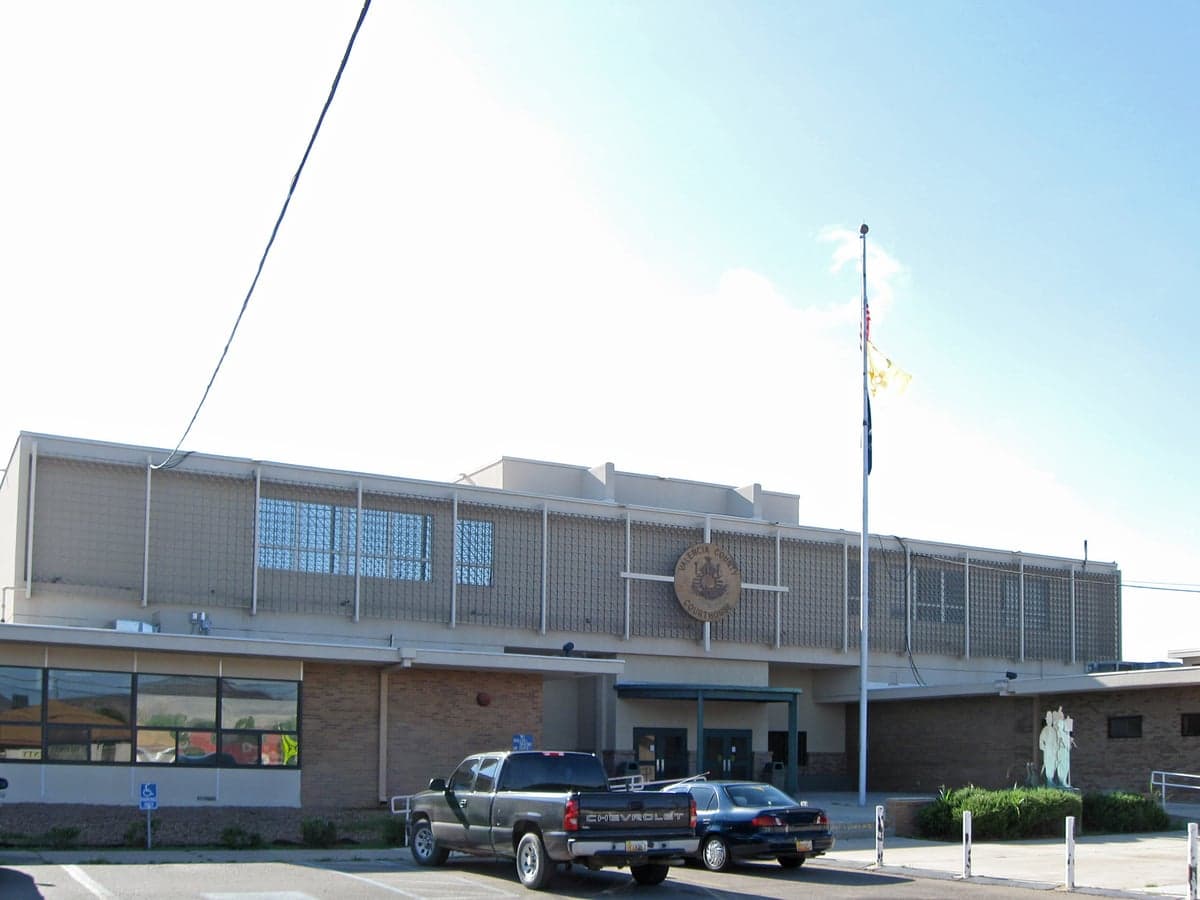
Political ClimatePolitical Climate in Valencia County
Showing district-level results — no local-only data available.
Local Political AnalysisPolitical Analysis of Valencia County
Valencia County is one of those rare places in New Mexico that still feels like a toss-up, and that’s exactly what the Cook PVI of EVEN tells you. It’s a county that’s been trending away from its old-school Democratic roots, and if you’ve lived here as long as I have, you’ve watched it happen in real time. The shift isn’t a landslide, but it’s real, and it’s driven by folks who are tired of being told how to live their lives by people in Santa Fe or Washington.
How it compares
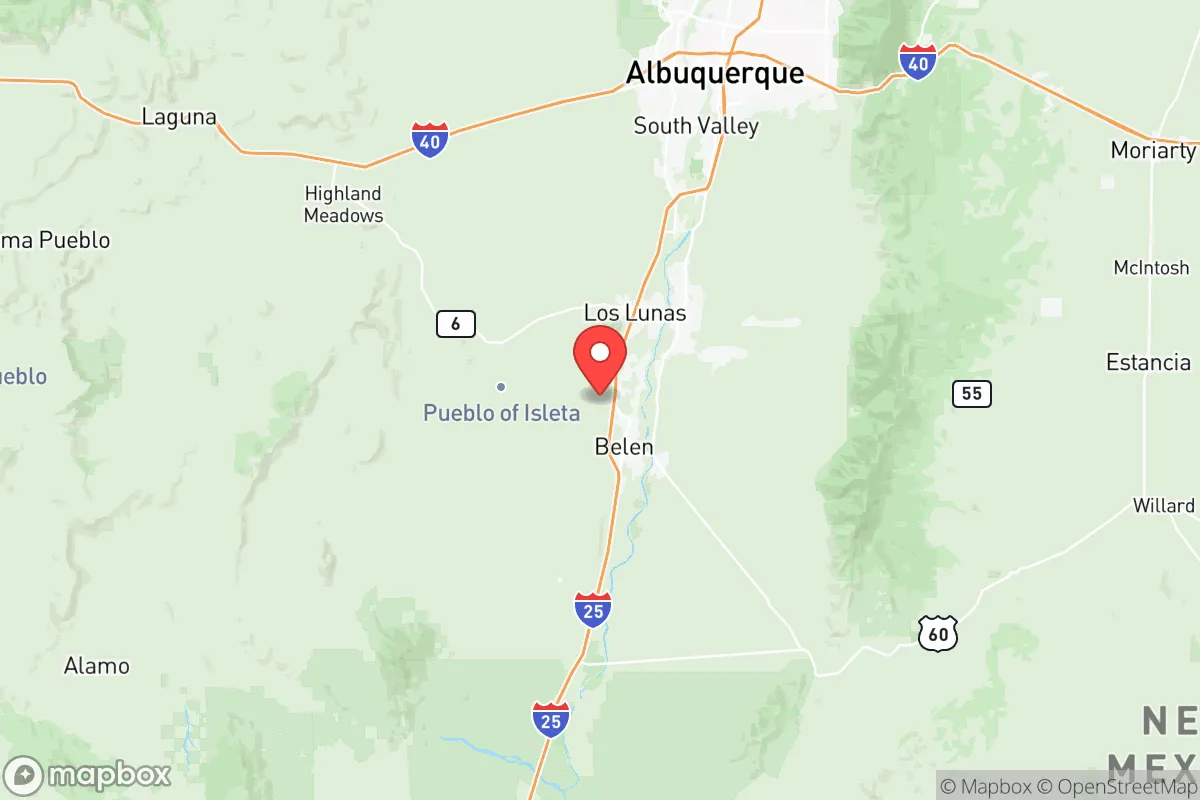
While the rest of New Mexico carries a D+3 Cook PVI, Valencia County sits dead even, and that’s a big deal. The state as a whole leans reliably blue thanks to Albuquerque and Santa Fe, but out here in the Middle Rio Grande Valley, it’s a different story. You’ve got towns like Los Lunas and Belen that are the real battlegrounds—precincts in these areas swing hard depending on the election cycle. Belen tends to lean more conservative, especially the older neighborhoods around Becker Avenue, where you’ll see a lot of Trump signs in yards. Meanwhile, Los Lunas is a mixed bag: the newer subdivisions near the interstate lean red, but the older parts closer to the river still vote blue. Out in Bosque Farms and Peralta, you’re looking at solidly conservative territory—these are farming communities where people value their privacy and don’t appreciate government sticking its nose in. The contrast with the state’s overall D+3 is stark: Valencia County is a check on the progressive agenda that’s been creeping into Santa Fe, and that’s a good thing for anyone who values personal freedom.
What this means for residents
For the people living here, the political climate means you’ve got a real voice in local elections. County commission races and school board seats are often decided by a few hundred votes, so your vote actually counts. That’s not something you can say in deep-blue counties like Santa Fe or Bernalillo. The downside is that you’re constantly fighting against state-level overreach. Santa Fe’s progressive policies—like the push for stricter gun laws, higher taxes, and mandates on everything from energy to education—don’t sit well with most Valencia County residents. You see it in the way people talk at the local diner or the hardware store: there’s a growing frustration with being told what to do. The county’s even PVI gives it some leverage, but it’s a constant battle to keep local control from being steamrolled by the state capital.
What daily life is like for families
If you’re raising a family here, the political climate shapes your day-to-day in ways you might not notice at first. Schools in Los Lunas and Belen are still relatively free from the kind of curriculum battles you see in bigger cities, but that’s changing. There’s been a push from the state to introduce more progressive social studies standards, and local parents have been pushing back hard. The county’s swing nature means you can still find pockets where traditional values hold strong—like the 4-H programs in Bosque Farms or the church communities in Tome. But you’ve got to stay engaged. The long-term trajectory is concerning: if the state keeps pushing its agenda, Valencia County could either double down on its conservative lean or get pulled into the blue wave. Right now, it’s a fight worth having, and that’s what makes this place special.

State Political ClimatePolitical Climate in New Mexico
State Political AnalysisPolitical Environment in the State
New Mexico has been a reliably blue state for decades, with a Cook Partisan Voting Index of D+3, but the reality on the ground is far more complex than that single number suggests. The state’s political engine is driven by a powerful Democratic machine centered in Albuquerque and Santa Fe, which has held the governorship for 12 of the last 16 years and controls both chambers of the legislature. Over the past 20 years, the state has shifted steadily leftward on cultural and economic issues, even as its rural and oil-rich southeastern counties have become some of the most conservative in the nation. If you’re considering a move here, you need to understand that your experience will vary wildly depending on whether you land in the liberal Rio Grande corridor or the deeply red eastern plains.
Urban vs. rural divide
The political map of New Mexico is essentially a tale of two states. The urban core—Bernalillo County (Albuquerque), Santa Fe County, and Doña Ana County (Las Cruces)—generates the vast majority of Democratic votes. Santa Fe is the state’s progressive epicenter, with a city council that has passed sanctuary city ordinances and defunded police initiatives. Albuquerque, home to about a third of the state’s population, reliably votes blue by double digits, though its East Mountains and far Northeast Heights show pockets of conservative resistance. Meanwhile, the rural southeast—Lea County (Hobbs), Eddy County (Carlsbad), and Chaves County (Roswell)—votes Republican by margins of 40 points or more, fueled by the oil and gas industry. The northwest, including San Juan County (Farmington), is also reliably red, driven by energy and ranching. The real battleground is the state’s Hispanic-majority rural counties, like Valencia and Sandoval, which have trended toward Republicans in recent cycles but still lean Democratic in local races. The divide is stark: you can drive 30 minutes from downtown Albuquerque and find yourself in a county that voted for Trump by 30 points.
Policy environment
New Mexico’s policy environment is a textbook case of progressive governance with significant consequences for residents. The state has a progressive income tax with a top rate of 5.9% on income over $210,000, and a gross receipts tax (essentially a sales tax on services) that can push above 8% in some cities. Property taxes are relatively low—around 0.8% of assessed value—but the state has no right-to-work law, and union influence is strong in public schools and government. Education policy is a flashpoint: the state has adopted Common Core standards, expanded pre-K, and implemented a community schools model that critics say centralizes control in Santa Fe. In 2023, the legislature passed a bill requiring all public schools to provide free menstrual products, a small but telling example of the state’s interventionist approach. Healthcare is heavily regulated, with a state-run insurance exchange and Medicaid expansion under the Affordable Care Act covering nearly half the population. Election laws are among the most accessible in the country: same-day registration, automatic voter registration, and no-excuse absentee voting are all in place. For a conservative, the policy environment feels like a constant push toward bigger government, higher taxes, and less local control.
Trajectory & freedom
Over the past five years, New Mexico has moved decisively toward less personal freedom in several key areas. In 2021, the legislature passed the Energy Transition Act, mandating a 100% carbon-free electricity grid by 2045, which has already driven up utility costs and threatened the state’s oil and gas jobs in places like Hobbs and Carlsbad. On gun rights, the state enacted a red flag law in 2020 and a ban on firearms at polling places and government buildings in 2023, drawing fierce opposition from rural sheriffs who have declared they won’t enforce it. Parental rights took a hit with the 2023 passage of a law requiring schools to adopt policies for transgender students that allow them to use preferred names and pronouns without parental notification—a direct challenge to family authority. On the positive side for conservatives, the state has no income tax on Social Security benefits, and the 2023 tax reform package lowered the top income tax rate from 8.2% to 5.9%. But the overall trajectory is concerning: the state’s Freedom in the 50 States ranking has dropped from 30th to 38th over the past decade, driven by economic regulation and criminal justice policies that critics say prioritize rehabilitation over punishment.
Civil unrest & political movements
New Mexico has seen its share of political flashpoints, particularly around immigration and public safety. Albuquerque has been a focal point for immigration activism, with the city council declaring itself a sanctuary city in 2019 and the state attorney general suing the Trump administration over border policies. In 2020, the city experienced weeks of protests following the murder of George Floyd, with some demonstrations turning violent and resulting in property damage downtown. The state’s sanctuary policies have created tension with federal immigration authorities, and the border city of Sunland Park has become a staging ground for migrant crossings. On the right, the New Mexico Civil Guard, a militia group, has been active in border surveillance and has clashed with local officials. Election integrity is a live issue: in 2022, a Republican candidate for state land commissioner refused to concede, citing irregularities, and the state’s use of same-day registration has drawn scrutiny from conservative groups. A new resident will notice the visible presence of political signage, the frequency of protests in Santa Fe, and the palpable distrust between urban and rural law enforcement.
Projection
Looking ahead 5-10 years, New Mexico’s political trajectory is likely to continue leftward, but with important caveats. The state’s population is aging and growing slowly, with net domestic outmigration to Texas and Arizona, which means the Democratic coalition is increasingly reliant on Hispanic voters who are showing signs of shifting right. In 2024, Trump improved his performance in several Hispanic-majority counties, including Valencia and Rio Arriba, suggesting a potential realignment. However, the influx of remote workers and retirees from California and Colorado is likely to reinforce progressive politics in Santa Fe and Albuquerque. The oil and gas industry, which funds much of the state budget, faces an uncertain future as federal policies push toward electrification. If energy prices drop, the rural conservative base could shrink, further concentrating power in the urban corridor. For someone moving in now, expect a state that will remain blue at the statewide level but with growing internal friction between a progressive urban core and a defiant rural minority. The practical takeaway: if you value low taxes, gun rights, and local control, you’ll want to settle in Lea or Eddy County, not Santa Fe or Albuquerque.
For a conservative considering relocation, New Mexico offers a mixed bag. The state’s natural beauty, low property taxes, and lack of Social Security income tax are genuine draws. But the progressive policy machine in Santa Fe is unlikely to relent, and the cultural climate in the major cities will feel increasingly hostile to traditional values. Your best bet is to target the conservative strongholds in the southeast or northwest, where you can find like-minded communities and a lower cost of living, while accepting that you’ll be fighting an uphill battle at the state level. If you’re a parent, be prepared to engage actively in school board politics and to consider private or homeschool options, as the public system is heavily unionized and ideologically aligned with the state’s Democratic leadership. New Mexico is a beautiful state with a rich history, but it’s not a refuge from progressive governance—it’s a place where you’ll need to be politically engaged to protect your freedoms.
* Values derived from national, state, county, city and local statistics and may differ in a specific area. Last updated: 2026-05-12T01:14:09.000Z
Narrative content on this page is AI-generated and may contain mistakes. Verify any details that matter before acting on them.
ReloMaps may earn a commission from affiliate links at no extra cost to you.

