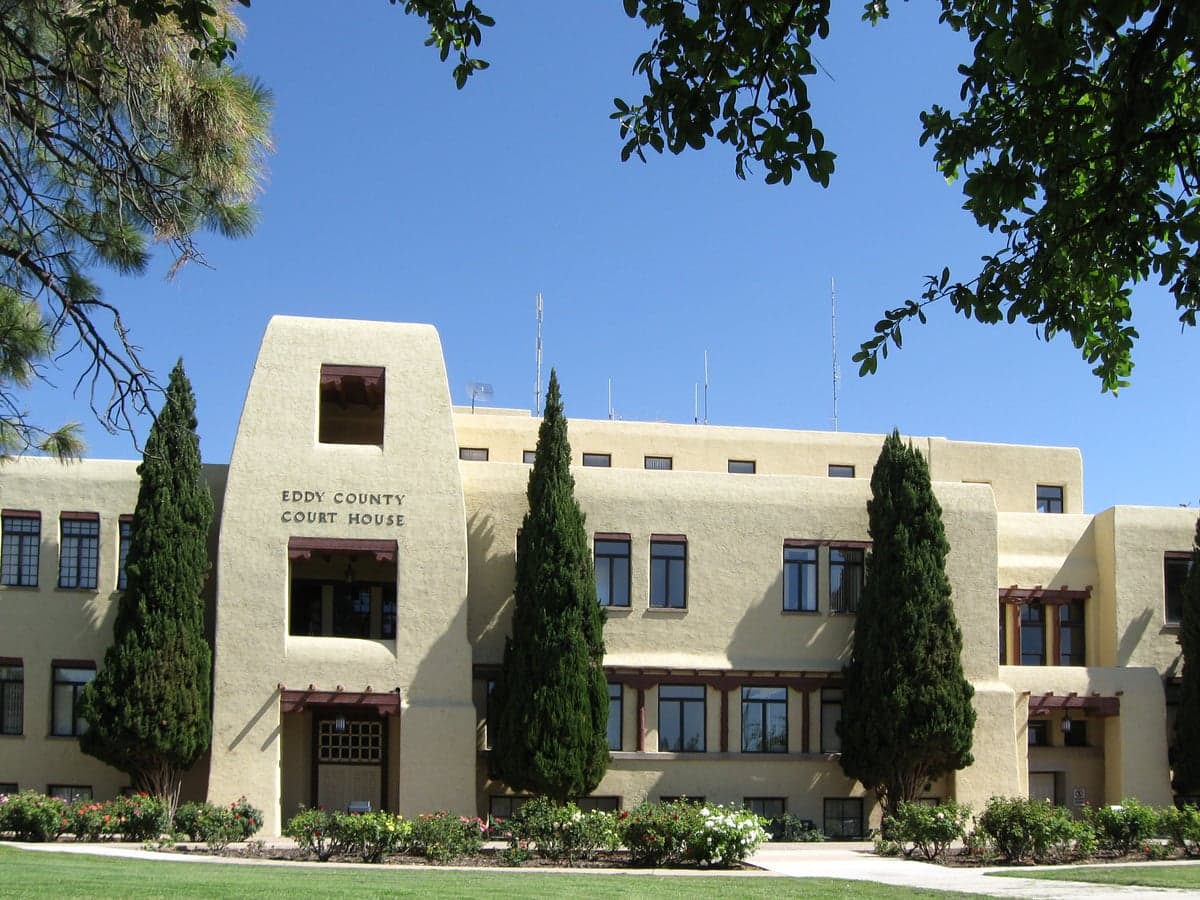
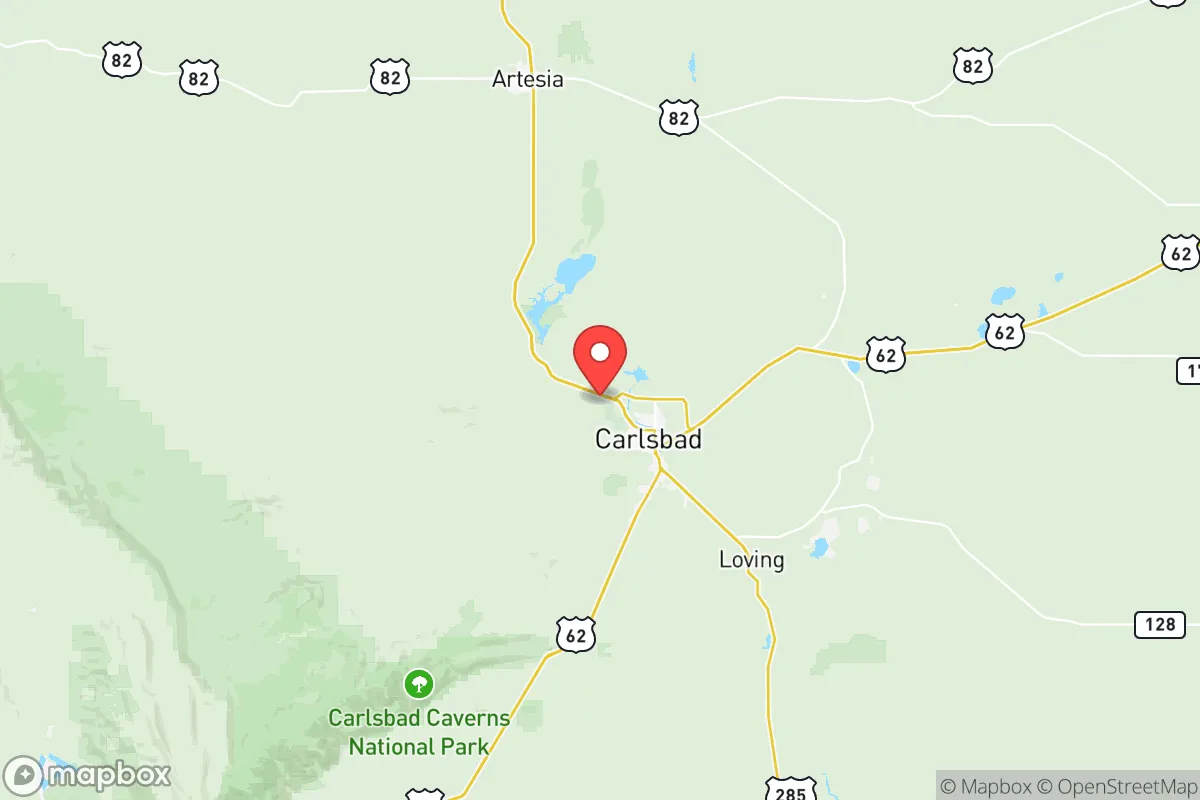
Photo: Wikipedia
Strategic Assessment of Eddy County
Strong survivability profile. Good buffer from population centers, with manageable environmental and tactical risks.
What does the Strategic Assessment tell us?
Our Strategic Assessment grades tactical survivability of an area. Major population centers, military targets, fallout zones, natural disasters, and border exposure all drive risk — lower exposure means a more defensible position in a crisis.
This is heavily inspired by Joel Skousen's Strategic Relocation book. Highly recommended you checkout the book ($)What does this tell us?
Our Strategic Assessment grades tactical survivability of an area. Major population centers, military targets, fallout zones, natural disasters, and border exposure all drive risk — lower exposure means a more defensible position in a crisis.
This is heavily inspired by Joel Skousen's Strategic Relocation book. Highly recommended you checkout the book ($)Strategic Pillars

Key Distances
Strategic Assessment Analysis
Eddy County, New Mexico, anchored by the twin cities of Carlsbad and Loving, presents a compelling strategic profile for relocators prioritizing resilience, self-sufficiency, and distance from major metropolitan fallout zones. Its location in the southeastern corner of the state, roughly 150 miles from the Permian Basin's core and over 200 miles from El Paso, places it in a low-density corridor that avoids the primary risk vectors of coastal hurricanes, seismic activity, and the concentrated industrial targets of the Texas Gulf Coast. For a family or individual serious about disaster readiness, Eddy County offers a rare combination of natural resource abundance, geographic isolation, and a working economy that doesn't depend on fragile supply chains.
Geographic position and natural advantages for long-term security
Eddy County sits at the intersection of the Chihuahuan Desert and the Pecos River Valley, a position that provides both natural defensibility and access to a perennial water source—a critical asset in the arid Southwest. The Pecos River runs through the county, feeding the Carlsbad Irrigation District and providing a reliable surface water supply that is rare in New Mexico. The county's topography is largely flat to gently rolling, with the Guadalupe Mountains rising to the southwest near the Texas border, offering natural barriers and potential retreat terrain. The nearest major population center is Odessa, Texas, about 75 miles east, but the intervening landscape is sparsely populated ranchland and oilfield infrastructure, creating a buffer zone that would slow any cascading disruptions from a coastal or urban event. Carlsbad Caverns National Park, located 20 miles southwest of Carlsbad, is a notable landmark—its underground chambers could theoretically serve as a hardened shelter, though the park's primary value is as a testament to the region's geological stability. The county's elevation, averaging around 3,000 feet, provides a moderate climate with low humidity, reducing the risk of mold and structural decay that plagues more humid regions.
Risks, exposures, and proximity to fallout-relevant landmarks
While Eddy County avoids many of the high-profile risks of coastal or seismic zones, it is not without its own strategic exposures. The most significant man-made risk is the Waste Isolation Pilot Plant (WIPP), located 26 miles east of Carlsbad. WIPP is the nation's only deep-geologic repository for transuranic nuclear waste from defense activities. A major incident at WIPP—while statistically unlikely—could render a significant portion of the county uninhabitable for decades. The 2014 radiological release at WIPP, which contaminated 22 workers and closed the facility for three years, serves as a real-world reminder that the risk is not theoretical. Additionally, the county sits atop the Permian Basin, one of the most productive oil and gas regions in the world. The area around Carlsbad and Loving is dotted with thousands of active wells, tank batteries, and natural gas processing plants. A major pipeline rupture or well blowout could create localized toxic plumes or fire hazards. The county's proximity to the Texas border also means it is within 200 miles of the Pantex nuclear weapons plant near Amarillo, though prevailing winds generally carry fallout from that site eastward. On the natural hazard front, the region faces periodic drought, flash flooding along the Pecos River, and the occasional severe thunderstorm with hail. Tornado risk is lower than in the Texas Panhandle but not absent. The county's low population density—roughly 60,000 people spread over 4,000 square miles—is itself a risk mitigator, as it reduces the likelihood of cascading infrastructure failures that plague dense urban centers.
Practical resilience for a relocator: food, water, energy, and defensibility
For a relocator focused on self-sufficiency, Eddy County offers several structural advantages. Water is the county's strongest asset. The Pecos River, supplemented by the Carlsbad Irrigation District's canals and the underlying Capitan Reef aquifer, provides a water supply that is far more reliable than most of the Southwest. Residents with property along the river or with irrigation rights can maintain gardens, orchards, and small livestock operations. The county's agricultural sector, centered on pecan orchards, alfalfa, and cattle ranching, means that local food production is a reality, not a hobby. The Carlsbad Farmers Market operates seasonally, and local ranches sell beef directly. Energy independence is also achievable. The Permian Basin's oil and gas infrastructure means propane and natural gas are readily available and relatively cheap. Solar potential is excellent, with over 280 sunny days per year, and off-grid solar installations are common among rural homesteaders. Net metering policies in New Mexico are favorable, though the local utility, Xcel Energy, has faced reliability issues during extreme weather events. Defensibility is a mixed picture. The county's rural character means that most properties are isolated, with long sightlines and limited ingress points—ideal for a security-minded relocator. However, the oilfield traffic on county roads, including heavy trucks and transient workers, creates a constant background of unfamiliar vehicles. The Eddy County Sheriff's Office and Carlsbad Police Department are professional but stretched thin over a large area. For a family, the practical reality is that you can achieve a high degree of self-reliance here, but you will need to invest in your own water storage, backup power, and security infrastructure. The county's emergency management office is active, with regular community preparedness workshops, but the expectation is that residents will be self-sufficient for at least 72 hours, and often longer, during a major event.
The overall strategic picture for Eddy County is one of calculated trade-offs. It offers genuine advantages in water availability, energy access, and geographic isolation from the primary risk corridors of the United States. The presence of WIPP is a non-trivial concern, but one that can be managed through situational awareness and a pre-planned evacuation route east toward Texas or west toward the mountains. For a relocator who values low population density, a working local economy, and the ability to produce their own food and power, Eddy County ranks among the more viable options in the Southwest. It is not a prepper's fantasy of a bug-out location—it is a real place with real infrastructure, real jobs, and real risks. But for someone willing to put in the work, it offers a foundation for long-term resilience that few other regions can match.

* Values derived from national, state, county, city and local statistics and may differ in a specific area. Last updated: 2026-06-11T03:51:53.000Z
Narrative content on this page is AI-generated and may contain mistakes. Verify any details that matter before acting on them.
ReloMaps may earn a commission from affiliate links at no extra cost to you.

