
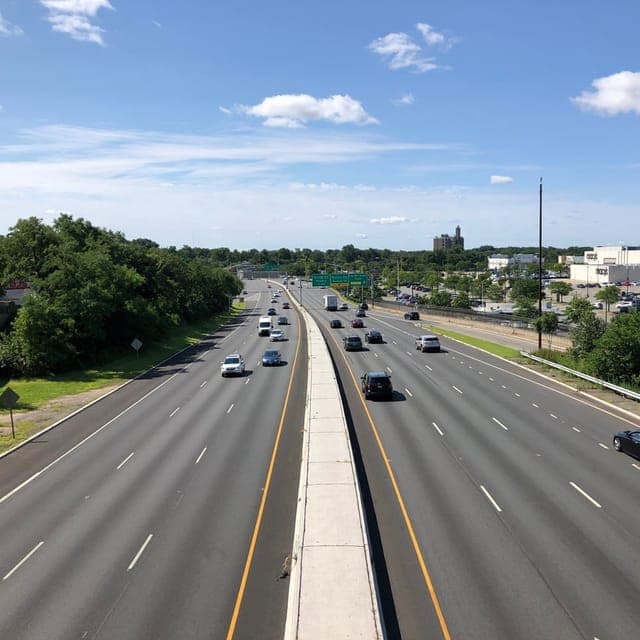
Photo: Wikipedia
Personal Sovereignty in New Jersey
Viable for self-reliance. Generally workable, though some barriers may limit total independence.
What does Personal Sovereignty tell us?
Personal Sovereignty measures your capacity for self-reliance and independence with minimal government friction. Higher scores mean fewer barriers between you and the way you want to live... but it assumes you have the space you need and good neighbors.
What does this tell us?
Personal Sovereignty measures your capacity for self-reliance and independence with minimal government friction. Higher scores mean fewer barriers between you and the way you want to live... but it assumes you have the space you need and good neighbors.
State Policy
Energy independence: Importer (8% of energy produced in-state)
Personal Liberty
Homesteading

Personal Liberty Analysis
New Jersey presents a complex and often contradictory environment for personal sovereignty, where dense population, aggressive state-level mandates, and high costs of living significantly constrain individual autonomy compared to less regulated states. For the conservative-leaning individual or family prioritizing self-reliance, the Garden State’s heavy tax burden, restrictive gun laws, and limited homesteading opportunities create a challenging landscape. While pockets of relative freedom exist in rural areas like Sussex County and Hunterdon County, the overall trajectory of state policy—from COVID-era mandates to energy regulations—signals a persistent erosion of personal choice. This analysis examines the specific barriers to sovereignty in New Jersey, focusing on taxes, self-defense rights, homesteading feasibility, and core personal liberties, with an eye toward how these factors compare to more freedom-oriented states.
Tax burden and regulatory posture: How New Jersey’s fiscal policies limit personal autonomy
New Jersey’s tax structure is among the most aggressive in the nation, directly undermining financial self-reliance. The state’s combined state and local tax burden ranks as the highest in the U.S., with property taxes averaging over $9,500 annually—a figure that can consume a significant portion of a household’s income. Income taxes are progressive, with a top marginal rate of 10.75% on earnings over $1 million, but even middle-class families face rates around 6-7%. This fiscal posture extends to regulatory overreach: the state’s Environmental Protection Department (NJDEP) imposes stringent land-use rules that can delay or block construction of private wells, septic systems, or even backyard sheds in towns like Montclair or Princeton. For those seeking to reduce dependency on government services, the high cost of living—driven by taxes and fees—makes saving for self-sufficiency difficult. In contrast, rural areas like Salem County offer lower property taxes and less zoning enforcement, but even there, state-level mandates on energy efficiency and building codes remain binding.
Self-defense and gun law specifics: What New Jersey’s restrictions mean for personal protection
New Jersey’s gun laws are among the most restrictive in the country, severely limiting the ability to defend oneself and one’s property. The state requires a Firearms Purchaser Identification Card (FPID) for long guns and a separate permit for handguns, both subject to a 30- to 60-day processing period and a background check that includes mental health records. Concealed carry is effectively prohibited for most residents, as the state’s “justifiable need” standard—upheld until a 2022 Supreme Court ruling—was replaced by a “sensitive places” law that bans firearms in parks, public transit, and private businesses unless explicitly allowed. This means that even in rural towns like Newton or Flemington, carrying a firearm for personal protection is legally risky. The state also bans “assault weapons” and magazines over 10 rounds, limiting options for home defense. For preppers, this creates a stark reality: while you can own a shotgun for hunting, the legal hurdles and storage requirements (e.g., locked containers) make rapid access in an emergency difficult. Compared to states like Pennsylvania or Texas, New Jersey’s gun culture is one of compliance, not empowerment.
Self-reliance and homesteading viability: Lot sizes, zoning, and off-grid feasibility in New Jersey
Homesteading in New Jersey is possible but heavily constrained by zoning and infrastructure requirements. Minimum lot sizes vary dramatically: in Hunterdon County, agricultural zones allow 5- to 10-acre parcels, while in Bergen County, suburban lots are often under a quarter-acre. Off-grid living is nearly impossible due to state mandates: all homes must be connected to the electrical grid, and solar panels require utility approval for net metering. Rainwater collection is legal but limited to non-potable uses, and composting toilets are not permitted as primary sewage systems. The state’s Right to Farm Act protects agricultural activities, but only on parcels of 5 acres or more, and even then, local ordinances can restrict livestock (e.g., no roosters in Middlesex County). For those serious about self-reliance, the best options are in Sussex County, where larger lots (2-5 acres) and fewer zoning restrictions allow for gardens, chickens, and small-scale livestock. However, the high cost of land—averaging $15,000–$20,000 per acre in rural areas—makes homesteading a significant financial investment. Overall, New Jersey’s regulatory environment favors suburban conformity over rugged individualism.
Personal liberties: Parental rights, medical autonomy, speech, and property in New Jersey
New Jersey’s stance on personal liberties is mixed, with strong protections for speech but significant government overreach in medical and parental rights. The state has no parental consent requirement for minors to receive vaccinations or mental health treatment, and during the COVID-19 pandemic, it imposed one of the longest-lasting school mask mandates in the country. Medical autonomy is further constrained by the state’s Medical Aid in Dying for the Terminally Ill Act, which legalizes assisted suicide but also allows insurers to deny coverage for life-sustaining treatments. On property rights, the state’s Eminent Domain authority is broad, as seen in the Mount Laurel affordable housing mandates, which force towns to rezone for high-density development. Free speech is protected under the state constitution, but “hate speech” laws and public accommodation statutes can limit expression in certain contexts. For parents, the lack of school choice—New Jersey has no voucher program and limited charter schools—means that public school curricula, including sex education and critical race theory, are mandatory unless families opt for expensive private options. In towns like Ridgewood or Cherry Hill, local school boards have become battlegrounds over these issues, but state preemption often overrides local control.
In summary, New Jersey ranks poorly for personal sovereignty compared to states like Texas, Florida, or New Hampshire, where lower taxes, fewer gun restrictions, and greater homesteading freedom prevail. The state’s high tax burden, restrictive gun laws, and regulatory density create an environment where individual autonomy is secondary to collective mandates. For conservative-leaning individuals or families seeking to maximize self-reliance, New Jersey is a challenging choice—best suited for those who can afford legal compliance or who prioritize proximity to urban jobs over freedom. Rural areas like Sussex County and Salem County offer some respite, but the state’s overall trajectory suggests that true sovereignty requires looking elsewhere.

Top Cities for Personal Sovereignty in New Jersey



* Values derived from national, state, county, city and local statistics and may differ in a specific area. Last updated: 2026-04-18T23:43:52.000Z
Narrative content on this page is AI-generated and may contain mistakes. Verify any details that matter before acting on them.
ReloMaps may earn a commission from affiliate links at no extra cost to you.

