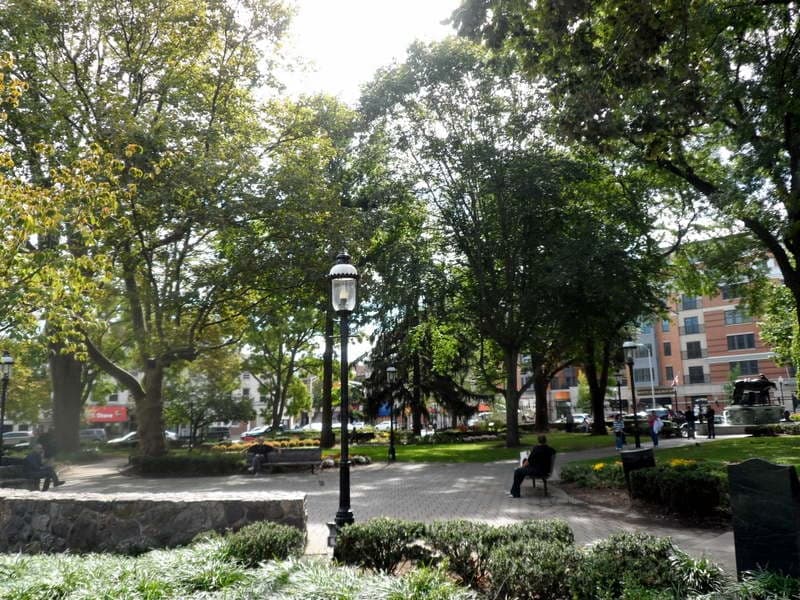
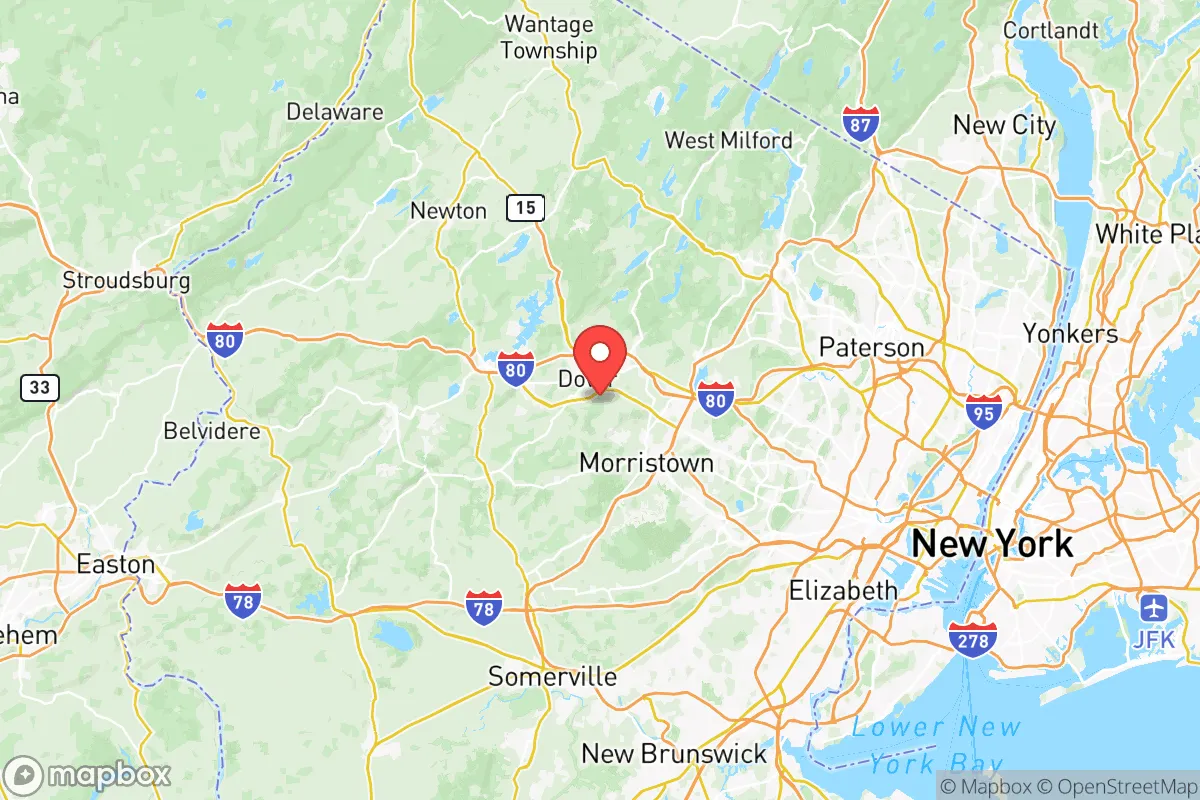
Photo: Wikipedia
Political ClimatePolitical Climate in Morris County
Showing county-level results — no local-only data available.
Lean and PVI are calculated from this county’s 2020 and 2024 presidential results, Cook-style.
Political rankings in New Jersey
- Most Conservative Cities in New Jersey
- Most Liberal Cities in New Jersey
- Best Conservative-Leaning Towns in the Northeast
- Best Conservative-Leaning Towns in the Mid-Atlantic
- Safest Liberal-Leaning Towns on the East Coast
- Safest Conservative-Leaning Towns on the East Coast
- Most Affordable Liberal-Leaning Small Towns in the U.S.
- Safest Liberal-Leaning Cities in the U.S.
- Most Conservative Counties in New Jersey
- Most Liberal Counties in New Jersey
Local Political AnalysisPolitical Analysis of Morris County
Morris County, New Jersey, sits at a political crossroads that mirrors its geography: historically Republican but drifting toward the center, with a Cook Partisan Voting Index of EVEN that makes it one of the few truly competitive counties in a state that leans D+5 overall. The county hasn't voted for a Democratic presidential candidate since Lyndon Johnson in 1964, but that streak is looking increasingly fragile—Donald Trump won it by just 1.4 points in 2020, down from 5.5 points in 2016. If you're moving here, you're landing in a place where the old GOP machine is still humming, but the suburbs are slowly turning purple, and the local politics feel more like a tug-of-war than a lock.
How it compares to New Jersey as a whole
New Jersey's D+5 PVI reflects a state where Democrats dominate in population centers like Newark, Jersey City, and the Philadelphia suburbs, while Republicans hold sway in more rural and exurban pockets. Morris County, by contrast, is the state's swingiest large county—a bellwether where statewide races often get decided. In the 2021 gubernatorial race, Republican Jack Ciattarelli carried Morris by 12 points even as Democrat Phil Murphy won the state by 3 points, showing the county's GOP lean is still real in downballot contests. But the gap is narrowing: in 2024, Kamala Harris lost Morris by only about 2,000 votes out of 200,000 cast, a far cry from the 20-point margins Republicans enjoyed here in the 1990s. The county's political identity is essentially a microcosm of the national suburban shift—affluent, educated, and increasingly skeptical of hardline positions on both sides.
What this means for residents
For conservative residents, Morris County remains a comfortable place to live without feeling politically isolated. The county GOP still controls the Board of County Commissioners (5-2 as of 2025), and towns like Mendham, Chester, and Long Hill Township reliably deliver Republican margins of 15-25 points in local elections. You'll find active Republican clubs, conservative school board candidates winning seats, and a general cultural tilt toward fiscal restraint and property tax skepticism. For liberal residents, the picture is more nuanced but increasingly encouraging. Morristown is the county's blue anchor—a walkable, diverse town where Democrats routinely win by 30 points or more. Madison and Chatham have shifted noticeably left over the past decade, with precincts near train stations and downtowns swinging hard for Democrats. The real battlegrounds are towns like Parsippany, Hanover, and Mount Olive, where Asian-American and Hispanic populations are growing and precinct-level results can flip from one election to the next. If you're a Democrat, you'll find your people in the county's progressive groups and in local races that are increasingly competitive; if you're a Republican, you'll still feel at home in most town halls and at the county fair.
Culturally, Morris County's political climate translates into a live-and-let-live vibe that's rare in hyperpartisan states. The county's school boards and municipal councils tend to focus on practical issues—open space preservation, road improvements, and tax rates—rather than culture-war flashpoints, though those do occasionally surface in places like Randolph or Roxbury. Property taxes are high (the median is around $10,000 annually), but residents on both sides generally agree that the county's excellent schools and low crime rates justify the cost. The trajectory is clear: Morris County is becoming more Democratic with each presidential cycle, but it's doing so slowly enough that neither side feels like it's losing the war. For a newcomer, that means you'll find neighbors who disagree with you politically but will still help you shovel your driveway—a rarity in 2026 America.

State Political ClimatePolitical Climate in New Jersey
State Political AnalysisPolitical Environment in the State
New Jersey has a solid Democratic lean, with a Cook PVI of D+5, but calling it a blue state oversimplifies a deeply layered political reality. The state hasn't voted Republican for president since 1988, yet it's been governed by both parties in the last 25 years, and its legislature often produces compromise bills that frustrate ideologues on both sides. Over the last 10-20 years, the trend has been a slow but steady drift leftward on social and cultural issues, even as fiscal conservatism retains a stubborn foothold in many suburbs and rural areas.
Urban vs. rural divide
The political map of New Jersey is a textbook study in contrast. The northern and central urban corridor—Newark, Jersey City, Paterson, and Elizabeth—drives the state's Democratic majority with massive turnout and lopsided margins. These cities are dense, diverse, and union-heavy, reliably delivering 70-80% of their votes to Democratic candidates. In contrast, the rural and exurban areas of Sussex County, Hunterdon County, and much of Ocean County vote Republican by similar margins. The real battleground is the suburban ring: Bergen County and Middlesex County have shifted from swing to solidly Democratic over the past decade, while Monmouth County and Morris County remain competitive but trending blue. A conservative moving to New Jersey will feel most at home in the northwestern corner or along the Shore in Ocean County; a liberal will find their people in the Hudson River cities or the I-95 corridor suburbs.
Policy environment
New Jersey's policy environment is defined by high taxes and heavy regulation, but with notable carve-outs. The state has a progressive income tax with a top rate of 10.75% on income over $1 million, and the average property tax rate hovers around 2.3%—the highest in the nation. For a conservative relocator, this is the single biggest shock. On the other hand, the state offers strong public schools (consistently ranked top 3 nationally), robust healthcare infrastructure, and a well-funded pension system for public employees. Education policy is centralized and union-friendly; charter schools exist but are tightly capped. Election laws are among the most accessible in the country: no-excuse mail-in voting, automatic voter registration at DMV, and same-day registration during early voting. Gun laws are strict—universal background checks, a permit-to-purchase system, and a ban on most semi-automatic rifles—which is a dealbreaker for some conservatives but a comfort for many liberals.
Recent policy direction
The last five years have seen New Jersey accelerate leftward on several fronts. In 2022, the state passed a law requiring all public schools to teach LGBTQ+ history, and in 2023 it expanded Medicaid coverage for gender-affirming care. Gun control tightened further with a 2024 law banning concealed carry in "sensitive places" like parks and libraries, which is currently being litigated. On property rights, the state has moved to increase affordable housing mandates on municipalities, a policy that has sparked fierce resistance in suburbs like Montclair and Maplewood. Tax-wise, the 2024 budget included a permanent increase in the corporate business tax and a new millionaire's surcharge. On the liberty side, the state legalized recreational marijuana in 2021, and it has some of the strongest privacy protections in the nation, including a 2023 law requiring warrants for cell phone location data. For a conservative, the direction is clear: more regulation, higher taxes, and expanded social programs. For a liberal, it's a state that is actively building the progressive agenda.
Civil unrest & political movements
New Jersey has a history of organized activism on both sides, but it rarely boils over into the kind of unrest seen in larger states. The 2020 Black Lives Matter protests in Newark and Trenton were large but mostly peaceful, leading to police reform legislation in 2021 that banned chokeholds and created a statewide use-of-force database. On the right, the state has a vocal but small Second Amendment movement, with regular rallies at the Statehouse in Trenton. Immigration politics are a flashpoint: New Jersey is a sanctuary state, with a 2018 executive order limiting local cooperation with ICE, and cities like Newark and Jersey City have active sanctuary policies. Election integrity has been a recurring issue, with Republican officials in Ocean County and Monmouth County raising concerns about mail-in ballot security after the 2020 election, though no widespread fraud has been found. A new resident will notice that political signs are common in yards, but actual confrontation is rare—most people keep their politics to themselves in daily life.
Projection
Over the next 5-10 years, New Jersey is likely to continue its gradual leftward drift, but with significant friction. The state's population is aging and slowly declining, with net out-migration to lower-tax states like Florida and Texas. However, the people moving in—often from New York City and other high-cost areas—tend to be younger, more diverse, and more liberal. This demographic shift will likely keep the state's politics blue, but the margin may narrow if the tax burden continues to drive out middle-class families. The biggest wildcard is the state's fiscal health: pension liabilities are massive, and if a future recession forces cuts to services or tax hikes, it could trigger a political realignment. For someone moving in now, expect the next decade to bring more of the same: high taxes, strong public services, and a culture war that plays out in school board meetings and zoning hearings rather than on the streets.
For a conservative relocator, New Jersey offers a high quality of life in terms of schools, safety, and proximity to major cities, but you will pay for it in taxes and accept a regulatory environment that limits personal choices on guns, education, and property use. For a liberal, it's a state that largely delivers on its promises of progressive governance, with the trade-off being a high cost of living and a political landscape that can feel stagnant. The bottom line: New Jersey is not a place for ideological purists of either stripe. It's a state of compromises, where your vote matters in local races but the overall direction is set by the urban core. If you can stomach the taxes and the traffic, it's a stable, functional place to live—just don't expect it to change its stripes anytime soon.
* Values derived from national, state, county, city and local statistics and may differ in a specific area. Last updated: 2026-11-14T02:08:46.000Z
Narrative content on this page is AI-generated and may contain mistakes. Verify any details that matter before acting on them.
ReloMaps may earn a commission from affiliate links at no extra cost to you.

