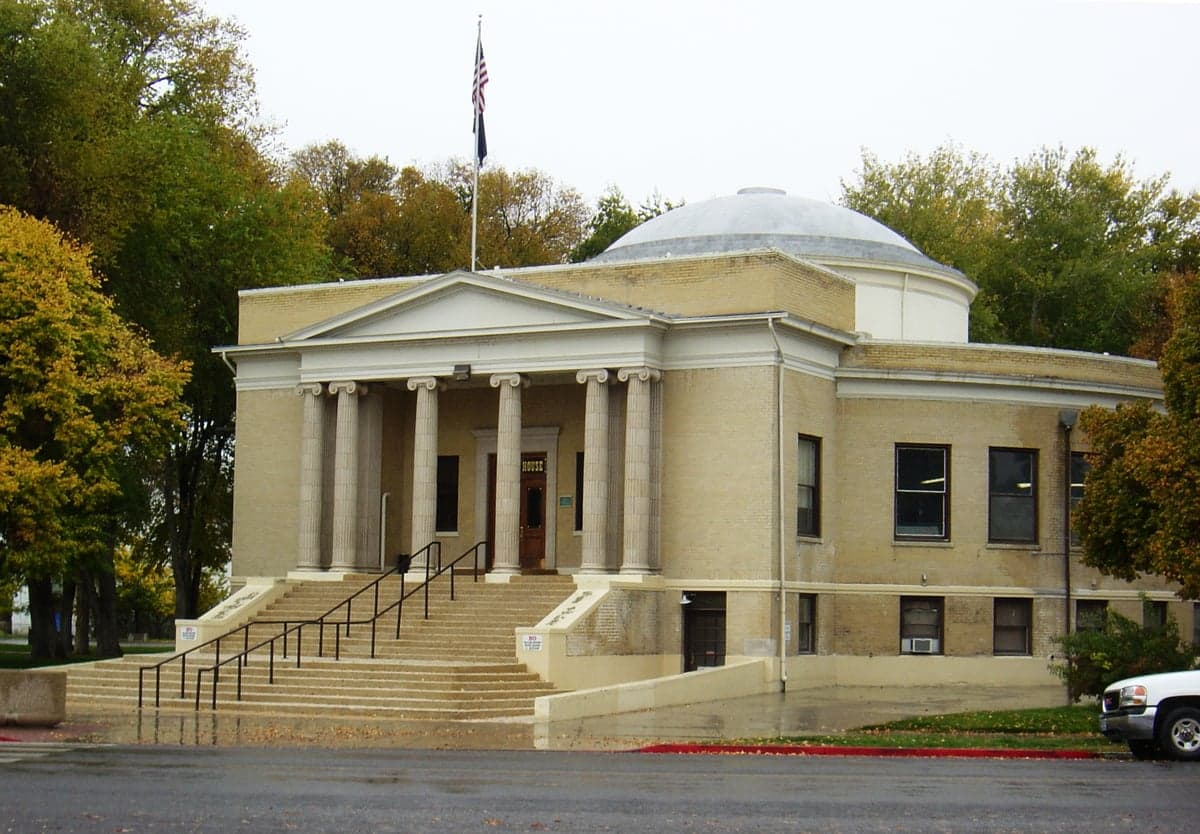
Photo: Wikipedia
Demographics of Pershing County
Affluence Level in Pershing County
A middle-class area roughly in line with national averages across income, home values, education, and employment.
People of Pershing County
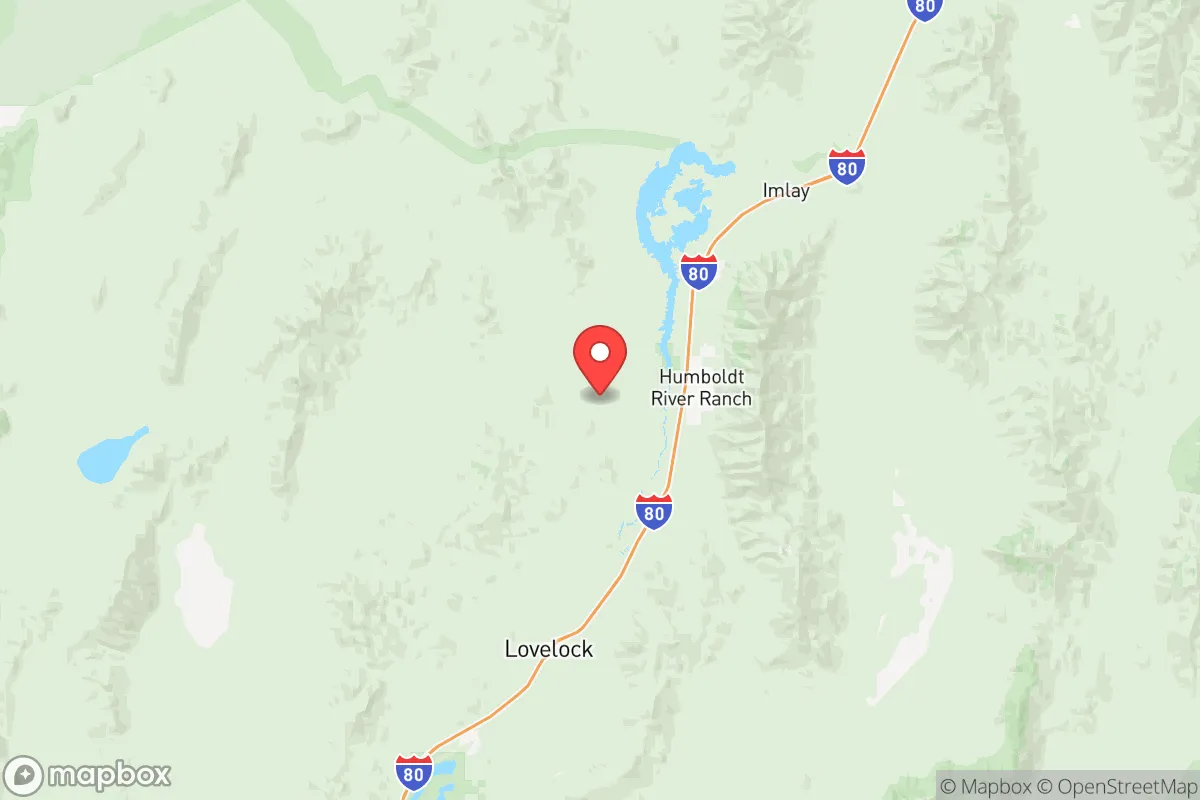
Pershing County, Nevada, is a sparsely populated rural county of 6,505 residents, defined by its mining and ranching heritage and a population that is 64.6% white and 23.3% Hispanic. The county seat, Lovelock, is the only incorporated town and the historic hub, while smaller communities like Unionville and Imlay dot the landscape. With a foreign-born population of just 5.6% and a low 9.3% college-educated rate, Pershing County retains a working-class, frontier character distinct from Nevada's urban centers. The population is older and more rooted than the state average, with a demographic story shaped by boom-and-bust resource extraction rather than waves of immigration.
Settlement & growth (pre-1960)
The land now called Pershing County was originally inhabited by the Northern Paiute people, who lived a semi-nomadic lifestyle across the Great Basin for thousands of years. Euro-American contact intensified in the 1840s, when the Humboldt River route became a key corridor for emigrants on the California Trail. The first permanent non-Native settlement was at Lovelock, established in the 1860s as a stagecoach stop and agricultural center along the Humboldt River. The 1862 Homestead Act and the completion of the Central Pacific Railroad in 1869 brought the first significant wave of settlers: farmers, ranchers, and railroad workers, many of whom were of Northern European descent—English, Irish, and German.
The discovery of silver and gold in the 1860s and 1870s created a second wave, drawing prospectors and miners to camps like Unionville and Star City. Unionville, founded in 1861, briefly boasted a population of over 1,500 and was home to the young Samuel Clemens (Mark Twain) in 1862. These mining booms were short-lived, and most camps were abandoned by the 1880s, leaving a core population of ranchers and farmers in the Lovelock area. The county was formally created in 1919 from Humboldt County and named after General John J. Pershing. The 1920s and 1930s saw little new settlement; the Dust Bowl brought a small number of Okies and Arkies, but the county's arid climate and limited farmland absorbed few newcomers.
World War II and the post-war era brought a modest industrial shift. The construction of the Lovelock Naval Ammunition Depot in 1942 (later the Hawthorne Army Depot) brought federal jobs and a small influx of workers, but the county remained overwhelmingly rural and white. By 1960, Pershing County's population was approximately 3,000, with nearly all residents being native-born whites of European ancestry. The Hispanic population was negligible, and the small Black population was tied to railroad and military support roles.
Modern era (post-1965)
The 1965 Hart-Cellar Act had a minimal direct impact on Pershing County, as the area did not attract the large-scale immigration seen in coastal or urban Nevada. The county's foreign-born population today is just 5.6%, well below the national average. The most significant demographic change since the 1970s has been the growth of the Hispanic population, driven by domestic migration from California and the Southwest, as well as some direct immigration from Mexico. Hispanics now make up 23.3% of the population, concentrated in Lovelock and working in agriculture, mining, and service industries. This community is largely Mexican-American, with families often having multi-generational roots in the region.
The Black population, at 4.2%, is small but notable, primarily tied to the nearby Hawthorne Army Depot and the state prison system. The East/Southeast Asian population is 1.2%, with a handful of families in Lovelock, often connected to mining or engineering. The Indian subcontinent population is effectively zero. Domestic migration has been limited; the county has not experienced the Sun Belt boom seen in southern Nevada. Instead, population growth has been slow and uneven, with the county's total rising from about 4,000 in 1970 to 6,505 in 2020. The 1990s saw a slight uptick from the expansion of the nearby Imlay and Mill City mining operations, but the overall trend is one of stagnation relative to the state.
Suburbanization has not occurred in any meaningful sense; Lovelock remains a small, isolated town, and the county has no suburbs. The population is aging, with a median age around 45, as younger residents often leave for education or jobs in Reno or Las Vegas. The college-educated share is just 9.3%, reflecting the county's blue-collar economy centered on mining (gold, diatomaceous earth), ranching, and state corrections (the Lovelock Correctional Center).
The future
Pershing County's population is likely to remain stable or grow very slowly over the next 10-20 years. The Hispanic share is expected to continue rising gradually, possibly reaching 30-35% by 2040, driven by higher birth rates and continued domestic migration from California. However, the county is not tribalizing into distinct enclaves; the small population and shared economic base encourage integration, with intermarriage between white and Hispanic residents common. The white population, while still the majority, will continue to age and decline in absolute numbers as younger whites leave.
Immigrant communities are not growing significantly; the foreign-born share may edge up to 7-8% but will remain low. The county's cultural identity—rooted in ranching, mining, and self-reliance—is likely to persist, though it will become more Hispanic-influenced over time. In-migration from outside the region is minimal, so the cultural character is being absorbed rather than transformed. The lack of college-educated residents and economic diversification means the county will remain a working-class, resource-dependent area. Newcomers will find a place where community ties are strong, but opportunities are limited to specific industries.
For a conservative-leaning individual or family considering relocation, Pershing County offers a low-cost, low-crime, rural lifestyle with a strong sense of history and community. The population is stable, politically conservative, and largely homogenous in values if not in ethnicity. The trade-off is limited economic diversity, few amenities, and a remote location. The county is not becoming a diverse, cosmopolitan hub; it is slowly becoming a more Hispanic version of its historic self, with the same frontier ethos and economic realities. Moving here means joining a small, resilient community where the past is still very much present.

* Values derived from national, state, county, city and local statistics and may differ in a specific area. Last updated: 2026-05-12T09:53:24.000Z
Narrative content on this page is AI-generated and may contain mistakes. Verify any details that matter before acting on them.
ReloMaps may earn a commission from affiliate links at no extra cost to you.

