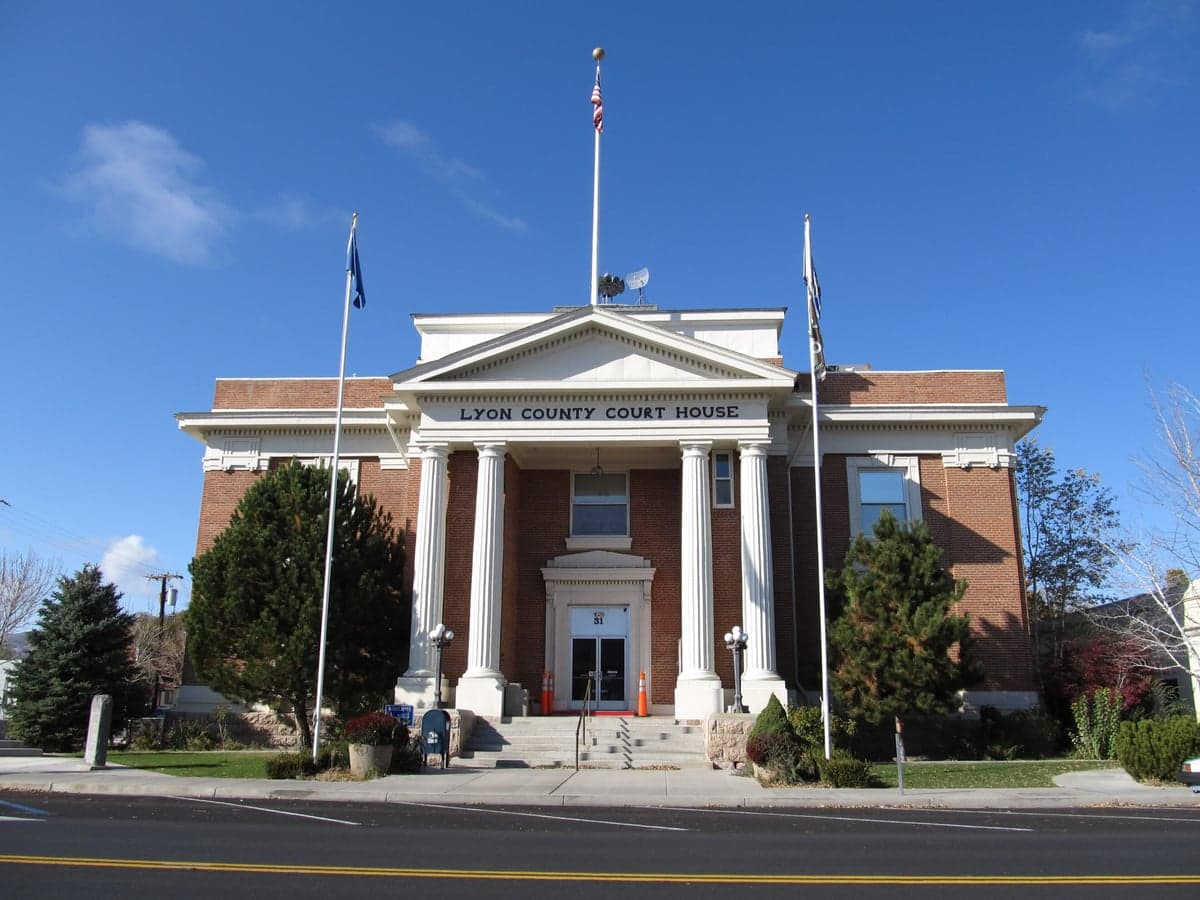
Photo: Wikipedia
Political ClimatePolitical Climate in Lyon County
Showing district-level results — no local-only data available.
Local Political AnalysisPolitical Analysis of Lyon County
Lyon County, Nevada, is a solidly conservative stronghold with a Cook PVI of R+7, a full six points redder than the state’s overall R+1 rating. That gap isn’t just a number—it reflects a deep cultural and political divide between this rural, working-class county and the increasingly progressive lean of Clark County (Las Vegas) and Washoe County (Reno). If you’ve lived here as long as I have, you’ve watched the state drift left on everything from gun rights to school choice, while Lyon County has held the line, and in some ways, dug in deeper.
How it compares
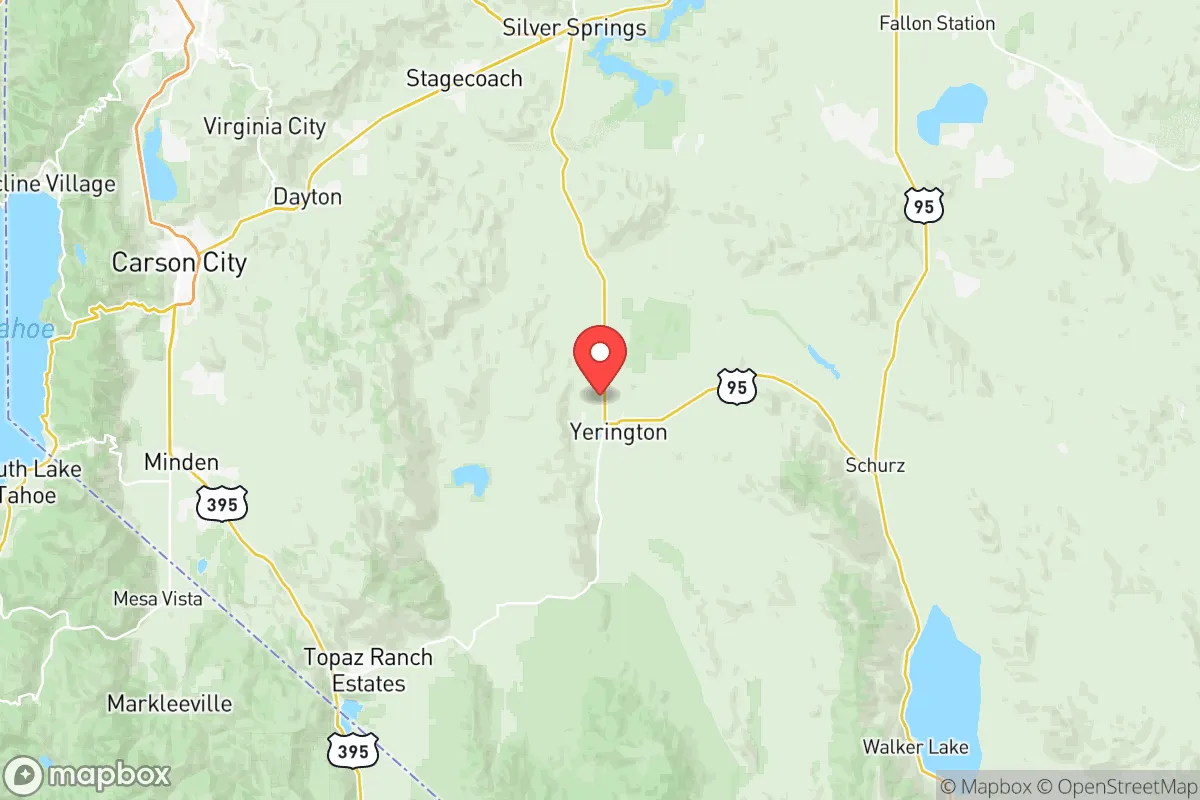
The difference between Lyon County and Nevada as a whole is stark when you look at the map. In 2024, while the state barely tipped Republican by a point, Lyon County voted for Trump by a margin closer to 20 points. The real action is inside the county itself. Yerington and Fernley are the reddest spots—you’ll see Trump signs on every other lawn and “Don’t Tread on Me” flags flying from pickup trucks. Dayton, with its growing commuter population from Carson City, is a bit more purple, but still reliably conservative. The only real blue pocket is around Silver Springs, where a handful of precincts near the federal lands and the prison complex lean left, but they’re outliers. The swing precincts are in Smith Valley and Mason Valley, where independent ranchers and farmers vote their pocketbooks—they’ll go Republican on taxes and property rights, but they’re skeptical of big government on both sides.
What this means for residents
For folks who value personal freedom, Lyon County is a breath of fresh air compared to the rest of Nevada. You won’t find the same level of government overreach here—no heavy-handed mask mandates during COVID, no push to restrict firearm carry, and local schools have largely resisted the critical theory and gender ideology curricula that have taken over in Washoe and Clark counties. The county commission has consistently voted against accepting state or federal grants that come with strings attached, like housing mandates or environmental regulations that would limit property rights. That said, the pressure is mounting. As more Californians and Nevadans from the urban centers move in, we’re seeing small but real shifts—a few more “Black Lives Matter” signs in Dayton, a few more zoning battles in Fernley. The long-term trend is concerning: if the state legislature keeps passing progressive laws (like the 2025 rent control bill and the expanded background check initiative), Lyon County will have to fight harder to keep its local control.
One cultural distinction that sets Lyon County apart is its strong tradition of self-reliance and local governance. The county fair, the 4-H programs, and the volunteer fire departments are still the backbone of community life, not government agencies. You’ll see more “Keep Your Government Hands Off My Medicare” bumper stickers here than anywhere else in the state. The biggest policy fights in recent years have been over water rights and land use—the federal government owns about 80% of the land in the county, and every new BLM regulation feels like a direct attack on ranchers and miners. If you’re looking for a place where your vote actually counts and your voice isn’t drowned out by the Vegas machine, Lyon County is it. But keep an eye on the next census—if the population keeps growing, we could lose our state assembly seat, and with it, our leverage against the progressive tide.

State Political ClimatePolitical Climate in Nevada
State Political AnalysisPolitical Environment in the State
Nevada is a classic swing state with a Cook PVI of R+1, meaning it leans just barely Republican on paper but has been a genuine battleground for two decades. The state voted for Democrats in every presidential election from 2008 through 2020, then flipped back to Donald Trump in 2024 by about 3 points — a shift that tracks with a broader realignment of working-class and rural voters away from the Democratic Party. The long arc here is a state that was reliably blue for a generation, then became a true toss-up, and now shows signs of trending redder, driven by an influx of conservative-leaning transplants from California and a growing backlash against progressive policies in Clark County.
Urban vs. rural divide
The political map of Nevada is a tale of two worlds. Clark County (Las Vegas) is the Democratic stronghold, home to roughly 73% of the state's population and the engine of every statewide Democratic win. The Las Vegas Strip unions, casino workers, and a diverse urban coalition keep the county blue, but even here, the margins have been shrinking — Biden won Clark by 8.7 points in 2020, while Trump lost it by only 4.5 in 2024. Washoe County (Reno) is the true bellwether: it voted for Obama twice, then Trump in 2016 and 2024, and Biden in 2020. Reno's tech and manufacturing growth has brought in a mix of moderates and conservatives, making it the state's most competitive swing county. The rest of Nevada is deeply red. Elko, Eureka, and White Pine counties routinely vote 75-80% Republican, driven by mining, ranching, and a fierce independent streak. Lyon County, just east of Reno, has become a conservative exurban haven, with Trump winning it by 30 points in 2024. The rural-urban split is stark: drive 30 minutes outside Las Vegas or Reno, and you're in Trump country where "Keep Nevada Red" signs outnumber everything else.
Policy environment
Nevada's policy environment is a mixed bag for conservatives. The good news: no state income tax — a huge draw for earners and retirees. Property taxes are capped by law, and the sales tax is moderate. The bad news: the state has a heavy regulatory hand in some areas. Nevada's gun laws are among the more restrictive in the West — universal background checks, a "red flag" law passed in 2019, and a ban on private transfers without a background check. The education system is a perennial frustration: Nevada ranks near the bottom nationally in K-12 outcomes, and the powerful teachers union in Clark County has blocked most school choice expansions, though a modest charter school sector exists in Las Vegas and Reno. Healthcare is dominated by a few large systems, and the state expanded Medicaid under Obamacare, which has kept costs high for private insurers. Election laws are a flashpoint: Nevada automatically mails ballots to all active registered voters and has same-day registration, which conservatives argue invites fraud, though no major scandals have been proven. The state also has a sanctuary-like policy — state law prohibits local law enforcement from inquiring about immigration status, a sore point for many in rural areas.
Trajectory & freedom
On the freedom front, Nevada is a state of contradictions. It's one of the most pro-gun states in the West on the surface — open carry is legal, and the state has a "Shall Issue" concealed carry system — but the 2019 red flag law and background check expansion have gun owners in rural counties like Nye and Lander feeling squeezed. Parental rights took a hit in 2023 when the legislature passed a law allowing minors to consent to certain medical procedures without parental notification, which sparked massive backlash and fueled the 2024 Republican wave. Medical autonomy is a bright spot: Nevada has some of the most permissive medical marijuana laws in the country, and recreational cannabis is legal and taxed. Property rights are generally strong, but the state's eminent domain powers have been used aggressively for the Las Vegas-to-California high-speed rail project, angering landowners in Clark and Nye counties. The overall trajectory is concerning for conservatives: the legislature has been controlled by Democrats for most of the last decade, and while the 2024 election flipped the governorship and state assembly to Republicans, the state senate remains narrowly Democratic. The freedom index is trending downward, but the 2024 results suggest a brake has been applied.
Civil unrest & political movements
Nevada has seen its share of political heat. The 2020 election integrity controversy was intense — Trump allies challenged the mail-in ballot system in Clark County, and the state's Republican Party held multiple "Stop the Steal" rallies in Las Vegas and Reno. The 2022 midterms saw a massive grassroots effort from the Nevada Republican Assembly and Nevada Gun Owners, which helped flip several legislative seats. On the left, the culinary union in Las Vegas remains the most powerful political force in the state, organizing massive get-out-the-vote operations and pushing back against right-to-work legislation. Immigration politics are a constant flashpoint: the sanctuary policy has led to clashes between Clark County law enforcement and ICE, and rural sheriffs in Elko and Humboldt counties have publicly refused to comply with state restrictions. The 2024 election saw a notable uptick in "election integrity" volunteers in rural counties, with citizens monitoring ballot drop boxes in Storey and Douglas counties. There's no secessionist movement, but the urban-rural divide is so deep that some rural commissioners have floated the idea of forming a "Greater Nevada" coalition to push back against Clark County dominance.
Projection
Over the next 5-10 years, Nevada is likely to become more competitive and possibly redder. The in-migration from California — which has been running at about 40,000 net new residents per year — is bringing a mix of conservatives fleeing high taxes and progressives seeking lower costs. The key demographic shift is the Hispanic vote: Nevada's Hispanic population is growing fast, and while it leaned Democratic for years, the 2024 election showed significant movement toward Trump, especially among working-class Hispanic men in Clark County suburbs like Henderson and North Las Vegas. The Reno-Sparks corridor is booming with tech and logistics jobs, attracting a younger, more libertarian-leaning crowd that could tip Washoe County solidly red. The wild card is the legislative redistricting after the 2030 census — if Republicans control the process, they could lock in gains. For now, expect a state that remains a toss-up but with a slight rightward drift, especially if the Democratic Party continues to lose ground with working-class voters. A new resident moving in today should expect to live in a state where their vote truly matters, but where the policy environment will remain a tug-of-war between a blue legislature and a red governor for the foreseeable future.
Bottom line for a new resident: Nevada offers no state income tax, strong property rights, and a growing conservative base, but you'll need to contend with a Democratic-controlled state senate, restrictive gun laws, and a powerful union presence in Las Vegas. If you're moving to Elko, Lyon County, or Reno's outskirts, you'll find a community that shares your values. If you're in Las Vegas or Henderson, you'll be in the fight of your life every election cycle. The state is trending in the right direction, but it's not there yet — and your vote will matter more here than almost anywhere else in the country.
* Values derived from national, state, county, city and local statistics and may differ in a specific area. Last updated: 2026-05-12T09:23:36.000Z
Narrative content on this page is AI-generated and may contain mistakes. Verify any details that matter before acting on them.
ReloMaps may earn a commission from affiliate links at no extra cost to you.

