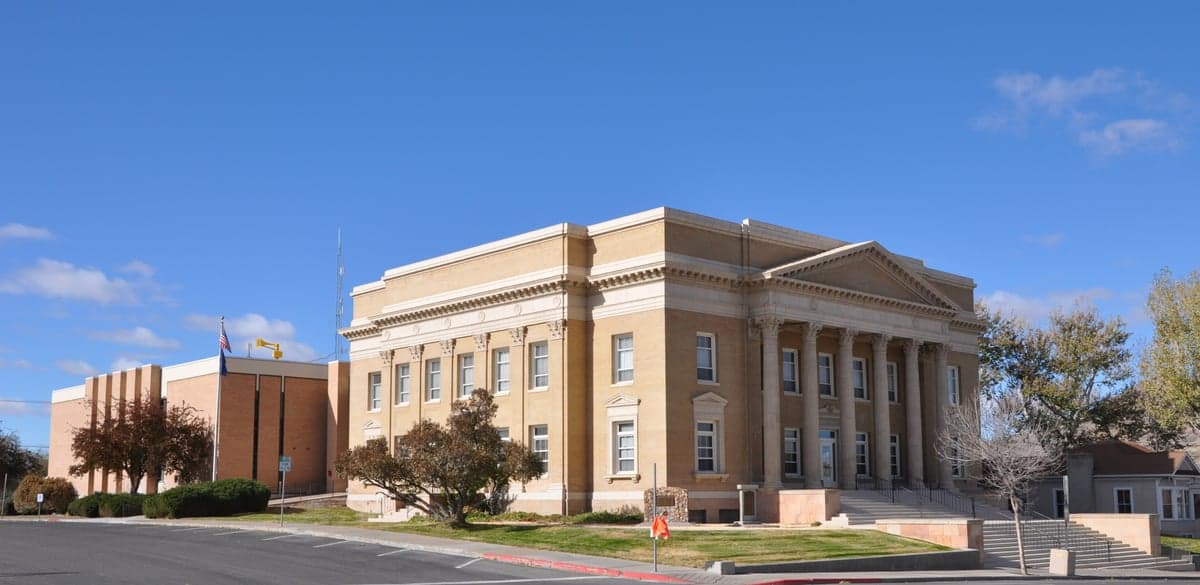
Photo: Wikipedia
Political ClimatePolitical Climate in Humboldt County
Showing district-level results — no local-only data available.
Local Political AnalysisPolitical Analysis of Humboldt County
Humboldt County, Nevada, is about as reliably conservative as it gets in the Silver State, with a Cook PVI of R+7 that puts it well to the right of the state as a whole (R+1). The county has been a Republican stronghold for decades, and while the national political winds have shifted, the local landscape has remained remarkably stable. The real story here isn't a sudden swing left, but a slow, steady erosion of the old-school, live-and-let-live conservatism that defined the area, replaced by a more nationalized, culture-war-driven version that can feel a bit more intense than it used to.
How it compares
Nevada as a state is a classic swing state, with a Cook PVI of R+1 that reflects its purple nature—think Clark County (Las Vegas) pulling hard left, while the rural counties like Humboldt pull hard right. Humboldt County is a full six points more Republican than the state average, which is a massive gap. Within the county itself, you see some variation. Winnemucca, the county seat and largest town, is the political heart of the region, and it votes reliably red—think 70-75% Republican in most presidential elections. The smaller towns like Golconda and Paradise Valley are even more conservative, often pushing into the 80% range. There isn't a single precinct in the county that leans blue; the closest you get is maybe a few precincts in Winnemucca that are slightly less red, but they're still solidly Republican. The real divide isn't between left and right, but between the old-school, "keep the government out of my business" conservatives and the newer, more evangelical, socially-focused conservatives.
What this means for residents
For a long-time resident like myself, the biggest change isn't the voting patterns—those are predictable. It's the tone. Twenty years ago, the political conversation was about water rights, mining regulations, and keeping the BLM from locking up our public lands. Now, it's more about national culture war issues—school boards, library books, and who's speaking at the county commission meeting. The old guard, the ranchers and miners, they just wanted to be left alone. The newer wave of conservatives, many of whom moved here from California or the West Coast, are more activist and more focused on fighting what they see as progressive overreach. That shift is a double-edged sword. On one hand, it means the county is more organized and vocal in defending its values. On the other hand, it can create a more tense, less neighborly atmosphere than the old "we agree to disagree" culture.
What this means for residents
For residents, this means you can expect a local government that is generally aligned with conservative principles—low taxes, limited regulation, and a strong emphasis on property rights. The county commission and school board are reliably conservative, and you won't see the kind of progressive policy experiments you'd find in Washoe or Clark County. However, the increasing nationalization of local politics means you might see more heated debates at public meetings than you did a decade ago. The good news is that the core values of the community—self-reliance, hard work, and a healthy skepticism of government—are still very much alive. The bad news is that the political climate can feel more polarized and less forgiving than it used to, especially if you're not fully on board with the most vocal wing of the local conservative movement.
One cultural distinction that still holds strong here is the deep-seated distrust of federal land management. The Bureau of Land Management (BLM) controls over 70% of the land in Humboldt County, and that's a constant source of tension. Local ranchers and miners have a long history of clashing with federal agencies over grazing permits, mining claims, and access to public lands. This isn't a partisan issue in the traditional sense—it's a practical, survival-level concern that unites most residents, regardless of their political affiliation. That shared frustration with federal overreach is one of the few things that still cuts across the internal divisions within the local conservative movement. Looking ahead, I expect the county to remain deeply red, but the internal battles over the direction of that conservatism will likely intensify, especially as more people move in from out of state.

State Political ClimatePolitical Climate in Nevada
State Political AnalysisPolitical Environment in the State
Nevada is a genuine battleground state, with a Cook PVI of R+1 that masks a deeply volatile political landscape. Over the past 20 years, the state has shifted from a reliably red western outpost to a purple toss-up, driven by massive in-migration to the Las Vegas metro area and a simultaneous rural conservative backlash. The dominant coalition is a fragile mix of unionized service workers, libertarian-leaning independents, and a growing Hispanic electorate, but the state’s trajectory is increasingly defined by a tug-of-war between Clark County’s progressive machine and the rest of the state’s stubbornly conservative instincts.
Urban vs. rural divide
The political map of Nevada is starkly simple: Clark County (Las Vegas, Henderson, North Las Vegas) holds about 73% of the state’s population and votes reliably Democratic, while the remaining 16 counties—from Washoe (Reno) to rural Elko, Nye, and Lander—lean heavily Republican. In 2024, Clark County delivered a 52-46 margin for Democrats, but that was down from 54-44 in 2020, a sign of erosion. Meanwhile, Washoe County, once a swing bellwether, has trended right; Reno’s suburbs like Spanish Springs and Damonte Ranch now vote red, while the city core remains blue. The rural counties are deeply conservative: Elko County voted 78-20 for Trump in 2024, and Nye County (Pahrump) went 72-25. The divide is not just geographic but cultural—Las Vegas is a transient, service-economy hub with strong union influence (Culinary Workers Union Local 226), while the rest of the state is defined by mining, ranching, and a fierce independent streak. The key battleground is the fast-growing exurbs of Clark County, like Summerlin South and parts of Henderson, where moderate Republicans and independents are shifting the balance.
Policy environment
Nevada’s policy environment is a mixed bag for conservatives. On the plus side, there is no state income tax, a major draw for high-earners and retirees. The sales tax is moderate (6.85% state rate, plus local options up to 8.75%), and property taxes are capped by the 2005 “Nevada Taxpayer Bill of Rights” (AB 489), which limits annual increases to 3% for owner-occupied homes. However, the state’s regulatory posture is increasingly progressive. In 2023, the Democratic-controlled legislature passed SB 426, which expanded background checks for private firearm sales, a move that drew fierce opposition from rural counties. Education policy is a flashpoint: the state has a school choice program (Nevada Educational Choice Scholarship Program) but it’s limited to low-income students, and the powerful Nevada State Education Association (teachers union) has blocked broader expansion. Healthcare is dominated by the state’s Medicaid expansion under the ACA, which covers about 20% of residents. Election laws are relatively open: same-day voter registration, no-excuse mail voting (made permanent after 2020), and automatic voter registration at the DMV—all of which conservatives view as vulnerabilities. The state also has a “sanctuary” law (AB 140, 2019) that limits local law enforcement cooperation with federal immigration authorities, a major concern for those prioritizing border security.
Trajectory & freedom
On personal liberty, Nevada is a study in contradictions. The state has a strong libertarian heritage—gambling, prostitution (in rural counties), and marijuana are all legal. But recent years have seen a clear erosion of freedom in key areas. Gun rights took a hit with SB 426 (2023), which banned firearms in polling places and required background checks for private transfers, though it stopped short of a full “universal” check. Parental rights are under pressure: in 2023, the legislature passed AB 285, which prohibits school boards from requiring parental notification if a student changes their gender identity or pronouns—a law that has sparked massive backlash and recall efforts. Medical autonomy was curtailed during COVID, when Governor Steve Sisolak imposed one of the nation’s strictest lockdowns (Nevada was the last state to fully reopen in June 2021), and vaccine mandates were enforced for state workers. On the positive side, property rights remain strong due to the 3% tax cap, and there is no inheritance tax. The state’s tax freedom is a major selling point, but the trend is concerning: in 2025, a proposed “margin tax” on businesses (Question 3) was narrowly defeated, but similar measures are likely to return. The overall trajectory is toward more government intervention, particularly in education and healthcare, which should worry anyone moving here for freedom.
Civil unrest & political movements
Nevada has seen its share of political flashpoints. The most visible is the election integrity controversy in Clark County, where the 2020 and 2022 elections were marred by allegations of ballot harvesting and machine irregularities, leading to a 2024 state audit that found “no systemic fraud” but did identify procedural lapses. The “Stop the Steal” movement was active in rural counties, with rallies in Carson City and Elko. On the left, the Culinary Workers Union has been a powerful force, organizing massive protests in Las Vegas for higher wages and against right-to-work laws. Immigration politics are heated: the sanctuary law (AB 140) has led to clashes between Clark County and rural sheriffs, with Nye County’s sheriff publicly refusing to comply. Secession rhetoric is alive in the rural “State of Jefferson” movement, which has gained traction in northeastern Nevada (Elko, White Pine counties) where residents feel ignored by Carson City. In 2023, a proposal to split the state into two (urban Clark vs. rural rest) was introduced in the legislature but died. The most visible recent flashpoint was the 2023 parental rights protests outside the Nevada State Capitol, where thousands rallied against AB 285, leading to a failed recall attempt against Assemblywoman Selena Torres. A new resident would notice the stark cultural divide: Las Vegas feels like a blue city, while a 30-minute drive to Pahrump feels like a different country.
Projection
Over the next 5-10 years, Nevada is likely to become more competitive but not reliably red. Demographic trends favor Democrats: the state’s Hispanic population (now 30% of residents) is growing and leans Democratic, though not as heavily as in California. In-migration from California (about 40,000 net new residents per year) brings both conservatives fleeing taxes and progressives fleeing housing costs—a mixed bag. The key swing group is the independent voter, now 35% of the electorate, who tend to be fiscally conservative but socially moderate. The rural counties will remain deeply red, but their share of the vote will shrink as Clark County grows. The most likely scenario is a continued purple status, with close presidential races (within 2-3 points) and divided state government. However, if the Democratic legislature continues to pass gun control and parental rights restrictions, a backlash could flip the state in 2028 or 2032. A new resident moving in now should expect a state that is politically volatile—one election cycle could bring a Republican governor and a conservative agenda, the next could bring a Democratic trifecta and more progressive laws.
Bottom line for a new resident: Nevada offers genuine tax freedom and a libertarian cultural vibe, but the political winds are shifting. If you value low taxes and property rights, you’ll find a home here—especially in the rural counties or the conservative exurbs of Reno and Las Vegas. But be prepared for a state government that is increasingly willing to restrict gun rights, override parental authority, and expand government healthcare. The best strategy is to settle in a county that aligns with your values—Elko, Nye, or Douglas County for a conservative haven, or the outskirts of Henderson for a more moderate environment. Keep an eye on the 2026 gubernatorial race: a Republican win could slow the progressive trend, while a Democratic win will accelerate it.
* Values derived from national, state, county, city and local statistics and may differ in a specific area. Last updated: 2026-05-12T10:01:33.000Z
Narrative content on this page is AI-generated and may contain mistakes. Verify any details that matter before acting on them.
ReloMaps may earn a commission from affiliate links at no extra cost to you.

