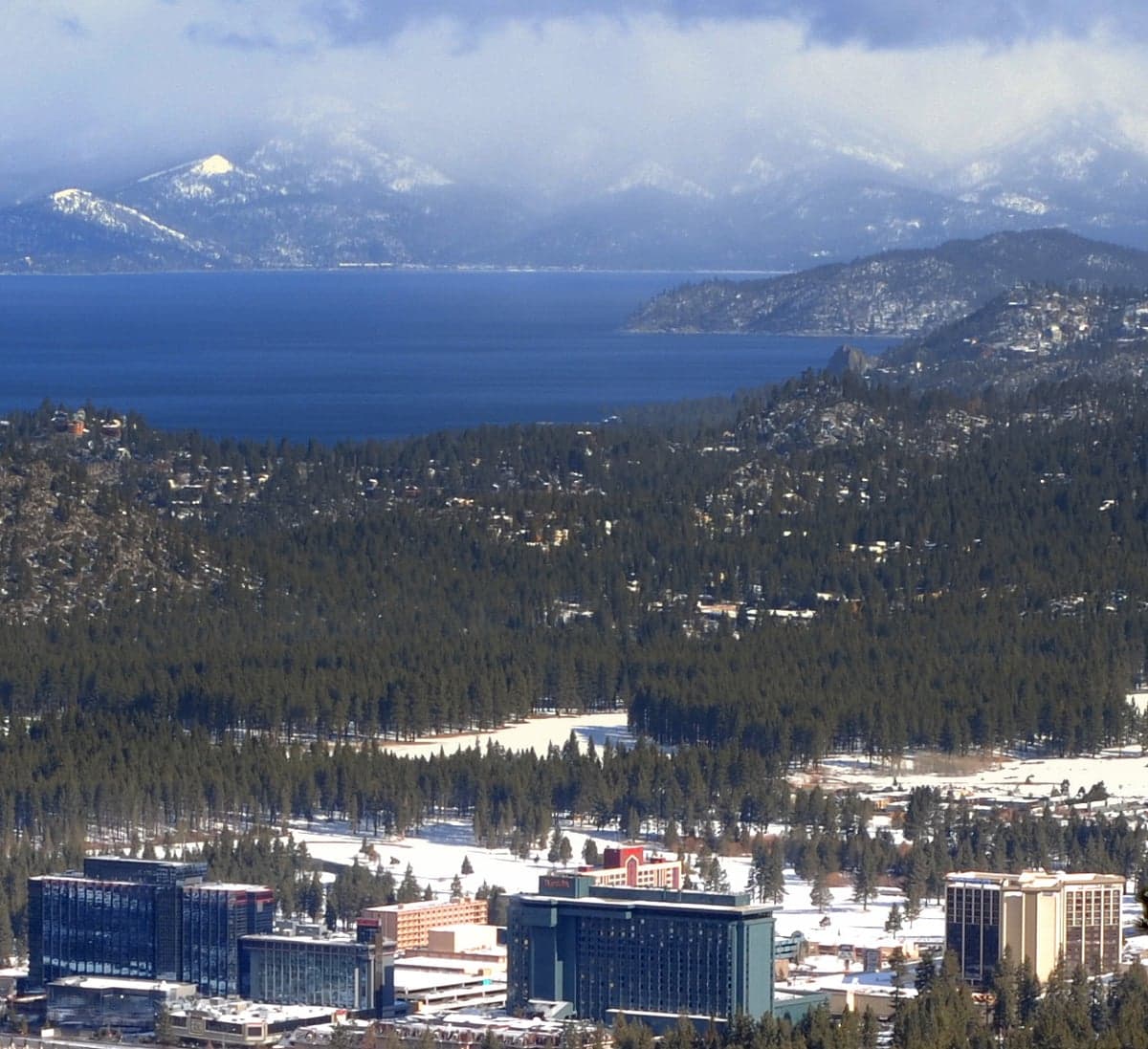
Photo: Wikipedia
Political ClimatePolitical Climate in Douglas County
Showing district-level results — no local-only data available.
Local Political AnalysisPolitical Analysis of Douglas County
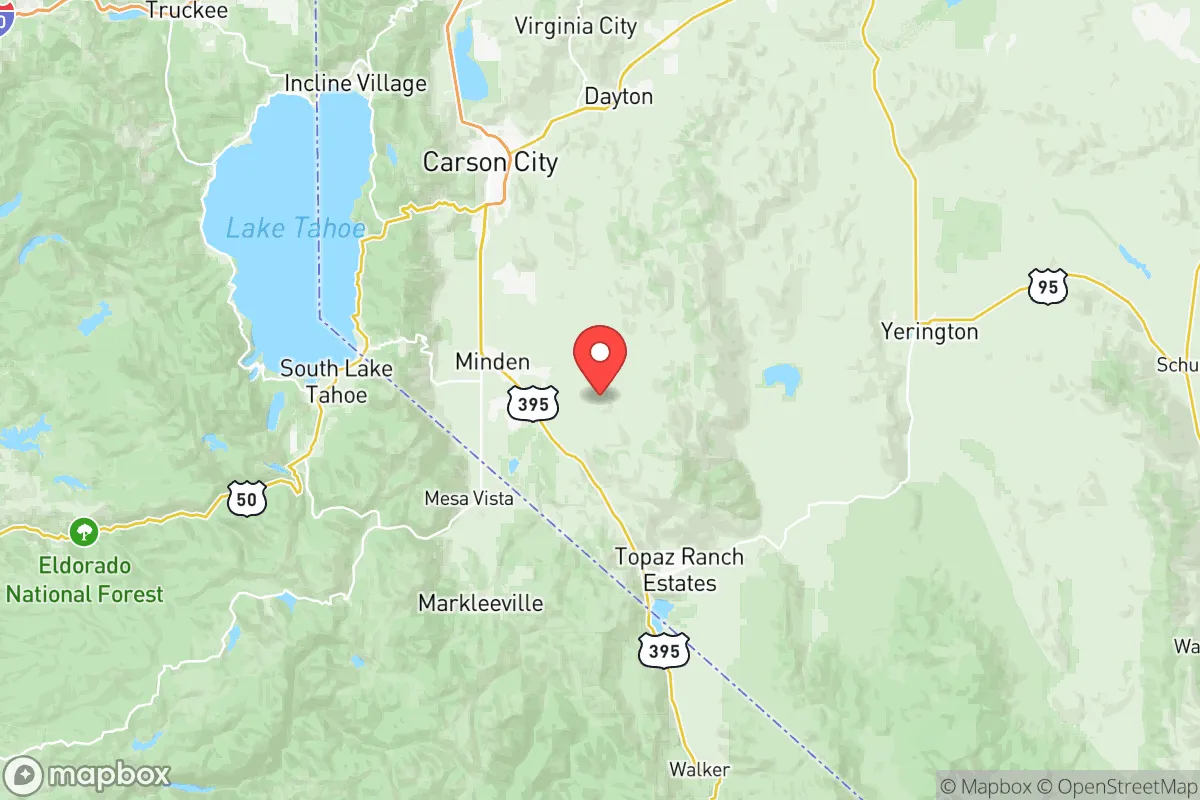
Douglas County has long been one of Nevada’s most reliably conservative strongholds, and that hasn’t changed much. The Cook PVI sits at R+7, which is a solid seven points more Republican than the state as a whole (R+1). But if you’ve lived here a while, you know the real story is in the precincts. The rural areas around Gardnerville and Minden are deep red—folks there vote like it’s 1985 and proud of it. Meanwhile, Stateline and the lakefront communities around Zephyr Cove have been trending a bit more purple, especially as second-home owners from California settle in. The swing precincts are actually in the Johnson Lane area, where you’ll find a mix of longtime ranchers and newer commuters who work in Carson City or Reno. That’s where elections are won or lost here.
How it compares
Compared to Nevada as a whole, Douglas County is a different political animal. The state’s R+1 rating means it’s a true battleground—Clark County (Las Vegas) and Washoe County (Reno) can flip the whole thing blue in a bad year. Douglas County doesn’t have that problem. We’re surrounded by conservative counties—Lyon to the east, Alpine (CA) to the west—so the pressure to shift left just isn’t there. But here’s the thing: the state legislature in Carson City has been pushing progressive policies on everything from gun laws to land use, and that’s where the tension comes in. A lot of us feel like the state government is overreaching, trying to impose urban values on a rural county that knows how to manage its own affairs. The 2024 election results showed Douglas County voting +14 for Trump, while the state only went +2 for him. That gap tells you everything about the disconnect between local values and state-level politics.
What this means for residents
For anyone living here, the political climate means you get a lot of freedom—for now. Property taxes are low, zoning is minimal, and the county commission has been pretty good about keeping Carson City’s hand out of local business. But there’s a growing concern about the influx of people from blue states who bring their voting habits with them. The Minden-Gardnerville area is still solid, but I’ve seen Genoa—our oldest settlement—start to shift as more retirees from California buy up the historic homes. If you’re looking for a place where your Second Amendment rights aren’t questioned and your kids aren’t getting progressive indoctrination in school, Douglas County is still one of the best bets in Nevada. But keep an eye on the school board races and the county commission elections; that’s where the real fight is happening.
Culturally, Douglas County is distinct from the rest of Nevada in a few key ways. We don’t have the casino culture of Reno or Vegas—our economy is built on timber, ranching, and tourism around Lake Tahoe. That means the local politics are more about water rights, wildfire management, and keeping the federal government from locking up our public lands. The Carson Valley is still a place where neighbors know each other and the Fourth of July parade in Minden is a bigger deal than any election. But the progressive creep is real. If the state keeps pushing mandates on housing density and renewable energy projects that don’t fit our landscape, you’ll see more of us pushing back. For now, it’s a good place to live if you value personal liberty and local control. Just don’t expect it to stay that way without paying attention.

State Political ClimatePolitical Climate in Nevada
State Political AnalysisPolitical Environment in the State
Nevada is a true swing state with a Cook PVI of R+1, meaning it leans just barely Republican at the presidential level, but the reality on the ground is far more volatile. Over the last 10-20 years, the state has shifted from a reliably red western outpost to a purple battleground, driven by massive in-migration to the Las Vegas metro area and a growing Hispanic electorate. The dominant coalition is a fragile mix of unionized service workers in Clark County, libertarian-leaning rural ranchers, and a growing number of retirees and remote workers from California, making every election a coin flip.
Urban vs. rural divide
The political map of Nevada is a tale of two worlds. Clark County (Las Vegas, Henderson, North Las Vegas) is the Democratic engine, accounting for nearly 73% of the state’s population. The Las Vegas Strip’s casino and hospitality unions—especially the Culinary Workers Union—turn out massive Democratic votes. Washoe County (Reno, Sparks) is the true bellwether, having flipped from red to blue in recent cycles as tech and logistics workers from California have moved in. Meanwhile, the vast rural expanse—places like Elko, Ely, and Winnemucca—votes overwhelmingly Republican, often by 70-80% margins. Lyon County (Dayton, Fernley) and Nye County (Pahrump) are reliably red, while Storey County (home to the Virginia City tourism corridor) is a libertarian-leaning outlier. The divide isn’t just cultural; it’s economic, with rural areas dependent on mining and ranching, while urban centers rely on tourism, gaming, and logistics.
Policy environment
Nevada’s policy environment is a mixed bag for conservatives. On the plus side, there is no state income tax, a major draw for individuals and businesses. Property taxes are capped at 3% annual growth, providing stability. However, the state’s regulatory posture is increasingly progressive. Nevada has universal mail-in voting (enacted permanently after the 2020 election), same-day voter registration, and automatic voter registration—policies that conservatives argue erode election integrity. The education system is a sore point: Nevada ranks near the bottom nationally in K-12 outcomes, and the state has resisted school choice expansion, though a modest Education Savings Account program was passed in 2023 but remains underfunded. Healthcare policy is mixed; the state expanded Medicaid under Obamacare and has a state-run exchange. On the positive side, Nevada is a “right-to-work” state, which limits union power outside of Clark County’s hospitality sector. The state also has relatively low business licensing fees and no corporate income tax, making it attractive for entrepreneurs.
Trajectory & freedom
Nevada’s trajectory on personal freedom is concerning for conservatives. Gun rights have been under sustained attack. In 2023, the legislature passed SB 171, which raised the purchase age for semi-automatic rifles to 21 and expanded background checks to private sales—a direct response to the 2017 Las Vegas shooting. A 2024 law (AB 354) banned firearms in polling places and government buildings. On parental rights, the state has moved left: Nevada passed a law in 2023 (AB 195) that prohibits schools from notifying parents if a child changes their gender identity or pronouns, a major flashpoint for conservative families. Medical autonomy took a hit with the 2022 passage of Question 2, which legalized recreational marijuana—while some see this as a freedom win, it also brought increased regulation and a state-run licensing system that critics say stifles small businesses. Property rights are relatively strong, but the state has a “public lands” problem: the federal government owns about 85% of Nevada, limiting private development and ranching. The 2024 “Sagebrush Rebellion” movement in rural counties like Nye and Elko has pushed for land transfer from federal to state control, but progress is slow.
Civil unrest & political movements
Nevada has seen its share of political flashpoints. The 2020 election integrity controversy was intense, with Clark County’s mail-in ballot process drawing lawsuits and allegations of irregularities—though no widespread fraud was proven. The “Stop the Steal” rally in Carson City in 2021 drew thousands, and the state’s Republican Party remains deeply divided between establishment and populist factions. On the left, the Culinary Workers Union is a powerful force, organizing massive protests for higher wages and against automation. Immigration politics are hot: Nevada is a “sanctuary” state in practice, with a 2019 law (AB 392) limiting local law enforcement cooperation with ICE. Rural counties like Elko and Nye have passed resolutions opposing this, creating a patchwork of enforcement. The “Rural Nevada” secession movement has gained steam, with proposals to split the state into two—a conservative “North Nevada” and a liberal “South Nevada”—though it remains symbolic. The 2023 legislative session saw protests at the Nevada State Capitol over gun control and parental rights bills, with armed demonstrators on both sides.
Projection
Over the next 5-10 years, Nevada is likely to become more Democratic at the state level, driven by continued in-migration from California and the growth of Clark County. The rural vote will be increasingly drowned out as Las Vegas and Reno expand. However, the state’s libertarian streak—especially on taxes and property rights—may slow the shift. Expect more gun control measures, tighter election laws (if Democrats hold the legislature), and continued battles over parental rights in schools. The 2026 gubernatorial race will be a key bellwether; if a Republican wins, they may be able to veto the worst progressive bills. For a conservative moving in now, the best bet is to settle in rural or exurban areas like Fernley, Pahrump, or Elko, where local governments are more aligned with traditional values. The state’s tax advantage will remain, but the cultural and regulatory climate will continue to drift left.
Bottom line for a new resident: Nevada offers a low-tax, low-regulation economic environment that is hard to beat, but you’ll need to be strategic about where you live. If you’re a conservative, avoid Clark County and the Reno core; instead, look at Lyon, Nye, or Elko counties, where you’ll find like-minded neighbors and local governments that push back against Carson City’s progressive agenda. The state is still a great place to build wealth and raise a family, but you’ll need to stay engaged politically to protect your freedoms—especially on guns, education, and parental rights. It’s not Texas, but it’s not California either—yet.
* Values derived from national, state, county, city and local statistics and may differ in a specific area. Last updated: 2026-05-16T23:18:43.000Z
Narrative content on this page is AI-generated and may contain mistakes. Verify any details that matter before acting on them.
ReloMaps may earn a commission from affiliate links at no extra cost to you.

