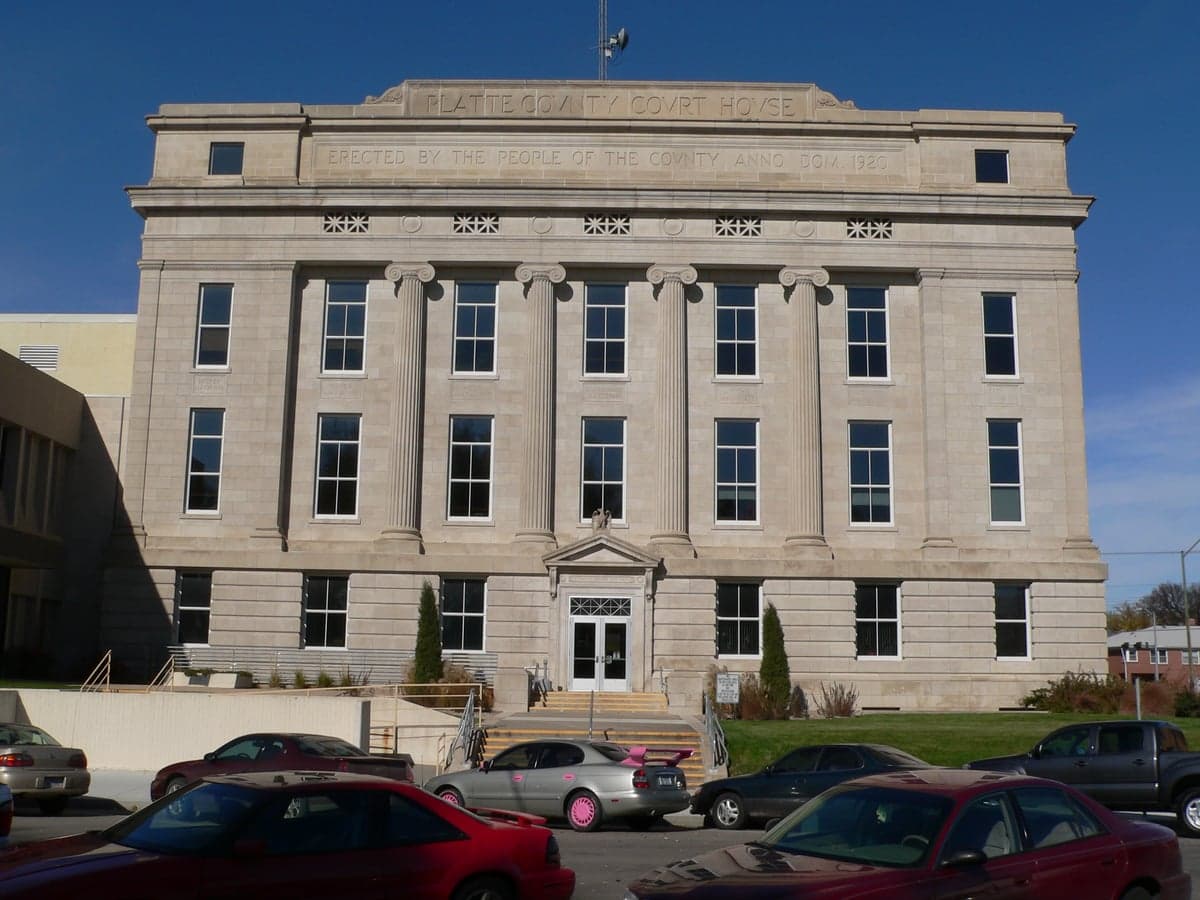
Photo: Wikipedia
Quality of Life in Platte County
A livable area that tracks near national norms for affordability, walkability, and neighborhood health.
What does Quality of Life tell us?
Quality of Life measures an area by evaluating factors like cost of living, nearby amenities, country club access, airport proximity, socioeconomic signals and neighborhood character. For large states, this is a general average — quality of life can vary dramatically between metro areas, suburbs, and rural communities within the same state.
What does this tell us?
Quality of Life measures an area by evaluating factors like cost of living, nearby amenities, country club access, airport proximity, socioeconomic signals and neighborhood character. For large states, this is a general average — quality of life can vary dramatically between metro areas, suburbs, and rural communities within the same state.
Cost of Living
26% below national average
122%
The Real Cost of Living in Platte County for 2026
| Tier | Individual | Family (4) |
|---|---|---|
| Survival | $14k | $26k |
| Comfortable | $40k | $59k |
| Luxury | $117k+ | $182k+ |
| Elite (Top 5%) | $138k+ | $214k+ |
Quality-of-Life Analysis
Platte County, Nebraska, offers a quality-of-life spectrum that spans from the regional hub of Columbus to quiet farming hamlets and open countryside, all within a county where the cost of living index sits at 74 (26% below the U.S. average). The county attracts a mix of manufacturing workers, agricultural families, and retirees who value short commutes—the average drive time is just 15.3 minutes—and affordable housing. The character of daily life shifts noticeably depending on whether you live in the county’s largest town, a smaller village, or a rural acreage.
Largest town(s) & population centers
Columbus, the county seat and home to roughly 24,000 residents, is the undisputed population and economic center of Platte County. Daily life here revolves around a strong manufacturing base—employers like Vishay Dale, BD (Becton Dickinson), and Behlen Manufacturing provide stable blue-collar and technical jobs. The town offers a full set of amenities: a regional hospital (Columbus Community Hospital), a public school system with multiple elementary schools and two high schools (Columbus High and Lakeview High), and retail corridors along 23rd Street and Highway 81. Housing is affordable relative to national averages, with a countywide median home value of $207,800 and median rent of $867; in Columbus, homes in established neighborhoods like the “North Side” or newer subdivisions near the Platte River run slightly above the county median but remain well below Omaha or Lincoln prices. The commute is negligible—most residents drive less than 15 minutes to work, many within Columbus itself. The town also hosts the Platte County Fair and has a growing trail system along the Loup and Platte rivers, appealing to families and outdoor enthusiasts.
Smaller towns & rural pockets
Outside Columbus, the county’s smaller communities offer a quieter, more agrarian pace. Humphrey (pop. ~760) sits in the northern part of the county and is known for its strong Catholic school system (St. Francis) and a tight-knit downtown with a grocery store, bank, and several churches. Platte Center (pop. ~330) is a classic Nebraska village with a grain elevator, a post office, and a bar-and-grill; it’s a bedroom community for Columbus workers who want a few acres without a long drive. Duncan (pop. ~390) lies just east of Columbus along U.S. 30 and offers a mix of older farmsteads and newer subdivisions. Creston (pop. ~200) and Lindsay (pop. ~250) are even smaller, each with a volunteer fire department, a church, and little else in the way of retail—residents drive 20–30 minutes to Columbus for groceries and medical care. Unincorporated areas like Oconee and Bismarck are essentially crossroads with a handful of homes; these rural pockets are where you’ll find larger acreages, cattle operations, and corn/soybean fields stretching to the horizon. The trade-off is privacy and land for a lower price—homes on 5–20 acres in these areas often sell for $150,000–$250,000, well below the national median.
Cost & lifestyle range
The cost-of-living spread across Platte County is narrow compared to metro areas, but meaningful differences exist. At the higher end, newer subdivisions in Columbus—such as those near Lost Creek Golf Course or along 33rd Avenue—see home values of $280,000–$350,000 for 3–4 bedroom houses with modern finishes. Renters in Columbus pay a median of $867, but two-bedroom apartments in newer complexes can reach $1,000–$1,200. At the lower end, older homes in Humphrey or Platte Center can be found for $120,000–$160,000, and rural fixer-uppers on acreage occasionally dip below $100,000. Property taxes in Nebraska are relatively high (around 1.5–2% of assessed value), but the low home prices keep monthly costs manageable. Amenities follow the same gradient: Columbus has a YMCA, a movie theater, and multiple fast-casual dining options; smaller towns have a single gas station or café. The average commute of 15.3 minutes holds true across the county—even residents in far northern Humphrey or rural Lindsay can reach Columbus in under 25 minutes. For those who want land and quiet, the rural pockets deliver; for those who want walkable neighborhoods and a grocery store within a mile, Columbus is the clear choice.
Platte County is best suited for people who value affordability, short commutes, and a mix of small-city convenience with rural access. Families with school-age children often choose Columbus for its multiple school options and extracurricular programs, while retirees and remote workers gravitate toward the smaller towns for lower home prices and larger lots. Agricultural families and hobby farmers find the rural acreages ideal for livestock or gardening. The county lacks the nightlife and cultural density of Omaha (90 minutes east), but for those who prioritize financial breathing room and a slower pace, Platte County delivers a consistent, grounded quality of life across its entire geographic range.

Crime in Platte County
Generally safer than 65% of comparable U.S. locations.
Violent CrimeViolent Crime Analysis
Property CrimeProperty Crime Analysis
Crime Analysis
Platte County, anchored by the city of Columbus, presents a notably safe environment with a violent crime rate of 215.2 per 100,000 residents and a property crime rate of 1,378.5 per 100,000. Both figures sit below Nebraska state averages and well under national benchmarks, reflecting the county’s rural character and a justice system that prioritizes public safety over progressive leniency. Unlike larger metro areas such as Omaha or Lincoln—where liberal district attorneys and judges have been linked to rising recidivism and softer sentencing—Platte County’s law enforcement and courts maintain a tougher, victim-centered approach that keeps criminals off the streets.
Crime in context
To understand Platte County’s safety advantage, compare its violent crime rate of 215.2 per 100K to Nebraska’s statewide rate of roughly 280 per 100K and the national rate of approximately 380 per 100K. Property crime in Platte County (1,378.5 per 100K) also undercuts the national average of about 1,950 per 100K. This gap is not accidental. In progressive-run cities like Omaha (Douglas County), permissive policies—such as cashless bail and reduced prosecution of property offenses—have fueled crime spikes. Platte County, by contrast, operates under a conservative judicial philosophy. The county attorney’s office in Columbus consistently seeks meaningful sentences, and local judges resist the trend of early release and diversion that plagues larger jurisdictions. The result is a deterrent effect that directly benefits residents and victims, not offenders.
What residents experience
Daily life in Platte County feels safe. Columbus, the county seat and largest city, accounts for the majority of reported incidents, but even here violent crime is rare—typically limited to domestic disputes or isolated assaults. Property crime, especially theft from vehicles and outbuildings, is the most common concern. Smaller towns such as Humphrey, Duncan, and Platte Center report even lower numbers, with many residents leaving doors unlocked without incident. The county’s strong community policing model, combined with a sheriff’s office that maintains close ties to rural neighborhoods, means suspicious activity is quickly reported and addressed. For families and retirees seeking a low-crime environment, Platte County offers a stark contrast to the disorder seen in metro areas where progressive prosecutors have deprioritized property crimes and misdemeanors.
Neighborhood-level variation exists but is modest. In Columbus, older areas near downtown and along the Loup River corridor see slightly elevated property crime, while newer subdivisions on the city’s west side and rural towns like Creston and Tarnov are exceptionally safe. The county’s overall stability is reinforced by a local economy anchored by manufacturing and agriculture—employers like BD (Becton Dickinson) and Central Community College provide steady jobs that reduce economic desperation. For anyone weighing a move to Nebraska, Platte County stands out as a jurisdiction where public safety is taken seriously, and where the justice system works for law-abiding citizens, not for repeat offenders.
* Values derived from national, state, county, city and local statistics and may differ in a specific area. Last updated: 2026-05-15T01:04:20.000Z
Narrative content on this page is AI-generated and may contain mistakes. Verify any details that matter before acting on them.
ReloMaps may earn a commission from affiliate links at no extra cost to you.

