
Photo: Wikipedia
Strategic Assessment of Lancaster County
Meaningful friction. Expect exposure to either population pressure, blast zones, or natural disaster risk. Consider buying a retreat property.
What does the Strategic Assessment tell us?
Our Strategic Assessment grades tactical survivability of an area. Major population centers, military targets, fallout zones, natural disasters, and border exposure all drive risk — lower exposure means a more defensible position in a crisis.
This is heavily inspired by Joel Skousen's Strategic Relocation book. Highly recommended you checkout the book ($)What does this tell us?
Our Strategic Assessment grades tactical survivability of an area. Major population centers, military targets, fallout zones, natural disasters, and border exposure all drive risk — lower exposure means a more defensible position in a crisis.
This is heavily inspired by Joel Skousen's Strategic Relocation book. Highly recommended you checkout the book ($)Strategic Pillars

Key Distances
Strategic Assessment Analysis
Lancaster County, Nebraska, anchored by Lincoln, offers a strategic relocation option for those prioritizing resilience and stability in an uncertain future. Its position in the Great Plains, away from major coastal population centers and their associated vulnerabilities, provides a significant advantage for individuals and families seeking a more secure base of operations. The county’s economic and social fabric, built around state government, the University of Nebraska-Lincoln, and a diversified agricultural and manufacturing base, demonstrates a level of insulation from the volatility that can cripple more leveraged regions. For a conservative-leaning audience concerned with civic stability and self-reliance, this area presents a compelling, if not perfect, balance of opportunity and risk.
Geographic position and natural advantages for long-term stability
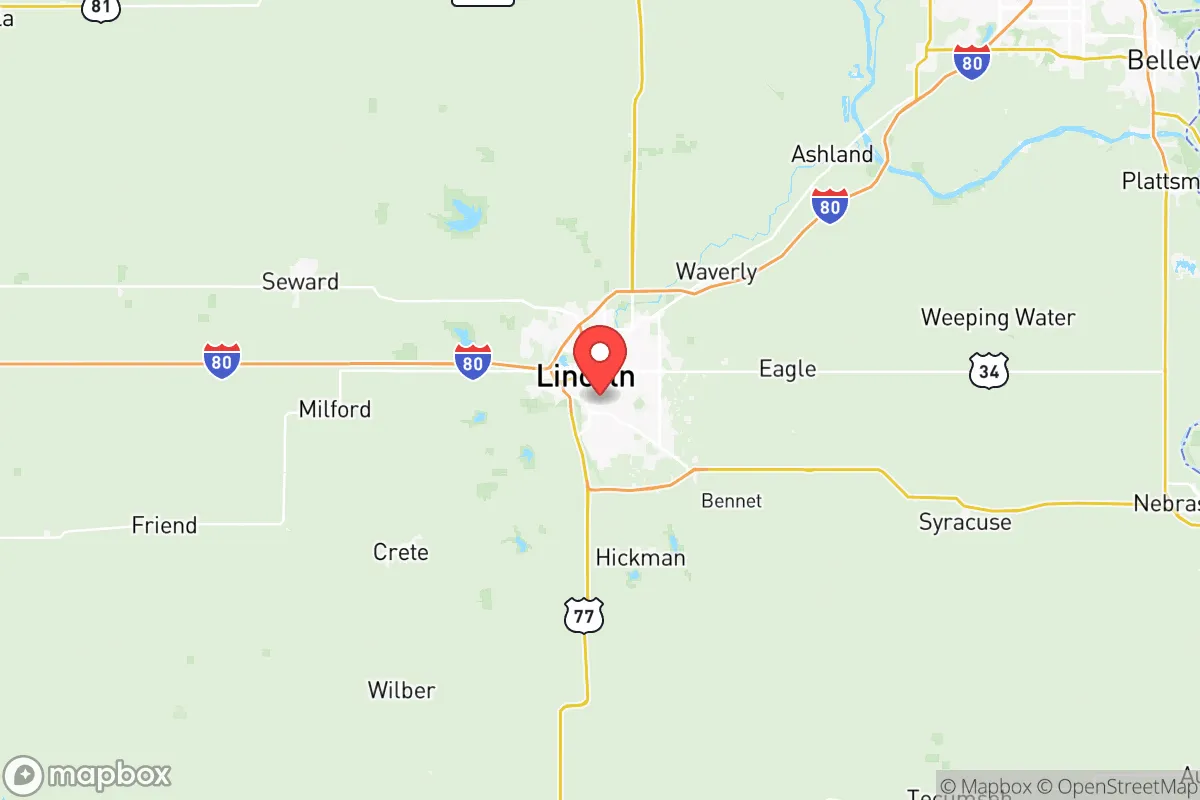
Lancaster County sits in the heart of the eastern Nebraska plains, a region defined by its agricultural productivity and relative geographic isolation from the most volatile national fault lines. The county is roughly 50 miles southwest of Omaha and its major economic and transportation hubs, and over 150 miles from the Missouri River and the eastern border of the state. This buffer zone is critical. The area is not a primary target for any major geopolitical adversary, lacking the strategic significance of a major port, a massive military installation like Fort Hood, or a critical energy hub like the Houston refinery corridor. The terrain is gently rolling, with the Salt Creek and its tributaries providing a reliable water source, though not a defensible mountain redoubt. The climate is continental, with cold winters and hot summers, but it avoids the extremes of tornado alley to the south and the blizzard-prone northern plains. This moderate environment supports a robust agricultural sector—corn, soybeans, and livestock—which is a foundational element of long-term food security. The city of Lincoln itself is a state capital, which means a concentration of government services, law enforcement, and emergency management infrastructure that would be a stabilizing force during any widespread disruption.
Risks, exposures, and proximity to potential fallout-relevant landmarks
No location is without risk, and Lancaster County has its own set of exposures that a relocator must weigh carefully. The most significant is the presence of the Lincoln Airport, which also hosts the Nebraska Air National Guard's 155th Air Refueling Wing. While not a primary nuclear target like Offutt Air Force Base near Omaha, this facility is a military asset and could be a secondary target in a major conflict. The county is also within the potential fallout zone of a strike on Offutt, which is a major US Strategic Command (USSTRATCOM) headquarters. Prevailing winds from the west would carry fallout away from Lincoln, but a shift in wind patterns could pose a significant risk. The city of Lincoln itself, with a population of roughly 290,000, is a moderate population center. In a scenario of widespread civil unrest, it could become a focal point for resource competition, though its size is manageable compared to a metropolitan area like Chicago or Denver. The county is also crisscrossed by major rail lines and Interstate 80, which are critical supply corridors. In a crisis, these routes could become chokepoints or targets for disruption. The proximity to the Platte River valley, a major migratory bird flyway, also presents a theoretical vector for a biological event, though this is a low-probability, high-consequence risk.
Practical resilience for a relocator: food, water, energy, and defensibility
For a relocator focused on practical self-sufficiency, Lancaster County offers a mixed but generally favorable picture. Food security is a major strength. The county is surrounded by some of the most productive farmland in the world. A relocator with land can easily establish a substantial garden, and local farmers' markets and co-ops are abundant. The presence of the University of Nebraska-Lincoln's Institute of Agriculture and Natural Resources provides a deep well of knowledge and resources for sustainable food production. Water availability is generally good, but not unlimited. The county sits atop the eastern edge of the Ogallala Aquifer, but the primary water source for Lincoln is the Platte River via a wellfield system. A well on private property is a significant advantage, but drilling depths and yields vary. Energy infrastructure is moderately resilient. Lincoln is served by the Lincoln Electric System, a municipal utility, which is generally reliable. However, the grid is interconnected with the larger regional system, meaning a major grid failure could still affect the area. A backup generator and a plan for fuel storage are prudent. Defensibility is a challenge. The terrain is open and flat, offering little natural cover. A rural property with good sightlines and a defensible perimeter is ideal, but the county's overall layout is not conducive to a small group holding out against a determined threat. The best strategy is to be part of a strong, like-minded community network. The county's population is generally conservative and self-reliant, with a strong culture of hunting, fishing, and outdoor skills. This social fabric is a resilience asset in itself.
The overall strategic picture for Lancaster County is one of a solid, if unspectacular, haven for those seeking to ride out national turbulence. It is not a remote, off-grid paradise, nor is it a high-risk target zone. It is a stable, functional, and agriculturally rich area with a government and university infrastructure that would likely remain operational during a crisis. The primary risks are the proximity to Offutt Air Force Base and the potential for civil unrest in Lincoln itself. For a conservative-leaning individual or family who values community, self-reliance, and a lower profile, Lancaster County represents a rational choice. The key is to secure a property with a reliable water source, establish a local network, and maintain a low profile. The area's greatest strength is its ordinariness—it is a place where life can continue with a degree of normalcy, even when the rest of the country is in turmoil. It is not a fortress, but it is a very defensible position in the long game of national recovery.

* Values derived from national, state, county, city and local statistics and may differ in a specific area. Last updated: 2026-05-12T08:57:47.000Z
Narrative content on this page is AI-generated and may contain mistakes. Verify any details that matter before acting on them.
ReloMaps may earn a commission from affiliate links at no extra cost to you.

