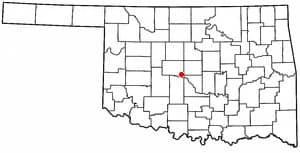
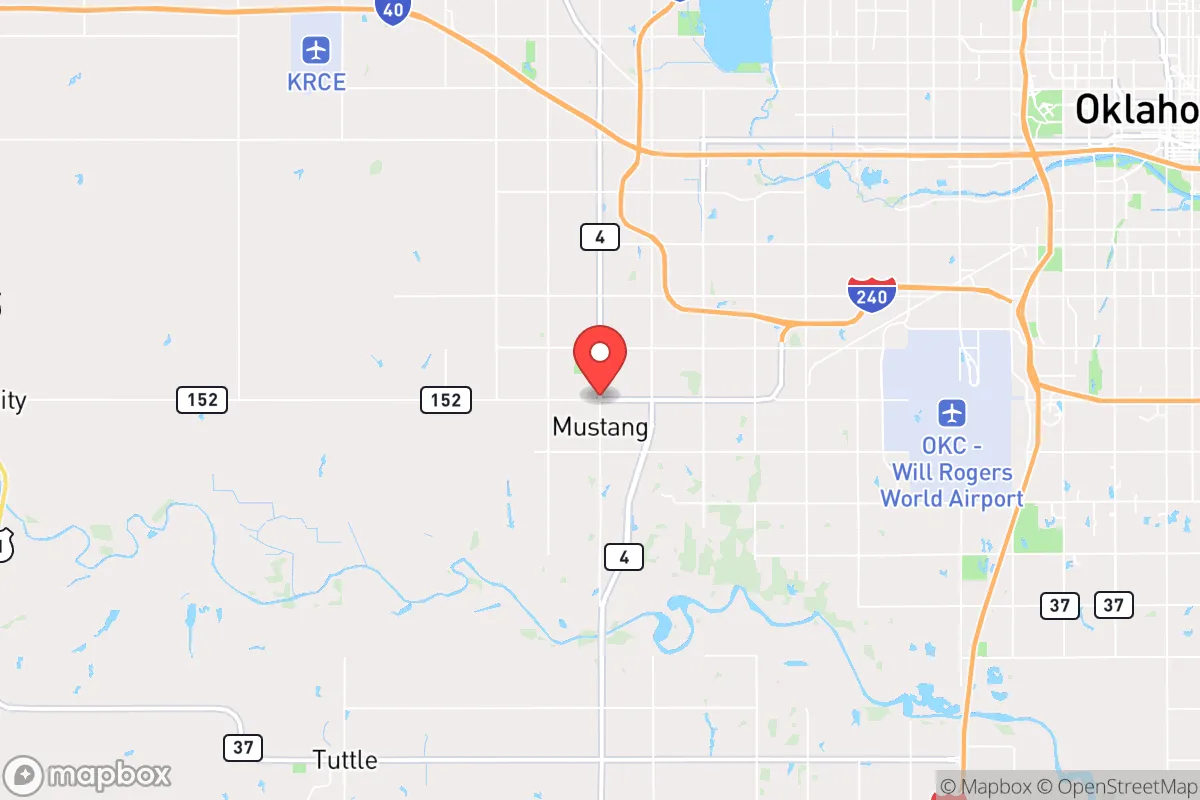
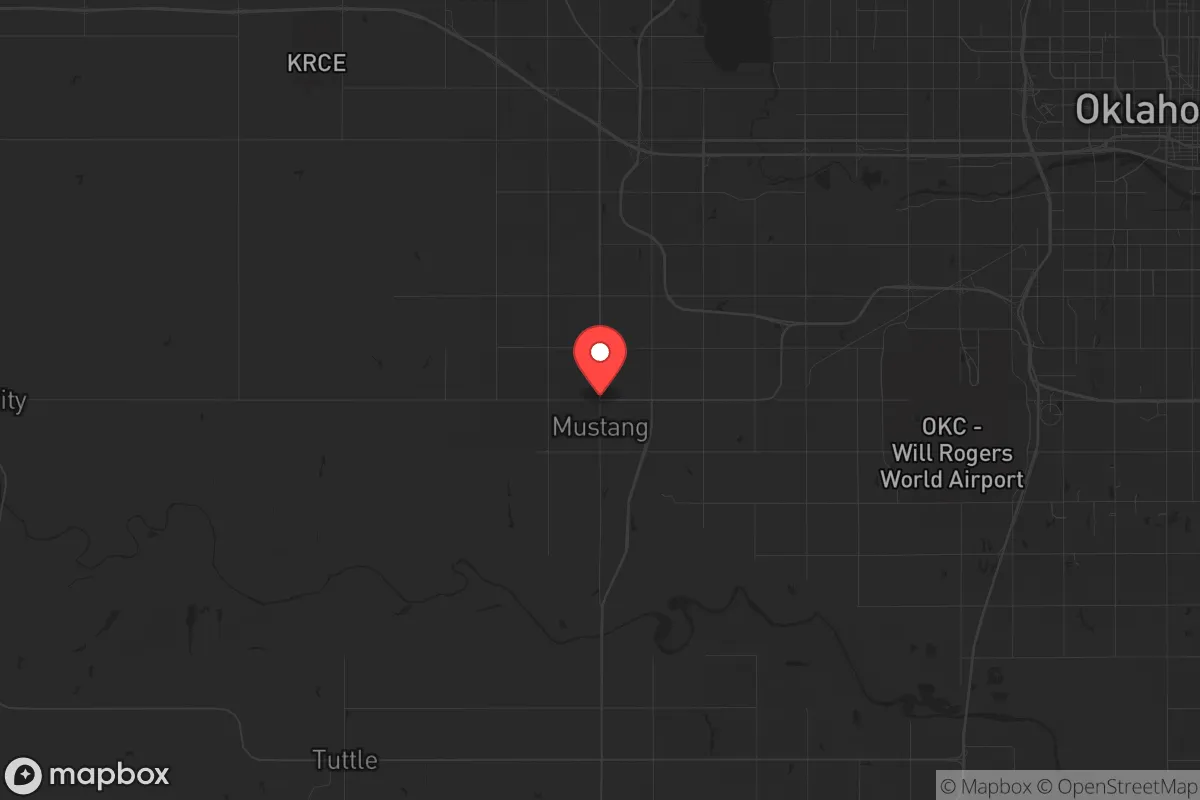
Photo: Wikipedia
Political ClimatePolitical Climate in Mustang, OK
District shown is the primary district for this city’s centroid. Cities may span multiple districts.
Local Political AnalysisPolitical Analysis of Mustang, OK
Mustang, Oklahoma, sits squarely in deep-red territory, with a Cook PVI of R+23 that puts it among the most reliably conservative communities in the metro area. That’s not just a number on a map—it reflects a long-standing, lived-in culture where folks genuinely believe in limited government, personal responsibility, and the right to live your life without a bureaucrat looking over your shoulder. For decades, Mustang has been the kind of place where you know your neighbors, the schools reflect local values, and the city council isn’t trying to reinvent the wheel every election cycle. But like a lot of Oklahoma towns, there’s a quiet undercurrent of change, and it’s worth keeping an eye on where things are headed.
How it compares
Drive ten minutes east into Yukon, and you’ll find a similar conservative vibe, though Yukon has seen a bit more commercial growth and a slightly younger, more transient population that sometimes leans a hair less predictable on local issues. Head north to Oklahoma City proper, and the contrast is stark—you’re looking at a blue island in a red state, with city council votes that often push progressive policies on zoning, policing, and spending that would never fly in Mustang. South of town, toward Newcastle and Blanchard, the politics stay just as red, but with a stronger rural libertarian streak—folks there are even more skeptical of any government hand in their business. Mustang sits in a sweet spot: conservative enough to feel safe, but close enough to the city that you’re not completely cut off from amenities. The real worry for longtime residents isn’t a sudden flip to blue—it’s the slow creep of progressive ideas through school board elections or county-level appointments, where a few well-funded outsiders can shift the tone without most people noticing until it’s too late.
What this means for residents
For the average family in Mustang, the political climate translates directly into daily life. Property taxes stay low because the city and county aren’t chasing every new state or federal grant that comes with strings attached. School curriculum decisions are made locally, not dictated from D.C. or even Oklahoma City, which means parents still have a real say in what their kids are taught about history, civics, and personal responsibility. Second Amendment rights are respected without hassle—you won’t find the kind of permitting delays or storage mandates that pop up in more progressive suburbs. The downside? If you’re hoping for rapid infrastructure improvements or flashy new public amenities, don’t hold your breath. The same skepticism of government that keeps overreach in check also means the city moves slow on big projects. That’s a trade-off most residents here are happy to make: freedom over convenience, every time.
One cultural distinction worth noting: Mustang has a strong “live and let live” streak that sometimes surprises outsiders. It’s not the kind of place that polices your lawn signs or your church attendance. But that tolerance has limits—when outside groups try to push mandates, mask requirements, or diversity quotas onto local schools or businesses, the community pushes back hard. The long-term trajectory depends on whether the next wave of newcomers moving in from the city share those values or bring big-government habits with them. If the school board stays grounded and the city council keeps its hands off personal choices, Mustang will remain the kind of place where you can raise a family without feeling like you’re fighting City Hall every step of the way. If not, well—you’ll know it by the zoning changes and the new committees nobody asked for.

State Political ClimatePolitical Climate in Oklahoma
State Political AnalysisPolitical Environment in the State
Oklahoma has long been one of the most reliably conservative states in the nation, with a deep-rooted Republican lean that has only solidified over the past two decades. The state hasn’t voted for a Democratic presidential candidate since 1964, and in 2024, Donald Trump carried it by over 33 points. The dominant coalition is a blend of rural traditionalists, evangelical Christians, and energy-sector workers, with a growing suburban conservative base in places like Edmond and Broken Arrow. Over the last 10-20 years, the shift has been stark: Democrats once held statewide offices and controlled the legislature into the early 2000s, but today Republicans hold supermajorities in both chambers and every statewide elected position. This isn’t a purple state—it’s a deep red one that’s gotten redder.
Urban vs. rural divide
The political map of Oklahoma is a textbook study in the urban-rural split, but with a twist: even the biggest cities lean conservative. Oklahoma City and its sprawling suburbs—places like Edmond, Yukon, and Mustang—are reliably Republican, with the city itself voting slightly more moderate but still favoring GOP candidates in most races. Tulsa, the second-largest city, is similar, though its core has a small but vocal progressive pocket around the Pearl District and Kendall-Whittier. The real Democratic strongholds are limited to a few small areas: the eastern part of Oklahoma City’s urban core, parts of Tulsa’s north side, and the rural, historically Democratic “Little Dixie” region in the southeast—counties like Pushmataha and McCurtain, which have been trending red but still occasionally back moderate Democrats. The rest of the state—the vast western plains, the Panhandle, and the oil-rich north-central region around Enid and Ponca City—votes overwhelmingly Republican. The divide isn’t just about party; it’s about culture. Rural Oklahomans see the state as a bastion of self-reliance, while urbanites in OKC and Tulsa are more focused on economic diversification and quality-of-life issues. But even in the cities, the political temperature is far to the right of most other states’ metros.
Policy environment
Oklahoma’s policy environment is aggressively conservative, with a focus on low taxes, limited regulation, and cultural traditionalism. The state has a flat income tax rate of 4.75% (down from 5% in 2022), and there’s a push to eliminate it entirely—Governor Kevin Stitt has called for a path to zero income tax. Property taxes are among the lowest in the nation, thanks to a constitutional cap and exemptions for homeowners and seniors. Sales taxes are high, though, often exceeding 10% in cities like Tulsa and Oklahoma City when local levies are added. Education policy is a flashpoint: the state passed a universal school voucher program in 2024 (the Oklahoma Parental Choice Tax Credit Act), allowing families to use public funds for private or homeschool expenses. This was a major win for school choice advocates, but it’s also sparked tension with rural districts that fear losing funding. On healthcare, Oklahoma expanded Medicaid in 2021 via a ballot initiative, a rare progressive victory that passed with 50.5% of the vote. But the state has also restricted abortion to near-total bans, with no exceptions for rape or incest, and has passed laws limiting gender-affirming care for minors. Election laws are strict: voter ID is required, and the state has purged inactive voters regularly. Overall, the policy environment rewards personal responsibility and local control, but critics argue it leaves gaps in public services.
Trajectory & freedom
Oklahoma is on a trajectory of expanding personal freedom in several key areas, particularly around gun rights, parental rights, and economic liberty. The state is a constitutional carry jurisdiction—no permit needed to carry a concealed firearm—and in 2024, it passed a law prohibiting state enforcement of any future federal gun bans (the Second Amendment Preservation Act). Parental rights have been strengthened: the “Parents’ Bill of Rights” (HB 1440, 2022) gives parents explicit authority over their children’s education and medical decisions, including the right to opt out of any curriculum or activity. On medical autonomy, the state has banned COVID-19 vaccine mandates for state employees and contractors, and it prohibits mask mandates in schools. However, there are concerning trends. The state’s medical marijuana program, once one of the most liberal in the country, has been tightened with stricter licensing and advertising rules. And while property rights are generally strong, the state’s use of eminent domain for pipeline projects has sparked backlash from landowners. The biggest freedom concern is the growing influence of state government in local affairs: the legislature has preempted local ordinances on everything from plastic bag bans to minimum wage increases, limiting city-level autonomy. For a conservative moving here, the trajectory is mostly positive—more school choice, more gun freedom, lower taxes—but the trend toward centralized state power is worth watching.
Civil unrest & political movements
Oklahoma has seen relatively little civil unrest compared to coastal states, but there have been notable flashpoints. The 2020 Black Lives Matter protests in Oklahoma City and Tulsa were largely peaceful, though a few incidents of property damage occurred near the Bricktown entertainment district. The state’s response was swift: the legislature passed a law in 2021 increasing penalties for rioting and blocking highways during protests. On the right, the “Oklahoma Freedom Caucus” has become a powerful force in the legislature, pushing for hardline stances on immigration, election integrity, and critical race theory. Immigration politics are heated, particularly in the Panhandle and southwestern towns like Altus and Lawton, where agricultural and meatpacking industries rely on immigrant labor. The state passed a law in 2024 requiring local law enforcement to cooperate with federal immigration authorities, and there’s been talk of a “sanctuary city” ban. Election integrity remains a hot-button issue: the state has implemented strict voter ID laws and limited mail-in voting, but there’s no evidence of widespread fraud. The most visible political movement is the “Take Back Oklahoma” campaign, a grassroots effort to push the state further right by targeting moderate Republicans in primaries. For a new resident, the political climate is stable but intense—you’ll see yard signs, bumper stickers, and church bulletin announcements that make the state’s lean clear. There’s no real threat of civil unrest, but the culture war is alive and well, especially in school board meetings and county commission hearings.
Projection
Over the next 5-10 years, Oklahoma is likely to become even more conservative, driven by in-migration from blue states and natural demographic trends. The state is seeing a steady influx of people from California, Colorado, and Illinois, many of whom are fleeing high taxes and progressive policies. These newcomers tend to settle in the suburbs of Oklahoma City and Tulsa—places like Mustang, Owasso, and Bixby—and they’re often more conservative than the locals, pushing the political needle further right. The rural population is shrinking, but the rural vote is becoming more concentrated and more Republican. The biggest wildcard is the state’s growing Hispanic population, particularly in the southwest and Panhandle. This demographic is currently split between conservative Catholic values and Democratic-leaning economic concerns, but if the GOP continues to court them on cultural issues, they could solidify the state’s red status for decades. On policy, expect continued tax cuts, further expansion of school choice, and more preemption of local ordinances. The biggest risk is a potential backlash if the state’s budget is squeezed by income tax elimination or if the voucher program drains rural schools. But for now, the trajectory is clear: Oklahoma is doubling down on its conservative identity. Someone moving in now should expect to find a state that’s even more aligned with traditional values in a decade, with a government that’s more focused on individual liberty than public services.
For a new resident, the bottom line is this: Oklahoma offers a high degree of personal freedom—especially around guns, school choice, and low taxes—but it’s not a libertarian paradise. The state government is active in enforcing cultural norms, and local autonomy is limited. If you value a community that shares your conservative values, with a government that mostly stays out of your way, Oklahoma is a solid bet. Just be prepared for the trade-offs: lower public services, a hot political climate, and a state that’s unapologetically red. It’s a place where your vote counts, your voice is heard, and your way of life is respected—as long as you’re on the same page as the majority.
* Values derived from national, state, county, city and local statistics and may differ in a specific area. Last updated: 2026-04-25T13:51:55.000Z
Narrative content on this page is AI-generated and may contain mistakes. Verify any details that matter before acting on them.
ReloMaps may earn a commission from affiliate links at no extra cost to you.

