Photo: Wikipedia
Demographics of Muskogee, OK
Affluence Level in Muskogee, OK
A below-average socioeconomic profile. Incomes, home values, and educational attainment trail the U.S., with higher poverty and unemployment.
People of Muskogee, OK
The people of Muskogee, Oklahoma today number 36,819, forming a community that is majority-minority with a distinctive blend of Native American, Black, and white residents. The city’s population is 49.2% white, 14.6% Black, 8.7% Hispanic, and 0.7% East/Southeast Asian, with a foreign-born share of just 1.7% — well below the national average. Only 18.2% of adults hold a college degree, reflecting a working-class character rooted in manufacturing, healthcare, and regional government. Muskogee’s identity is shaped by its role as a historic gateway to Indian Territory and its present-day status as a slow-growing, affordable hub in eastern Oklahoma.
How the city was settled and grew
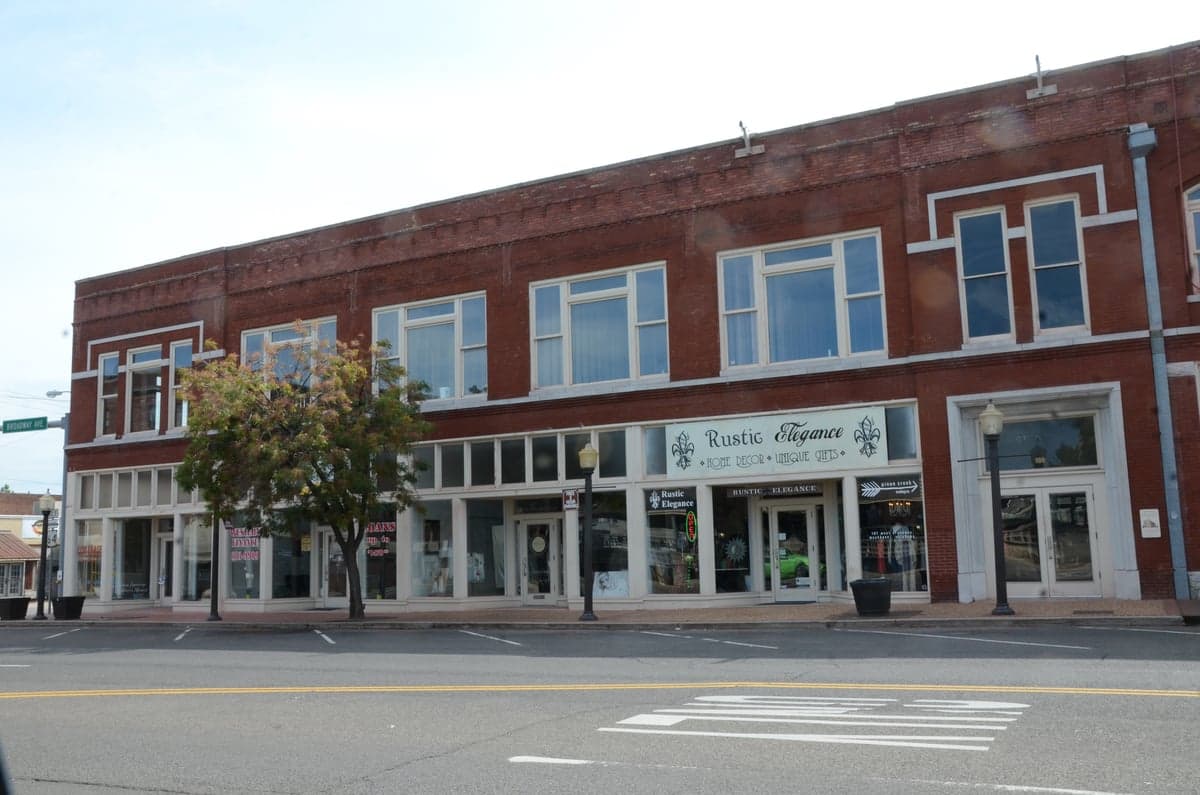
Muskogee was founded in 1872 as a depot on the Missouri-Kansas-Texas Railroad, built on land that had been part of the Creek Nation. The original settlers were a mix of railroad workers, merchants, and Creek citizens who had been forcibly relocated from the Southeast decades earlier. The city quickly became a commercial center for Indian Territory, drawing white traders and attorneys who set up shop in the downtown commercial district around Main Street and Broadway. By the early 1900s, the discovery of oil and gas in the region triggered a boom that brought a wave of white and Black workers. Black families settled primarily in the West Side neighborhood, near the railroad tracks and industrial zones, building churches, schools, and a business corridor along Second Street. The North Side, closer to the Arkansas River, became home to many working-class white families employed in the oil fields and the nearby Fort Gibson munitions plant during World War II. The South Side, including the Highland Park subdivision, attracted middle-class white professionals and merchants who built Craftsman and Tudor-style homes in the 1920s and 1930s. By 1950, Muskogee’s population had reached 37,000, a peak it would not surpass for decades.
Modern era (post-1965)
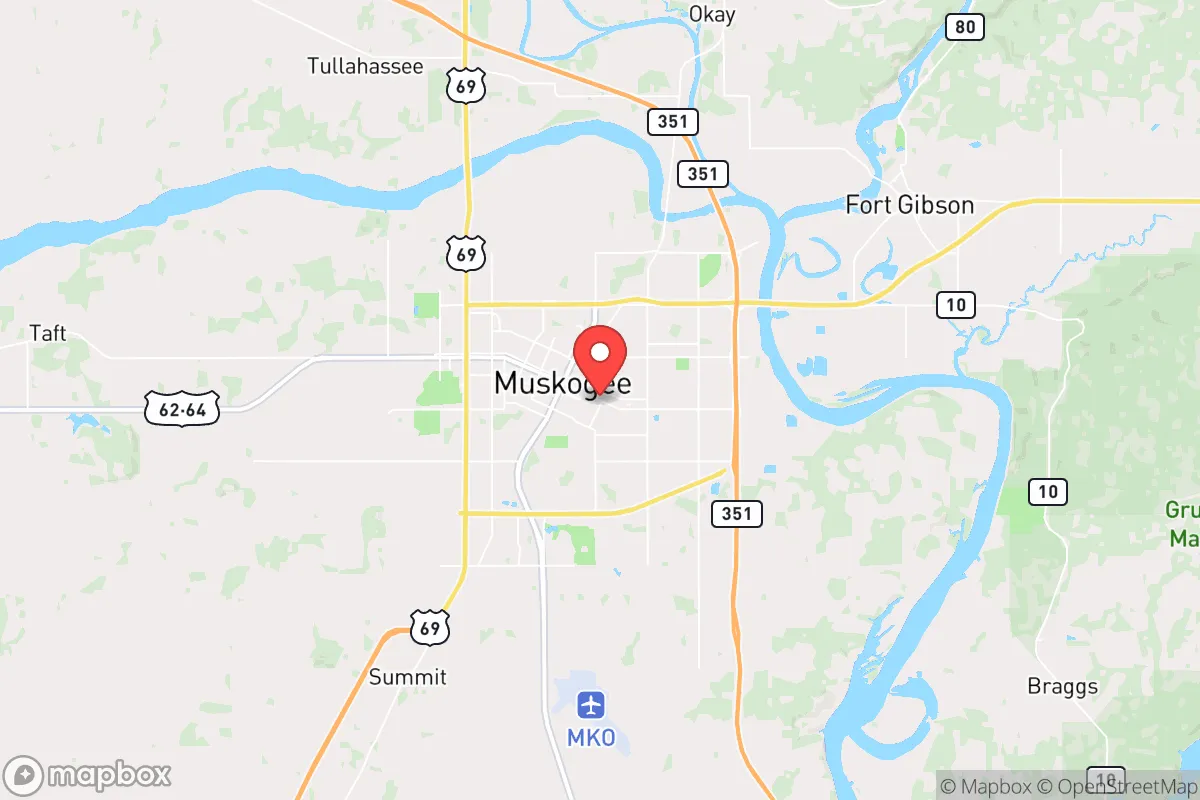
After the 1965 Hart-Cellar Act, Muskogee saw only a trickle of new immigration — the foreign-born share remains at 1.7% — but domestic migration reshaped the city’s racial geography. The white population, which had been a solid majority through the 1960s, began a slow decline as younger families moved to Tulsa or Dallas for professional jobs. Meanwhile, Black families from rural eastern Oklahoma and Arkansas moved into the West Side and Northwest Muskogee, expanding those historically Black neighborhoods. The Hispanic population, though small at 8.7%, grew steadily after 1990, with most families settling in the Southwest quadrant near the industrial parks and the Muskogee Regional Medical Center. East/Southeast Asian residents, numbering only about 260 people, are scattered across the city but have a small concentration near the Oklahoma School for the Blind and the Bacone College campus. The Native American population — not counted as a separate racial category in the supplied data but a significant cultural presence — is concentrated in the East Side near the Creek Nation tribal headquarters and the Honor Heights Park area. Suburbanization has been minimal; Muskogee’s population has hovered between 36,000 and 39,000 since 1970, with most growth occurring in unincorporated areas like Fort Gibson and Braggs rather than within city limits.
The future
Muskogee’s population is aging and slowly shrinking, with a median age of 38.5 and a birth rate that barely replaces deaths. The white share is projected to continue declining, while the Hispanic and Native American shares will grow modestly through natural increase. The Black population is stable, with little new in-migration from outside the region. The city is not tribalizing into distinct enclaves — neighborhoods remain relatively mixed by class and race — but the West Side and Northwest Muskogee are becoming more uniformly Black and low-income, while the South Side and Highland Park remain predominantly white and middle-class. The immigrant communities are too small to form distinct ethnic enclaves; the few Hispanic and East/Southeast Asian families are dispersed. Over the next 10–20 years, Muskogee will likely remain a stable, low-growth city with a working-class character, a growing Native American institutional presence, and a slow demographic shift toward a non-white majority.
For someone moving in now, Muskogee offers an affordable, slow-paced environment with a strong sense of local history and a population that is neither rapidly diversifying nor homogenizing. The city is becoming more Native American in its civic identity, more Hispanic in its working-class neighborhoods, and more economically stratified along the old West Side–South Side divide. It is a place where the past — railroad, oil, and Indian Territory — still shapes who lives where and why.

* Values derived from national, state, county, city and local statistics and may differ in a specific area. Last updated: 2026-04-25T13:50:03.000Z
Narrative content on this page is AI-generated and may contain mistakes. Verify any details that matter before acting on them.
ReloMaps may earn a commission from affiliate links at no extra cost to you.

