 Popular
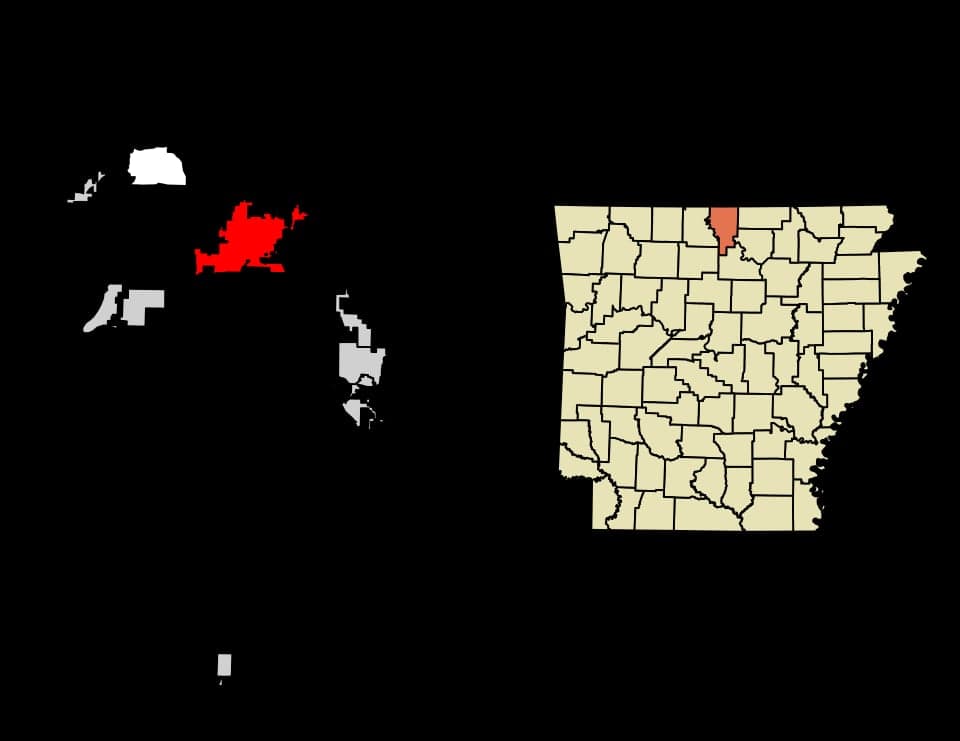
Photo: Wikipedia
Personal Sovereignty in Mountain Home, AR
Viable for self-reliance. Generally workable, though some barriers may limit total independence.
What does Personal Sovereignty tell us?
Personal Sovereignty measures your capacity for self-reliance and independence with minimal government friction. Higher scores mean fewer barriers between you and the way you want to live... but it assumes you have the space you need and good neighbors.
What does this tell us?
Personal Sovereignty measures your capacity for self-reliance and independence with minimal government friction. Higher scores mean fewer barriers between you and the way you want to live... but it assumes you have the space you need and good neighbors.
State Policy
Energy independence: Importer (35% of energy produced in-state)
Personal Liberty
Homesteading

Personal Liberty Analysis
Mountain Home, Arkansas, offers a notably high degree of personal sovereignty compared to much of the United States, functioning as a practical stronghold for those prioritizing autonomy over convenience. In a state that consistently ranks among the most individual-rights-oriented in the nation, this north-central Ozarks town provides a legal and cultural environment where government overreach is met with skepticism and self-reliance is the default expectation. For the single individual or parent who views the erosion of personal freedoms as a pressing national concern, Mountain Home represents a place where the balance of power still tilts meaningfully toward the citizen, not the state.
Tax burden and regulatory posture: how Arkansas compares to high-tax states
Arkansas’s tax structure is a primary pillar of its sovereignty appeal. The state’s individual income tax rate was cut to a flat 4.4% in 2025, down from a progressive top rate of nearly 7% just a few years prior, with further reductions scheduled. Property taxes in Baxter County are among the lowest in the state, typically averaging around 0.5% of assessed value—a fraction of what homeowners pay in states like Illinois, New York, or California. There is no state-level estate or inheritance tax, meaning wealth transfers to the next generation remain untouched by the state treasury. On the regulatory side, Arkansas operates under a “right-to-work” framework, and occupational licensing requirements are less burdensome than in coastal states. The state’s regulatory climate for small businesses and trades is permissive; starting a handyman service, home-based manufacturing, or small farm operation involves minimal bureaucratic friction. For the prepper or survivalist, this means less of your income is confiscated before you can invest it in land, supplies, and infrastructure, and fewer state agencies have the authority to dictate how you use your property.
Self-defense and gun law specifics: constitutional carry and castle doctrine
Arkansas is a constitutional carry state, meaning no permit is required to carry a concealed firearm for any law-abiding adult 18 or older. This went into full effect in 2021, and Mountain Home’s local culture fully embraces it—you will see open carry in rural areas and concealed carry is the norm in town. The state’s castle doctrine is unambiguous: there is no duty to retreat in your home, vehicle, or place of business, and the use of deadly force is presumed justified if an intruder has unlawfully entered. Stand-your-ground protections extend to any place where you are lawfully present. For parents, this means the legal framework supports defending your family without fear of prosecution for exercising that right. Local law enforcement in Baxter County is generally supportive of the Second Amendment; there are no local ordinances that restrict magazine capacity, firearm types, or ammunition sales. The nearest major city with restrictive gun policies is over 150 miles away. For the survivalist, this is not merely a convenience—it is a foundational layer of personal sovereignty that many states have already eroded.
Self-reliance and homesteading viability: lot sizes, zoning, and off-grid feasibility
Mountain Home’s rural character makes self-reliant living genuinely achievable. Outside the city limits, zoning is minimal to nonexistent in unincorporated Baxter County. You can purchase raw land in 5- to 40-acre parcels for $3,000 to $8,000 per acre, depending on proximity to water and road access. There are no county-level restrictions on keeping livestock, building a root cellar, or constructing a workshop or barn. Off-grid feasibility is high: the area receives adequate rainfall (about 45 inches annually) for rainwater catchment, and many properties have existing wells or easy access to groundwater. Solar panels are common, and the local utility, North Arkansas Electric Cooperative, offers net metering for grid-tied systems. Septic systems are the norm, and the county health department’s permitting process is straightforward. For the prepper, this means you can establish a property that is functionally independent of municipal utilities and supply chains. The local culture of self-sufficiency means neighbors are more likely to help you dig a well than to report you for having a generator or a food storage room. The only notable constraint is that the Ozarks terrain is rocky and hilly, so building sites require careful selection, but this also provides natural defensibility and privacy.
Personal liberties: parental rights, medical autonomy, speech, and property
Arkansas has been at the forefront of protecting parental rights in education and healthcare. The state’s LEARNS Act, passed in 2023, guarantees parental access to all instructional materials and prohibits school policies that withhold information from parents about a child’s physical or mental health. Medical autonomy is similarly robust: there are no state-level vaccine mandates for adults or children, and the state has passed laws prohibiting discrimination against those who decline vaccination. During the COVID-19 era, Arkansas was one of the few states that pushed back against federal mandates, and that posture remains in state law. Free speech protections are strong; there are no hate speech laws that criminalize political or religious expression, and the state has passed legislation to protect citizens from being deplatformed by social media companies for their views. Property rights are protected by a strong eminent domain statute that limits government seizure for private development. For the parent concerned about government overreach into family decisions, Mountain Home offers a legal environment where the state largely stays out of your home and your children’s upbringing. The local school district, Mountain Home Public Schools, is responsive to parental input, and the broader community is heavily church-oriented, reinforcing traditional family structures.
In the broader context of American personal sovereignty, Mountain Home stands as a outlier in the best sense. Compared to the Pacific Northwest, the Northeast, or the Front Range of Colorado—where property taxes, gun restrictions, and regulatory burdens have escalated dramatically—this corner of Arkansas offers a legal and cultural foundation that still respects the individual’s right to live, defend, and provide for themselves without constant state interference. For the strategic relocator who sees the national trajectory as concerning, Mountain Home is not a compromise; it is a deliberate choice to live under a government that remembers its proper limits.

* Values derived from national, state, county, city and local statistics and may differ in a specific area. Last updated: 2026-04-23T02:11:34.000Z
Narrative content on this page is AI-generated and may contain mistakes. Verify any details that matter before acting on them.
ReloMaps may earn a commission from affiliate links at no extra cost to you.

