 Popular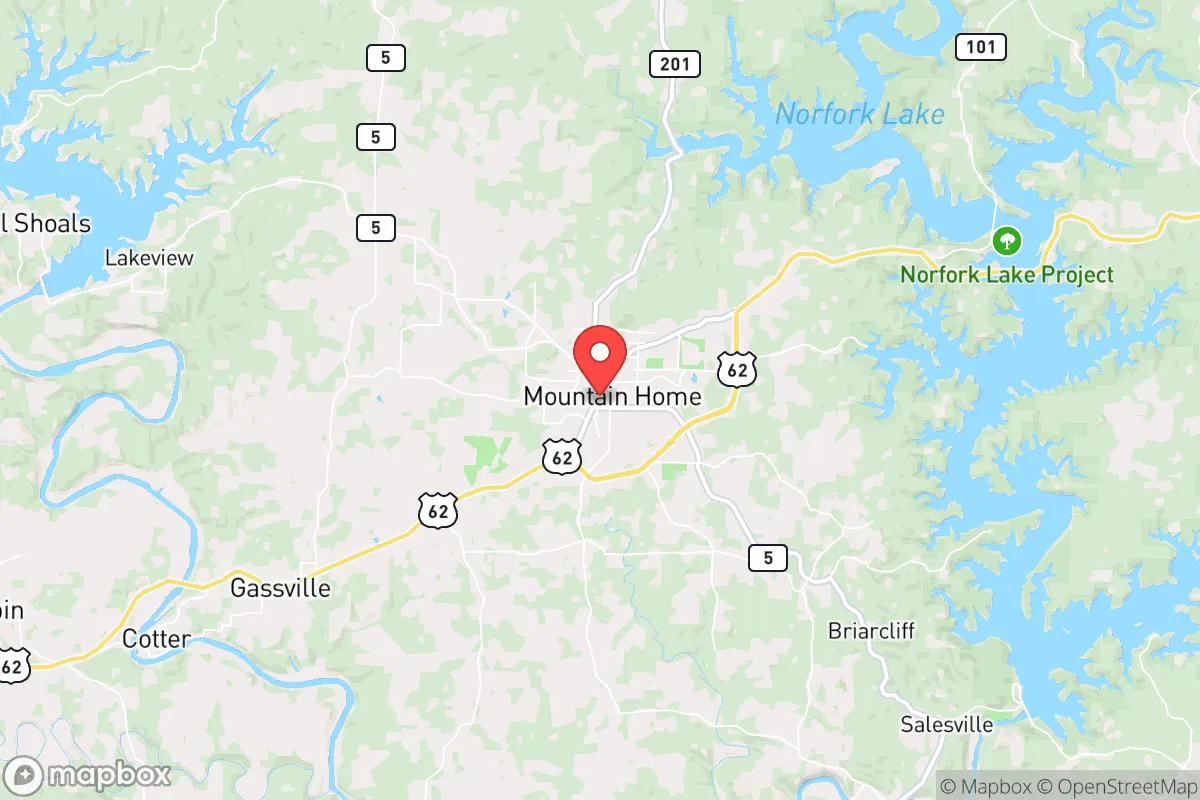
Photo: Wikipedia
Demographics of Mountain Home, AR
Affluence Level in Mountain Home, AR
A low-income area with significant economic hardship. Household wealth and educational attainment are well below national averages.
People of Mountain Home, AR
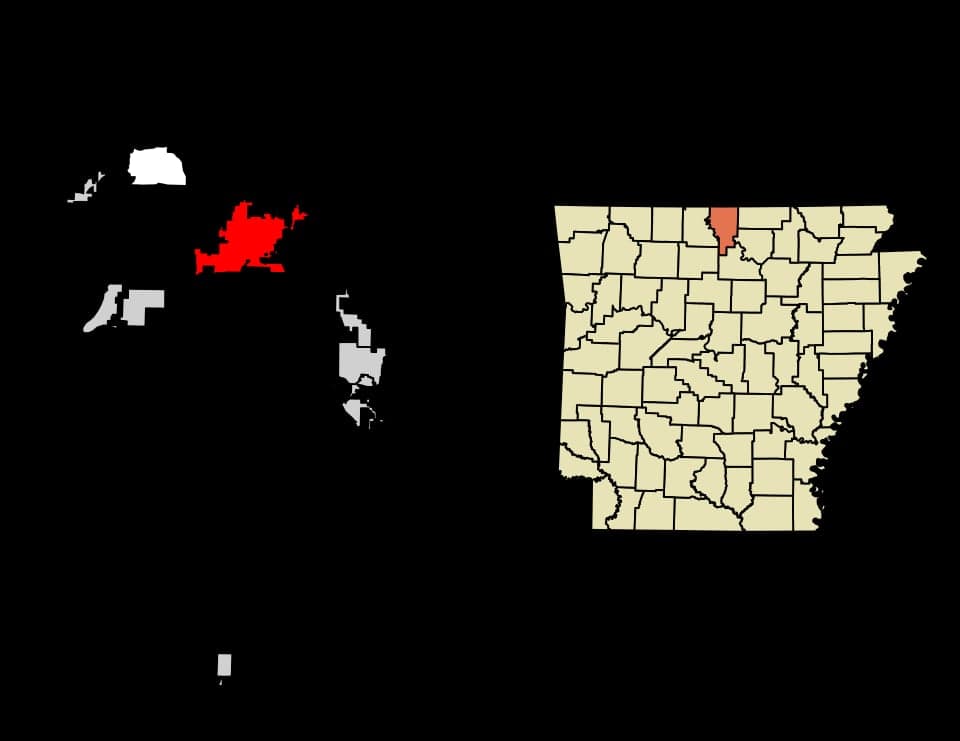
Mountain Home, Arkansas, is a predominantly white, older, and culturally conservative community of 13,021 residents, with a population that is 91.5% white and a foreign-born share of just 0.7%. The city’s identity is shaped by its role as a regional retirement and healthcare hub for the Ozarks, attracting domestic in-migrants from the Midwest and South rather than international arrivals. With a median age well above the national average and only 20.0% of adults holding a college degree, the population is characterized by a blue-collar and service-oriented workforce, a strong sense of local independence, and a demographic profile that has changed little in racial terms over the past half-century.
How the city was settled and grew
Mountain Home was founded in the 1850s as a trading post for farmers and timber workers in the rugged Ozark hills. The original settlers were overwhelmingly white Anglo-American families from Tennessee, Kentucky, and Missouri, drawn by cheap land under the Homestead Act and the region’s isolation from the plantation economy. The city’s early growth was slow; by 1900, the population was barely 500, and the town remained a rural service center for the surrounding hardwood timber and cattle industries. The arrival of the Missouri Pacific Railroad in the early 1900s spurred modest expansion, with the East Side neighborhood developing around the depot as a working-class area for railroad laborers and sawmill hands. The West Main Street corridor became the commercial and civic spine, housing the county courthouse and the first banks. The city’s population remained almost entirely white and native-born through the 1950s, with no significant immigrant or minority settlement during this period.
Modern era (post-1965)
After the 1965 Immigration and Nationality Act, Mountain Home saw virtually no international immigration. The foreign-born population today is 0.7%, and the city’s Hispanic share is just 3.2%, with Black residents at 0.5% and East/Southeast Asian communities at 0.4%. The modern demographic story is one of domestic in-migration, not ethnic diversification. Beginning in the 1970s, the construction of Bull Shoals Lake and Norfolk Lake to the north and east turned Mountain Home into a retirement and recreation destination. Retirees from Chicago, St. Louis, and other Midwestern industrial cities moved in, drawn by lower taxes, a slower pace of life, and the area’s outdoor amenities. These newcomers settled primarily in the Lakeview Heights and Briarcliff subdivisions, which feature newer homes on larger lots near the lakes. The Cooper Homes area, a post-war housing development, absorbed many of the younger families and service workers who staffed the growing healthcare and retail sectors. The Downtown Historic District remained the commercial heart but saw a gradual shift from general stores to antique shops and medical offices. The city’s racial composition has remained static: the white share has stayed above 90% since 1970, and the small Hispanic population is concentrated in the South Hill neighborhood, where seasonal agricultural and construction work draws a few dozen families. No significant Asian, Indian, or Arab communities exist in the city.
The future
Mountain Home’s population is projected to grow slowly, if at all, over the next 10–20 years, driven primarily by continued domestic retirement migration and natural decrease (deaths exceeding births). The city is not homogenizing or tribalizing into distinct ethnic enclaves because it has never been ethnically diverse; instead, it is likely to become slightly older and more economically stratified. The small Hispanic population may grow modestly as service-sector jobs in healthcare and hospitality expand, but the foreign-born share is unlikely to exceed 2% given the lack of industrial or agricultural demand for immigrant labor. The East Side and South Hill neighborhoods may see modest infill development, while Lakeview Heights and Briarcliff will continue to attract affluent retirees. The city’s college attainment rate (20.0%) is well below the national average, suggesting that younger, educated residents will continue to leave for larger metro areas, reinforcing the area’s older, blue-collar character.
For a conservative-leaning mover, Mountain Home represents a stable, culturally homogeneous community with little demographic churn. The population is overwhelmingly white, native-born, and politically conservative, with a strong local identity rooted in Ozark self-reliance and outdoor recreation. The city is not becoming more diverse or cosmopolitan; it is aging in place, with growth limited to retirement migration and a small service-sector workforce. New residents should expect a quiet, low-density environment where change is slow and the population’s character is unlikely to shift significantly in the coming decades.

* Values derived from national, state, county, city and local statistics and may differ in a specific area. Last updated: 2026-04-23T02:11:34.000Z
Narrative content on this page is AI-generated and may contain mistakes. Verify any details that matter before acting on them.
ReloMaps may earn a commission from affiliate links at no extra cost to you.

