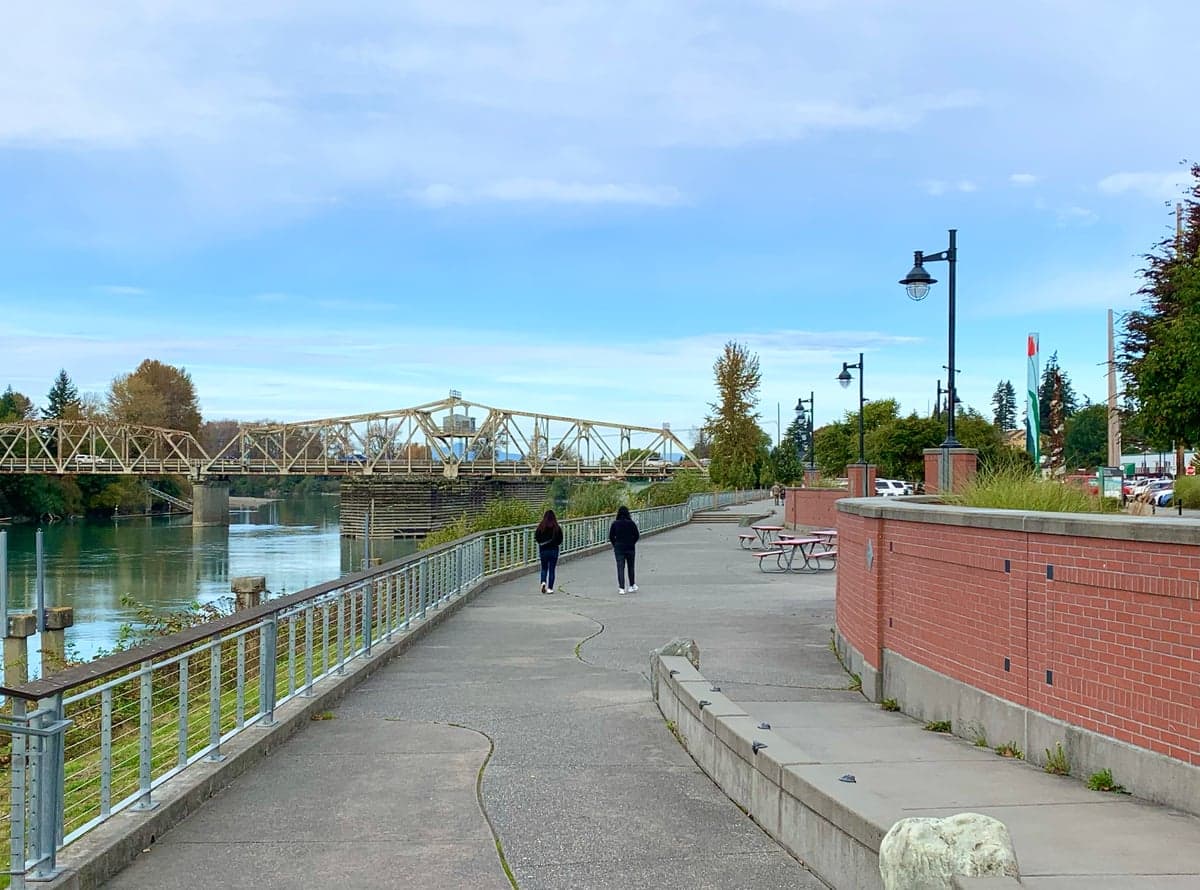
Photo: Wikipedia
Political ClimatePolitical Climate in Mount Vernon, WA
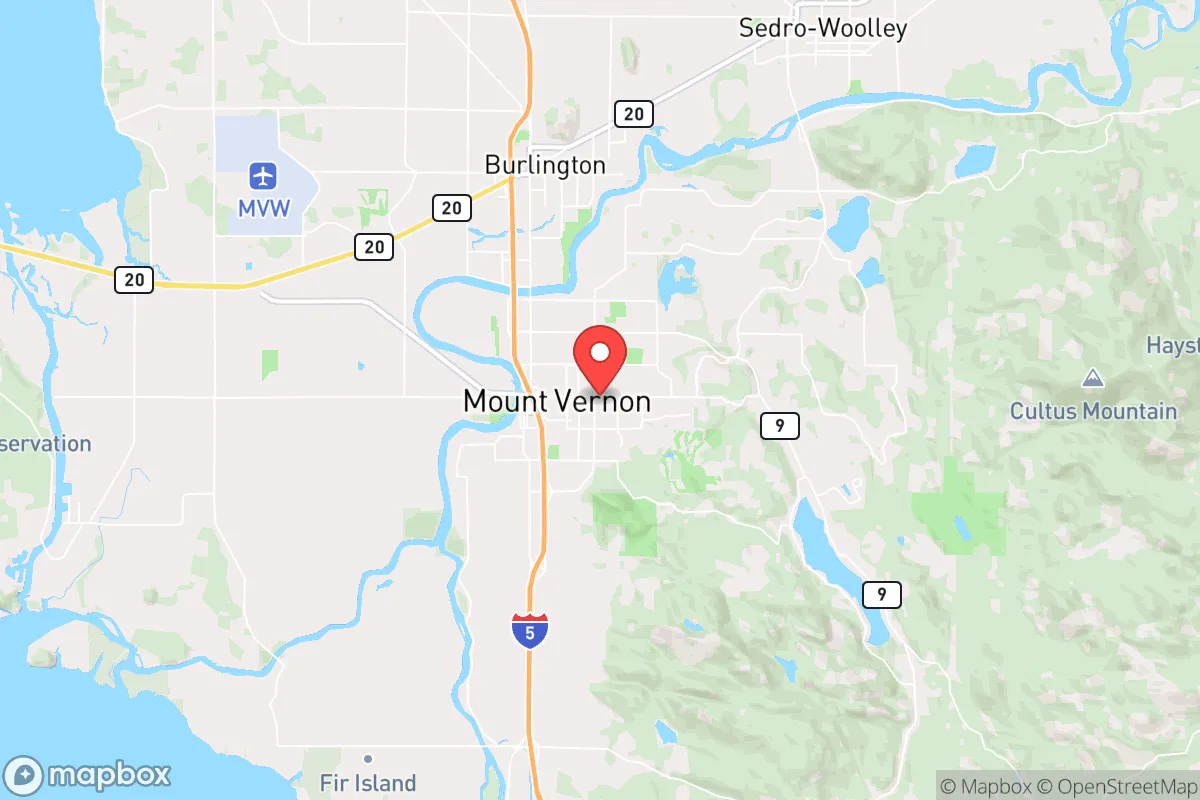
District shown is the primary district for this city’s centroid. Cities may span multiple districts.
Local Political AnalysisPolitical Analysis of Mount Vernon, WA
Mount Vernon, Washington, has a political climate that leans heavily to the left, with a Cook PVI of D+12, meaning it votes about 12 points more Democratic than the national average. This wasn’t always the case—I remember when this valley was a mix of conservative farmers, small business owners, and union workers who kept things balanced. Over the last decade or so, the influx from Seattle and King County has shifted the local government and school boards toward progressive policies that many of us see as government overreach into personal freedoms. The trajectory is concerning, with each election cycle bringing tighter regulations on property rights, business operations, and even how we can use our own land.
How it compares
If you drive just 15 minutes east to Sedro-Woolley or 20 minutes north to Burlington, you’ll find a much different political vibe. Those towns still have a strong independent streak, with local leaders who push back on state mandates and focus on practical, community-driven solutions. Mount Vernon, by contrast, has embraced the “Skagit Valley progressive” label, with city council members who prioritize bike lanes over road repairs and density over single-family neighborhoods. The contrast is stark when you look at school board meetings here versus in Concrete or La Conner—here, you’ll hear more talk about equity initiatives and critical race theory than about reading scores or vocational training. It’s a cultural divide that’s grown wider since 2020, and it’s pushing longtime residents to consider moving to places like Stanwood or even across the county line into Snohomish County.
What this means for residents
For folks who value personal freedoms—like choosing whether to vaccinate, how to run a small business, or what to teach their kids—Mount Vernon is becoming a tougher place to live. The city has adopted strict land-use codes that make it harder to build a shop on your property or run a home-based business without jumping through hoops. There’s also a growing push for “sanctuary city” policies that limit local law enforcement’s ability to cooperate with federal immigration authorities, which raises safety concerns for many of us. Property taxes have climbed steadily to fund new social programs, and the school district has shifted focus toward social-emotional learning at the expense of core academics. If you’re a gun owner, you’ll find the local climate increasingly hostile, with city parks and public buildings adopting “gun-free zone” signage that does little to deter criminals but restricts law-abiding citizens.
One cultural distinction that stands out is the annual Skagit Valley Tulip Festival—it’s a beautiful event, but it’s also become a flashpoint for debates over agricultural land use versus tourism development. The city’s leadership seems more interested in courting tourists and new residents from out of state than preserving the working farms and rural character that made this valley special. In the long term, I see Mount Vernon continuing down this path unless there’s a serious grassroots push to elect local officials who respect property rights, fiscal responsibility, and individual liberty. For now, it’s a place where you have to pick your battles carefully, and where many of us are keeping one eye on the exit sign.

State Political ClimatePolitical Climate in Washington
State Political AnalysisPolitical Environment in the State
Washington State has shifted from a purple swing state to a solidly blue stronghold over the past two decades, driven by explosive growth in the Seattle metro area and a shrinking rural electorate. The Democratic Party now holds every statewide office and both U.S. Senate seats, and the state legislature has been under unified Democratic control since 2017. While the state voted for the Democratic presidential candidate by margins of 19 points in 2020 and roughly 18 points in 2024, this number masks a deeply fractured political landscape where the urban core of King County alone delivers enough votes to outweigh the rest of the state combined. For a conservative considering relocation, the key takeaway is that Washington is a one-party state at the state level, but local control varies dramatically depending on where you land.
Urban vs. rural divide
The political map of Washington is a tale of two worlds. King County, home to Seattle, Bellevue, and Redmond, casts about 30% of the state’s total vote and delivers margins of 70-80% for Democrats. This single county has effectively decided every statewide election since the early 2000s. The I-5 corridor stretching from Seattle through Tacoma and Olympia is reliably blue, with Pierce and Thurston counties trending that direction as well. Meanwhile, Eastern Washington — cities like Spokane, Spokane Valley, and the Tri-Cities (Kennewick, Pasco, Richland) — votes reliably Republican, though Spokane County itself has been slowly drifting left as California transplants fill new subdivisions. The truly red strongholds are the rural counties: Ferry, Stevens, Pend Oreille, Lincoln, Adams, and Garfield routinely vote 70-80% Republican. What’s notable is that even some historically purple suburban counties have flipped. Snohomish County, north of Seattle, was a swing county as recently as 2004 but now votes Democratic by double digits. Clark County, across the river from Portland, was reliably red until 2016 and is now a toss-up trending blue, driven by Portland exurbs and new arrivals from California and Oregon.
Policy environment
Washington’s policy environment is aggressively progressive, and the trend has accelerated since 2020. The state has no income tax, which sounds great, but it’s replaced by some of the highest sales taxes in the nation — the state rate is 6.5%, but local add-ons push it to 10% or more in Seattle and Tacoma. Property taxes are moderate but rising fast, especially in growing counties. The regulatory climate is hostile to traditional industries: the state has a cap-and-trade carbon market (the Climate Commitment Act) that drives up gas and energy prices, and a long-term care payroll tax (the WA Cares Fund) that took effect in 2023, taking 0.58% of every paycheck with no opt-out for most workers. Education policy is dominated by teachers unions, and the state has a universal mask mandate history and strong vaccine requirements for school attendance. Election laws are among the most liberal in the country: universal mail-in voting, same-day registration, and no voter ID requirement. Ballot harvesting is legal, and ballot drop boxes are ubiquitous. For a conservative, the policy environment feels like a one-way ratchet toward higher taxes, more regulation, and less local control.
Trajectory & freedom
Washington is becoming less free by nearly every measure of personal liberty, especially for those who value gun rights, parental rights, and economic freedom. The state passed a ban on high-capacity magazines in 2022, followed by a ban on the sale of many semi-automatic rifles (HB 1240) in 2023, and a requirement for a 10-day waiting period and safety training for all firearm purchases. In 2024, the legislature passed a law allowing the state to sue gun manufacturers for "public nuisance." On parental rights, the state has some of the strongest LGBTQ+ nondiscrimination laws in the country, and school districts in King and Snohomish counties have adopted policies that allow students to change their name and pronouns without parental notification. Medical freedom took a hit with the state’s strict COVID-19 vaccine mandates for healthcare workers and state employees, which remain in effect for some roles. Property rights are constrained by the Growth Management Act, which limits development in rural areas and drives up housing costs. The only bright spot for freedom advocates is the lack of an income tax, but there are active efforts to pass a capital gains tax (already enacted in 2021 and upheld by the state Supreme Court) and a wealth tax is being discussed. The trajectory is clearly toward more government control, not less.
Civil unrest & political movements
Washington has been a flashpoint for civil unrest, particularly in Seattle. The 2020 CHOP/CHAZ occupation in Seattle’s Capitol Hill neighborhood lasted nearly a month and involved the abandonment of a police precinct, leading to a spike in shootings and property crime. Since then, the city has seen ongoing debates over police funding, with the city council cutting the police budget by 14% in 2020 before partially restoring it. Organized activist movements are strong on both sides: the left has the Seattle Democratic Socialists of America and groups like Puget Sound Sage, while the right has the Washington State Republican Party and grassroots groups like the Washington Gun Rights Alliance. Immigration politics are a major fault line — Washington is a sanctuary state, and King County has policies that limit cooperation with ICE. There have been periodic secessionist murmurs from Eastern Washington, with proposals to create a "Liberty State" or "Cascadia," but these have never gained serious traction. Election integrity is a hot-button issue: the 2020 and 2022 elections saw Republican candidates in close races refuse to concede, and there have been ongoing lawsuits over ballot signature verification and drop box security. A new resident will notice the political tension most acutely in the suburbs — places like Issaquah, Sammamish, and Bothell, where school board meetings have become battlegrounds over curriculum and parental rights.
Projection
Over the next 5-10 years, Washington will likely become even more Democratic and more progressive. The state is growing by about 100,000 people per year, and the vast majority of new arrivals are coming from California, Oregon, and other blue states, drawn by tech jobs and the lack of an income tax. These new residents tend to be younger, more liberal, and more supportive of government intervention. The rural counties will continue to lose population and political influence, while the suburbs of Seattle, Tacoma, and Vancouver will become more diverse and more left-leaning. The state legislature is likely to pass a wealth tax or a progressive income tax within the decade, despite the political difficulty. Gun control will tighten further, with potential bans on possession of certain firearms and mandatory buybacks. Parental rights will continue to erode as the state pushes for more centralized control over education. The only wild card is a potential economic downturn — if the tech sector crashes, the state’s tax base could shrink, leading to budget crises that might slow the expansion of government. But for someone moving in now, expect to find a state where the political center of gravity is firmly on the left, and where conservative values are increasingly confined to the home and the local church.
Bottom line for a new resident: If you’re a conservative moving to Washington, choose your county carefully. The state government will be hostile to your values, but you can find like-minded communities in the rural east, the exurbs of Spokane Valley, or even in parts of Pierce and Clark counties if you stick to the unincorporated areas. You’ll pay high sales taxes and face ever-tightening gun laws, but you’ll also enjoy stunning natural beauty and a strong economy. Just don’t expect the political winds to shift anytime soon — this is a blue state that’s only getting bluer.
* Values derived from national, state, county, city and local statistics and may differ in a specific area. Last updated: 2026-04-21T11:08:52.000Z
Narrative content on this page is AI-generated and may contain mistakes. Verify any details that matter before acting on them.
ReloMaps may earn a commission from affiliate links at no extra cost to you.

