Photo: Wikipedia
Political ClimatePolitical Climate in Moscow, ID
District shown is the primary district for this city’s centroid. Cities may span multiple districts.
Local Political AnalysisPolitical Analysis of Moscow, ID
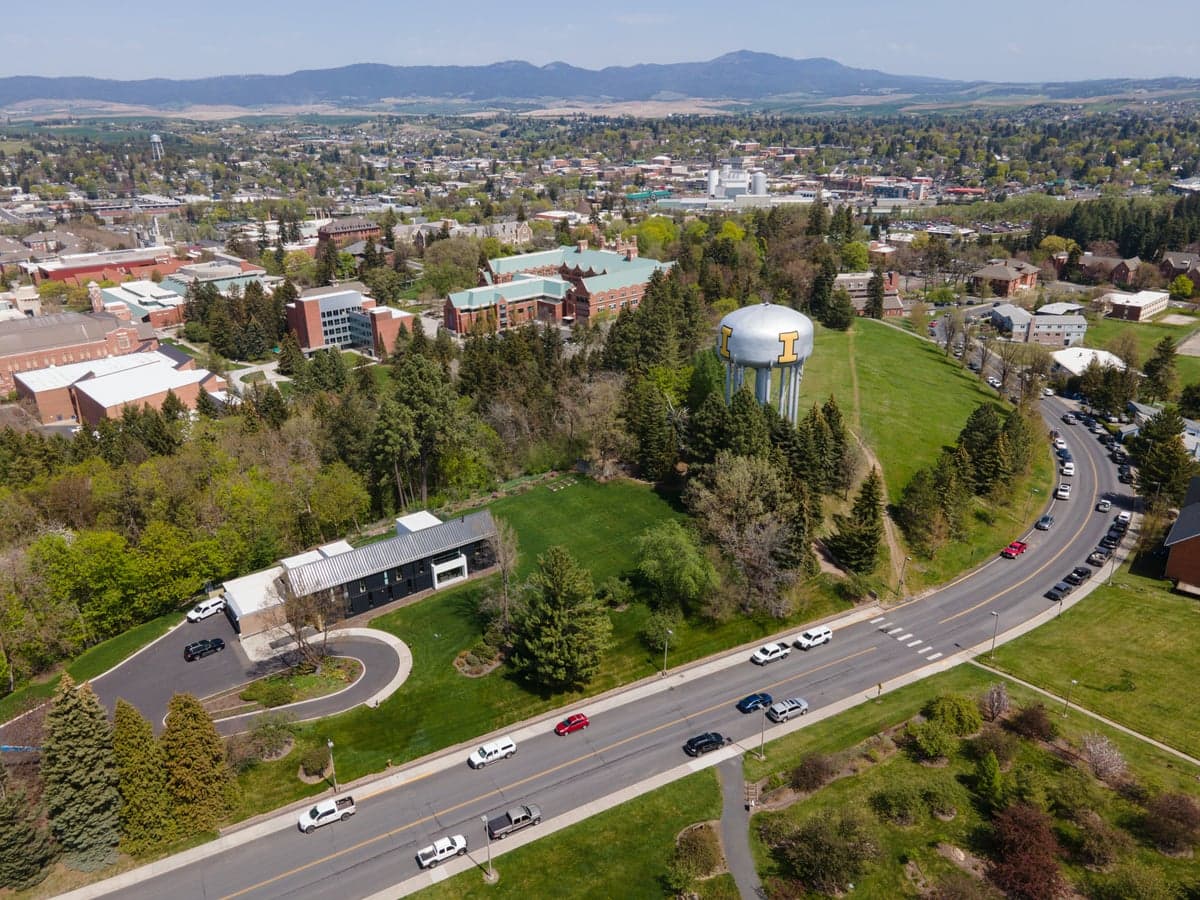
Moscow, Idaho, has long been a blue dot in a deeply red state, but the political winds are shifting in a way that should give any freedom-loving resident pause. The Cook Partisan Voting Index (PVI) for the area is R+22, meaning the surrounding region leans heavily Republican, but the city itself has been drifting leftward for years, driven largely by the University of Idaho's influence. If you've been here since the 90s, you remember when Moscow was a quiet, conservative town where folks minded their own business and the biggest political debate was over the county fair. Now, you're seeing city council meetings dominated by progressive activists pushing bike lanes, diversity initiatives, and zoning changes that feel more like Portland than the Palouse.
How it compares
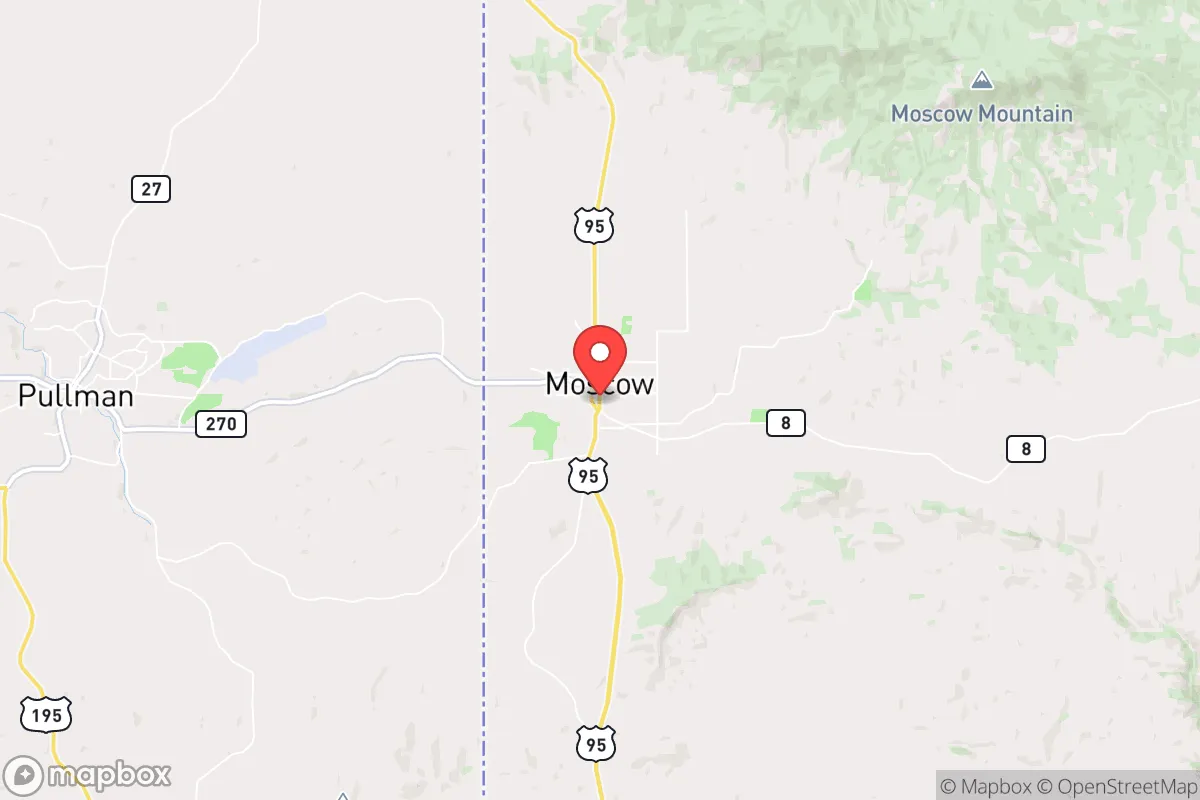
Drive 30 minutes south to Lewiston, and you'll find a town that's still holding the line—more working-class, more gun-friendly, and far less likely to entertain the kind of social engineering that's creeping into Moscow. Head east to Pullman, Washington, and you're in a different universe entirely: a deep-blue college town where state-level policies on taxes, energy, and land use are dictated by Olympia. Moscow sits in an uncomfortable middle ground. The surrounding Latah County is reliably conservative, but the city itself is increasingly run by a coalition of university faculty, out-of-state transplants, and younger residents who see government as a tool for social change rather than a necessary evil. That's a problem when you start looking at property rights, school curriculum, and local business regulations.
What this means for residents
For the average Moscow homeowner or small business owner, the shift means more layers of bureaucracy and a creeping sense that your personal freedoms are being nibbled away. The city has already floated ideas around rental inspections, short-term rental restrictions, and "equity" language in planning documents that sound harmless but open the door to more government overreach. If you value the right to build a shed on your own property without three permits, or to run a home-based business without a zoning board's blessing, Moscow's trajectory is concerning. The long-term worry is that as the university continues to attract left-leaning faculty and students, the city council will become a rubber stamp for progressive policies that prioritize "community values" over individual liberty. The 2024 election cycle showed that conservative candidates can still win in the county, but the city itself is slipping.
One cultural distinction that stands out is Moscow's relationship with the Second Amendment. While most of Idaho is a constitutional carry state with strong gun rights, Moscow has seen local efforts to create "gun-free zones" near campus and public events. These aren't laws yet, but the conversation is there, and it's a sign of where the city's leadership wants to go. If you're a hunter, a collector, or just someone who believes in the right to self-defense, you'll want to keep a close eye on city council elections. The bottom line: Moscow is still a great place to live if you're willing to get involved and push back, but the days of it being a sleepy, conservative haven are fading fast. The next five years will tell whether it becomes another Pullman or stays true to Idaho's independent spirit.

State Political ClimatePolitical Climate in Idaho
State Political AnalysisPolitical Environment in the State
Idaho is a deeply red state, with Republicans holding every statewide office and supermajorities in both legislative chambers, but the real story is the tension between its traditional libertarian-conservative roots and a wave of new arrivals reshaping the political landscape. The state voted +30 points for Trump in 2024, yet the growing influence of Boise and its suburbs is slowly moderating the GOP primary electorate, while rural counties like Lemhi and Boundary remain among the most conservative in the nation. Over the last 20 years, Idaho has shifted from a quiet, low-tax Western outpost to a national flashpoint for fights over school choice, gun rights, and medical freedom, with the legislature increasingly willing to preempt local progressive ordinances.
Urban vs. rural divide
The political map of Idaho is a study in contrasts. The Treasure Valley—anchored by Boise, Meridian, and Nampa—is the state’s population center and the primary engine of its moderate-to-liberal drift. Ada County (Boise) voted for Biden in 2020 and only narrowly went for Trump in 2024, a shift driven by tech transplants and out-of-state remote workers. Canyon County (Nampa, Caldwell) remains reliably red but is trending purple as housing pressure pushes families westward. Meanwhile, the rest of the state is overwhelmingly conservative: counties like Bonner, Kootenai, and Boundary in the north, and Madison, Fremont, and Jefferson in the east, routinely deliver 70-80% Republican margins. The divide isn’t just rural vs. urban—it’s also cultural. The Panhandle (Coeur d’Alene, Post Falls) has seen an influx of Californians and Washingtonians, but many of them are conservative refugees fleeing high taxes and lockdowns, reinforcing the red vote. The University of Idaho in Moscow and Idaho State in Pocatello create small blue islands, but they don’t shift the statewide balance.
Policy environment
Idaho’s policy environment is a conservative dream on paper, but the devil is in the details. The state has a flat income tax of 5.8% (down from 6.5% in 2023), no corporate income tax on pass-through entities, and property taxes that are among the lowest in the West. The legislature passed a $600 million tax cut in 2024, including a child tax credit and elimination of the grocery tax. Education policy is a battleground: Governor Brad Little signed the nation’s most expansive school choice law in 2025, creating education savings accounts (ESAs) worth $5,000 per child, usable for private school, homeschooling, or tutoring. However, the state’s public school funding remains below the national average, and teacher salaries lag. Healthcare is largely deregulated—Idaho has no certificate-of-need laws for hospitals, and direct primary care agreements are legal. Election laws are strict: voter ID is required, same-day registration is not allowed, and the state has a closed Republican primary. In 2024, the legislature passed a law banning ranked-choice voting and requiring hand-count audits in all counties. The regulatory posture is light—no state-level minimum wage above the federal $7.25, no paid family leave mandate, and a right-to-work law that keeps unions weak.
Trajectory & freedom
Idaho is arguably becoming more free in several key areas, but the trend is uneven. On gun rights, the state is a national leader: permitless carry has been law since 2016, and in 2023 the legislature passed a Second Amendment Preservation Act that prohibits state enforcement of any federal gun law deemed unconstitutional. On medical freedom, Idaho was one of the first states to ban COVID-19 vaccine mandates for employment and education (2022), and in 2024 it passed a law prohibiting mRNA vaccine mandates permanently. Parental rights are strongly protected: the 2023 Parental Rights in Education Act requires schools to notify parents of any curriculum involving sexuality or gender identity and bars instruction on those topics before grade 5. However, there are concerning trends. The state’s strict abortion ban (triggered in 2022, with no exceptions for rape or incest) has led to a medical exodus—over 30 OB-GYNs have left the state, and rural maternity wards are closing. Property rights are under pressure from rapid growth: cities like Boise and Coeur d’Alene have imposed growth boundaries and impact fees, and the legislature has preempted local rent control but not zoning reform. The biggest freedom concern is the growing power of the state government itself: the legislature has preempted local ordinances on everything from plastic bags to sanctuary city policies, and the attorney general’s office has aggressively sued the federal government over public lands, but some see this as a necessary check on federal overreach.
Civil unrest & political movements
Idaho has a history of fringe movements, but the mainstream is surprisingly stable. The most visible flashpoint is the ongoing fight over public lands: the “Sagebrush Rebellion” is alive and well, with the state legislature demanding the transfer of federal lands (62% of Idaho) to state control. In 2024, a standoff in Owyhee County over a BLM grazing permit made national news. The anti-government “constitutional sheriff” movement has a foothold in counties like Bonner and Boundary, where sheriffs have refused to enforce certain state laws. On the left, the Idaho Women’s March in Boise drew 10,000 in 2022 but has dwindled to a few hundred. Immigration politics are muted—Idaho has no sanctuary cities, and the legislature passed a law in 2023 requiring local law enforcement to cooperate with ICE. Election integrity controversies are minimal compared to other states; the 2020 and 2024 elections were certified without major incident, though a 2023 audit found no evidence of widespread fraud. The most visible civil unrest is actually over growth: in Ketchum and Sun Valley, locals have protested short-term rental regulations, while in Boise, NIMBY activists have blocked new housing developments, creating a strange-bedfellows coalition of left-wing environmentalists and right-wing property rights advocates.
Projection
Over the next 5-10 years, Idaho will likely remain solidly red but with a more suburban, pragmatic flavor. The in-migration wave—Idaho grew 18% between 2020 and 2025, the fastest in the nation—is bringing a mix of conservative refugees from California and Oregon, plus tech workers who lean libertarian but are socially moderate. This will push the GOP primary electorate toward candidates who emphasize tax cuts and school choice over culture war issues. The biggest wildcard is housing: if prices continue to rise (median home price in Boise is now $550,000), the state could see a backlash against growth, potentially leading to zoning reform or even a land-value tax. The Democratic Party will remain irrelevant statewide, but could win a few legislative seats in Boise and Moscow. The real action will be in the Republican primaries, where the battle between the “Main Street” establishment (Little, Senator Mike Crapo) and the “Freedom Caucus” wing (Representative Heather Scott, Senator Tammy Nichols) will intensify. Expect more preemption of local progressive ordinances, continued expansion of school choice, and a push for a constitutional amendment requiring a supermajority for tax increases.
Bottom line for a new resident: If you’re moving to Idaho for freedom, you’ll find it—but it’s not the Wild West. The state government is actively protecting your rights on guns, school choice, and medical freedom, but it’s also growing more powerful and intrusive in local affairs. The cost of that freedom is rising housing prices, strained infrastructure, and a political scene that’s becoming more factionalized. Pick your county carefully: Ada County is trending purple and moderate, while rural counties like Lemhi or Madison are still deeply traditional. If you want the full Idaho experience—low taxes, minimal regulation, and a government that leaves you alone—head to the Panhandle or the eastern farming valleys. Just don’t expect it to stay exactly the same for the next decade.
* Values derived from national, state, county, city and local statistics and may differ in a specific area. Last updated: 2026-04-21T12:29:23.000Z
Narrative content on this page is AI-generated and may contain mistakes. Verify any details that matter before acting on them.
ReloMaps may earn a commission from affiliate links at no extra cost to you.

