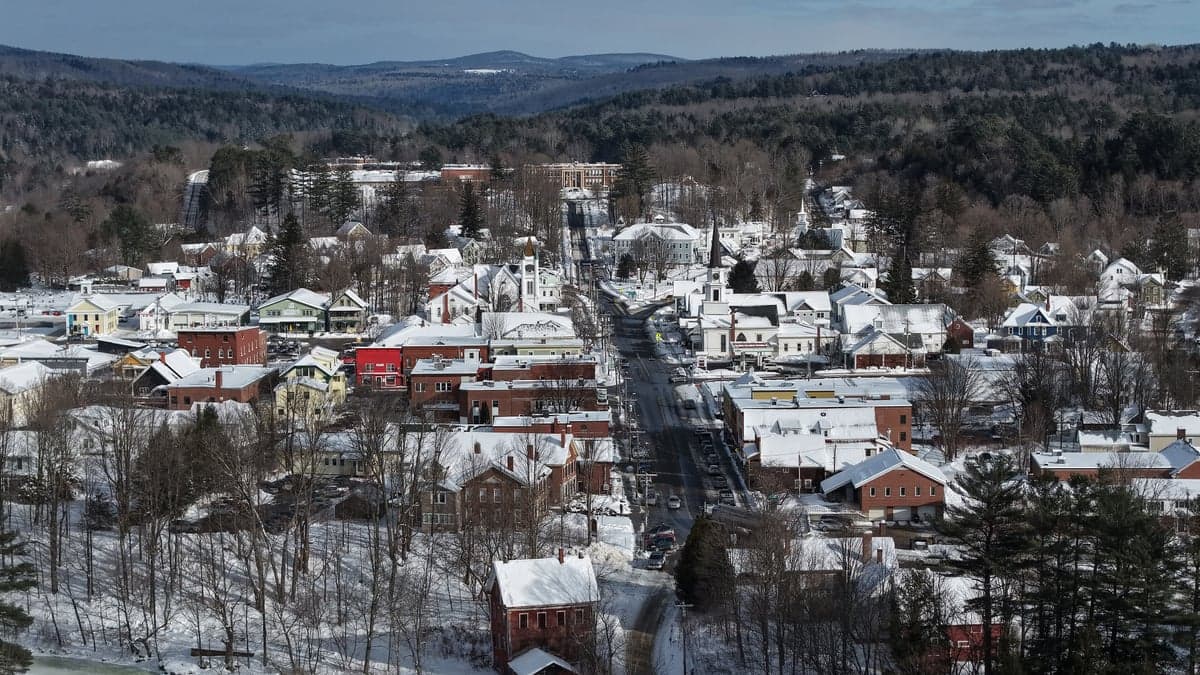
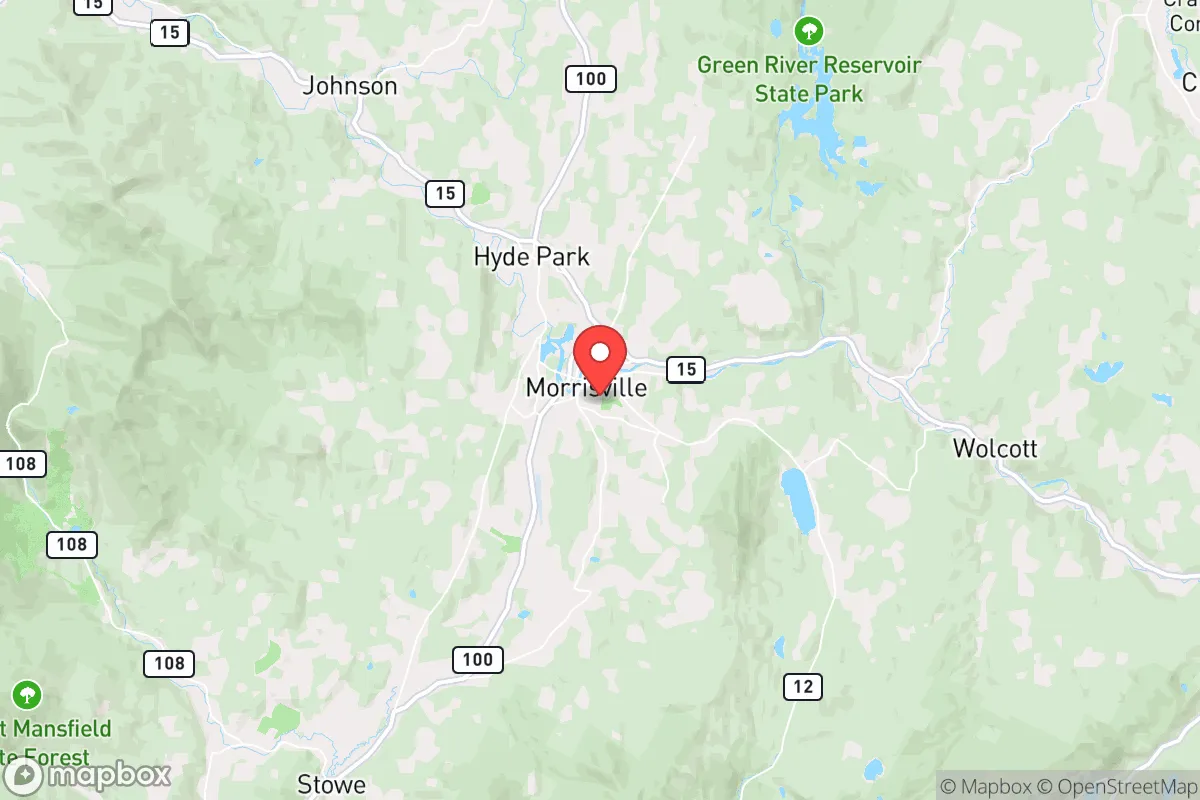
Photo: Wikipedia
Personal Sovereignty in Morrisville, VT
Moderate friction. Expect trade-offs in some aspect of personal liberty and independence.
What does Personal Sovereignty tell us?
Personal Sovereignty measures your capacity for self-reliance and independence with minimal government friction. Higher scores mean fewer barriers between you and the way you want to live... but it assumes you have the space you need and good neighbors.
What does this tell us?
Personal Sovereignty measures your capacity for self-reliance and independence with minimal government friction. Higher scores mean fewer barriers between you and the way you want to live... but it assumes you have the space you need and good neighbors.
State Policy
Energy independence: Importer (15% of energy produced in-state)
Personal Liberty
Homesteading

Personal Liberty Analysis
Morrisville, Vermont, presents a complex picture for those prioritizing personal sovereignty. While the town itself is a small, rural community in Lamoille County, it operates under the broader legal and regulatory framework of Vermont, a state with a reputation for both fierce independence and, in recent years, increasingly progressive governance. For a survivalist or prepper mindset, the key takeaway is that Morrisville offers a high degree of physical and social space to live on your own terms, but you will be navigating a state-level environment that is actively challenging certain core tenets of personal autonomy, particularly regarding taxation, regulation, and medical mandates. The trade-off is clear: you gain a low-density, self-reliant lifestyle, but you must remain vigilant against state-level overreach into your property, your health decisions, and your family.
Tax burden and regulatory posture in Vermont
Vermont’s tax burden is among the highest in the nation, and this is the first major sovereignty concern for anyone considering Morrisville. The state levies a progressive income tax with rates reaching 8.75% on higher earners, and property taxes are notoriously high, often exceeding 2% of assessed home value annually. This directly impacts your ability to retain the fruits of your labor and build self-sufficient wealth. The regulatory environment is equally dense. Vermont has strict land-use laws under Act 250, which can complicate even modest construction or land improvement projects. For a prepper looking to build a root cellar, a workshop, or a secure outbuilding, you will likely need to navigate a permitting process that gives the state significant say over your own property. This is a clear form of government overreach into private land rights, and it is a constant friction point for those who believe their land is their own to manage.
Self-defense and gun law specifics in Vermont
On the surface, Vermont has a strong tradition of firearm freedom. It is a constitutional carry state, meaning no permit is required to carry a concealed or open firearm. There is no state-level background check for private sales, and there is no waiting period. This is a significant positive for personal sovereignty and self-defense. However, the landscape has shifted. In 2023, the state passed a ban on many semi-automatic firearms commonly referred to as "assault weapons," along with a ban on magazines holding more than 10 rounds for long guns and 15 rounds for handguns. This is a direct infringement on the right to keep and bear arms as many preppers understand it. While existing owners were grandfathered in, the ability to acquire new, standard-capacity defensive rifles is now severely restricted. The state also has a "red flag" law (Extreme Risk Protection Order) that allows for the temporary seizure of firearms without a criminal conviction, based on a civil petition. For anyone serious about self-defense, these laws represent a clear and present threat to your ability to maintain a fully equipped armory for worst-case scenarios.
Self-reliance and homesteading viability in Morrisville
This is where Morrisville shines. The surrounding Lamoille County offers a genuine opportunity for self-reliance that is hard to find in more populated states. Zoning in the rural areas around Morrisville is generally permissive for agricultural and homesteading activities. You can find properties with acreage that allow for livestock, large gardens, and even small-scale farming operations without excessive municipal interference. Off-grid feasibility is moderate. While Vermont has no state-level law explicitly banning off-grid living, local building codes and Act 250 can complicate things. You can install solar panels, but net-metering rules are state-controlled. Rainwater collection is legal for non-potable uses, but well and septic regulations are strict. The real advantage is the land itself: lot sizes of 2 to 10 acres are common and affordable compared to southern New England, giving you the physical buffer and space to develop your own water, food, and energy systems. The biggest hurdle is the state’s push for "renewable energy" mandates, which can pressure you into grid-tied systems rather than true independence.
Personal liberties: parental rights, medical autonomy, speech, and property
This is the most contentious area for a conservative-leaning individual. Vermont has aggressively asserted state authority over parental rights, particularly in education and medical decisions. The state mandates that schools follow curriculum standards that include comprehensive sexuality education, and parents do not have the right to opt their children out of specific lessons they find objectionable. Medical autonomy was severely tested during the COVID-19 pandemic, where Vermont had some of the most prolonged and strictest mandates in the country, including vaccine requirements for healthcare workers and school staff. The state also passed a law protecting access to gender-affirming care for minors, overriding parental consent in certain circumstances. Free speech is generally protected, but the state has a strong "hate speech" statute that can be used to penalize certain public expressions. Property rights, as noted, are heavily regulated. The overall environment is one where the state sees itself as the primary arbiter of your family’s and your body’s well-being, which is a direct challenge to the concept of personal sovereignty.
In summary, Morrisville offers a strong foundation for a self-reliant, low-density lifestyle with good land access and a constitutional carry environment that, despite recent restrictions, still respects the core right to bear arms. However, the trade-off is a state government that is actively hostile to several key pillars of personal sovereignty: high taxes, heavy land-use regulation, and a clear pattern of asserting state control over medical decisions, parental rights, and firearm ownership. Compared to a state like New Hampshire, which is just a short drive away and has no income tax, no sales tax, and far fewer firearm restrictions, Vermont feels like a place where you can live your life quietly but must constantly defend your autonomy from a well-intentioned but overreaching state apparatus. For the strategic relocator, Morrisville is a viable option if you are willing to fight for your freedoms at the local and state level, but it is not a sanctuary from government overreach.

* Values derived from national, state, county, city and local statistics and may differ in a specific area. Last updated: 2026-04-23T11:42:46.000Z
Narrative content on this page is AI-generated and may contain mistakes. Verify any details that matter before acting on them.
ReloMaps may earn a commission from affiliate links at no extra cost to you.

