Photo: Wikipedia
Political ClimatePolitical Climate in Pondera County
Showing district-level results — no local-only data available.
Local Political AnalysisPolitical Analysis of Pondera County
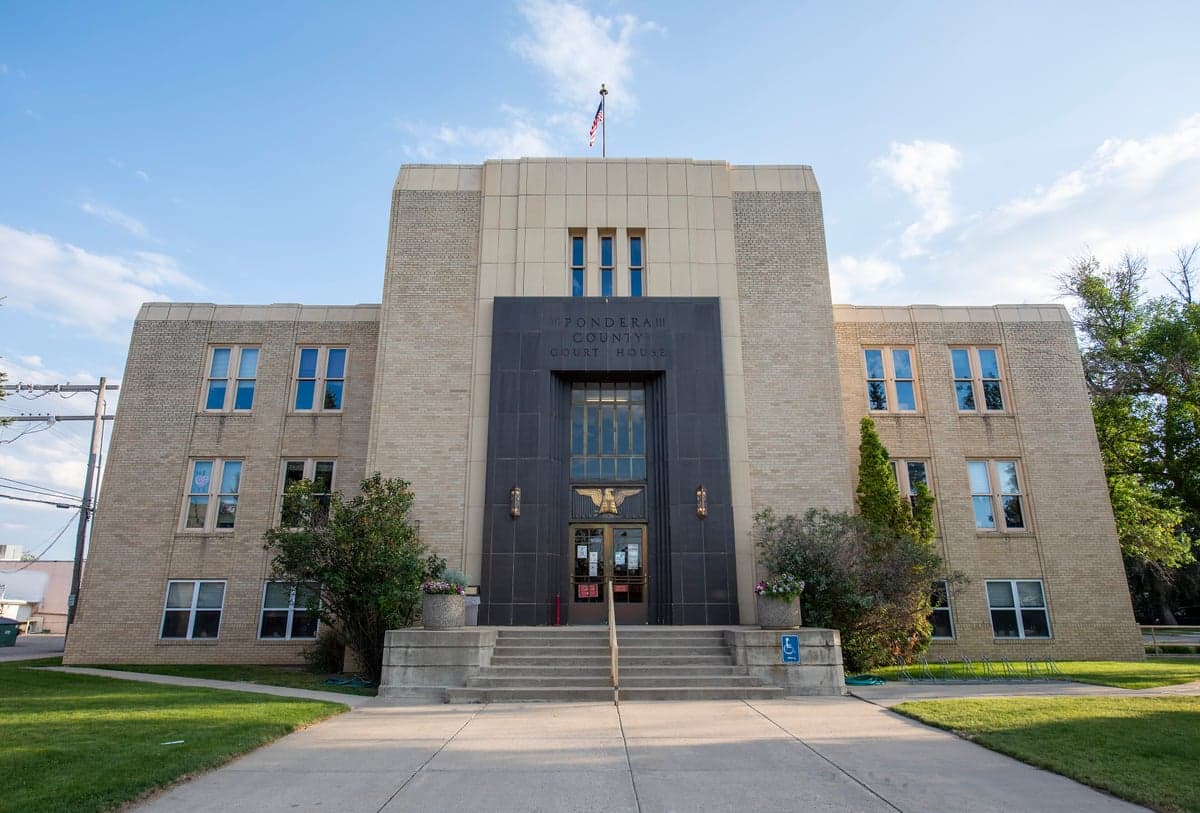
Pondera County, Montana, leans reliably Republican with a Cook PVI of R+5, though it's notably less conservative than the state as a whole, which sits at R+10. The county's political center of gravity is in Conrad, the county seat and largest town, where Republican candidates typically win by comfortable margins but not the blowouts seen in more rural parts of the state. The real political story here is the subtle variation across the county's small communities — and how that shapes daily life for everyone, regardless of party.
How it compares
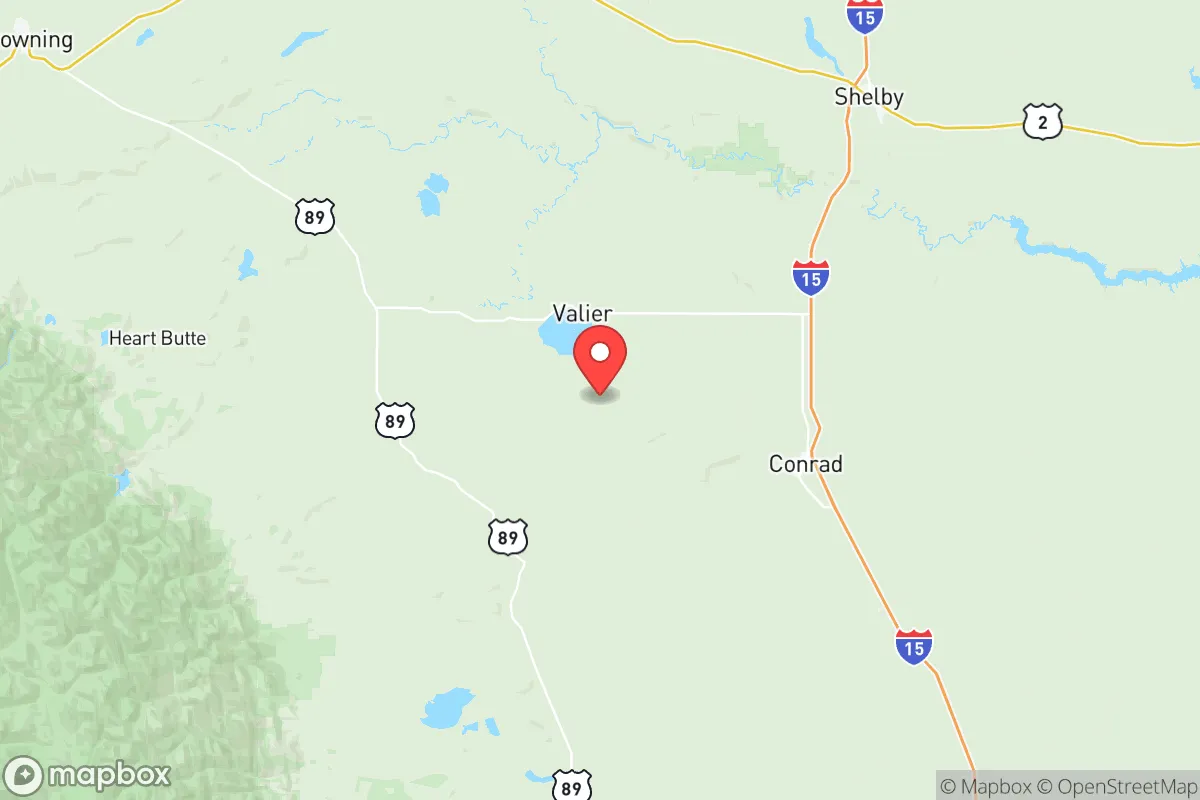
Pondera County's R+5 rating makes it a genuine swing county by Montana standards, sitting about five points to the left of the statewide baseline. The difference is most visible in the county's northern reaches, around Valier and the farming communities along the Marias River, where precincts often vote more moderately — sometimes within single digits of a Democratic candidate in competitive races. In contrast, the southern part of the county, including the area around Dupuyer and the rolling plains toward the Rocky Mountain Front, leans harder red, often matching or exceeding the statewide R+10 average. Conrad itself is the bellwether: its precincts have voted for the statewide winner in every presidential election since 2000, making it a reliable microcosm of Montana's broader political mood. The county's Democratic presence is small but persistent, concentrated among a handful of longtime ranching families and a modest number of union-affiliated workers tied to the region's grain elevators and the BNSF Railway line that runs through Conrad.
What this means for residents
For conservative residents, Pondera County offers a comfortable political environment where Republican candidates and conservative values dominate local offices, from the county commission to the school board. There's no real pressure to moderate positions, and the local Republican Party is active but not factionalized — the internal fights that plague more populous counties are rare here. For liberal residents, the picture is more nuanced. You won't find a formal Democratic Party infrastructure, but you also won't face the kind of social ostracism that can occur in deeper-red rural counties. The county's smaller Republican margin means that moderate Democrats and independents can still win local races if they have deep community roots, particularly in Valier and the northern precincts. The practical effect is that most residents, regardless of party, describe the local political climate as civil and neighborly — people disagree on policy but still show up for each other at harvest time and community fundraisers.
Culturally, Pondera County stands apart from Montana's more polarized regions in a few key ways. The county has a notable Hutterite colony presence — several colonies operate large-scale farming operations around Conrad and Valier — and this community tends to vote as a bloc, usually Republican but with a pragmatic streak that can surprise outsiders. Land use and water rights are the issues that actually animate local politics more than national culture wars, and both conservative and liberal residents share a deep skepticism of federal land management, given the county's proximity to the Lewis and Clark National Forest. The trajectory is toward gradual, not dramatic, conservatism: as younger residents move to Great Falls or Missoula for work, the remaining population skews older and more Republican, but the county's small size and tight-knit character keep the political temperature low. For anyone moving here, the takeaway is simple: Pondera County is a place where your politics matter less than your willingness to help a neighbor dig out after a blizzard.

State Political ClimatePolitical Climate in Montana
State Political AnalysisPolitical Environment in the State
Montana has been a reliably Republican state for decades, carrying the GOP presidential candidate in every election since 1992, and its Cook PVI of R+10 reflects a solid conservative lean. However, the state is in the midst of a significant political realignment driven by rapid in-migration, with the old-school libertarian-conservative coalition that once defined Montana politics being challenged by a more populist, culturally conservative wave, while Democratic strongholds in places like Missoula and Bozeman have become more progressive and influential. Over the last 10-20 years, the state has shifted from a place where split-ticket voting was common—electing Democratic governors like Brian Schweitzer and Jon Tester alongside GOP legislatures—to a state where Republicans now hold a supermajority in the legislature and control every statewide office, a trajectory that shows no sign of reversing.
Urban vs. rural divide
The political map of Montana is a textbook case of the urban-rural split. The Democratic base is concentrated in the university towns and mountain valleys: Missoula (home to the University of Montana) and Bozeman (Montana State University) are the two most reliably blue metros, with Gallatin County (Bozeman) flipping from red to purple to blue over the last decade as tech workers and out-of-state transplants poured in. Helena, the state capital, leans Democratic due to the concentration of state workers and environmental nonprofits. In contrast, the eastern two-thirds of the state—the High Line, the Hi-Line, and the oil patch around Sidney—vote overwhelmingly Republican, with counties like Wibaux and Garfield routinely delivering 80-90% GOP margins. The fastest-growing counties, like Gallatin and Missoula, are pulling the state leftward, but the rural counties that are losing population are becoming even more conservative, creating a widening gulf. Billings, the largest city, is a bellwether: it leans Republican but is more moderate than the rural east, often deciding close statewide races. Kalispell and the Flathead Valley have become a hotbed of populist conservative activism, with a strong libertarian streak on land use and gun rights.
Policy environment
Montana's policy environment is defined by low taxes, light regulation, and a strong emphasis on individual liberties, particularly gun rights and property rights. There is no state sales tax, and income tax rates were flattened and lowered in recent years to a top rate of 5.9%. Property taxes are relatively low but vary significantly by county, with Gallatin County seeing sharp increases due to soaring home values. The state has a Republican supermajority that has passed permitless carry (constitutional carry), expanded school choice through tax credits for private school scholarships, and enacted some of the nation's strictest laws on transgender athletes and gender-affirming care for minors. Election laws have been tightened: voter ID requirements were strengthened, and same-day voter registration was eliminated in 2021. The state also passed a law requiring a supermajority vote of the legislature to raise taxes, a key priority for fiscal conservatives. On healthcare, Montana expanded Medicaid under the Affordable Care Act in 2015, a decision that has been repeatedly reauthorized with bipartisan support, though the program faces ongoing scrutiny from the GOP majority.
Recent policy direction
The last three legislative sessions have seen a sharp rightward turn on cultural and social issues. In 2023, the legislature passed a ban on gender-affirming care for minors (SB 99), a law defining "sex" as biological sex in state code (HB 359), and a ban on drag story hours in public libraries (HB 359). On gun rights, Montana enacted permitless carry in 2021 and passed a law in 2023 prohibiting state and local law enforcement from enforcing federal gun laws that violate the state constitution (HB 303), a direct challenge to federal authority. On education, the legislature created a school choice tax credit program and passed a law requiring schools to notify parents of any "sexually explicit" materials in curricula. On property rights, the state has resisted land-use planning mandates from the federal government and passed laws limiting the ability of counties to impose growth restrictions, a major issue in fast-growing Bozeman and Missoula. On voting, the state moved to a closed primary system for the 2024 election, meaning only registered party members can vote in primaries, a change that has been controversial among the state's many independent voters. On medical freedom, Montana passed a law prohibiting vaccine mandates by private employers and government entities, though it was partially blocked in court.
Civil unrest & political movements
Montana has a long tradition of anti-government sentiment, from the "Freemen" standoff in the 1990s to more recent "constitutional sheriff" movements in rural counties. In 2020, protests in Missoula and Billings over George Floyd's murder were relatively small compared to national trends, but they did spark a backlash that fueled the election of a Republican supermajority in 2022. The state has seen organized opposition to public health mandates, with large rallies at the state capitol in Helena during the pandemic. Immigration politics are less visible than in border states, but there has been a growing concern among conservatives about illegal immigration, particularly as the state's population grows. There is no sanctuary city policy anywhere in Montana; in fact, the legislature passed a law in 2023 requiring local law enforcement to cooperate with federal immigration authorities. Election integrity has been a flashpoint: the 2020 election saw no evidence of widespread fraud, but the GOP majority passed a series of voting restrictions anyway, citing "confidence in elections." The state has also seen a rise in "county sovereignty" movements, particularly in Lincoln County and Ravalli County, where activists have pushed for nullification of state and federal laws they see as infringing on local control.
Projection
Over the next 5-10 years, Montana is likely to become more polarized, not less. The influx of new residents—many from California, Washington, and Colorado—is concentrated in the blue-leaning urban centers of Missoula and Bozeman, which will continue to pull those areas leftward. Meanwhile, the rural counties that are losing population will become even more conservative, and the GOP's legislative supermajority is likely to persist, though internal divisions between the libertarian wing (focused on property rights and low taxes) and the populist wing (focused on cultural issues) may intensify. The state's demographic shift is real: Gallatin County grew by over 30% in the last decade, and if that trend continues, it could eventually flip the state's congressional delegation from all-Republican to a split. However, the rural vote is so lopsided that it will take a generation for the urban growth to meaningfully change statewide outcomes. A new resident moving in now should expect a state where the culture wars are front and center, where the legislature is aggressively conservative on social issues, but where local politics vary dramatically—from the progressive city council in Missoula to the libertarian county commissions in the Flathead.
For a new resident, the bottom line is that Montana offers a deeply conservative state government with low taxes, strong gun rights, and a hands-off regulatory environment, but the experience on the ground depends heavily on where you live. If you settle in Bozeman or Missoula, you'll find a liberal bubble with high housing costs and progressive local policies. If you choose Kalispell, Billings, or a rural county, you'll be in a solidly conservative community where the culture wars are a daily reality. The state's political trajectory is toward more conflict, not less, as the urban-rural divide deepens and the legislature continues to push culturally conservative legislation. If you value low taxes, gun rights, and local control, you'll feel at home. If you're looking for a moderate, live-and-let-live environment, the polarization may wear on you over time.
* Values derived from national, state, county, city and local statistics and may differ in a specific area. Last updated: 2026-08-08T11:39:45.000Z
Narrative content on this page is AI-generated and may contain mistakes. Verify any details that matter before acting on them.
ReloMaps may earn a commission from affiliate links at no extra cost to you.

