Photo: Wikipedia
Demographics of Jackson County
Affluence Level in Jackson County
A middle-class area roughly in line with national averages across income, home values, education, and employment.
People of Jackson County
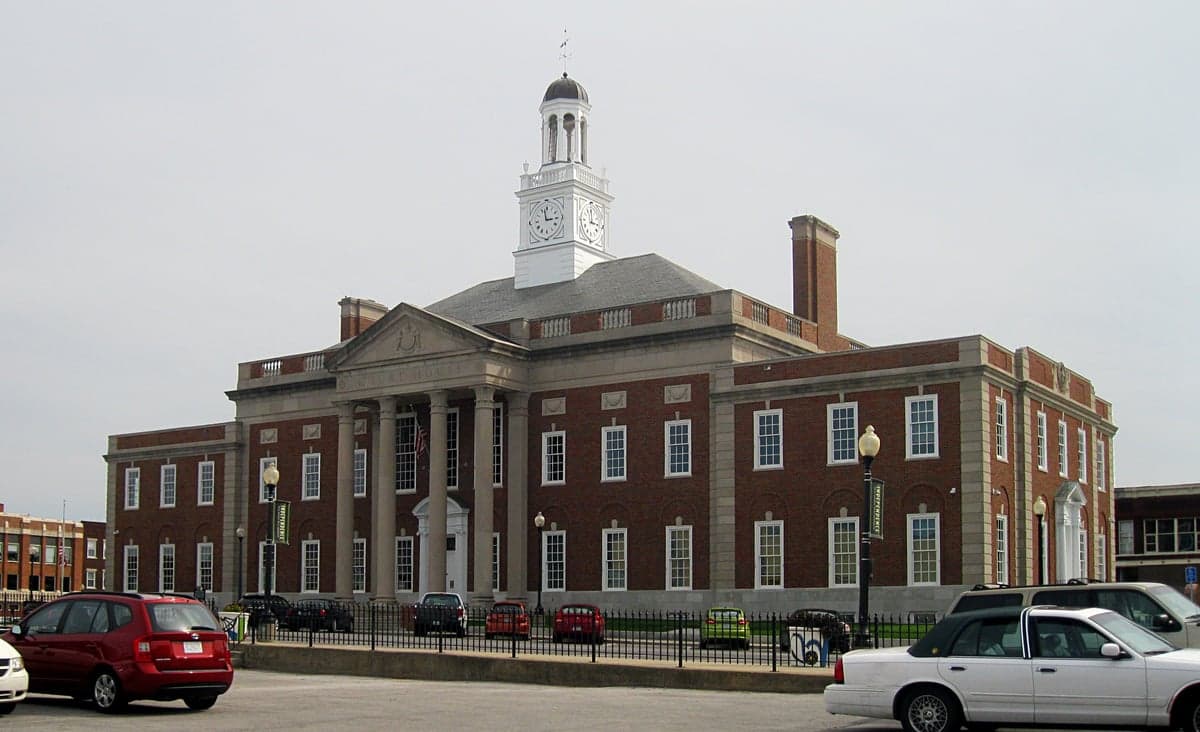
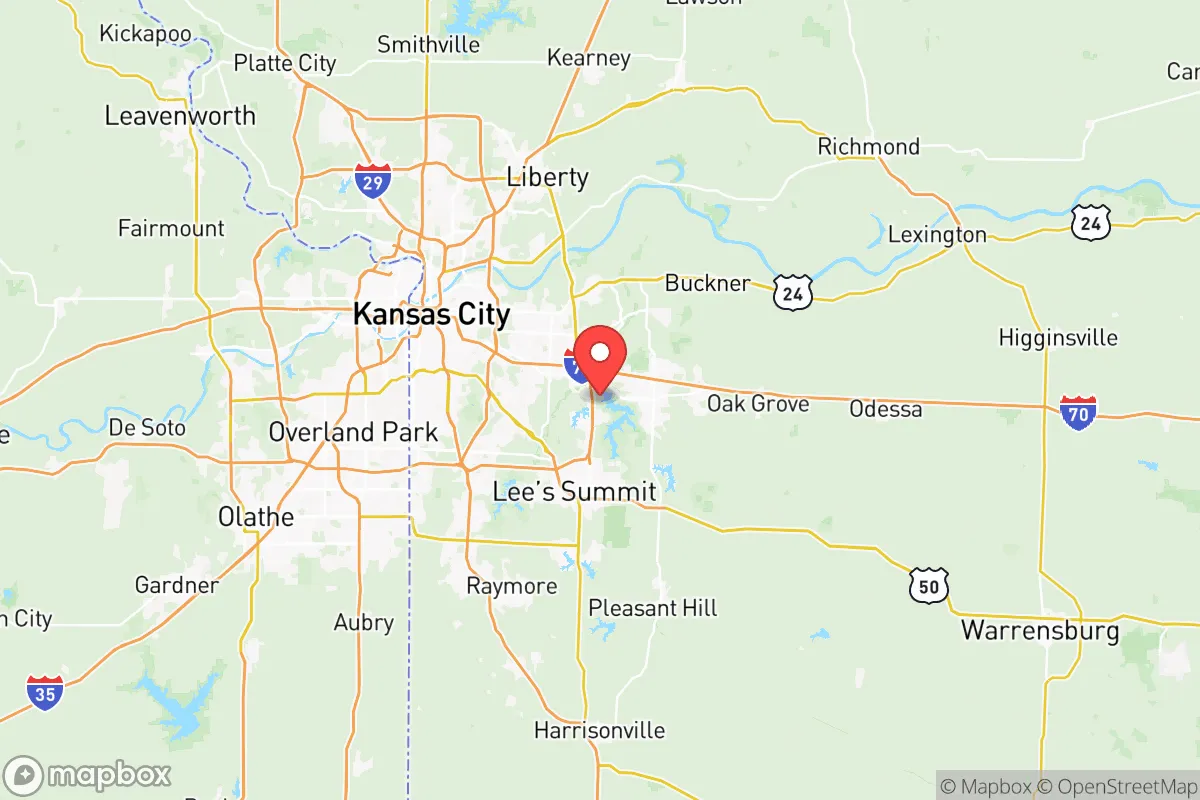
Jackson County, Missouri, is home to 717,021 residents who form the historic and economic core of the Kansas City metropolitan area. The county’s population is characterized by a significant Black minority (22.3%), a growing Hispanic community (11.1%), and a white majority (59.7%) that is increasingly concentrated in the suburban and exurban rings. With a low foreign-born rate of just 3.4% and a college-educated share of 33.5%, Jackson County remains a predominantly native-born, Midwestern population whose identity is shaped by its legacy as a frontier crossroads, a manufacturing hub, and a modern Sun Belt-adjacent suburb.
Settlement & growth (pre-1960)
Long before European settlement, the land that is now Jackson County was home to the Osage Nation, who controlled the region’s vast prairies and woodlands, and the Kansa tribe, for whom the state is named. French fur traders and trappers passed through the area in the 1700s, but no permanent European settlements took hold until after the Louisiana Purchase. The first American settlers arrived in the 1820s and 1830s, primarily Scots-Irish and English migrants from Kentucky, Tennessee, and Virginia, drawn by the promise of cheap, fertile land along the Missouri and Blue rivers. These early pioneers founded the county’s first towns, including Independence (1827), which became the eastern terminus of the Santa Fe Trail and a crucial jumping-off point for westward expansion. The town of Westport (now part of Kansas City) was established in 1833 as a rival trading post, and Lee’s Summit was settled in the 1860s by farmers and merchants.
The county’s population exploded after the Civil War, driven by the arrival of the railroad and the rise of Kansas City as a major livestock and grain market. German immigrants, many fleeing political unrest in the 1840s and 1850s, settled in Kansas City’s northeast neighborhoods and in the farming communities of Blue Springs and Grain Valley, where they established breweries, bakeries, and churches. Irish immigrants followed in the 1860s and 1870s, working on the railroads and in the stockyards, and concentrated in the West Bottoms and Strawberry Hill areas of Kansas City. By 1900, the county’s population had swelled to over 200,000, fueled by the meatpacking and manufacturing industries. The Great Migration of Black Americans from the rural South began in earnest after World War I, with tens of thousands of African Americans moving to Kansas City for industrial jobs in the stockyards, steel mills, and railroad yards. They established vibrant communities in the 18th & Vine district and the East Side of Kansas City, which became a national center of jazz and Black entrepreneurship. The Dust Bowl and the Great Depression brought a smaller wave of white migrants from Oklahoma and Arkansas, who settled in working-class neighborhoods in Raytown and Grandview.
Modern era (post-1965)
The 1965 Hart-Cellar Act had a muted effect on Jackson County compared to coastal regions, as the county’s foreign-born population remains low at 3.4%. However, the post-1965 era saw a significant shift in domestic migration patterns. White flight from Kansas City’s urban core accelerated in the 1970s and 1980s, as families moved to newly developed suburbs in Lee’s Summit, Blue Springs, and Grain Valley. These communities grew rapidly, transforming from small farming towns into sprawling bedroom communities with good schools and lower crime rates. The Black population, which had been concentrated in the city’s East Side, began to suburbanize as well, with significant growth in Independence and Raytown.
The Hispanic population, which now stands at 11.1%, began to grow noticeably in the 1990s and 2000s, driven by immigration from Mexico and Central America. These new arrivals settled primarily in the Northeast neighborhoods of Kansas City and in Independence, where they found work in construction, landscaping, and the service industry. The East/Southeast Asian community (1.3%) is small but established, with a notable Vietnamese and Chinese presence in the South Kansas City area and in Lee’s Summit. The Indian subcontinent population (0.5%) is even smaller, concentrated among professionals working in the healthcare and technology sectors in Lee’s Summit and Blue Springs. The county’s white population has declined from over 70% in 1990 to 59.7% today, while the Black share has remained relatively stable, and the Hispanic share has more than doubled.
The future
Jackson County is likely to continue its gradual diversification, but at a slower pace than the national average. The Hispanic population is the fastest-growing demographic segment, projected to reach 15-18% of the county’s population by 2040, driven by both immigration and higher birth rates. This growth will be most visible in Independence and the Northeast corridor of Kansas City, where Hispanic-owned businesses and cultural institutions are already expanding. The Black population is expected to remain stable or grow slightly, with continued suburbanization into Lee’s Summit and Blue Springs. The white population will continue to age and decline in the urban core, but will remain the majority in the exurban towns of Grain Valley and Oak Grove, which are attracting conservative-leaning families from across the metro. The East/Southeast Asian and Indian communities are likely to remain small but will grow modestly as the region’s tech and healthcare sectors expand.
The county is not homogenizing; rather, it is tribalizing into distinct enclaves along geographic and cultural lines. The urban core of Kansas City is becoming more diverse and Democratic-leaning, while the eastern suburbs are solidifying as predominantly white, conservative, and family-oriented. The Hispanic community is carving out its own cultural space in Independence and the Northeast, while the Black community maintains a strong presence in the East Side and southern suburbs. This balkanization means that newcomers will find a county where the character of their neighborhood depends heavily on which town they choose.
For someone moving to Jackson County today, the bottom line is this: you are entering a region that is still deeply Midwestern in its values and demographics, but is slowly becoming more diverse and suburban. The county offers a range of distinct communities, from the historic, walkable neighborhoods of Kansas City to the quiet, conservative subdivisions of Lee’s Summit and Blue Springs. The cultural identity of the county is being reshaped by Hispanic growth and Black suburbanization, but the dominant ethos remains one of pragmatism, family, and a strong sense of local identity. If you are looking for a place with a low foreign-born rate, a stable economy, and a clear choice between urban diversity and suburban homogeneity, Jackson County is a solid fit.

* Values derived from national, state, county, city and local statistics and may differ in a specific area. Last updated: 2026-05-28T12:11:10.000Z
Narrative content on this page is AI-generated and may contain mistakes. Verify any details that matter before acting on them.
ReloMaps may earn a commission from affiliate links at no extra cost to you.

