
Photo: Wikipedia
Political ClimatePolitical Climate in Boone County
Showing district-level results — no local-only data available.
Local Political AnalysisPolitical Analysis of Boone County
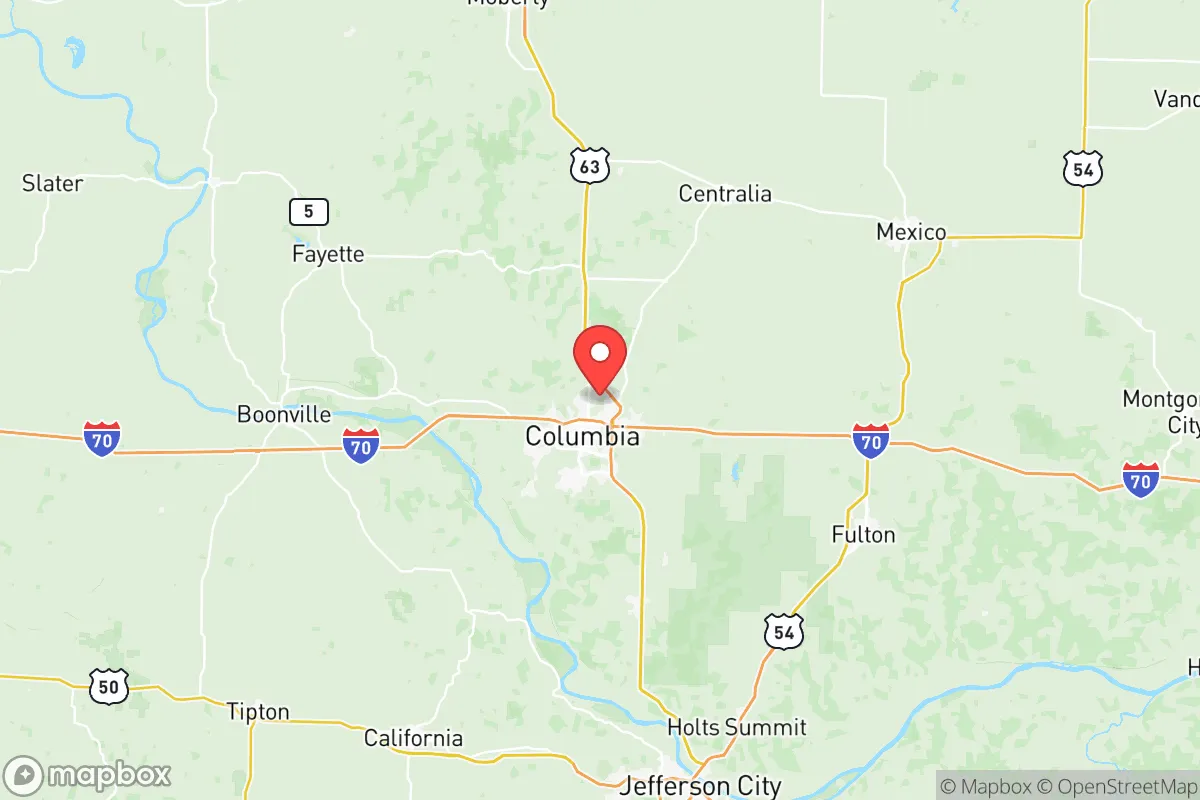
Boone County, Missouri, is a classic case of a deep-red state island that’s been drifting leftward, and if you’ve lived here as long as I have, you’ve felt the shift in your gut. The Cook PVI clocks the county at R+21, which sounds solidly Republican, but that number hides a real split: the city of Columbia, home to the University of Missouri, leans reliably blue, while the rest of the county—towns like Ashland, Centralia, and Hallsville—votes deep red. The overall trajectory is concerning if you value limited government and personal freedoms, because the progressive influence from Columbia is slowly bleeding into county-wide policy debates, especially around property rights and school curriculum.
How it compares
Statewide, Missouri sits at R+8, meaning Boone County is significantly more conservative than the state average on paper—but that’s only because the rural precincts outside Columbia are so overwhelmingly Republican. Compare Ashland, where you’ll see Trump signs on every other lawn, to Columbia’s First Ward, where local elections are dominated by progressive candidates pushing things like sanctuary city policies and defunding police rhetoric. The gap is stark. In the 2024 election, Boone County as a whole voted about 54% Republican, but that’s only because the rural towns turned out hard. Meanwhile, the state of Missouri itself is still reliably red, but you can feel the same cultural creep happening in St. Louis and Kansas City that’s happening in Columbia—just slower. The difference is that in Boone County, the rural majority still holds the line on county commissions and sheriff elections, but the margin is shrinking every cycle.
What this means for residents
For folks living in the unincorporated areas or small towns like Harrisburg or Sturgeon, the political climate still feels like the Missouri you grew up in: low taxes, minimal zoning, and a sheriff who’s not interested in enforcing federal overreach. But if you live inside Columbia city limits, you’re dealing with a city council that’s increasingly comfortable with government mandates—think mask mandates that lasted longer than the state’s, housing ordinances that restrict what you can do with your own property, and a school board that’s more focused on DEI training than reading scores. The real red flag for conservatives is the slow erosion of local control: state preemption laws have blocked Columbia from enacting its own gun bans and minimum wage hikes, but the city keeps trying, and every session in Jefferson City brings another battle to keep those overreaches in check.
Cultural and policy distinctions
One thing that still sets Boone County apart from the rest of Missouri is the sheer number of people who moved here from out of state—especially from California and Illinois—to work at the university or the hospitals. They bring their politics with them, and it shows in local ballot initiatives. In 2020, Boone County voted to legalize recreational marijuana before the rest of the state did, and in 2022, it voted against a right-to-work law that passed statewide. That’s the tension: the rural towns want to keep things simple and free, while Columbia wants to experiment with progressive policy. If you’re looking for a place where your Second Amendment rights are respected and your property isn’t subject to endless new regulations, stick to the county’s small towns. But keep an eye on the county commission races—that’s where the next fight over your freedoms will be won or lost.

State Political ClimatePolitical Climate in Missouri
State Political AnalysisPolitical Environment in the State
Missouri is a solidly Republican state with a Cook PVI of R+8, but don’t let that number fool you into thinking it’s a monolith. Over the last 20 years, the state has shifted rightward, driven by a massive rural-urban split and the exodus of conservative-leaning families from deep-blue cities like St. Louis and Kansas City into the suburbs and exurbs. The old Show-Me State consensus—moderate, union-friendly, and culturally conservative—has given way to a sharper, more ideological divide, with the GOP now holding supermajorities in both chambers of the legislature and every statewide office. If you’re looking for a place where state government is actively pushing back against federal overreach, Missouri is a strong contender, but the battle lines are drawn in some surprising places.
Urban vs. rural divide
The political map of Missouri is a textbook case of the urban-rural chasm. The two major metros—St. Louis and Kansas City—are deep blue islands in a red sea. St. Louis City and County, along with Jackson County (Kansas City), reliably deliver 60-70% of their votes to Democrats, powered by dense, diverse populations and a strong union and academic presence. But the real story is the suburbs. Places like St. Charles County (just west of St. Louis) and Clay County (north of Kansas City) have become GOP strongholds, flipping from purple to deep red over the past decade as families fled city crime and school policies. Meanwhile, the rural spine of the state—counties like Phelps (Rolla), Buchanan (St. Joseph), and Greene (Springfield)—vote 70-80% Republican. The Ozarks region, anchored by Springfield, is the most reliably conservative area in the state, with a strong evangelical and gun-owning culture. The only real outlier is Boone County (Columbia), home to the University of Missouri, which votes blue but is surrounded by deep-red rural counties. So if you’re moving to Missouri, your political experience will depend heavily on whether you land in a city, a suburb, or a small town.
Policy environment
Missouri’s policy environment is aggressively conservative, especially compared to its neighbors. The state has a flat income tax rate of 4.95% (down from 5.4% in 2022), and the legislature is pushing for further cuts, aiming for a 4.5% rate by 2027. There’s no state property tax on vehicles, and property taxes on real estate are among the lowest in the nation—around 0.9% of assessed value. The regulatory climate is business-friendly, with right-to-work laws (reinstated in 2022 after a 2018 repeal via ballot initiative) and a strong tort reform environment. On education, Missouri has a robust school choice movement: the MOScholars program provides tax-credit scholarships for private school tuition, and the state has expanded charter schools in St. Louis and Kansas City. However, the state’s public school funding formula remains a point of contention, with rural districts often feeling shortchanged. On healthcare, Missouri rejected Medicaid expansion for years until a 2020 ballot initiative forced it through, but the state has since imposed work requirements for able-bodied adults. Election laws are strict: voter ID is required, and the state purged over 100,000 inactive voters in 2023. For a conservative, the policy environment is largely a win, but the constant ballot initiatives (like Medicaid expansion and marijuana legalization) show that voters can sometimes bypass the legislature.
Trajectory & freedom
Missouri is trending more free in several key areas, but not without some worrying backsliding. On gun rights, the state passed the Second Amendment Preservation Act (SAPA) in 2021, which declares federal gun laws that violate the Second Amendment to be null and void in Missouri. This law has been challenged in court, but it remains on the books and is a powerful statement of intent. On parental rights, the state passed the Parental Bill of Rights in 2022, requiring schools to notify parents of any curriculum involving sexual orientation or gender identity, and allowing parents to opt their children out. Medical freedom got a boost with a 2022 law banning vaccine passports and prohibiting employers from mandating COVID-19 vaccines. However, the state’s hands-off approach to property rights is a double-edged sword: there’s no statewide zoning, but local governments can still impose onerous regulations. The biggest red flag for freedom advocates is the state’s tax burden: while income taxes are falling, sales taxes are high (averaging 8.3% statewide), and the state’s gas tax was raised by 12.5 cents per gallon in 2021. Overall, Missouri is moving in the right direction on personal liberty, but the tax-and-spend habits of local governments remain a concern.
Civil unrest & political movements
Missouri has a history of civil unrest, most notably the 2014 Ferguson protests after the shooting of Michael Brown, which sparked a national movement. Since then, the state has seen periodic protests in St. Louis and Kansas City over police shootings and racial justice, but these have largely subsided. On the right, the most visible movement is the “Show-Me State” brand of Second Amendment activism, with groups like the Missouri Firearms Coalition and the Missouri Republican Assembly pushing for permitless carry (passed in 2017) and SAPA. Immigration politics are relatively quiet, as Missouri has a small foreign-born population (around 4%), but there have been flashpoints over sanctuary city policies in St. Louis and Kansas City, with the state legislature threatening to withhold funding from any city that declares itself a sanctuary. Election integrity is a hot-button issue: the 2020 election saw no major scandals, but the GOP-led legislature passed strict voter ID laws and banned ballot drop boxes. The most visible political flashpoint for a new resident would be the constant battle over abortion: Missouri was the first state to effectively ban abortion after the Dobbs decision, with no exceptions for rape or incest. This has energized both pro-life and pro-choice activists, and you’ll see signs and rallies in any mid-sized city.
Projection
Over the next 5-10 years, Missouri is likely to become more Republican and more conservative, but with a twist. The in-migration pattern is heavily skewed toward conservative-leaning families from Illinois, California, and the Northeast, who are drawn to low taxes, gun rights, and school choice. This is already reshaping the suburbs of St. Louis and Kansas City, with places like St. Charles and Lee’s Summit becoming even redder. However, the urban cores are likely to remain blue, and the state’s growing Hispanic population (concentrated in Kansas City and southwest Missouri) could shift the political calculus over time. The biggest wild card is the state’s aging population: rural counties are losing young people, which could weaken the GOP’s rural base. But for now, the trajectory is clear: Missouri will continue to pass conservative legislation on guns, taxes, and education, and the state will remain a bulwark against federal overreach. A new resident moving in today should expect to find a state that is culturally conservative, fiscally restrained, and fiercely independent—but also one where the urban-rural divide will only deepen.
Bottom line for a new resident: If you’re a conservative looking for a state that respects your rights, keeps taxes low, and pushes back against federal mandates, Missouri is a solid bet. Just know that your experience will vary wildly depending on where you land. Stick to the suburbs or rural areas, and you’ll find a community that shares your values. Move to St. Louis or Kansas City proper, and you’ll be in a blue island with higher crime and progressive policies. Choose wisely, and you’ll be happy you made the move.
* Values derived from national, state, county, city and local statistics and may differ in a specific area. Last updated: 2026-06-01T04:47:28.000Z
Narrative content on this page is AI-generated and may contain mistakes. Verify any details that matter before acting on them.
ReloMaps may earn a commission from affiliate links at no extra cost to you.

