
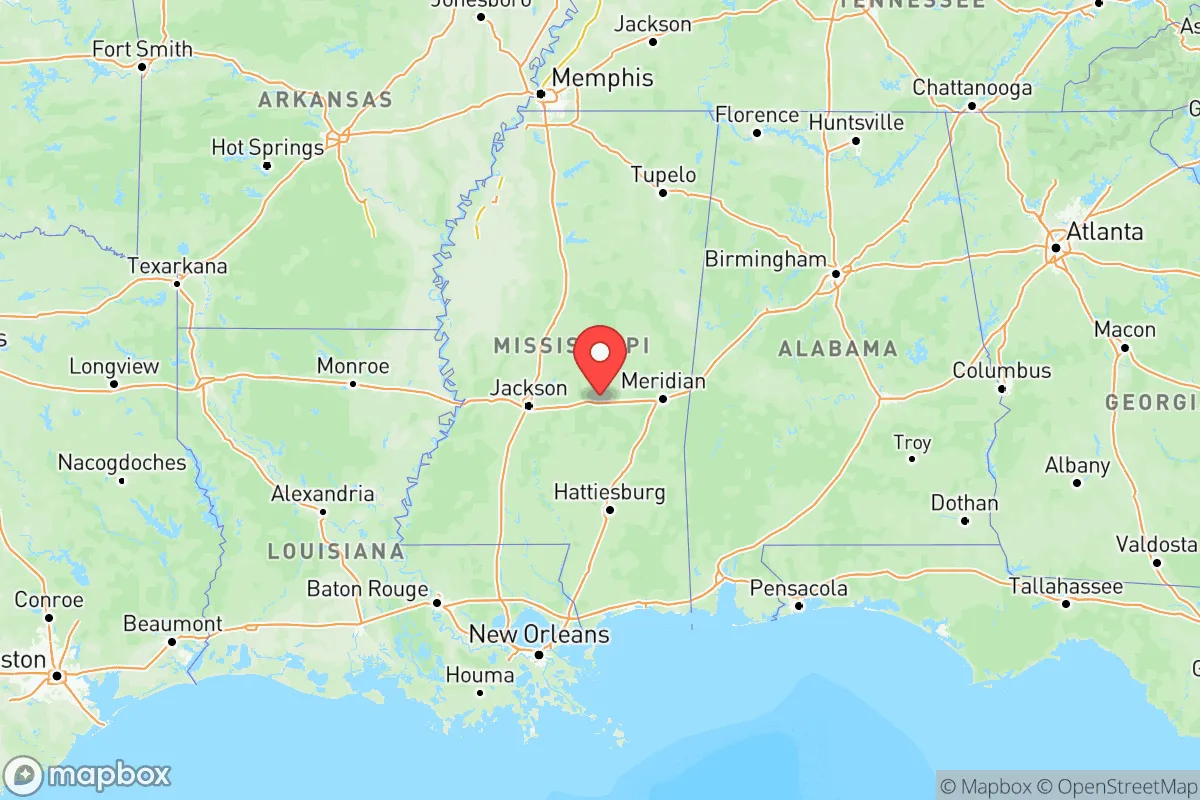
Photo: Wikipedia
Demographics of Mississippi
Affluence Level in Mississippi
A below-average socioeconomic profile. Incomes, home values, and educational attainment trail the U.S., with higher poverty and unemployment.
People of Mississippi
Mississippi’s people today number 2,951,438, making it one of the most racially concentrated states in the nation, with a population that is 55.4% white and 36.9% Black. The state is characterized by deep-rooted family ties, a strong sense of place, and a foreign-born share of just 1.4% — the lowest in the country. Its identity is shaped by a rural-to-small-city distribution, with Jackson, Gulfport, and Hattiesburg serving as the primary urban anchors, while the Mississippi Delta remains a distinct cultural and demographic region unlike any other in America.
Settlement & growth (pre-1960)
Long before European arrival, Mississippi was home to the Choctaw, Chickasaw, Natchez, and other Native nations, who built mound cities and trade networks along the river valleys. The Choctaw were the largest group, concentrated in the central and southern parts of the state, while the Chickasaw held the northern hill country. European contact began with French explorers in the late 1600s, who established the first permanent settlement at Biloxi in 1699, followed by Natchez and Fort Rosalie. The French brought enslaved Africans to work the riverfront plantations, laying the foundation for Mississippi’s Black population.
After the French and Indian War, British control brought a wave of Scots-Irish and English settlers into the Piney Woods and the hill country around Tupelo and Oxford. These were small farmers, not plantation owners, and they established a yeoman culture that still echoes in parts of north Mississippi today. The 1803 Louisiana Purchase and the subsequent cotton boom transformed the state. The invention of the cotton gin made the rich alluvial soil of the Delta — from Greenville to Vicksburg — incredibly valuable, and planters from the older Southern states poured in with thousands of enslaved people. By 1860, Mississippi had a Black majority population, a demographic reality that persisted until the Great Migration.
After the Civil War and Reconstruction, the state’s economy remained agricultural, with sharecropping and tenant farming replacing slavery. The Great Migration (roughly 1915–1970) saw more than 400,000 Black Mississippians leave for Chicago, Detroit, and other industrial cities, dramatically reducing the Black share of the population. White settlement during this period was largely domestic — there was no major European immigration wave to Mississippi as there was to the Midwest or Northeast. A small number of Italian immigrants settled in the Delta around Sunflower and Leland, working as merchants and farmers, and Lebanese and Syrian immigrants established dry-goods stores in towns like Jackson and Meridian. But overall, Mississippi’s population remained overwhelmingly native-born and divided between white and Black.
The mid-20th century saw the rise of the timber and manufacturing industries, drawing rural residents to cities like Hattiesburg and Laurel. The 1950s and early 1960s were marked by the Civil Rights Movement, with Mississippi at the epicenter of the struggle — the Freedom Rides, the murder of Emmett Till, and the 1964 Freedom Summer all centered on the state. By 1960, the population was roughly 58% white and 42% Black, with virtually no other groups present.
Modern era (post-1965)
The 1965 Hart-Cellar Act had almost no impact on Mississippi. The state’s foreign-born population remains the lowest in the nation at 1.4%, and the immigrant communities that do exist are small and localized. The most notable change since 1965 has been the return migration of Black families from the North — a reverse Great Migration — and the growth of Hispanic communities, now 3.6% of the population.
Hispanic settlement began in the 1990s, driven by work in poultry processing plants in central Mississippi and along the Gulf Coast. Forest and Morton in Scott County have become the most visible Hispanic enclaves, with Mexican and Central American families forming a significant share of the local workforce. The Gulf Coast, particularly Biloxi and Gulfport, also saw an influx of Vietnamese immigrants after the Vietnam War, who established a fishing and shrimping community that remains active today. East/Southeast Asian communities (0.7% of the population) are concentrated in the Jackson metro area, where a small but stable Chinese and Vietnamese presence exists, often in restaurant and retail businesses. Indian-subcontinent residents (0.3%) are a tiny group, mostly professionals in healthcare and academia in Jackson and Oxford.
Domestic migration has been more consequential. The reverse Great Migration has brought tens of thousands of Black families back to Mississippi from the North, particularly to the Jackson metro area and the Gulf Coast. At the same time, white retirees and second-home buyers have moved to the Gulf Coast, especially around Ocean Springs and Bay St. Louis, drawn by lower costs and a slower pace of life. Suburbanization has been modest compared to other Sun Belt states, but the Jackson suburbs of Madison and Ridgeland have grown as white and Black middle-class families have moved outward from the city center.
The future
Mississippi’s population is projected to remain relatively stable, with slow growth or even slight decline in many rural counties. The state is not homogenizing — it is tribalizing into distinct enclaves: the Delta remains overwhelmingly Black and poor; the hill country and suburbs are predominantly white and middle-class; the Gulf Coast is the most diverse region, with a mix of white, Black, Hispanic, and Vietnamese residents. The Hispanic share is growing slowly but steadily, driven by births rather than new immigration, and is expected to reach 5-6% by 2040. The Black share is likely to remain near 37%, as the reverse Great Migration offsets out-migration of younger Black residents seeking better economic opportunities elsewhere.
The foreign-born share will remain low, as Mississippi lacks the job base and ethnic networks that attract immigrants to other states. The state’s cultural identity — rooted in Southern Protestantism, family loyalty, and a strong sense of local history — is likely to persist, absorbing the small Hispanic and Asian populations rather than being transformed by them. The biggest demographic challenge is out-migration of college-educated young people of all races, which keeps the college-educated share at just 24.2% and limits economic diversification.
For someone moving in now, Mississippi offers a deeply rooted, racially defined society where community ties are strong and change is slow. The state is not becoming more cosmopolitan or diverse in the way Atlanta or Houston are; it remains a place where the past is always present, and where newcomers — whether from other states or other countries — will find a culture that expects assimilation into existing patterns rather than accommodation of new ones.

Most Diverse Cities in Mississippi


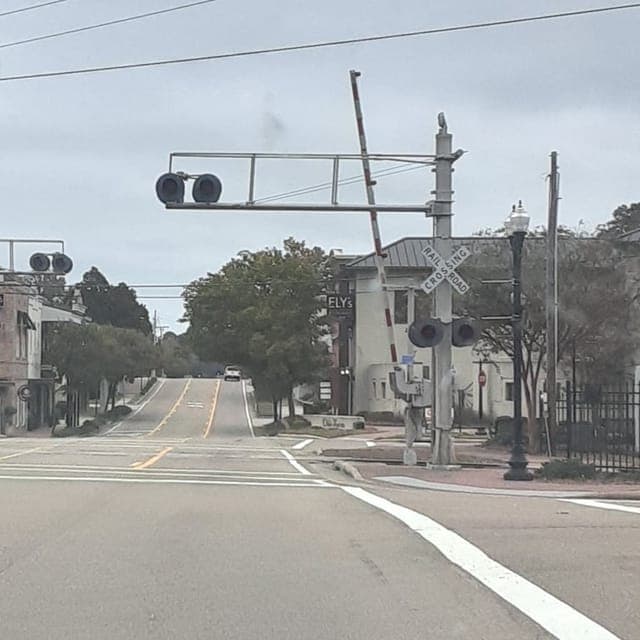
Most Homogenous Cities in Mississippi


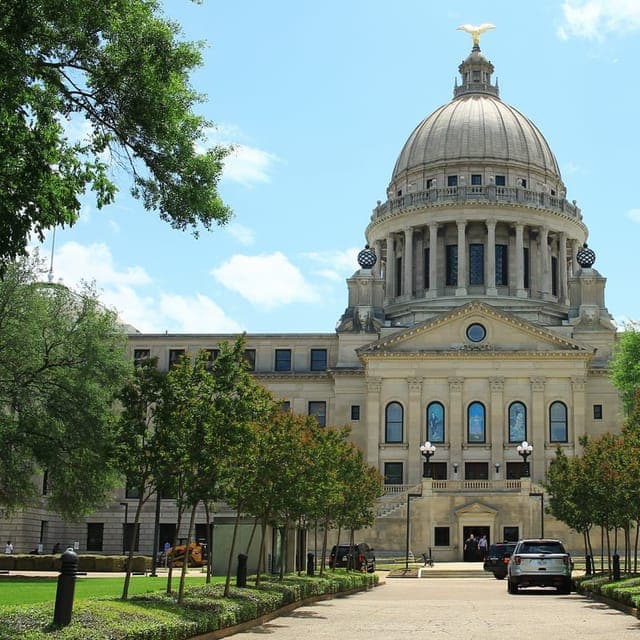
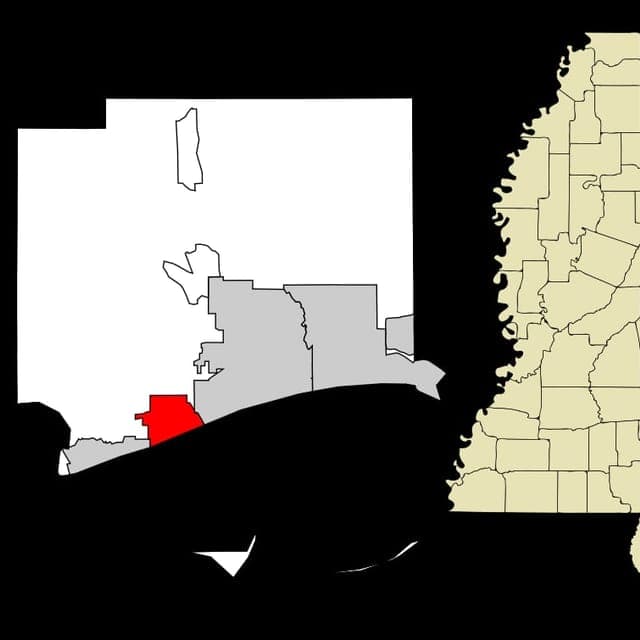
* Values derived from national, state, county, city and local statistics and may differ in a specific area. Last updated: 2026-04-18T23:31:22.000Z
Narrative content on this page is AI-generated and may contain mistakes. Verify any details that matter before acting on them.
ReloMaps may earn a commission from affiliate links at no extra cost to you.

