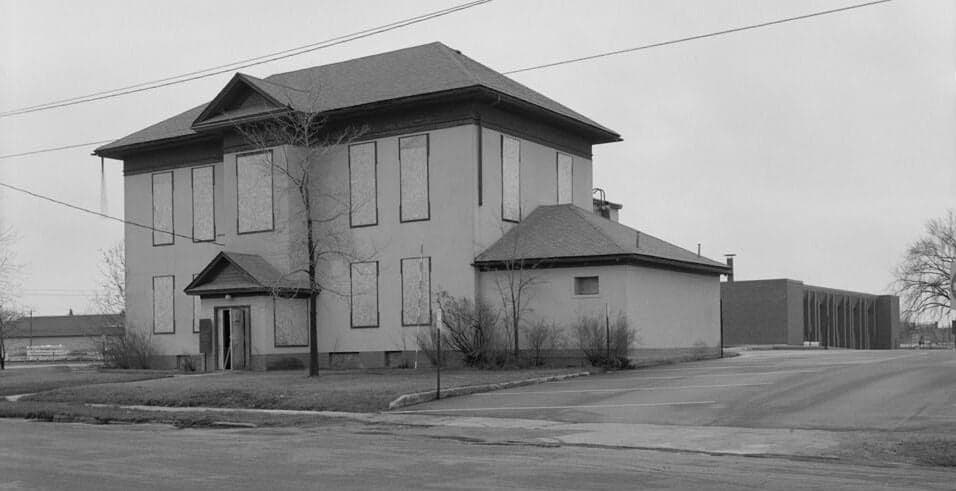
Photo: Wikipedia
Political ClimatePolitical Climate in Sherburne County
Showing district-level results — no local-only data available.
Local Political AnalysisPolitical Analysis of Sherburne County
Sherburne County has long been a reliably conservative stronghold in Minnesota, with a Cook Partisan Voting Index of R+10 that puts it firmly in the red column. But if you’ve lived here as long as I have, you’ve watched the political ground shift under your feet. The county still votes Republican by comfortable margins in most races, but the margins are tightening, especially in the southern townships that are getting swallowed up by the suburban sprawl bleeding out of the Twin Cities. It’s not the same place it was twenty years ago, and that’s got a lot of folks around here paying close attention.
How it compares
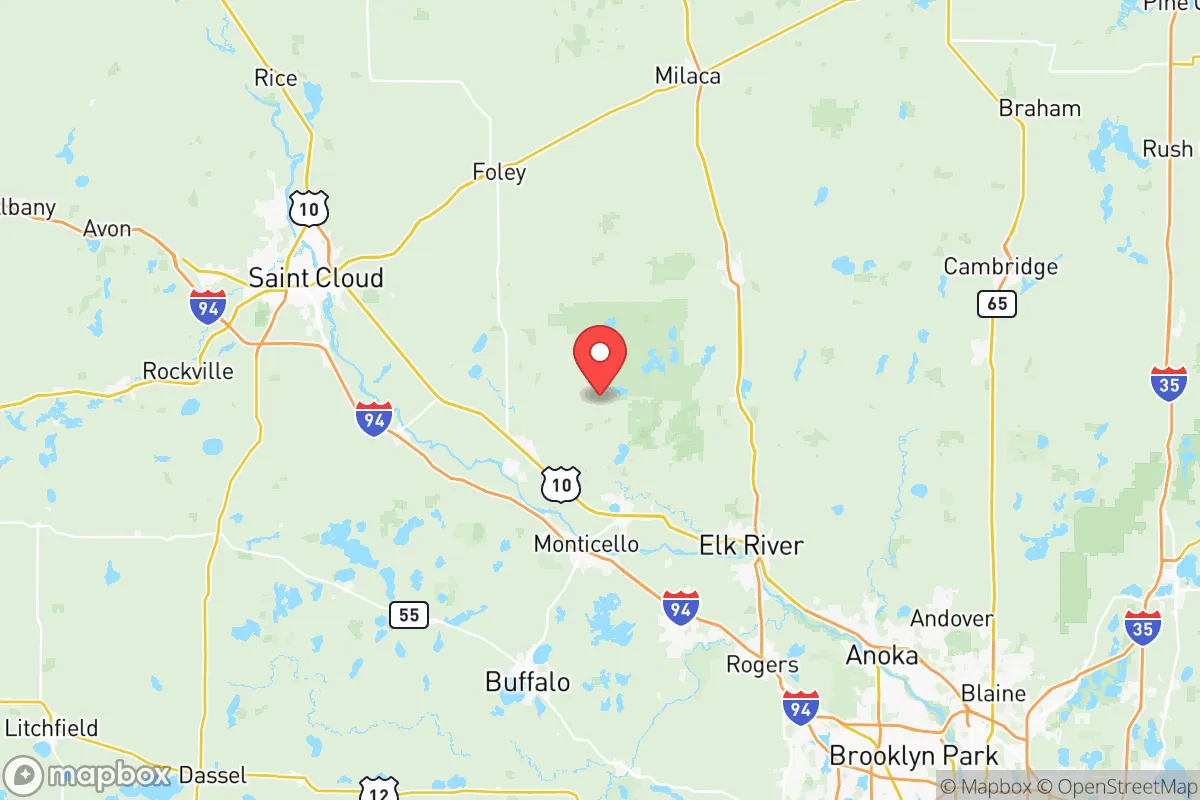
To understand Sherburne County’s politics, you have to look at the state it sits in. Minnesota as a whole has a Cook PVI of D+3, meaning it leans Democratic by a modest margin. That’s a 13-point gap between the county and the state—one of the widest in the metro region. What that means in practice is that while the state legislature and governor’s office tilt left, Sherburne County consistently sends conservative representatives to St. Paul. But the real story is the variation inside the county. Elk River, the county seat, is the political bellwether—it’s got a mix of old farming families, new commuters, and a growing Hispanic population that’s shifting some precincts toward purple. Big Lake and Becker are still deep red, with Trump winning those towns by 20+ points in 2024. Meanwhile, Zimmerman and Clear Lake are more reliably conservative, but you’ll find pockets of blue in the newer subdivisions near the Sherburne National Wildlife Refuge, where transplants from Minneapolis have settled. The swing precincts are in the southern part of the county, around Otsego and St. Michael—those areas are trending left as development pushes north, and that’s where the real battle lines are drawn.
What this means for residents
For those of us who value personal freedoms and limited government, the trend is concerning. The county commission and school boards have held the line on things like mask mandates and critical race theory, but the pressure is mounting. Property taxes have crept up as the county tries to fund new schools and roads for the influx of people, and there’s a growing sense that the state government in St. Paul is overreaching into local affairs—think gun control bills, environmental regulations on farms, and mandates that hit rural communities harder than the cities. The silver lining is that Sherburne County still has a strong network of conservative civic groups and churches that push back. But if you’re looking for a place where the government stays out of your business, you’ll want to keep an eye on the local elections. The school board races in Elk River and the county commissioner seats are where the real fights happen now.
Culturally, Sherburne County is still a place where people wave at each other on the backroads and the county fair is a big deal. But the policy differences with the rest of Minnesota are stark. You won’t find a plastic bag ban here, and the local sheriff’s office has made it clear they won’t enforce state-level red flag laws. The county’s rural character is under pressure from development, but the political identity is holding—for now. If the southern townships keep trending blue, though, the next decade could flip this county from solid red to a battleground. That’s the inside scoop: Sherburne County is still conservative, but it’s not the sure thing it used to be.

State Political ClimatePolitical Climate in Minnesota
State Political AnalysisPolitical Environment in the State
Minnesota has shifted from a classic purple battleground to a solidly Democratic-leaning state, carrying a Cook PVI of D+3 after voting for Democratic presidential candidates in every election since 1976 — the longest such streak of any state. The dominant coalition is the DFL (Democratic-Farmer-Labor Party), powered by the Twin Cities metroplex, while Greater Minnesota has grown increasingly red. Over the last 10-20 years, the state has moved leftward on cultural and economic issues, driven by suburbanization of the metro and a steady influx of out-of-state transplants, but the rural-urban chasm has widened dramatically, making statewide races tighter than the PVI suggests.
Urban vs. rural divide
The political map of Minnesota is a tale of two states. The Twin Cities metro — Hennepin, Ramsey, and Dakota counties — delivers roughly 55% of the state’s vote and leans heavily Democratic. Minneapolis and St. Paul are deep blue strongholds, with precincts routinely hitting 80%+ for Democrats. The inner-ring suburbs like Edina and Bloomington have shifted left as well, while outer-ring exurbs such as Lakeville and Woodbury remain more competitive but are trending blue. Meanwhile, Greater Minnesota is overwhelmingly Republican. The Iron Range (St. Louis, Itasca counties) was once a DFL bastion but has flipped hard red over the past two cycles, driven by mining jobs and cultural conservatism. Counties like Otter Tail, Stearns, and Wright routinely deliver 65-70% Republican margins. The real battleground is the "collar counties" — Anoka, Washington, and Carver — where suburban swing voters decide statewide races. In 2024, Trump won 87 of Minnesota’s 87 counties in the primary, but the metro margin was enough to carry the state for Democrats in the general.
Policy environment
Minnesota’s policy environment has become a laboratory for progressive governance since the DFL took full control in 2023. The state income tax is progressive, with a top rate of 9.85% on income over $200,000 (single) — one of the highest in the nation. Property taxes are above average, and the state sales tax is 6.875%, with local add-ons pushing it past 8% in some cities. The regulatory posture is business-friendly in some sectors (agriculture, mining) but hostile to others (energy, housing). Education policy is dominated by the teachers’ unions; Minnesota has some of the strongest collective bargaining laws in the country and a per-pupil spending that ranks in the top 10 nationally. Healthcare is heavily regulated, with a state-run insurance exchange and Medicaid expansion under the ACA. Election laws have been loosened: Minnesota now has automatic voter registration, same-day registration, and no-excuse absentee voting — making it one of the easiest states to vote in, but also raising concerns about ballot security among conservatives. The state also passed a sanctuary state law in 2023 (the Minnesota Driver’s License for All Act), granting licenses to undocumented immigrants, and a law banning "conversion therapy" for minors.
Trajectory & freedom
On the freedom index, Minnesota is moving decisively in the wrong direction for conservatives. The 2023 legislative session was a firehose of progressive bills. The Minnesota Equal Rights Amendment (HF 100) was passed, enshrining abortion rights and gender identity protections into state law — a direct response to Dobbs. Gun rights took a major hit with the passage of universal background checks and a "red flag" law (the Minnesota Extreme Risk Protection Order Act), allowing courts to temporarily seize firearms from individuals deemed a threat. Parental rights were eroded by the Trans Refuge Act, which shields gender-affirming care for minors from out-of-state legal challenges, effectively overriding parental consent laws from other states. Medical autonomy was further restricted by a law mandating insurance coverage for abortion and gender transition procedures with no copays. Property rights are under pressure from a new "just cause" eviction law and rent control measures in Minneapolis and St. Paul. On the tax front, the state created a new capital gains tax surcharge on high earners and expanded the child tax credit, but overall the tax burden is rising. The only bright spot for liberty advocates was the defeat of a proposed carbon tax and the preservation of some agricultural land-use protections.
Civil unrest & political movements
Minnesota has been a flashpoint for civil unrest since the George Floyd protests in 2020, which caused over $500 million in property damage in Minneapolis and St. Paul. The "Defund the Police" movement had real traction here — the Minneapolis City Council attempted to disband the police department, though it was later reversed. The state has seen a surge in organized activist groups on both sides. On the left, the Minnesota Freedom Fund and Reclaim the Block have been active in bail reform and police oversight. On the right, the Minnesota Gun Owners Caucus and the Minnesota Family Council have mobilized against the red flag law and transgender policies. Immigration politics are heated: the Driver’s License for All Act passed despite strong opposition from rural counties, and some sheriffs have vowed not to enforce it. Election integrity remains a sore point — the 2020 election saw a record 3.1 million votes cast, with no major fraud proven, but the 2023 law allowing automatic voter registration without citizenship verification has raised alarms. Visible flashpoints include the ongoing Minneapolis 2040 Plan (a zoning overhaul that eliminated single-family zoning citywide) and the Line 3 pipeline protests, which drew thousands of activists from across the country.
Projection
Over the next 5-10 years, Minnesota will likely become more Democratic at the state level, but the margin will remain narrow. Demographic trends favor the DFL: the Twin Cities metro is growing, while Greater Minnesota is aging and losing population. In-migration is coming from blue states like California and Illinois, bringing progressive voting habits. However, the rural backlash is real — counties like Beltrami and Cass are seeing a surge in conservative activism, and the Iron Range could flip permanently red. The state’s political future hinges on the suburbs: if Anoka and Washington counties continue trending left, Republicans will be locked out of statewide office for a generation. A new resident moving in now should expect higher taxes, more regulation, and a cultural environment that is increasingly hostile to traditional values. The DFL trifecta is likely to persist, meaning more gun control, more expansive transgender rights, and a continued push for universal healthcare. The only wildcard is a potential economic downturn — Minnesota’s high tax burden and regulatory climate could drive out businesses, leading to a fiscal crisis that might moderate the leftward drift.
For a conservative considering relocation, Minnesota offers a mixed bag. The rural areas and exurbs provide a high quality of life with strong schools and low crime, but you’ll be fighting an uphill battle at the ballot box. The state’s natural beauty, strong economy, and excellent healthcare are real draws, but the policy environment is increasingly at odds with conservative values. If you’re moving here, pick your county carefully — Wright, Sherburne, or Stearns are your best bets for a like-minded community — and be prepared to engage in local politics to protect your freedoms. The state isn’t lost yet, but the clock is ticking.
* Values derived from national, state, county, city and local statistics and may differ in a specific area. Last updated: 2026-05-12T08:00:05.000Z
Narrative content on this page is AI-generated and may contain mistakes. Verify any details that matter before acting on them.
ReloMaps may earn a commission from affiliate links at no extra cost to you.

