Photo: Wikipedia
Demographics of Ramsey County
Affluence Level in Ramsey County
A middle-class area roughly in line with national averages across income, home values, education, and employment.
People of Ramsey County
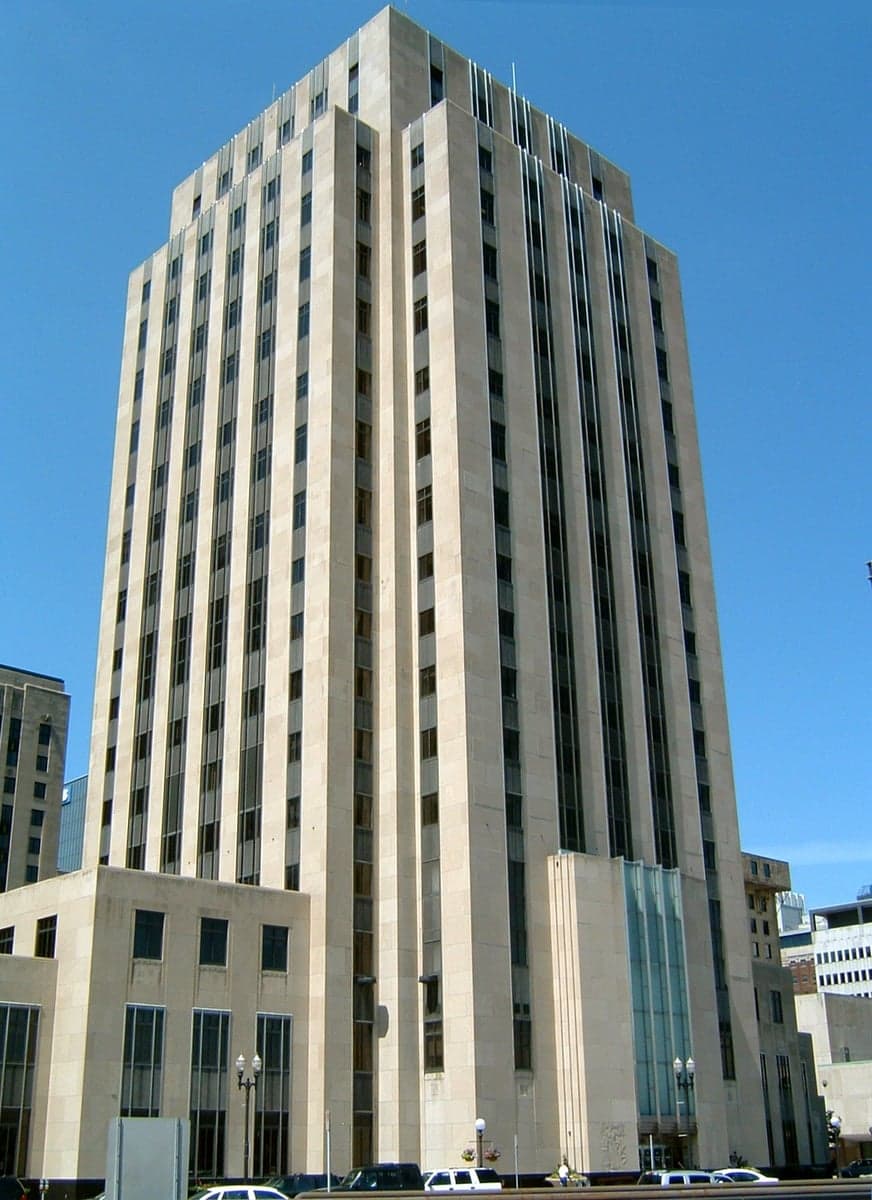
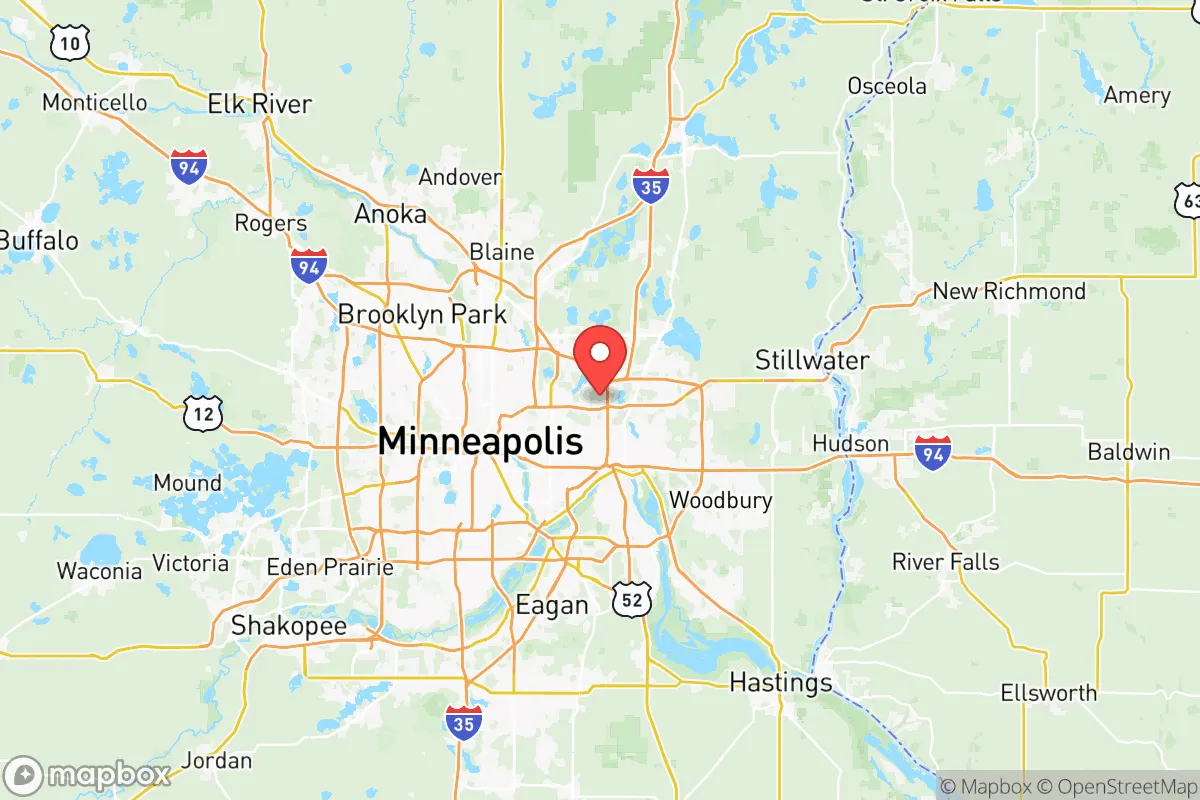
Ramsey County, Minnesota, is a densely populated urban core anchored by the state capital, Saint Paul, and characterized by a highly educated, racially diverse population of 544,438. With 45.5% of adults holding a college degree, the county stands out as a knowledge-economy hub, while its demographic makeup—58.7% White, 13.7% East/Southeast Asian, 12.0% Black, 8.2% Hispanic, and 1.2% Indian—reflects waves of immigration and migration spanning over 150 years. The county’s identity is shaped by a blend of historic European ethnic enclaves, a significant Hmong and East African presence, and a growing professional class drawn to government, healthcare, and tech sectors centered in Saint Paul, Roseville, and Maplewood.
Settlement & growth (pre-1960)
Before American settlement, the area now known as Ramsey County was the homeland of the Dakota people, particularly the Mdewakanton band, who lived in villages along the Mississippi and Minnesota Rivers. French fur traders and missionaries passed through in the 17th and 18th centuries, but permanent European-American settlement began only after the 1837 Treaty with the Dakota opened the land for logging and farming. The county was established in 1849, the same year the Minnesota Territory was created, with Saint Paul designated as the territorial capital.
The first major wave of American settlers were Yankees from New England and New York, who arrived in the 1840s and 1850s, establishing the political and commercial framework of Saint Paul. They were soon joined by German and Irish immigrants, who formed the backbone of the city’s working class. Germans concentrated in the West Seventh Street area of Saint Paul, while the Irish settled along the Mississippi riverfront and in the Dayton’s Bluff neighborhood. By 1870, foreign-born residents made up over 40% of the county’s population, with Germans and Irish the largest groups. The railroad boom of the 1870s and 1880s brought Swedish and Norwegian immigrants, who settled in the Midway district and in the eastern suburbs of Maplewood and North Saint Paul, working in rail yards and lumber mills.
The late 19th and early 20th centuries saw a second wave of European immigration. Poles and Czechs arrived between 1880 and 1910, forming tight-knit communities in the East Side of Saint Paul, particularly around Payne Avenue and in Dayton’s Bluff. Italians, mostly from southern Italy and Sicily, settled in the Lowertown and Rice Street areas of Saint Paul, working as laborers and in the city’s growing brewing and meatpacking industries. By 1920, Ramsey County was overwhelmingly white and European-born or of European descent, with a population of about 250,000. The Great Depression and World War II slowed immigration, but the post-war boom brought a new domestic migration: African Americans from the South, part of the Second Great Migration, who settled in the Rondo neighborhood of Saint Paul and in Frogtown. By 1960, the county’s population had reached 478,000, with a small but growing Black community of about 4%.
Modern era (post-1965)
The 1965 Hart-Cellar Act fundamentally reshaped Ramsey County’s demographics. The most dramatic change came with the arrival of Hmong refugees from Laos after the Vietnam War, beginning in the late 1970s and continuing through the 1990s. The Hmong community, which now numbers over 30,000 in the county, concentrated in Saint Paul’s East Side, particularly along University Avenue and in the Payne-Phalen neighborhood. Today, Ramsey County has the largest urban Hmong population in the United States, and the community has established cultural institutions like the Hmong Cultural Center and the Hmong Village shopping center in Saint Paul.
Another major post-1965 group is East African immigrants, primarily Somali, who began arriving in the 1990s as refugees from civil war. They settled in the Cedar-Riverside area of Minneapolis (just across the county line) and in Saint Paul’s Midway and Frogtown neighborhoods. The Somali community in Ramsey County is estimated at 15,000–20,000, with a growing presence in Roseville and Maplewood. Hispanic immigration, primarily from Mexico and Central America, accelerated after 1980, with families settling in West Side Saint Paul (the West Side Flats area) and in South Saint Paul. The Hispanic population grew from 2.5% in 1990 to 8.2% today, with a mix of long-established Tejano families and newer arrivals working in construction, hospitality, and food processing.
Domestic migration has also shifted the county’s character. Since 2000, Ramsey County has seen an influx of young professionals and empty-nesters from the broader Midwest, drawn to the urban amenities of Saint Paul and the inner-ring suburbs. The Lowertown and Cathedral Hill neighborhoods of Saint Paul have experienced significant gentrification, with new condos and apartments attracting college-educated workers in healthcare (HealthPartners, Regions Hospital), government (Minnesota state government), and tech (3M in nearby Maplewood). At the same time, the county’s Black population has grown from 7.5% in 2000 to 12.0% today, driven by both African American families moving from Chicago and Detroit and by African immigrants from Liberia and Ethiopia. The East/Southeast Asian population, now 13.7%, is overwhelmingly Hmong, with smaller communities of Vietnamese and Chinese in Saint Paul and Roseville.
The future
Ramsey County is projected to become more diverse over the next two decades, though at a slower pace than the 1990s and 2000s. The white population, which declined from 72% in 2000 to 58.7% today, is expected to continue shrinking as older residents age out and younger, more diverse cohorts move in. The Hispanic and East/Southeast Asian populations are likely to grow modestly, driven by both natural increase and continued immigration, while the Black population may stabilize as African American out-migration to the suburbs (particularly Woodbury and Oakdale in neighboring Washington County) offsets new arrivals. The Indian subcontinent population, currently 1.2%, is small but growing, with professionals in healthcare and tech settling in Roseville and Shoreview.
The county’s cultural identity is evolving from its historic European ethnic enclaves toward a more polyglot, multi-ethnic character. The Hmong New Year celebration in Saint Paul draws over 100,000 visitors annually, and Somali-owned businesses line University Avenue. At the same time, the county faces challenges of economic segregation: the North End and Frogtown neighborhoods have poverty rates above 25%, while Roseville and Shoreview are solidly middle-class. The next 10–20 years will likely see continued suburbanization of immigrant communities, with second-generation Hmong and Somali families moving to Maplewood, Vadnais Heights, and Little Canada, while Saint Paul’s core becomes increasingly affluent and professional.
For someone moving in now, Ramsey County offers a dense, urban-suburban mix with strong public schools (particularly in Roseville and Shoreview), a robust job market anchored by government and healthcare, and a level of ethnic diversity rare for the Upper Midwest. The county is becoming less white and more Asian and Hispanic, but it remains a place where historic European roots—German beer halls, Irish pubs, Swedish churches—still coexist with Hmong markets, Somali coffee shops, and Mexican taquerias. The character is pragmatic, politically moderate to liberal, and increasingly oriented toward the knowledge economy, making it a solid choice for families and professionals who value urban amenities without the extremes of coastal cities.

* Values derived from national, state, county, city and local statistics and may differ in a specific area. Last updated: 2026-06-08T09:45:24.000Z
Narrative content on this page is AI-generated and may contain mistakes. Verify any details that matter before acting on them.
ReloMaps may earn a commission from affiliate links at no extra cost to you.

