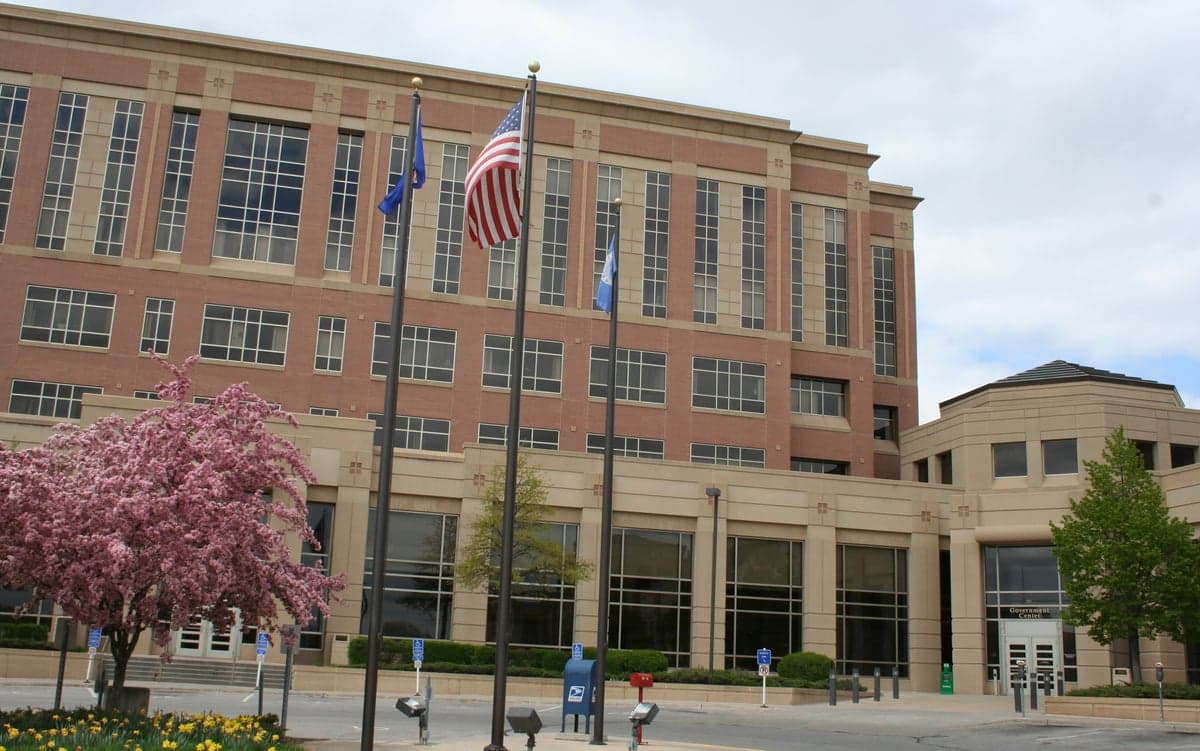
Photo: Wikipedia
Personal Sovereignty in Olmsted County
Viable for self-reliance. Generally workable, though some barriers may limit total independence.
What does Personal Sovereignty tell us?
Personal Sovereignty measures your capacity for self-reliance and independence with minimal government friction. Higher scores mean fewer barriers between you and the way you want to live... but it assumes you have the space you need and good neighbors.
What does this tell us?
Personal Sovereignty measures your capacity for self-reliance and independence with minimal government friction. Higher scores mean fewer barriers between you and the way you want to live... but it assumes you have the space you need and good neighbors.
State Policy
Energy independence: Importer (20% of energy produced in-state)
Personal Liberty
Homesteading

Personal Liberty Analysis
Olmsted County, anchored by Rochester, presents a nuanced personal sovereignty environment where Minnesota's generally progressive state-level policies intersect with a more pragmatic, medically-driven local culture. While the county does not offer the same degree of regulatory freedom found in deeply rural or Western states, it provides a stable, rule-of-law framework that many conservative-leaning individuals and families find predictable and workable. The key for relocators is understanding that personal autonomy here is less about the absence of rules and more about the quality and consistency of those rules, particularly in contrast to the more restrictive urban corridors of the Twin Cities.
Tax burden and regulatory posture in Olmsted County
Minnesota's state income tax is progressive, with a top marginal rate of 9.85%, which applies to higher earners in Rochester and the surrounding area. Property taxes in Olmsted County are moderate for the state, with effective rates around 1.1% to 1.3% of market value, though this varies significantly between the city of Rochester and the smaller townships. The regulatory posture is characterized by a strong state-level framework, particularly around environmental and land-use rules, but local enforcement in towns like Byron and Eyota tends to be less aggressive than in Rochester proper. Business licensing is straightforward for most professions, though healthcare and construction sectors face more oversight due to the Mayo Clinic's influence and state building codes. Overall, the tax burden is higher than in states like Texas or Florida, but the county's infrastructure and services—especially roads and schools—are correspondingly robust.
Self-defense and gun law specifics in Olmsted County
Minnesota is a "shall-issue" state for concealed carry permits, and Olmsted County's sheriff's office processes applications efficiently, typically within the statutory 30-day window. The county has no local ordinances that further restrict state law, meaning that permitless open carry is legal for individuals 18 and older, though concealed carry requires a permit. The city of Rochester has a more visible law enforcement presence, but gun-friendly culture is stronger in the outlying communities like Stewartville and Chatfield, where private ranges and hunting clubs are common. Important note: Minnesota does not have a "Stand Your Ground" law; instead, it follows a "duty to retreat" standard in public spaces, though the Castle Doctrine applies within one's home. This is a meaningful distinction for those prioritizing self-defense autonomy, and it is a consistent point of discussion among local gun owners.
Self-reliance and homesteading viability across Olmsted County
Homesteading viability varies sharply by location within the county. In the unincorporated townships and smaller cities like Dover and Elgin, agricultural zoning allows for larger lot sizes—often 5 to 40 acres—with minimal restrictions on livestock, gardens, and outbuildings. Rochester's city limits, by contrast, impose standard suburban lot sizes (typically 0.25 to 0.5 acres) and have stricter ordinances regarding chickens, bees, and accessory structures. Off-grid feasibility is limited by state building codes that require connection to the electrical grid for new construction in most areas, though solar panels with net metering are permitted and increasingly common. Rainwater collection is legal for non-potable uses, but well and septic systems must meet state Department of Health standards, which adds cost and complexity. For serious homesteaders, the townships around Oronoco offer the best balance of land availability and regulatory leniency.
Personal liberties in Olmsted County: parental rights, medical autonomy, speech, and property
Parental rights in Minnesota are generally strong, with state law affirming parents' authority over their children's education and medical decisions, though vaccine mandates for school attendance exist. Medical autonomy is a complex topic here: the Mayo Clinic's dominance means world-class healthcare is available, but some conservative residents express concern about institutional pressure regarding COVID-19 protocols and end-of-life care. Free speech is protected under the First Amendment, and Olmsted County has no local ordinances that restrict public expression beyond standard time-place-manner rules. Property rights are well-defined, with clear zoning and permitting processes, though the state's environmental review process can delay larger developments. Eminent domain is used sparingly and primarily for public infrastructure projects like road widening. The county's legal climate is predictable, which many relocators value over the uncertainty found in more politically volatile jurisdictions.
Compared to the Twin Cities metro area, Olmsted County offers a noticeably lighter regulatory touch and a more pragmatic approach to personal sovereignty, though it remains firmly within Minnesota's state-level framework. For a conservative-leaning individual or family, the county's strongest appeal lies in its predictability and the availability of rural townships where self-reliance is genuinely feasible, rather than in any radical departure from state norms. Those seeking the absolute minimum in taxes and regulation will find more freedom in states like South Dakota or Wyoming, but for relocators who want high-quality infrastructure, excellent healthcare, and a stable legal environment without the political intensity of Minneapolis or St. Paul, Olmsted County represents a solid, middle-ground choice.

* Values derived from national, state, county, city and local statistics and may differ in a specific area. Last updated: 2026-08-08T14:59:11.000Z
Narrative content on this page is AI-generated and may contain mistakes. Verify any details that matter before acting on them.
ReloMaps may earn a commission from affiliate links at no extra cost to you.

