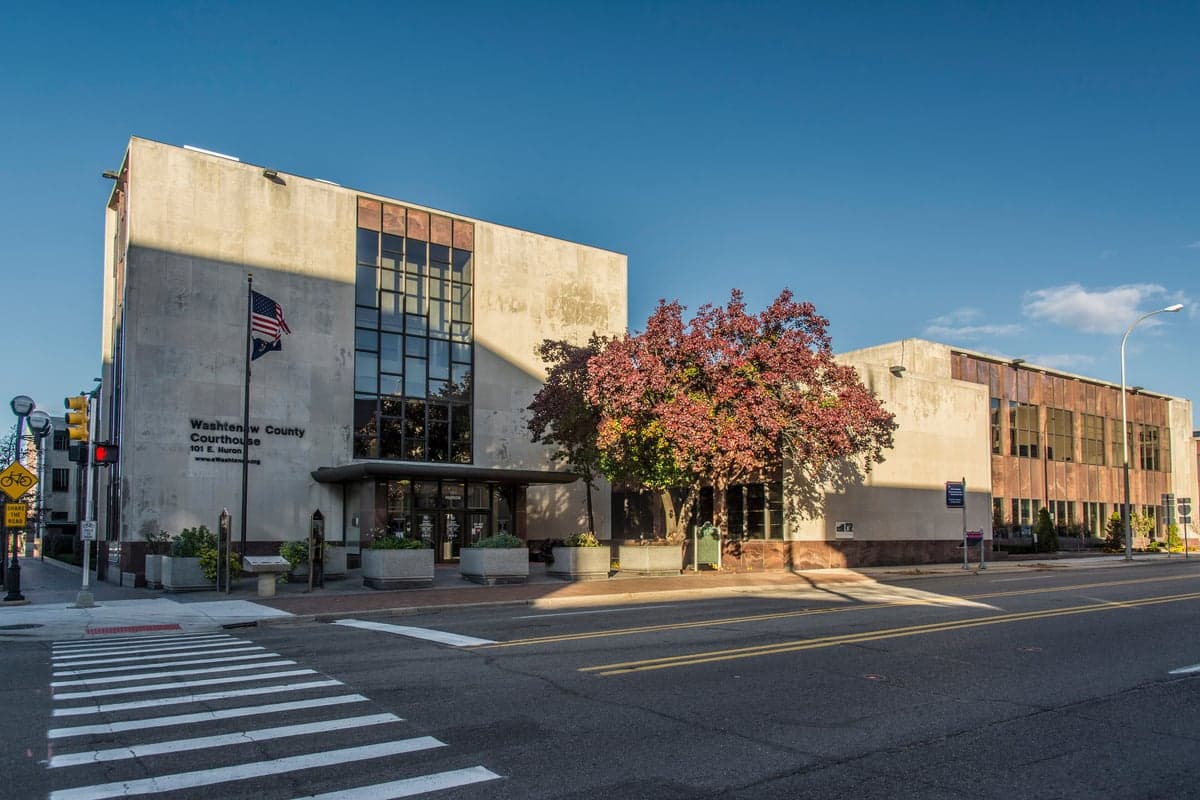
Photo: Wikipedia
Personal Sovereignty in Washtenaw County
Strong independent fundamentals that actively favor personal liberty and low regulation.
What does Personal Sovereignty tell us?
Personal Sovereignty measures your capacity for self-reliance and independence with minimal government friction. Higher scores mean fewer barriers between you and the way you want to live... but it assumes you have the space you need and good neighbors.
What does this tell us?
Personal Sovereignty measures your capacity for self-reliance and independence with minimal government friction. Higher scores mean fewer barriers between you and the way you want to live... but it assumes you have the space you need and good neighbors.
State Policy
Energy independence: Importer (20% of energy produced in-state)
Personal Liberty
Homesteading

Personal Liberty Analysis
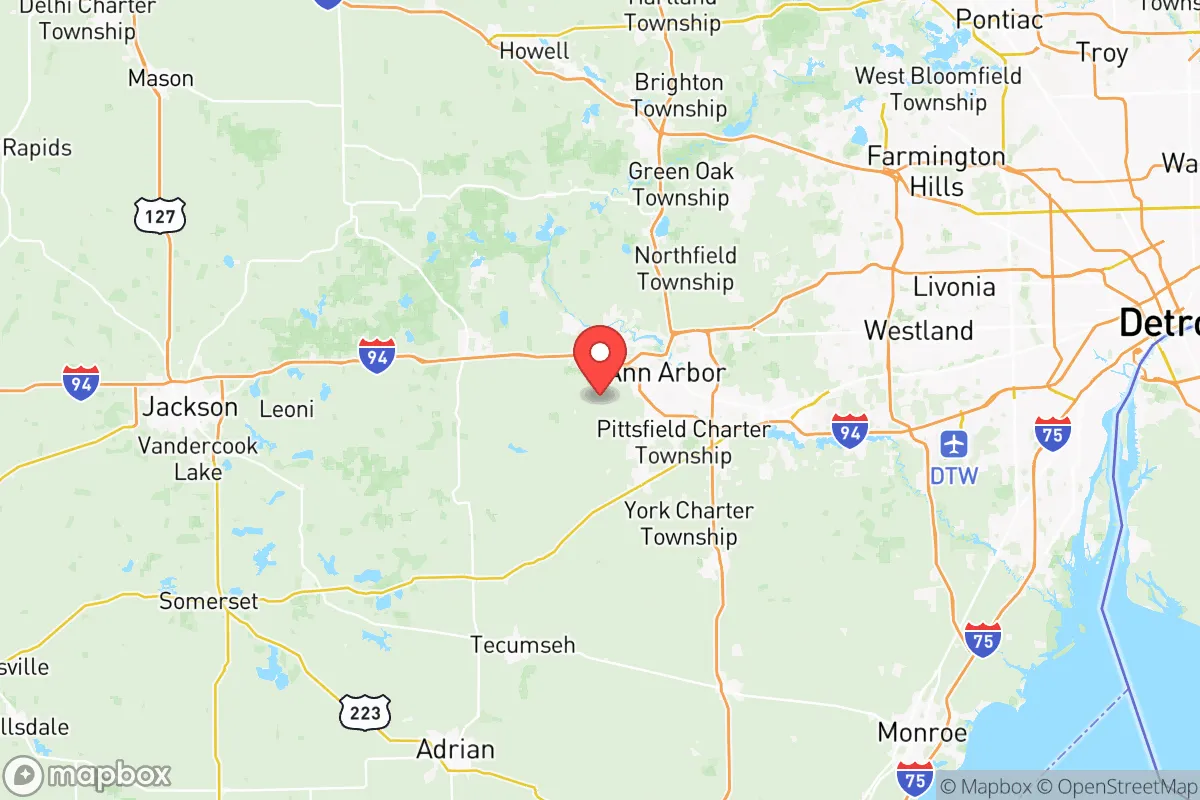
Washtenaw County presents a complex autonomy environment where state-level protections for personal sovereignty are frequently moderated by local municipal codes and a dominant progressive political culture, particularly within Ann Arbor and its inner-ring suburbs. While Michigan law provides a baseline of individual rights—from firearm preemption to property rights—the lived experience of personal freedom varies dramatically depending on whether one resides in the city of Ypsilanti, the rural township of Manchester, or the exurban reaches of Dexter. For a relocation-minded individual or family prioritizing self-reliance, the key strategic decision is not whether to move to Washtenaw County, but precisely where within its 720 square miles to plant roots.
Tax burden and regulatory posture across Washtenaw County
Michigan's state-level tax structure is comparatively light for a northern state, with a flat 4.25% individual income tax and no state-level estate or inheritance tax. However, Washtenaw County's local tax burden is among the highest in the state, driven by voter-approved millages for schools, parks, and transit. Property taxes in Ann Arbor routinely exceed 60 mills, while rural townships like Saline Township and Sharon Township often sit in the low-to-mid 40s. The regulatory posture is similarly bifurcated: Ann Arbor enforces a strict rental housing code, energy efficiency mandates, and a plastic bag ban, while townships like Bridgewater and Freedom Township operate with minimal zoning enforcement and no building code inspections for owner-occupied agricultural structures. For a reader seeking low regulatory overhead, the county's western and northern townships—places like Lyndon Township and Dexter Township—offer a significantly lighter touch than the urban core.
Self-defense and gun law specifics in Washtenaw County
Michigan is a shall-issue state for concealed pistol licenses (CPL), and Washtenaw County's gun board processes applications in compliance with state law, typically within the statutory 45-day window. The county sheriff's office has not adopted any "good cause" restrictions beyond state requirements. However, local ordinances create a patchwork: Ann Arbor prohibits firearms in city parks and recreation facilities, and the University of Michigan campus—a sovereign entity within the county—bans concealed carry even for CPL holders. Open carry is legal in most unincorporated areas but practically discouraged in Ann Arbor and Ypsilanti by police interaction patterns. Manchester and Milan, by contrast, have no local firearm ordinances beyond state law, and gun culture is visibly present at local shooting ranges like the Washtenaw Sportsman's Club. The practical takeaway: a gun owner will find a welcoming environment in the county's rural townships but should expect friction within the urbanized core.
Self-reliance and homesteading viability across the county
Homesteading feasibility in Washtenaw County is almost entirely a function of zoning jurisdiction. The county's rural townships—Sharon Township, Bridgewater Township, and Freedom Township—allow accessory dwelling units, chicken keeping, beekeeping, and small-scale livestock on parcels as small as two acres. Off-grid living is legally ambiguous: Michigan law does not prohibit solar panels or rainwater collection, but the county health department requires a septic system permit for any dwelling, and wells must be drilled by a licensed contractor. Ann Arbor's zoning code, by contrast, prohibits front-yard chickens, limits backyard structures to 200 square feet, and requires grid-tied electrical connections for new construction. The sweet spot for self-reliance is the county's northwestern quadrant, where Dexter Township and Lyndon Township offer five-acre minimum lot sizes in agricultural zones, allowing for substantial gardening, small orchards, and even hobby livestock without triggering county health inspections beyond the basic septic requirement.
Personal liberties in practice: parental rights, medical autonomy, speech, and property
Michigan's state constitution guarantees parental rights in educational and medical decisions, and Washtenaw County's school districts generally defer to parents on opt-outs for sex education and curriculum objections. However, the Ann Arbor Public Schools district has a notably progressive policy environment, including gender-inclusive restroom policies and a robust DEI framework that some conservative families find at odds with their values. Medical autonomy is strong at the state level—Michigan has no vaccine mandate for adults and no state-level prescription drug monitoring program that restricts patient choice—but local health departments in Washtenaw County have historically pushed for masking and vaccination mandates during public health emergencies. Property rights are well-protected under Michigan's Private Property Rights Protection Act, which requires compensation for regulatory takings, and the county's planning commission generally respects existing nonconforming uses. Free speech is protected under both the U.S. and Michigan constitutions, and the county has no local hate speech ordinances that would criminalize protected expression. The practical reality: a family that values parental autonomy will find more alignment with the culture of Saline or Manchester than with Ann Arbor's school board politics.
Overall, personal sovereignty in Washtenaw County is best understood as a gradient rather than a uniform condition. The state of Michigan provides a solid legal foundation for self-defense, property rights, and medical choice, but the county's progressive urban centers—Ann Arbor and Ypsilanti—layer on additional regulations and cultural expectations that constrain individual autonomy. For the relocation-minded reader who prioritizes personal freedom, the strategic move is to target the county's rural townships: Sharon Township, Freedom Township, Bridgewater Township, and Lyndon Township offer the lightest regulatory touch, the most homesteading flexibility, and the strongest gun culture, all while remaining within commuting distance of Ann Arbor's employment base. Compared to similarly situated counties in the Midwest, Washtenaw offers more autonomy than Cook County, Illinois, but less than Livingston County to the north—making it a viable compromise for those who need urban access but value rural liberty.

* Values derived from national, state, county, city and local statistics and may differ in a specific area. Last updated: 2026-08-08T15:47:25.000Z
Narrative content on this page is AI-generated and may contain mistakes. Verify any details that matter before acting on them.
ReloMaps may earn a commission from affiliate links at no extra cost to you.

