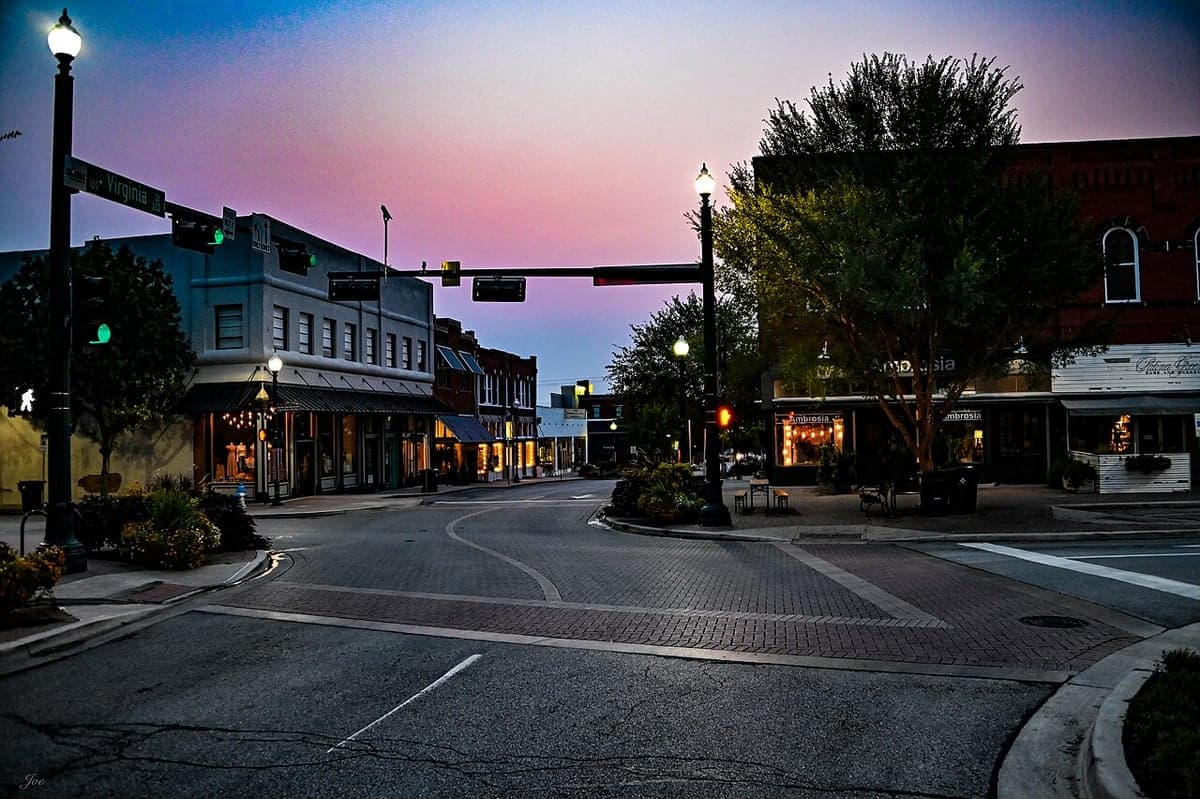
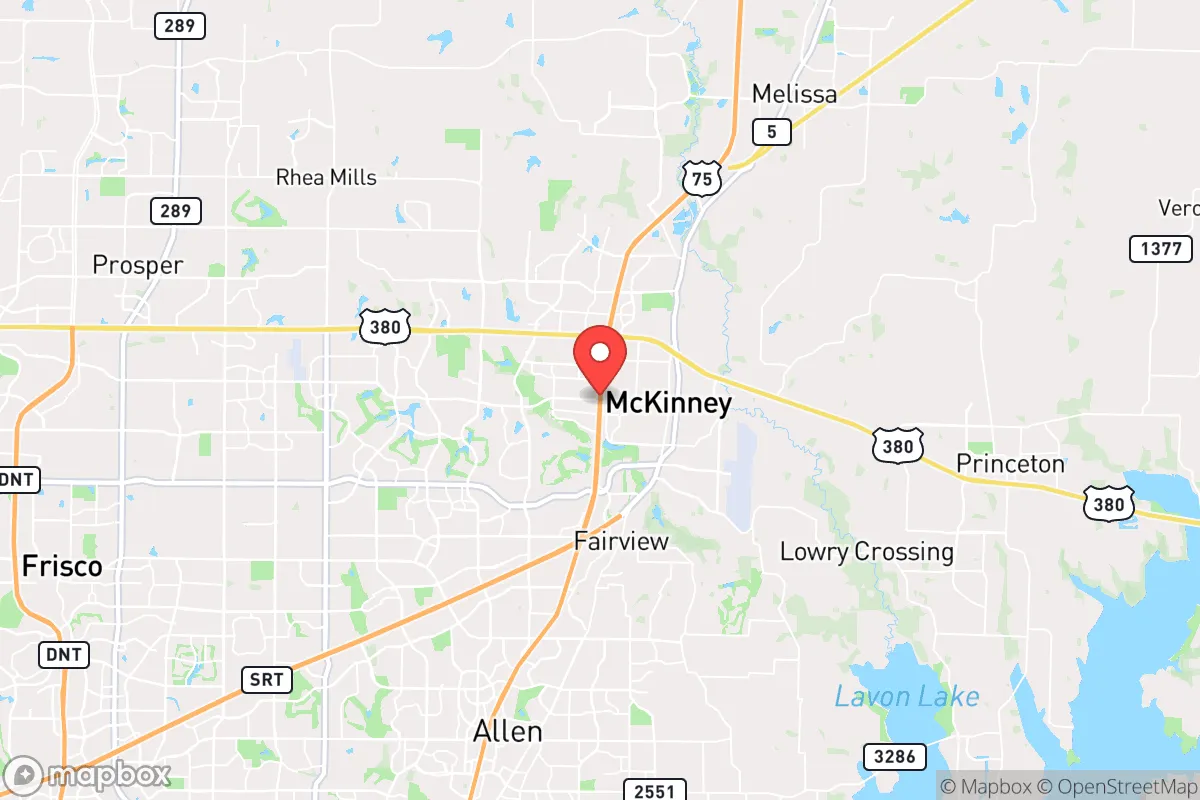
Photo: Wikipedia
Strategic Assessment of McKinney, TX
Multiple tactical vulnerabilities. Population density, target proximity, or disaster risk are likely compounding. A retreat property and exit planning is required.
What does the Strategic Assessment tell us?
Our Strategic Assessment grades tactical survivability of an area. Major population centers, military targets, fallout zones, natural disasters, and border exposure all drive risk — lower exposure means a more defensible position in a crisis.
This is heavily inspired by Joel Skousen's Strategic Relocation book. Highly recommended you checkout the book ($)What does this tell us?
Our Strategic Assessment grades tactical survivability of an area. Major population centers, military targets, fallout zones, natural disasters, and border exposure all drive risk — lower exposure means a more defensible position in a crisis.
This is heavily inspired by Joel Skousen's Strategic Relocation book. Highly recommended you checkout the book ($)Strategic Pillars

Key Distances
Regional Safe Places
Below is our recommended "safe zones" in Texas and the surrounding area based on our strategic heuristics. For most people, it's unrealistic to live in a “safe zone” full-time due to work, family or other personal reasons. They tend to be more rural. However, many of these areas are perfect for second homes and retreat properties that double as a vacation home or even a short-term rental.

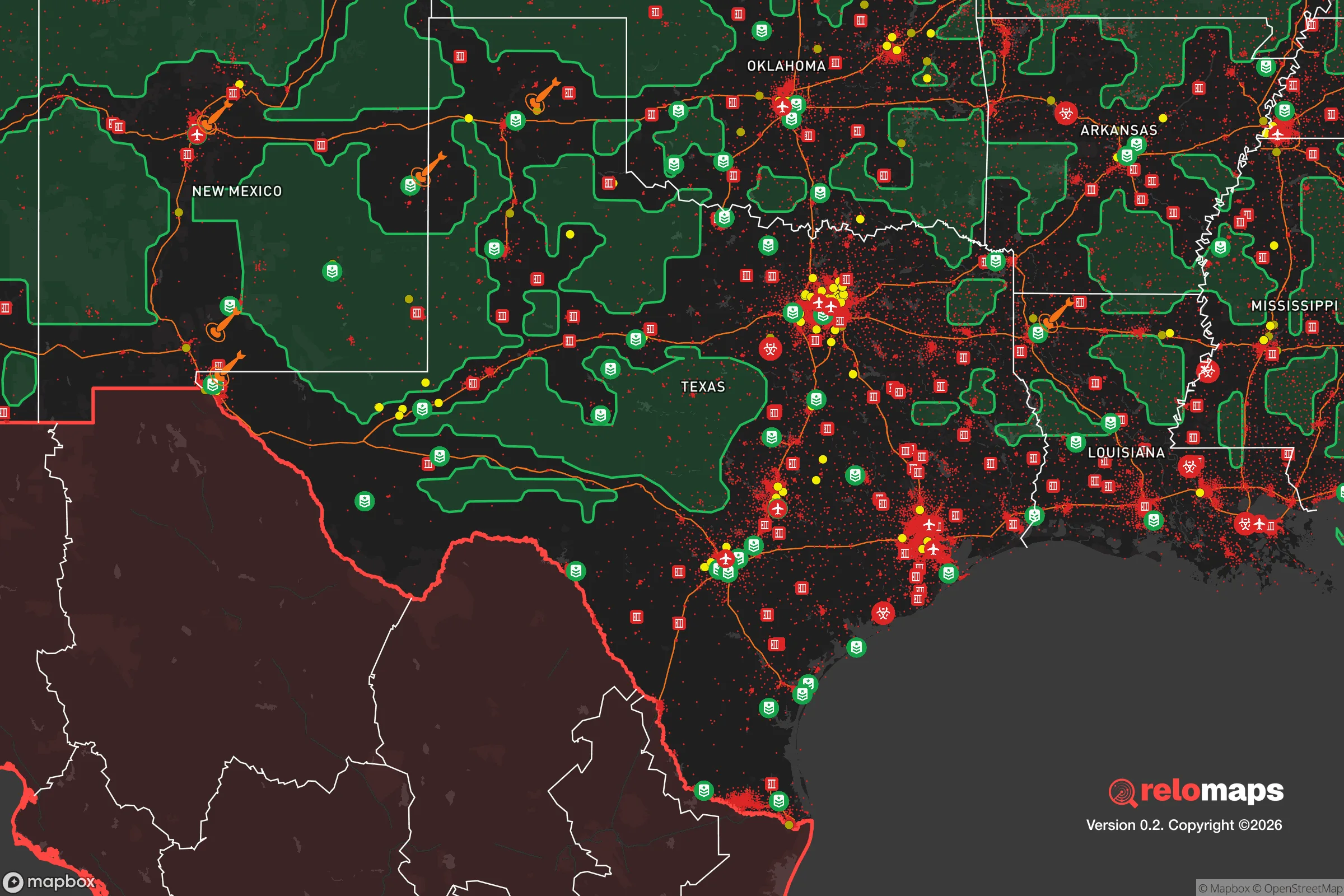


Important Note: For informational purposes only. This does not mean nothing bad ever happens in the green zones. Please use common sense. This is based on public data and modeled with AI. We tried to take a conservative approach but mistakes happen. We update this regularly as new information becomes available.
Solar Generator Recommendations
Backup power matters more here than in safer locations. We've picked three solar generators across budgets and capacity tiers — start with the budget unit if you only need a few essentials, or step up if you want to run a fridge and HVAC for days at a time.

Jackery Portable Power Station Explorer 300
Budget OptionPower on the Go: Weighing only 11 lbs, it's convenient to set up and store with book-sized foldable solar panels

BLUETTI Portable Power Station AC180
Designed for both indoor and outdoor scenarios, AC180 is highly capable as it has a robost capacity and continuous output power.

EF ECOFLOW DELTA Pro Ultra Power Station
Upgraded PickEcoFlow DELTA Pro Ultra is a whole-home energy system designed to grow with your family. Integrated with the Smart Home Panel 2, it scales to meet your evolving energy needs — keeping your home powered, intelligent, and secure through every stage of life.
We earn a commission, at no additional cost to you.
Strategic Assessment Analysis
McKinney, Texas, presents a mixed strategic picture for the conservative prepper or survivalist. Its rapid growth and proximity to the Dallas-Fort Worth metroplex offer economic opportunity but introduce significant vulnerabilities in a collapse scenario. While the city itself is a well-managed conservative enclave with strong community ties, its location within the North Texas urban corridor means it is not a remote retreat; it is a suburban buffer zone that could become a contested area during widespread unrest or a major disaster. The key to understanding McKinney’s strategic value lies in its position as a secondary hub—close enough to benefit from regional resources, but far enough to avoid the immediate blast radius of a major urban collapse.
Geographic position and natural advantages for long-term security
McKinney sits roughly 30 miles north of downtown Dallas, placing it in the outer ring of the DFW sprawl. This distance is critical: in the event of a major civic disruption, the first wave of chaos typically concentrates in dense urban cores. McKinney’s geography offers a natural buffer, with the city straddling the Blackland Prairie region—fertile soil that, while not ideal for large-scale agriculture without irrigation, supports small-scale gardening and livestock. The area is relatively flat, which limits defensible terrain but provides clear sightlines and easy movement for those with vehicles or on foot. The lack of major natural barriers (mountains, rivers, dense forests) means McKinney is not a natural fortress, but its grid of suburban neighborhoods and developing commercial corridors can be secured with community coordination. The climate is a double-edged sword: hot, dry summers and occasional severe storms (hail, tornadoes) require robust shelter and water storage, but the absence of hurricane storm surge, earthquake risk, or wildfire danger (outside of grass fires) makes it a lower-risk zone compared to coastal or mountainous regions.
Risks, exposures, and proximity to fallout-relevant landmarks
The primary strategic liability is McKinney’s proximity to critical infrastructure targets. The DFW metroplex is home to Dallas Love Field, DFW International Airport, major rail yards, and multiple military installations (NAS Fort Worth JRB, Red River Army Depot)—all potential targets for a sophisticated adversary or domestic terror event. A conventional or EMP attack on these assets could cripple the region’s power grid, communications, and supply chains within hours. McKinney itself hosts Raytheon (now Collins Aerospace) and other defense contractors, making it a secondary target for sabotage or unrest. Additionally, the city lies within 50 miles of the Comanche Peak Nuclear Power Plant (southwest of Fort Worth). While a meltdown is unlikely, a worst-case release could place McKinney in a downwind plume path depending on weather patterns. The city’s water supply comes from the North Texas Municipal Water District, which draws from Lake Lavon and other reservoirs—vulnerable to contamination, drought, or sabotage. For the prepper, these risks mean that McKinney is not a bug-out destination; it is a location that requires active preparation for a regional crisis, not a national one.
Practical resilience for a relocator: food, water, energy, and defensibility
For a family or individual looking to establish a resilient household, McKinney offers a mixed bag. Water is the most pressing concern: the city’s municipal supply is reliable in normal times, but a prolonged grid failure would render taps dry within days. Rainwater collection is legal in Texas, and a 2,500-gallon tank system can provide a family of four with drinking and hygiene water for several months—but this requires roof space and a gutter system, which most suburban homes have. Food security is achievable through suburban gardening (raised beds, hoop houses) and local sourcing from the McKinney Farmers Market and nearby farms in Collin County. The area’s growing season is long (March to November), allowing for significant home production. Energy independence is feasible: solar panels with battery storage (e.g., Tesla Powerwall) are common in newer developments, and the Texas grid’s isolation (ERCOT) means that a home with solar can operate off-grid during blackouts. However, natural gas is the primary heating fuel, and a propane backup generator is a wise investment. Defensibility is the weakest link. McKinney’s suburban layout—cul-de-sacs, large lots, and a low crime rate in normal times—creates a false sense of security. In a collapse scenario, the city’s 200,000+ population would create a massive resource competition. The best strategy is to join or form a neighborhood watch/community defense group before a crisis, focusing on mutual aid, shared supplies, and coordinated security. The Collin County Sheriff’s Office is well-funded and professional, but in a major event, response times would stretch to hours or days.
The overall strategic picture for McKinney is one of calculated risk. It is not a remote survivalist paradise, nor is it a doomed urban death trap. For the conservative relocator who values community, economic stability, and a lower baseline threat level than a major city, McKinney offers a viable base of operations—provided you invest in decentralized infrastructure (solar, water storage, food production) and build local relationships before the storm hits. The city’s conservative governance, strong schools, and active civic culture are assets that can be leveraged for mutual aid. But do not mistake suburban comfort for true security: McKinney is a staging ground, not a fortress. If the SHTF scenario is a nationwide collapse, you will eventually need to relocate further north or west. If it is a regional crisis (e.g., a Dallas riot or a grid failure), McKinney’s buffer zone position and community resilience can carry you through. The smart move is to treat it as a Phase 1 location: establish your foothold, build your supplies, and keep a bug-out plan for the next ring of safety.

* Values derived from national, state, county, city and local statistics and may differ in a specific area. Last updated: 2026-04-15T18:40:15.000Z
Narrative content on this page is AI-generated and may contain mistakes. Verify any details that matter before acting on them.
ReloMaps may earn a commission from affiliate links at no extra cost to you.

