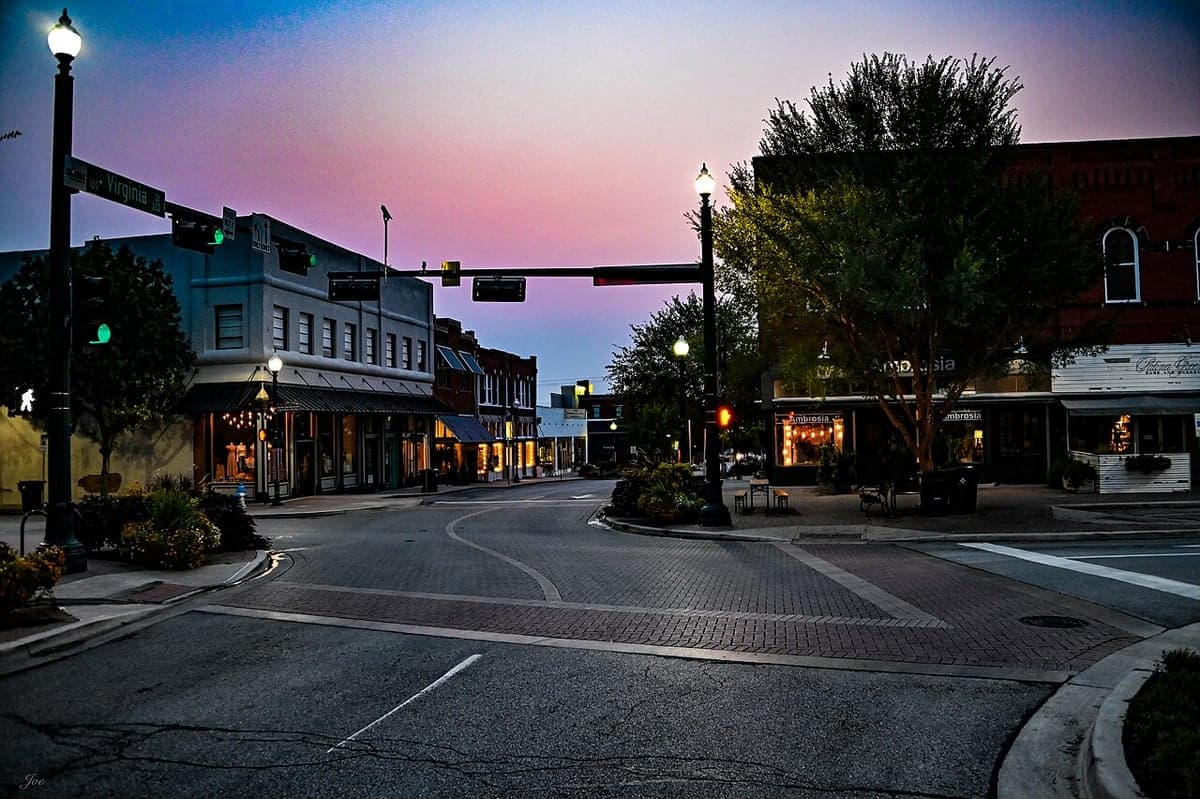
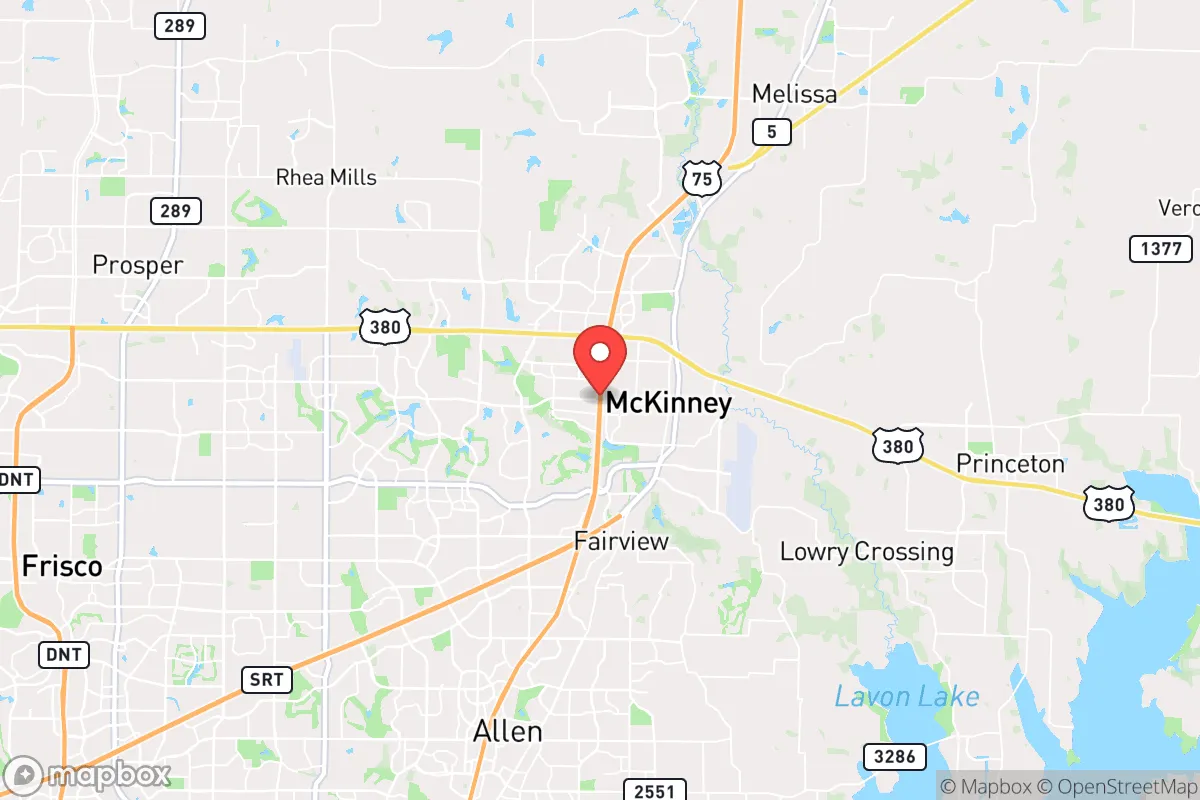
Photo: Wikipedia
Political ClimatePolitical Climate in McKinney, TX
District shown is the primary district for this city’s centroid. Cities may span multiple districts.
Local Political AnalysisPolitical Analysis of McKinney, TX
McKinney, Texas, has long been a reliably conservative stronghold, and the numbers back that up with a Cook PVI of R+10, meaning the district votes about ten points more Republican than the national average. But if you’ve lived here as long as I have, you’ve watched that lean get tested as the city has exploded in population over the last decade. The political climate here is still solidly red, but it’s not the same quiet, small-town conservatism it was in the early 2000s—there’s a growing tension between the old guard and the new arrivals, especially those fleeing from blue states like California and Illinois. The trajectory is still conservative overall, but you can feel the pressure shifting, and it’s something to keep an eye on if you value limited government and local control.
How it compares
When you stack McKinney up against its neighbors, the contrast is pretty stark. Head south to Dallas, and you’re in a deep blue urban core that’s been pushing progressive policies on everything from policing to property taxes for years. Even nearby Plano and Frisco, which were once just as conservative as McKinney, have seen their politics drift leftward as they’ve grown denser and more diverse. McKinney, by contrast, has held the line better—Collin County as a whole still votes Republican by wide margins, but the city itself is a bit of a bulwark. Drive twenty minutes east to Princeton or Farmersville, and you’ll find even more traditional, rural conservatism, where folks are less worried about HOA regulations and more about federal overreach. The real contrast, though, is with Austin or Houston—those places have embraced big-government solutions and progressive social agendas, while McKinney still fights to keep property taxes low and school boards focused on basics, not ideology.
What this means for residents
For the average person living here, the political climate means you still have a lot of breathing room when it comes to personal freedoms. You’re not dealing with the kind of government overreach you’d see in a blue city—no mask mandates that drag on for years, no heavy-handed business closures, and no zoning fights that tell you what you can do with your own land. The city council and county commissioners are generally pro-business and pro-property rights, which keeps the cost of living reasonable and the bureaucracy thin. That said, the influx of new residents has brought some concerning trends: there’s been more talk about “affordable housing” mandates and “equity” initiatives in local planning, which sound like the first steps toward the kind of top-down control that ruins a place. If you’re a conservative who values local autonomy, you’ll appreciate that McKinney still pushes back on state and federal overreach, but you’ll want to stay engaged in local elections to make sure it stays that way.
One thing that sets McKinney apart culturally is its stubborn attachment to traditional values, even as the region modernizes. You still see a strong presence of churches, veterans’ groups, and civic organizations that prioritize community over government solutions. The school board here has been a battleground lately, with parents pushing back hard against critical race theory and gender ideology in the classroom—a fight that’s been won so far, but it’s not over. The city also has a notable independent streak: it’s one of the few places in the metroplex that’s resisted the push for light rail and regional transit authorities, preferring to keep control local rather than cede it to a Dallas-based bureaucracy. Long-term, the concern is that continued growth will dilute that conservative culture, but for now, McKinney remains a place where you can still live your life without the government breathing down your neck. Just keep your eyes on the city council meetings—that’s where the real battles are fought.

State Political ClimatePolitical Climate in Texas
State Political AnalysisPolitical Environment in the State
Texas remains a solidly Republican state, but the margin has tightened noticeably over the past decade. In 2024, Donald Trump carried the state by roughly 8 points, down from 9 points in 2020 and 16 points in 2012. The dominant coalition is still a mix of rural conservatives, suburban moderates, and business-oriented fiscal conservatives, but rapid in-migration from blue states and explosive growth in the urban core of cities like Austin, Dallas, and Houston are slowly shifting the ground beneath your feet. If you’re moving here for lower taxes and fewer regulations, you’re still in the right place, but the political vibe is more contested than it was even five years ago.
Urban vs. rural divide
The political map of Texas is a tale of two worlds. The vast rural expanse—places like Lubbock, Abilene, and the Panhandle—votes overwhelmingly Republican, often by 70-80% margins. Meanwhile, the major metros are the battlegrounds. Harris County (Houston) and Dallas County have been trending blue for years, with Harris County going for Biden by 13 points in 2020. The real story is the suburbs: Collin County (north of Dallas) and Denton County were once reliably red but are now purple, with Collin County voting for Trump by only 4 points in 2024. Austin’s Travis County is the state’s deep-blue stronghold, voting over 70% Democratic, while El Paso and the Rio Grande Valley—historically Democratic—are shifting right, with Hidalgo County flipping to Trump in 2024. The divide isn’t just geographic; it’s cultural. Rural Texans see the state as a bastion of traditional values, while urbanites increasingly push for progressive policies on everything from zoning to policing.
Policy environment
Texas’s policy environment is still a draw for conservatives, but it’s not without cracks. The state has no income tax, a major selling point, and property taxes are high but capped by Proposition 2 (2023), which raised the homestead exemption to $100,000. The regulatory posture remains business-friendly, with no state-level minimum wage above the federal $7.25 and a right-to-work law that keeps unions weak. On education, the 2023 school choice bill (HB 3) created education savings accounts for special-needs students, but a broader voucher program failed—a sign that rural Republicans and urban Democrats can still block each other. Healthcare is a mixed bag: Texas has the highest uninsured rate in the nation (over 16%), and the state refused Medicaid expansion under Obamacare, a decision that keeps taxes low but leaves rural hospitals struggling. Election laws tightened after 2021’s SB 1, which added ID requirements for mail-in ballots and banned drive-through voting, a move that drew fire from progressives but was popular with conservatives who want election integrity. The overall posture is still limited government, but the cracks are showing as the state grows more diverse.
Trajectory & freedom
On the freedom front, Texas has been a mixed bag lately. The good news: constitutional carry (HB 1927, 2021) lets you carry a handgun without a permit, and the state has a strong castle doctrine and stand-your-ground law. Parental rights got a boost with the 2023 “Parental Bill of Rights” (HB 900), which requires schools to get parental consent for health surveys and restricts sexually explicit content in libraries. Property rights are solid, with no state-level rent control and strong eminent domain protections. The bad news: medical autonomy took a hit with the near-total abortion ban (SB 8, 2021, and the trigger law), which, while popular with many conservatives, also created confusion over emergency care and IVF. On speech, the 2023 law (HB 20) requiring social media platforms to moderate content neutrally was partially blocked by courts, leaving a gray area. The biggest concern for liberty-minded folks is the growth of local government overreach: cities like Austin and Dallas have imposed stricter mask mandates, zoning rules, and even plastic bag bans, which the state legislature has fought with preemption laws. Overall, Texas is still trending freer on guns and parental rights, but the state is also seeing more fights over local control.
Civil unrest & political movements
Texas has seen its share of political flashpoints. The 2020 protests in Austin, Dallas, and Houston over George Floyd’s death were large and occasionally violent, with Austin seeing property damage and a police funding debate that still lingers. The border crisis is a constant source of tension: Governor Abbott’s Operation Lone Star (2021-present) has deployed state troopers and National Guard to the border, busing migrants to New York and Chicago, which has drawn both praise and lawsuits. Sanctuary city bans (SB 4, 2017) remain in effect, but some counties like Travis and Harris have declared themselves “welcoming,” creating a patchwork of enforcement. Secession talk is mostly fringe, but the Texas Nationalist Movement has a small but vocal following. Election integrity remains a hot-button issue: the 2020 election saw Trump’s lawsuit over Harris County’s drive-through voting, and the 2024 cycle had disputes over voter roll purges. A new resident will notice the political energy at the local level—yard signs, bumper stickers, and heated city council meetings are common, especially in the suburbs.
Projection
Over the next 5-10 years, Texas will likely become more competitive but not flip blue. The key demographic shift is the influx of Californians and New Yorkers, who tend to be moderate-to-liberal but also bring money and a desire for lower taxes. The suburbs of Dallas-Fort Worth, Houston, and San Antonio will be the battlegrounds—places like Frisco, McKinney, and Round Rock are growing fast and trending purple. Rural areas will hold the line, but their population share is shrinking. If the GOP loses the suburbs, Texas could be a swing state by 2032, but that’s a long shot given the state’s gerrymandered maps and voter ID laws. The biggest wildcard is the border: if the federal government doesn’t secure it, the state will continue to spend billions on its own enforcement, which could drive up taxes or create a backlash. For now, expect more of the same: a red state with blue cities, constant legislative fights over local control, and a growing sense that the old Texas is being challenged by the new.
Bottom line for a new resident: If you’re moving to Texas for freedom from income tax, gun rights, and a business-friendly climate, you’ll find it—especially in the suburbs and rural areas. But don’t expect a monolithic conservative paradise. You’ll see progressive pockets in Austin and parts of Dallas, and you’ll need to pay attention to local elections, where the real battles over zoning, schools, and policing happen. The state is still a net win for liberty, but it’s not static. Keep an eye on the suburbs—they’ll decide Texas’s future.
* Values derived from national, state, county, city and local statistics and may differ in a specific area. Last updated: 2026-04-15T18:40:15.000Z
Narrative content on this page is AI-generated and may contain mistakes. Verify any details that matter before acting on them.
ReloMaps may earn a commission from affiliate links at no extra cost to you.

