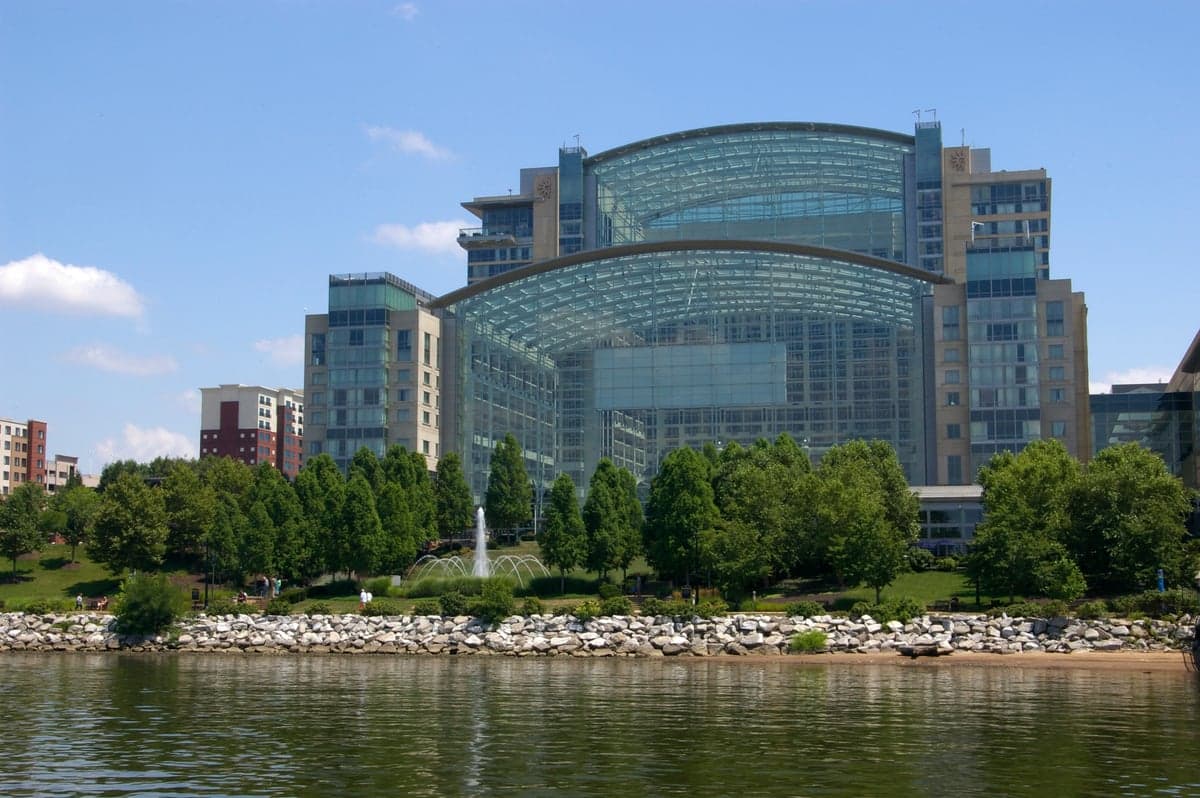
Photo: Wikipedia
Quality of Life in Prince Georges County
A livable area that tracks near national norms for affordability, walkability, and neighborhood health.
What does Quality of Life tell us?
Quality of Life measures an area by evaluating factors like cost of living, nearby amenities, country club access, airport proximity, socioeconomic signals and neighborhood character. For large states, this is a general average — quality of life can vary dramatically between metro areas, suburbs, and rural communities within the same state.
What does this tell us?
Quality of Life measures an area by evaluating factors like cost of living, nearby amenities, country club access, airport proximity, socioeconomic signals and neighborhood character. For large states, this is a general average — quality of life can vary dramatically between metro areas, suburbs, and rural communities within the same state.
Cost of Living
48% above national average
87%
The Real Cost of Living in Prince Georges County for 2026
| Tier | Individual | Family (4) |
|---|---|---|
| Survival | $28k | $53k |
| Comfortable | $79k | $115k |
| Luxury | $151k+ | $234k+ |
| Elite (Top 5%) | $178k+ | $276k+ |
Quality-of-Life Analysis
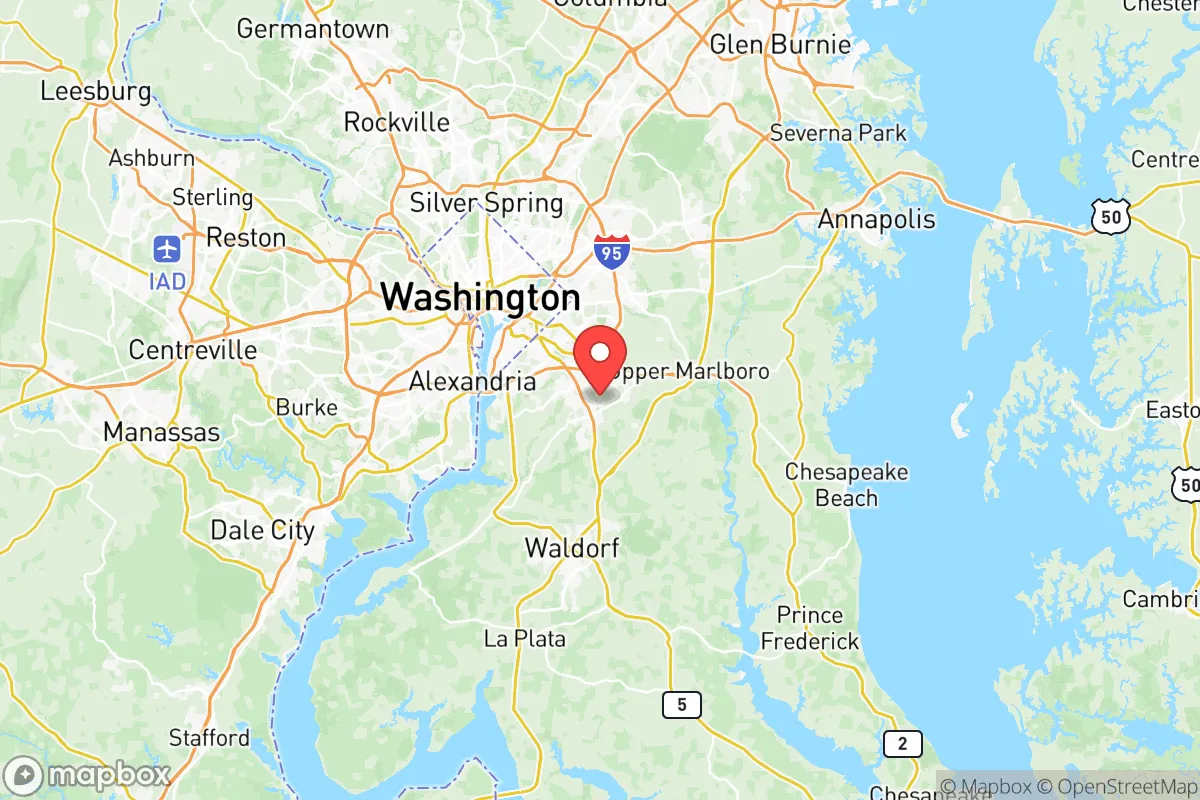
Prince George’s County, Maryland, offers a broad spectrum of quality-of-life options that range from dense, transit-oriented urban centers to quiet, semi-rural enclaves, all within commuting distance of Washington, D.C. The county’s character shifts dramatically from the high-rise corridors along the Metro’s Blue and Green lines to the horse farms and historic villages of its eastern and southern reaches. This diversity draws a wide array of residents: federal employees and young professionals seeking walkable neighborhoods near the capital, families looking for suburban schools and larger homes, and those who want acreage and a slower pace without leaving the D.C. metro area entirely.
Largest town(s) & population centers
The county’s most prominent population centers are Bowie, College Park, and Hyattsville, each offering a distinct flavor of suburban-urban life. Bowie, the largest city in the county with roughly 58,000 residents, is a classic planned suburb with extensive single-family home subdivisions, large parks like Allen Pond Park, and a strong sense of community centered around its schools and recreation centers. Daily life there is car-dependent, with most errands requiring a drive, but it offers excellent access to major employers via US-50 and US-301. In contrast, College Park and Hyattsville are anchored by the University of Maryland and the Metro system. College Park is a bustling college town with a walkable downtown along Route 1, dense apartment complexes, and a lively bar and restaurant scene driven by the student and faculty population. Hyattsville has undergone a significant revitalization, with its Arts District featuring galleries, breweries, and independent shops, and its proximity to the West Hyattsville and Prince George’s Plaza Metro stations makes it a prime choice for commuters who want a walkable, urban-adjacent lifestyle. Greenbelt, with its historic planned community core and direct Metro access, also functions as a major population center, offering a mix of mid-century modern homes and newer townhouse developments.
Smaller towns & rural pockets
Venture east and south, and the county reveals a completely different character. Upper Marlboro, the county seat, retains a small-town feel with its historic courthouse square, antique shops, and annual county fair, surrounded by large-lot subdivisions and working farms. Further south, Brandywine and Accokeek are unincorporated communities where you’ll find horse farms, rural estates, and the sprawling Cedarville State Forest. These areas offer a distinctly rural lifestyle, with properties often sitting on one to five acres, and residents relying on wells and septic systems. The historic town of Bladensburg, while closer to the urban core, feels like a small river town with its waterfront park and the Anacostia River Trail. Laurel, straddling the county’s northern border, blends a historic Main Street with large retail corridors and the Laurel Park horse racing track, offering a middle ground between small-town charm and suburban convenience. The Belt Woods area near Bowie and the Patuxent River watershed provide significant green space and a sense of remoteness, even though they are only 30 minutes from downtown D.C.
Cost & lifestyle range
The cost of living across Prince George’s County is uniform at a COL index of 148, well above the national average, but the lifestyle value varies dramatically by location. At the high end of the spectrum, neighborhoods like University Park and Cheverly near the D.C. line offer historic homes on tree-lined streets with walkable access to Metro stations, commanding median home values well above the county’s $404,300 average. These areas attract professionals who prioritize a short commute and urban amenities. In the middle, Bowie and Mitchellville offer large single-family homes, good schools, and community amenities for families, with median rents around the county’s $1,761 average. At the more affordable end, communities like Suitland and Landover offer older housing stock and closer proximity to industrial areas, with lower home prices and rents, though the average commute of 35.5 minutes is a reality for most residents regardless of location. The rural southern tier, including Aquasco and Baden, offers the lowest housing costs per square foot, but residents trade off longer drives to grocery stores and a lack of public water and sewer. The lifestyle range is thus a direct trade-off between commute time, housing type, and access to walkable amenities versus space and quiet.
Prince George’s County is best suited for those who want to live within the D.C. metro area but need more space or a lower price point than what is available inside the Beltway in Montgomery County or Northern Virginia. It works well for federal employees, University of Maryland affiliates, and families who prioritize a diverse community, good schools in certain clusters, and a range of housing options from urban apartments to rural homesteads. The county’s greatest strength is its variety: a resident can live in a walkable Arts District, a planned suburb with a swim club, or a farm with a barn, all within the same county and with the same tax base.

Crime in Prince Georges County
WARNING: The crime statistics are unreliable for this jurisdiction. Local authorities have either not reported or under reported their data to the FBI. This could be due to bad intentions, incompetence or technical issues. Regardless, we suggest skepticism.
Higher crime rates than 71% of comparable U.S. locations.
Violent CrimeViolent Crime Analysis
Property CrimeProperty Crime Analysis
Crime Analysis
Prince George’s County, Maryland, presents a mixed safety picture for potential residents. While the county’s violent crime rate of 351.4 per 100,000 residents is lower than many neighboring jurisdictions, its property crime rate of 1,814.9 per 100,000 remains a significant concern, particularly in areas with high population density and commercial activity. The county’s proximity to Washington, D.C., and its diverse mix of suburban communities, from Bowie to Oxon Hill, means safety conditions vary dramatically by neighborhood and even by block.
Crime in context
Prince George’s County’s violent crime rate of 351.4 per 100,000 is notably higher than the Maryland state average of roughly 380 per 100,000 but sits below the national average of approximately 400 per 100,000. However, this aggregate figure masks stark internal disparities. The property crime rate of 1,814.9 per 100,000 is elevated compared to the national average of around 1,954 per 100,000, but still represents a serious issue for residents in areas like Langley Park and Hyattsville, where auto theft and burglary are persistent problems. By contrast, communities such as Bowie and Laurel report significantly lower property crime rates, often 30-40% below the county average. The county’s overall crime index is roughly 15% higher than the Maryland average, driven largely by property offenses in transit-adjacent corridors.
What residents experience
Daily life in Prince George’s County is shaped by the local criminal justice system, which has drawn criticism for its progressive policies. The county’s State’s Attorney’s Office, under Aisha Braveboy, has implemented reforms including reduced cash bail and diversion programs for non-violent offenders. While these measures aim to reduce incarceration, critics argue they have contributed to a revolving-door effect for repeat property offenders. Residents in Oxon Hill and Camp Springs frequently report that stolen vehicles and package thefts are rarely prosecuted, leading to a sense of impunity among criminals. The county’s police department, with roughly 1,500 sworn officers, struggles with response times in high-call-volume areas like Landover and Seat Pleasant, where violent incidents—including armed robberies and aggravated assaults—are concentrated. For families, the practical impact is visible: many residents in safer enclaves like University Park or Berwyn Heights invest in private security systems and neighborhood watch programs, while those in higher-crime zones report avoiding public transit stops after dark.
Neighborhood-level variation
The most significant safety factor in Prince George’s County is neighborhood selection. The county’s eastern and northern sections, including Bowie and Greenbelt, consistently report violent crime rates below 200 per 100,000—comparable to safer Maryland suburbs like Columbia. In contrast, the western corridor along the D.C. border—particularly Chillum, Langley Park, and Mount Rainier—sees violent crime rates exceeding 500 per 100,000, driven by gang activity and drug trafficking. Property crime is more evenly distributed but spikes in commercial districts like New Carrollton and around the Beltway Plaza mall. The county’s judicial districts also play a role: the District 5 court in Upper Marlboro handles a disproportionate share of violent cases, while District 3 in Hyattsville processes most property offenses. For prospective residents, the safest strategy is to target neighborhoods east of the Baltimore-Washington Parkway or north of Route 50, where crime rates drop sharply and community policing is more effective.
* Values derived from national, state, county, city and local statistics and may differ in a specific area. Last updated: 2026-05-12T13:50:00.000Z
Narrative content on this page is AI-generated and may contain mistakes. Verify any details that matter before acting on them.
ReloMaps may earn a commission from affiliate links at no extra cost to you.

