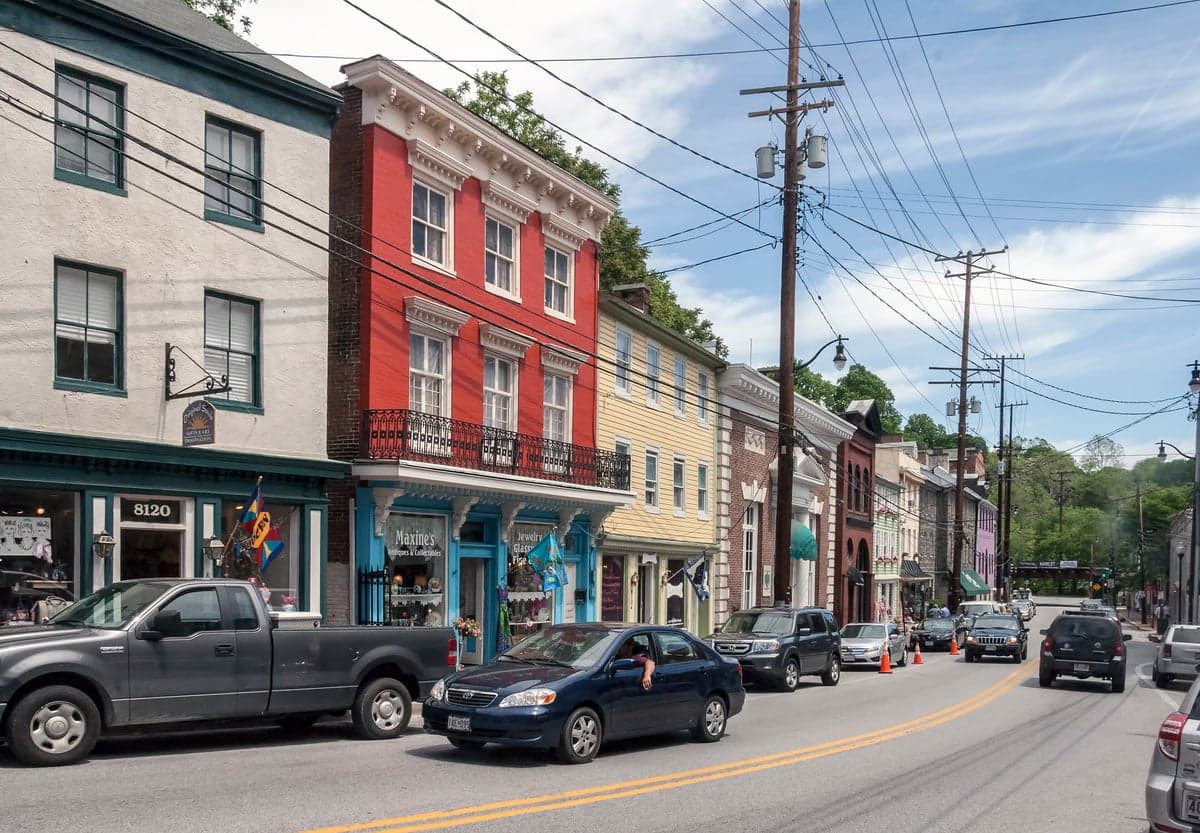
Photo: Wikipedia
Demographics of Howard County
Affluence Level in Howard County
An upper-middle-class area. Household wealth, education levels, and homeownership run ahead of national benchmarks.
People of Howard County
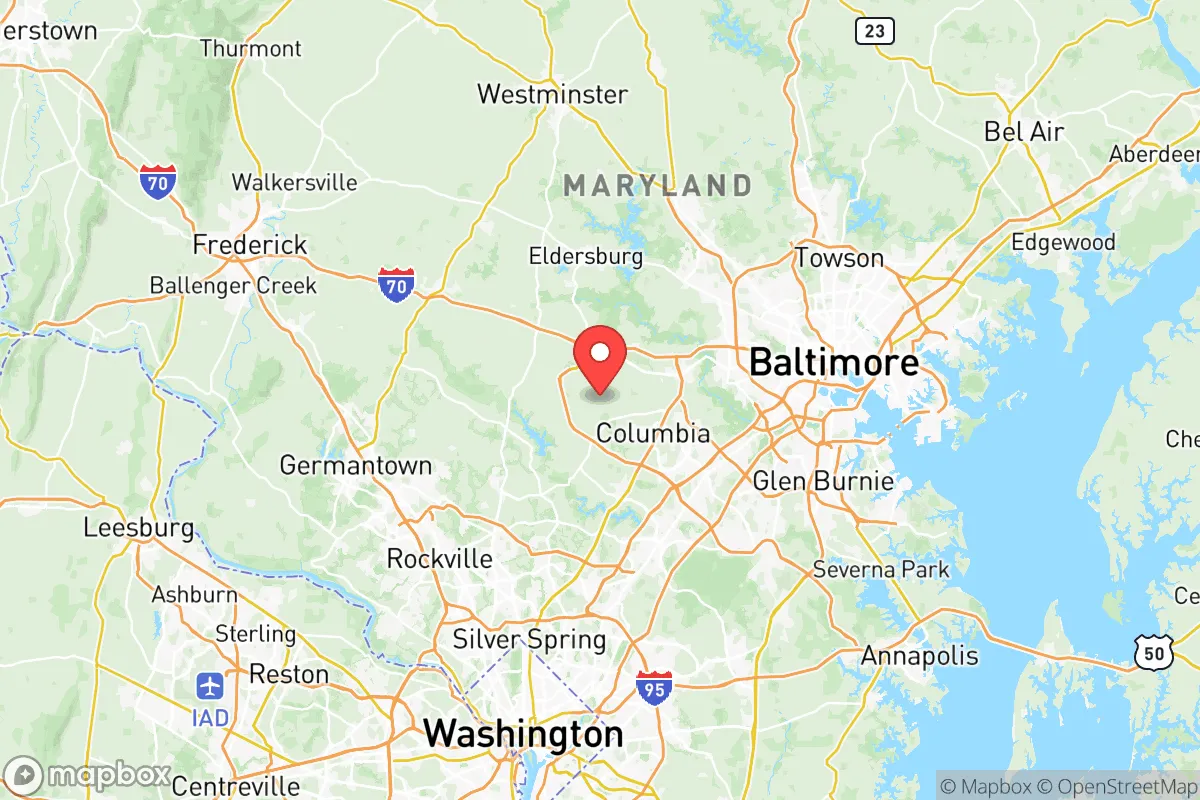
Howard County, Maryland, is home to 333,916 residents who form one of the most educated and economically prosperous communities in the United States, with 64.5% holding a college degree and a median household income among the highest in the nation. The county’s population is notably diverse: 47.0% White, 19.6% Black, 10.4% East and Southeast Asian, 8.4% Indian subcontinent, and 8.4% Hispanic, creating a suburban mosaic that blends historic rural roots with modern, globally connected communities. This is a place where old tobacco farming families, post-World War II suburbanites, and recent immigrants from Asia and Latin America coexist in a landscape of planned communities, historic towns, and high-tech corridors. The county’s identity is shaped by its position between Baltimore and Washington, D.C., attracting professionals who value top-ranked schools, low crime, and a quality of life that balances suburban comfort with access to urban opportunity.
Settlement & growth (pre-1960)
Long before European settlement, the land now called Howard County was inhabited by the Piscataway and Susquehannock peoples, who used the Patuxent and Patapsco river valleys for hunting and seasonal agriculture. English colonists began arriving in the mid-1600s, establishing tobacco plantations along the rivers, and by 1700 the area was part of Anne Arundel County. The first permanent European settlers were primarily English and Scots-Irish farmers, drawn by the fertile soil and the Chesapeake tobacco economy. They founded small crossroads communities like Ellicott City (originally Ellicott's Mills) in 1772, where the Ellicott brothers built a grist mill that became the nucleus of one of the first planned industrial towns in America. The Quaker influence was strong in the Ellicott City area, promoting education and abolitionist sentiment.
The 19th century brought a wave of German and Irish immigrants who worked on the Baltimore and Ohio Railroad, which reached Ellicott City in 1830, and in the region's granite quarries. Towns like Lisbon and Cookeysville grew as agricultural service centers. The Civil War divided the county, with many residents supporting the Union while others, particularly in the southern part, sympathized with the Confederacy. After emancipation, freed African Americans established communities such as Simpsonville and Guilford, where they built churches, schools, and farms on land they purchased. The late 1800s saw the rise of the canning industry, with Italian and Eastern European immigrants arriving to work in tomato and corn canneries in towns like Jessup and Savage. By 1900, Howard County remained overwhelmingly rural and agricultural, with a population of just over 16,000, mostly White and native-born, with a significant Black minority descended from enslaved families.
The first half of the 20th century brought slow change. The automobile and improved roads began connecting Howard County to Baltimore and Washington, but the county remained a quiet farming area through the Great Depression and World War II. The population grew modestly, reaching about 23,000 by 1950. The construction of the Baltimore-Washington Parkway and the expansion of Fort Meade during the Cold War began to shift the county's character, but the real transformation was still a decade away.
Modern era (post-1965)
The passage of the 1965 Hart-Cellar Act coincided with a wave of domestic migration that fundamentally reshaped Howard County. The construction of Interstate 95 and the Columbia Mall in the 1960s and 1970s opened the county to massive suburban development. The most transformative event was the creation of Columbia, a planned city founded by developer James Rouse in 1967. Rouse envisioned a racially and economically integrated community, and Columbia quickly attracted a diverse population of young professionals, many of whom worked for the federal government in Washington or at the expanding Fort Meade. The city's population grew from zero in 1965 to over 100,000 by 2020, making it the county's largest population center and a magnet for educated, progressive-leaning families.
Post-1965 immigration brought new diversity. The 1970s and 1980s saw an influx of Korean and Vietnamese families, many of whom settled in Ellicott City and Columbia, establishing small businesses and churches. The 1990s and 2000s brought a significant wave of Indian subcontinent immigrants, particularly from India and Pakistan, drawn by jobs in technology, engineering, and medicine. These communities concentrated in Clarksville and Ellicott City, where they built temples, mosques, and cultural centers. Hispanic immigration, primarily from Central America and Mexico, grew steadily from the 1990s onward, with families settling in Jessup and North Laurel, working in construction, landscaping, and the food industry. The Black population, which had been historically concentrated in rural communities like Highland and Fulton, grew substantially as middle-class African American families moved to Columbia and other suburban areas, drawn by good schools and integrated neighborhoods.
By 2020, Howard County had become one of the most diverse counties in Maryland. The White share of the population fell from over 80% in 1980 to 47.0% in 2024, while the Asian and Indian subcontinent populations grew rapidly. The county's foreign-born population reached 7.5%, with the largest groups coming from India, China, Korea, and El Salvador. The county's economy shifted from agriculture to a knowledge-based economy, anchored by the Johns Hopkins Applied Physics Laboratory in Laurel, the University of Maryland's research facilities, and a growing number of biotech and cybersecurity firms. The county's schools consistently rank among the best in the nation, reinforcing its appeal to college-educated families.
The future
Howard County's population is projected to continue growing, reaching an estimated 350,000-360,000 by 2035, driven by both domestic migration and international immigration. The county is becoming more diverse, with the White population projected to fall below 40% by 2040, while the Asian and Indian subcontinent populations are expected to grow to 15% and 12%, respectively. The Hispanic population is also rising, though more slowly, and is projected to reach 12-13% by 2040. New communities are forming in the county's western and southern areas, particularly around Fulton and Maple Lawn, where large-lot subdivisions are attracting affluent families. The county is also seeing a modest increase in younger, single professionals moving to transit-oriented developments near the MARC train stations in Jessup and Savage.
The cultural identity of Howard County is evolving from a predominantly White, liberal-leaning suburb into a multi-ethnic, globally connected community. The county's schools now teach over 100 languages, and ethnic festivals, from Diwali celebrations in Columbia to Korean harvest festivals in Ellicott City, are becoming mainstream events. The county's political character remains reliably Democratic, but the growing diversity is creating new coalitions and tensions, particularly around school funding, housing affordability, and development density. The county's challenge will be maintaining its high quality of life while accommodating growth and ensuring that new residents from all backgrounds feel included.
For someone moving to Howard County now, the bottom line is this: you are joining a community that is affluent, educated, and increasingly diverse, where the public schools are excellent, the economy is strong, and the cultural landscape is rich with the traditions of its many immigrant groups. The county is not a place of static tradition but of dynamic change, where the old rural past is giving way to a future shaped by global migration and suburban ambition. If you value top-tier education, safety, and a community that reflects the broader American mosaic, Howard County offers a compelling, if expensive, option.

* Values derived from national, state, county, city and local statistics and may differ in a specific area. Last updated: 2026-08-24T22:38:45.000Z
Narrative content on this page is AI-generated and may contain mistakes. Verify any details that matter before acting on them.
ReloMaps may earn a commission from affiliate links at no extra cost to you.

