Photo: Wikipedia
Quality of Life in Harford County
A livable area that tracks near national norms for affordability, walkability, and neighborhood health.
What does Quality of Life tell us?
Quality of Life measures an area by evaluating factors like cost of living, nearby amenities, country club access, airport proximity, socioeconomic signals and neighborhood character. For large states, this is a general average — quality of life can vary dramatically between metro areas, suburbs, and rural communities within the same state.
What does this tell us?
Quality of Life measures an area by evaluating factors like cost of living, nearby amenities, country club access, airport proximity, socioeconomic signals and neighborhood character. For large states, this is a general average — quality of life can vary dramatically between metro areas, suburbs, and rural communities within the same state.
Cost of Living
32% above national average
106%
The Real Cost of Living in Harford County for 2026
| Tier | Individual | Family (4) |
|---|---|---|
| Survival | $25k | $47k |
| Comfortable | $71k | $105k |
| Luxury | $161k+ | $249k+ |
| Elite (Top 5%) | $189k+ | $293k+ |
Quality-of-Life Analysis
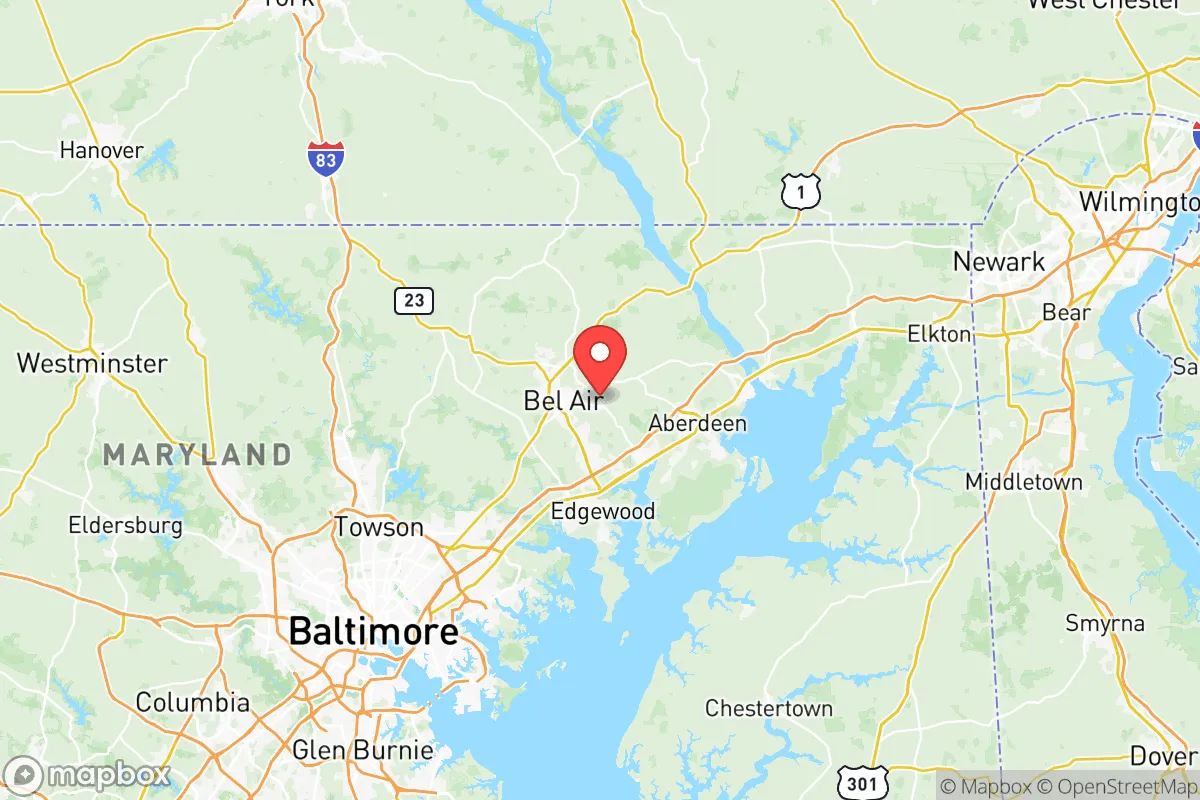
Harford County, Maryland, offers a genuine spectrum of living environments, from the dense, walkable streets of its historic county seat to the deep rural quiet of its northern and western farmlands. The county’s character shifts noticeably as you travel south toward the Chesapeake Bay or north toward the Pennsylvania line, attracting a mix of defense-industry professionals commuting to Aberdeen Proving Ground, Baltimore workers seeking more space, and long-time farming families. With a cost-of-living index of 132 (100 being the U.S. average), Harford is more expensive than the national norm but generally more affordable than neighboring Baltimore or Howard counties, making it a practical middle ground for those who want suburban amenities without sacrificing access to open country.
Largest town(s) & population centers
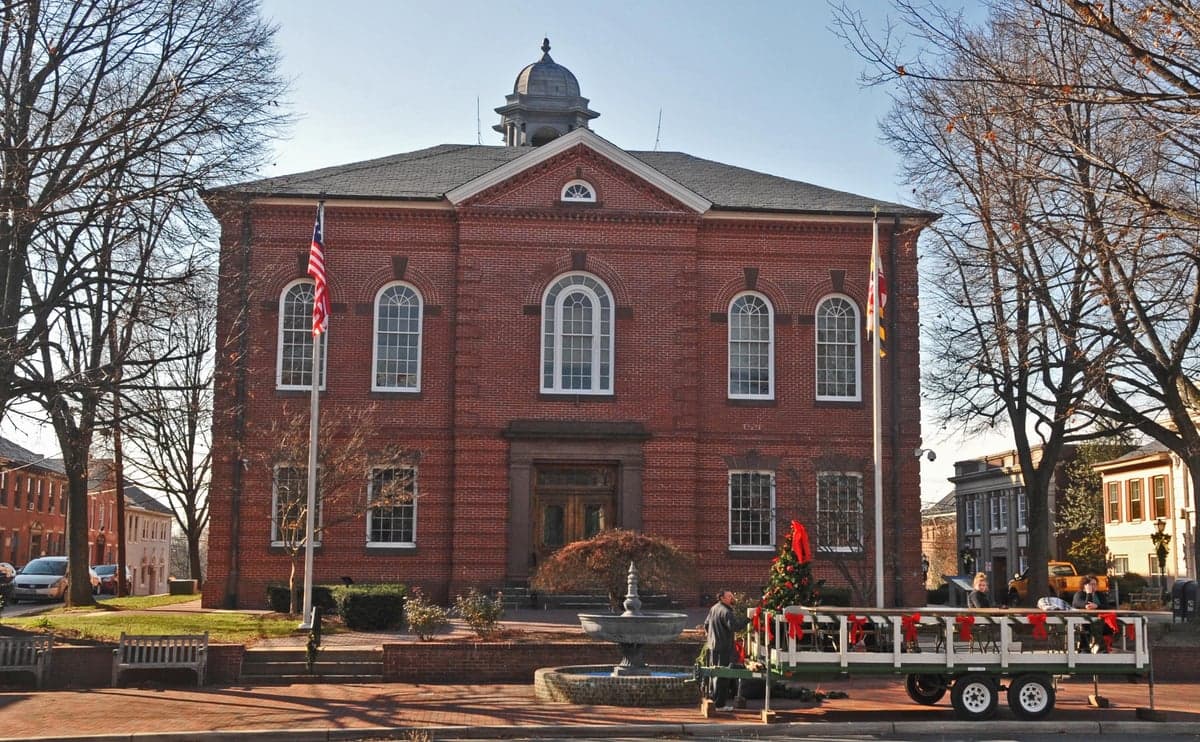
Bel Air is the county’s largest town and its commercial and governmental hub, with a population around 10,000 within the town limits and roughly 50,000 in the greater Bel Air area. Daily life here centers on the walkable Main Street lined with independent shops, restaurants, and the historic Harford County Courthouse. The town is dense enough that many errands are done on foot, but traffic on Route 24 and Route 1 is a persistent complaint during rush hours. Aberdeen, the second-largest town, has a more working-class, military-adjacent feel, heavily influenced by the nearby Aberdeen Proving Ground (APG), the U.S. Army’s oldest active proving ground and a major regional employer. Aberdeen’s downtown is less polished than Bel Air’s but offers lower home prices and a quicker commute for the thousands of civilian and military personnel who work at APG. Havre de Grace, a smaller but distinct population center on the Susquehanna River and Chesapeake Bay, draws retirees and second-home buyers with its waterfront promenade, maritime museum, and quieter pace, though its housing stock is older and often pricier per square foot than inland options.
Smaller towns & rural pockets
Beyond the main towns, Harford County contains several unincorporated communities and small villages that define its rural character. Jarrettsville and Pylesville, in the northern part of the county, are classic Maryland horse-country settlements with large-lot zoning, working farms, and a strong equestrian culture. Whiteford and Street are even smaller, with populations under 1,000, where the nearest grocery store might be a 15-minute drive and internet service can be spotty. Darlington, along the Susquehanna River, is a historic village with a handful of antique shops and a deeply rural feel, though it’s only about 20 minutes from Bel Air. Edgewood and Joppatowne, in the southern part of the county, are more suburban and less affluent, with denser housing developments and a higher proportion of rental properties, serving as a bedroom community for APG and Baltimore commuters. These areas offer lower entry prices but also higher crime rates relative to the rest of the county, particularly in parts of Edgewood.
Cost & lifestyle range
The cost of living and lifestyle options vary dramatically across Harford County. At the high end, Bel Air’s historic district and Havre de Grace’s waterfront command median home values well above the county’s $367,300 average, often exceeding $500,000 for a renovated single-family home. These areas offer walkability, local events, and proximity to the bay, but property taxes are among the highest in the county. At the lower end, Edgewood and Aberdeen have median home values closer to $250,000–$300,000, with median rents around $1,557 aligning with the county average. The trade-off is longer commute times—the countywide average commute is 32 minutes, but residents of northern towns like Pylesville or Whiteford often face 40–50 minute drives to Bel Air or Baltimore. Rural areas also lack public water and sewer, meaning well and septic maintenance is an added cost. For those seeking land, Jarrettsville and Darlington offer 2–5 acre lots at prices that would be unattainable in central Bel Air, but with fewer nearby services and longer drives for school activities or medical care.
Harford County is best suited for people who want a clear trade-off between suburban convenience and rural space. Families working at Aberdeen Proving Ground or commuting to Baltimore will find the southern and central corridors most practical, while those who prioritize land, quiet, and a slower pace will gravitate toward the northern and western towns. Retirees and water enthusiasts are well-served in Havre de Grace. The county’s diversity of settings means that a single move within Harford can shift a household’s lifestyle dramatically—from a walkable Main Street apartment to a 10-acre horse farm—without leaving the same school district or county government.

Crime in Harford County
WARNING: The crime statistics are unreliable for this jurisdiction. Local authorities have either not reported or under reported their data to the FBI. This could be due to bad intentions, incompetence or technical issues. Regardless, we suggest skepticism.
Higher crime rates than 71% of comparable U.S. locations.
Violent CrimeViolent Crime Analysis
Property CrimeProperty Crime Analysis
Crime Analysis
Harford County, Maryland, presents a mixed safety profile for prospective residents. With a violent crime rate of 351.4 per 100,000 residents and a property crime rate of 1,814.9 per 100,000, the county sits above the national average for violent offenses but below the Maryland state average for property crime. The county’s proximity to Baltimore and its position along the I-95 corridor influence these figures, though significant variation exists between its suburban towns and more rural communities.
Crime in context
Harford County’s violent crime rate of 351.4 per 100,000 is roughly 20% higher than the national average of approximately 290 per 100,000, but notably lower than the Maryland state average of about 500 per 100,000. Property crime in Harford County, at 1,814.9 per 100,000, is below the national average of roughly 2,100 per 100,000 and significantly under the Maryland state average of approximately 2,400 per 100,000. These numbers place Harford County in a middle tier among Maryland jurisdictions — safer than Baltimore City and Prince George’s County, but with more violent crime than neighboring Carroll County or rural Cecil County. The county’s location along the I-95 corridor, a known drug trafficking route, contributes to drug-related offenses and associated violence, particularly in areas with easier highway access.
What residents experience
Residents in Harford County’s more urbanized areas, particularly Aberdeen and Edgewood, report higher instances of violent crime, including aggravated assault and robbery. Edgewood, in particular, has historically struggled with gang activity and drug-related violence, making it the most challenging area for public safety within the county. In contrast, Bel Air, the county seat, maintains a lower violent crime rate than the county average, though property crimes like theft and vehicle break-ins remain a concern in its commercial districts and apartment complexes. Fallston and Jarrettsville, the more rural northern communities, consistently report the lowest crime rates in the county, with violent incidents being rare. The county’s judicial system, overseen by the Harford County State’s Attorney’s Office, has maintained a generally conservative approach to prosecution, though residents express concern about the influence of progressive policies from Baltimore City spilling over into the county’s courts. The presence of the Aberdeen Proving Ground, a major U.S. Army installation, brings a federal law enforcement presence that helps stabilize crime in the immediate vicinity but does not fully insulate surrounding communities from regional crime trends.
Neighborhood-level variation
The starkest divide in Harford County is between the I-95 corridor communities and the rural northern towns. Edgewood and Aberdeen see violent crime rates that can be double or triple those of Bel Air, Fallston, and Jarrettsville. Property crime, including theft from vehicles and burglary, is more evenly distributed but still concentrates near commercial corridors and highway exits. The county’s school district, Harford County Public Schools, has implemented school resource officer programs and security upgrades in response to these disparities. For prospective residents, choosing a neighborhood north of Bel Air or in the rural western portion of the county offers the lowest crime exposure, while Edgewood and southern Aberdeen require more vigilance. The county’s law enforcement, the Harford County Sheriff’s Office, maintains a strong presence in high-crime areas, but the proximity to Baltimore means that regional crime trends, including carjackings and organized retail theft, periodically affect even the safer communities.
* Values derived from national, state, county, city and local statistics and may differ in a specific area. Last updated: 2026-06-06T04:56:48.000Z
Narrative content on this page is AI-generated and may contain mistakes. Verify any details that matter before acting on them.
ReloMaps may earn a commission from affiliate links at no extra cost to you.

