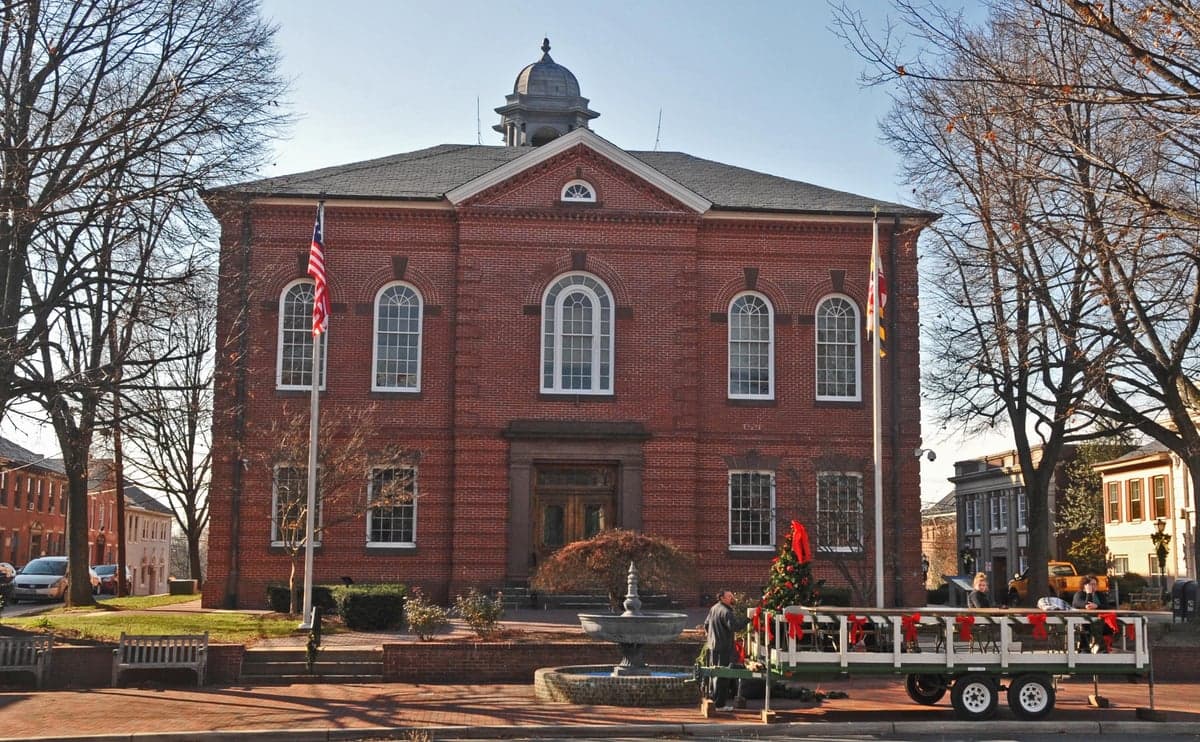
Photo: Wikipedia
Personal Sovereignty in Harford County
Viable for self-reliance. Generally workable, though some barriers may limit total independence.
What does Personal Sovereignty tell us?
Personal Sovereignty measures your capacity for self-reliance and independence with minimal government friction. Higher scores mean fewer barriers between you and the way you want to live... but it assumes you have the space you need and good neighbors.
What does this tell us?
Personal Sovereignty measures your capacity for self-reliance and independence with minimal government friction. Higher scores mean fewer barriers between you and the way you want to live... but it assumes you have the space you need and good neighbors.
State Policy
Energy independence: Importer (8% of energy produced in-state)
Personal Liberty
Homesteading

Personal Liberty Analysis
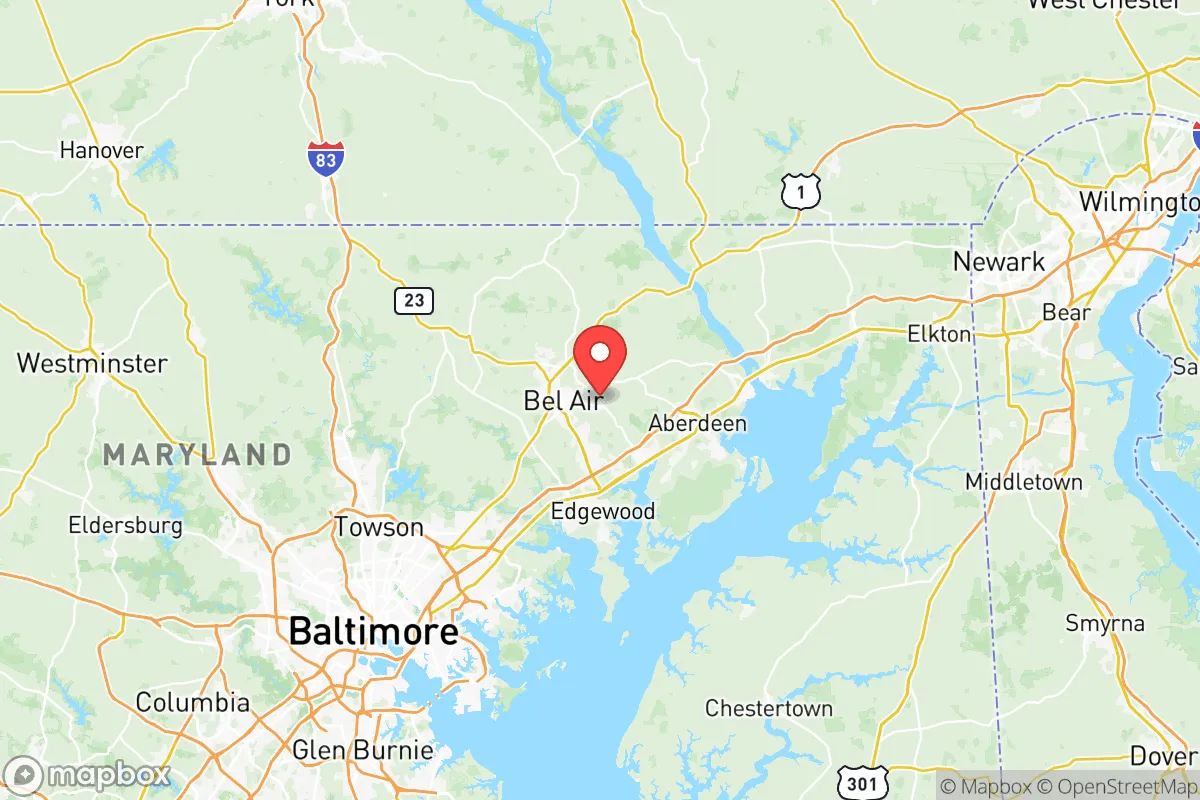
Harford County sits at a critical junction: a conservative pocket in a state that ranks among the nation's most restrictive on self-defense, taxation, and individual autonomy. For those prioritizing personal sovereignty—whether preppers, homesteaders, or parents wary of government overreach—the county offers a mixed picture depending on where you land. The suburban infrastructure of Bel Air contrasts sharply with the farmland around Darlington and Whiteford, while military-heavy Aberdeen and waterfront Havre de Grace each carry their own regulatory nuance. Understanding where Harford County stands on taxes, guns, homesteading, and personal liberties is essential before betting your family's freedom on this corner of Maryland.
Tax burden and regulatory posture in Harford County vs. the rest of Maryland
Maryland is notorious for its high tax load—state income tax brackets top out at 5.75%, and counties add their own piggyback tax. Harford County's income tax rate sits at 3.06% (the state-mandated minimum for counties), making it one of the least punishing spots in the state. Property taxes are also relatively moderate: the county levy is about $0.978 per $100 of assessed value, with no additional municipal overlay in most unincorporated areas. That matters when you're calculating the long-term cost of owning land for self-reliance. On the regulatory front, Harford County leans permissive compared to its neighbors. Zoning in rural districts like Darlington and Whiteford allows agricultural and residential uses with minimal hoop-jumping; you won't face the same battles as you would in urban Howard or Montgomery counties. However, Maryland's state-level regulations—environmental review for land clearing, stormwater management on any new structure, and strict well/septic permitting—still apply. If you want to build a bunker or convert a barn into a safe room, expect state oversight. The county's Board of Commissioners has a 4-1 Republican majority as of 2026, which keeps local red tape thinner than in Baltimore County, but the state legislature in Annapolis remains the real throttle on economic freedom.
Self-defense and gun law specifics: what Harford County gun owners face
Maryland is a shall-issue state for concealed carry after the Bruen decision, but the process remains burdensome. To purchase a handgun you need a Handgun Qualification License—a multi-step application with fingerprinting and a 16-hour training course. Harford County's Sheriff's Office processes applications efficiently, but you're still subject to the state's ban on "assault weapons" (defined by a 2013 list) and a 10-round magazine limit. On the ground, the gun culture in Harford County is robust. Rural areas like Jarrettsville and Whiteford see regular shooting on private land, and the county is home to several ranges and gun clubs. The Southern Maryland Rifle & Pistol Club near Bel Air is a hub for preppers and competitors alike. Carrying in public is legal with a permit, but you need to respect the state's list of prohibited places—schools, government buildings, hospitals, and any private property with posted signage. If you're coming from a free state like Texas or Arizona, the administrative friction will be an adjustment. The local sheriff's office maintains a pro-2A stance, but enforcement of state restrictions is consistent. For those seeking to stockpile ammunition or build an armory, note that Maryland requires background checks for all rifle and shotgun sales, and private transfers must go through a licensed dealer. The bottom line: Harford County is the best place in Maryland for a gun owner, but it's not a sanctuary from state-level overreach.
Self-reliance and homesteading viability: lot sizes, zoning, and off-grid feasibility
The key to homesteading in Harford County is getting outside the suburban ring. In the northern tier—especially around Darlington, Whiteford, and Pylesville—you can find agricultural parcels starting at 5 to 20 acres with reasonable prices ($8,000–$15,000 per acre as of 2026). Zoning is generally Agri-Conservation (AG) or Rural Residential (RR), which permits livestock, gardens, and outbuildings without the permit battles you'd face in Bel Air or Aberdeen. Off-grid feasibility is mixed. Maryland requires grid-tied or permitted off-grid solar systems—you cannot legally drop a few panels and a battery bank without inspections and interconnection agreements if you stay connected. Wells and septic are tightly regulated by the Harford County Health Department; you must test water quality annually and meet strict setback requirements. Rainwater collection is legal but limited to outdoor use unless you get a permit for potable systems. For the serious prepper, the biggest obstacle is the state's ban on unpermitted structures for human habitation. You can build a workshop or a barn, but living in it full-time without a certificate of occupancy is illegal. That said, many rural landowners operate below the radar with "hunting cabins" and converted sheds—enforcement is complaint-driven and sparse in the far north. If you want year-round self-sufficiency with legal security, your best bet is to buy an existing farmhouse and add a large garden, root cellar, and backup generator. Havre de Grace and the Susquehanna River corridor offer waterfront homesteading possibilities, but flood zones and environmental restrictions increase the paperwork.
Personal liberties: parental rights, medical autonomy, speech, and property
Maryland's state government has aggressively expanded its reach into family and medical decisions in recent years. Parental rights have eroded notably: the state passed a "transgender youth dignity" law that allows schools to withhold information from parents about a child's gender identity if the school deems it necessary. Harford County Public Schools have a mixed record—some board members have pushed back, but the policy remains state-mandated. For conservative parents considering homeschooling or private education, the landscape is moderately restrictive. Homeschooling requires a notice of intent, a portfolio review, and an annual assessment; religious exemption is difficult to obtain in Maryland courts. Medical autonomy is another sore point. While COVID-era vaccine mandates have subsided, the state maintains mandatory vaccine schedules for schoolchildren with limited opt-out provisions (medical and religious exemptions are permitted but often questioned by health officials). Harford County's health department is generally pragmatic, but the legal framework remains top-down. Speech is protected, but the state has enacted a hate crimes law with enhanced penalties for offenses motivated by "perceived race, religion, gender identity, or sexual orientation"—a provision that can chill politically incorrect rhetoric. Property rights are relatively strong in Harford County compared to western Maryland: eminent domain is rarely exercised, and the county does not have a rent control ordinance. However, the state's Critical Area Commission imposes strict regulations on development within 1,000 feet of tidal waters—a significant constraint if you're eyeing waterfront land in Havre de Grace or along the Bush River.
Overall sovereignty: how Harford County compares to other regions
For the liberty-minded individual weighing relocation, Harford County represents a compromise. It is not West Virginia or rural Pennsylvania, where state-level restrictions are far looser. You will pay higher taxes, jump through more hoops for firearms, and navigate a school system that can overrule parental authority. What Harford County offers is proximity—a two-hour drive to the DC beltway or Philadelphia, combined with a strong local conservative culture and real opportunities for land-based self-reliance. Compared to the rest of Maryland, it's a standout: lower tax rates, a pro-2A sheriff, and actual countryside where you can raise chickens, hunt deer, and stockpile supplies without your neighbors calling code enforcement. The county's regulatory posture is the best you'll find inside the state, but state-level overreach is the constant drag. If your strategy is to stay within commuting distance of the Mid-Atlantic job market while maintaining a prepper lifestyle, Harford County is arguably the top choice. If you can go farther—into Pennsylvania's rural northern tier or the Virginia Blue Ridge—you'll find fewer restrictions on self-defense supplies and off-grid construction. Choose Harford County for its balance of access and autonomy; don't choose it if absolute freedom from government is your only acceptable condition.

* Values derived from national, state, county, city and local statistics and may differ in a specific area. Last updated: 2026-06-06T04:56:48.000Z
Narrative content on this page is AI-generated and may contain mistakes. Verify any details that matter before acting on them.
ReloMaps may earn a commission from affiliate links at no extra cost to you.

