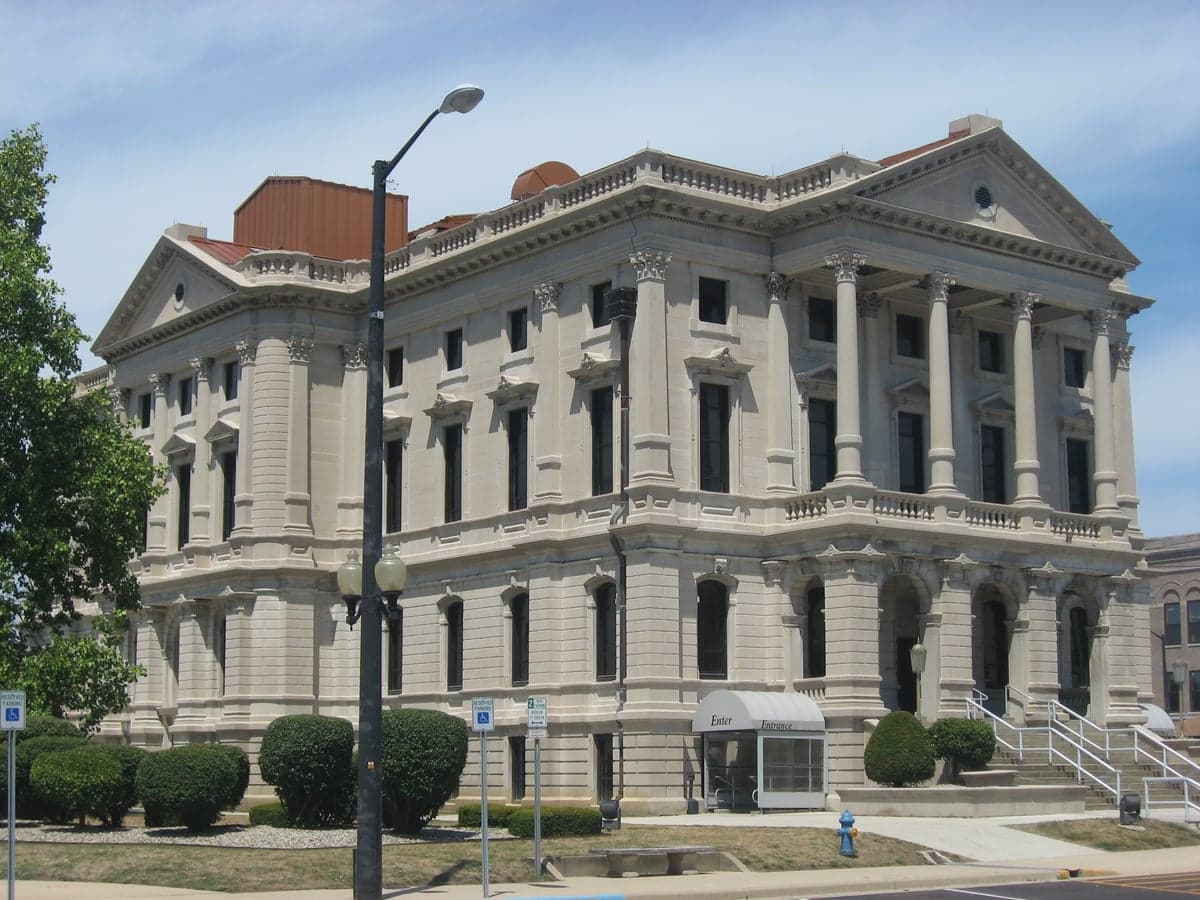
Photo: Wikipedia
Political ClimatePolitical Climate in Marion, IN
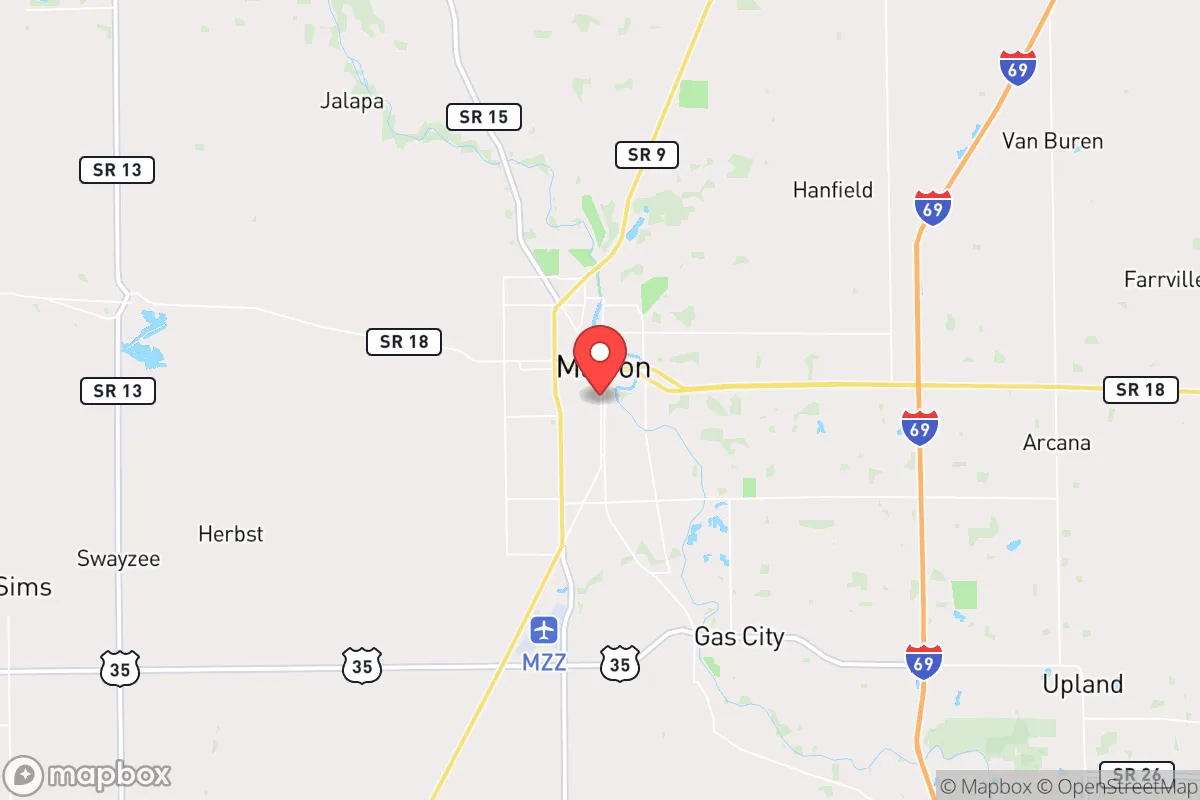
District shown is the primary district for this city’s centroid. Cities may span multiple districts.
Local Political AnalysisPolitical Analysis of Marion, IN
Marion, Indiana, has long been a reliably conservative community, and that hasn't changed much, even as the rest of the country seems to be pulling in different directions. The Cook Partisan Voting Index (PVI) for the area sits at R+8, meaning it votes about eight points more Republican than the national average, and that feels about right to anyone who's lived here a while. You see it in the local elections, the school board meetings, and the general attitude around town: people here value personal responsibility and want the government to stay out of their lives as much as possible. That said, there's a quiet unease among folks who remember when Marion was even more solidly red, and they're watching the slow creep of progressive ideas from bigger cities like Indianapolis or even Muncie with a wary eye.
How it compares
Drive thirty minutes south to Muncie, and you'll feel a different political energy entirely. Muncie, home to Ball State University, leans more moderate to left, with a younger, more transient population that brings different priorities. Marion, by contrast, is more rooted in manufacturing and agriculture, and the political conversation here is less about social experiments and more about keeping taxes low, protecting Second Amendment rights, and making sure local schools aren't pushing agendas that don't align with family values. Even compared to nearby Kokomo, which has a similar industrial history, Marion feels a bit more stubbornly conservative. Kokomo has seen some shifts toward more progressive local policies in recent years, and a lot of folks here see that as a cautionary tale of what happens when you let outside influence creep in. The contrast is stark: Marion is a place where a candidate who talks about cutting red tape and defending personal freedoms will get a fair hearing, while one pushing for new regulations or identity-based policies will face a tough crowd.
What this means for residents
For the people who live here, the political climate means a few very practical things. First, there's a general sense that local government is still mostly responsive to the community's values, not to state or national party bosses. You can still go to a city council meeting and feel like your voice matters, especially if you're speaking up against a new ordinance that feels like overreach. Second, it means that the culture here is one of self-reliance. People don't expect the government to solve their problems, and they get nervous when politicians start talking about expanding programs or taking on new responsibilities. The concern among long-time residents is that as Marion grows—and it is growing, slowly—it might attract people who want to change the character of the place. There's a real fear that the kind of progressive policies that have led to higher crime and more bureaucracy in places like Indianapolis could start showing up here if people aren't vigilant.
One of the biggest cultural distinctions you'll notice is the strong, almost reflexive support for the Second Amendment. It's not just a political talking point here; it's a way of life. Hunting, target shooting, and gun ownership are common, and any talk of new restrictions is met with serious pushback. Similarly, there's a deep skepticism of any new taxes or fees, especially ones that are framed as "for the greater good." People here have long memories, and they remember when promises of new revenue led to nothing but more government bloat. The trajectory, as I see it, is that Marion will likely stay conservative for the foreseeable future, but it's going to take active participation from folks who value that to keep it that way. The progressive wave is real, and it's washing over a lot of small towns. Marion is holding its ground, but it's not a given. If you're looking for a place where you can live your life without a lot of interference, this is still a good bet—but keep your eyes open and your voice ready.

State Political ClimatePolitical Climate in Indiana
State Political AnalysisPolitical Environment in the State
Indiana has been a reliably red state for decades, but it’s not the deep-red monolith outsiders often assume. The state leans Republican by about 10-15 points in most statewide races, but that margin has been shrinking in presidential cycles—from a 19-point Trump win in 2016 down to an 11-point win in 2020. The real story is the growing urban-suburban divide: Indianapolis and its collar counties are trending left, while the rest of the state—especially the small towns and rural areas—has hardened its conservative stance. If you’re moving here expecting a solidly conservative haven, you’ll find it, but you’ll also find pockets of progressive activism that are reshaping local politics faster than many longtime residents are comfortable with.
Urban vs. rural divide
The political map of Indiana is a tale of two worlds. Marion County (Indianapolis) is the Democratic stronghold, delivering about 60% of its vote to Biden in 2020. The surrounding "donut counties"—Hamilton, Hendricks, Johnson, and Boone—are the swing battlegrounds. Hamilton County, home to affluent suburbs like Carmel and Fishers, voted for Trump by only 5 points in 2020, down from 15 points in 2016. That’s a massive shift driven by college-educated professionals moving in from blue states. Meanwhile, the rest of the state—places like Kokomo, Muncie, Terre Haute, and Evansville—voted for Trump by 20-30 points. The rural counties along the Ohio River, like Switzerland and Perry counties, are deeply conservative, but they’re losing population. The real political action is in the Indianapolis suburbs, where the GOP is fighting to hold ground against an influx of moderate and left-leaning newcomers.
Policy environment
Indiana’s policy environment is broadly conservative, but with some notable exceptions that frustrate freedom-minded residents. The state has a flat income tax rate of 3.15%, which is low by national standards, and property taxes are capped at 1% of assessed value for residential homes—a major win for homeowners. The regulatory climate is business-friendly, with a right-to-work law still on the books (though it’s been under attack). On education, Indiana has a robust school choice program—vouchers and charter schools are widely available—and the state passed a near-total abortion ban in 2022 (Senate Bill 1), which is currently tied up in court. However, the state also has a statewide smoking ban that many conservatives see as government overreach, and the alcohol laws are still archaic (no cold beer sales at gas stations, though that’s slowly changing). Election integrity is a mixed bag: Indiana has voter ID laws, but also offers no-excuse absentee voting, which some conservatives view as a vulnerability.
Trajectory & freedom
Indiana is on a trajectory that’s both encouraging and concerning for conservatives. On the plus side, the state passed constitutional carry (permitless carry) in 2022, a major win for Second Amendment advocates. The legislature also passed a parental bill of rights in 2023, giving parents more say in their children’s education and medical decisions. Property rights are strong, with no statewide rent control and minimal zoning restrictions outside of Indianapolis. But there are red flags. The state’s medical marijuana ban remains in place, despite neighboring Michigan and Illinois legalizing recreational use—a clear example of government overreach into personal medical choices. The COVID-era emergency powers granted to the governor were scaled back in 2021, but the underlying law still gives the executive too much unilateral authority in a crisis. The biggest freedom concern is the growing influence of Indianapolis’s progressive city council, which has pushed for sanctuary city policies and defunding police rhetoric, though neither has passed yet.
Civil unrest & political movements
Indiana has seen its share of political flashpoints. The 2020 George Floyd protests in Indianapolis turned violent, with looting and fires downtown, and the city’s Democratic mayor struggled to restore order. Since then, a strong "Back the Blue" movement has emerged in the suburbs, with groups like the Indiana Fraternal Order of Police becoming more politically active. On the right, the Indiana Freedom Coalition has been a vocal force, pushing for school board transparency and parental rights. Immigration politics are tense: Indianapolis declared itself a "welcoming city" in 2021, but the state legislature has repeatedly tried to ban sanctuary policies. The most visible flashpoint is the ongoing battle over critical race theory and LGBTQ curriculum in schools, with conservative parents packing school board meetings in Hamilton County. There’s also a growing nullification movement in rural counties, with several passing resolutions declaring themselves "Second Amendment sanctuaries" and refusing to enforce certain state gun laws.
Projection
Over the next 5-10 years, Indiana is likely to become more politically polarized, not less. The in-migration from Illinois and California is accelerating, particularly to the Indianapolis suburbs and the Lake County area (near Chicago). These newcomers tend to be more moderate or left-leaning, which will continue to shift the donut counties blue. The rural areas will hold firm, but they’re losing population, so their electoral weight will shrink. The state legislature will likely remain Republican-controlled, but the margins will tighten. Expect more fights over school choice funding, property tax caps, and local control—the urban counties will push for more spending and regulation, while the state will try to preempt them. The biggest wildcard is the 2024 governor’s race, which could determine the direction of the state for the next decade. If a moderate Republican wins, Indiana may stay on its current course; if a hardline conservative wins, expect more preemption battles and a sharper urban-rural divide.
For a new resident, the bottom line is this: Indiana is still a good bet for conservatives who value low taxes, school choice, and gun rights, but you need to pick your location carefully. Hamilton County is becoming a political battleground, while rural counties like Dubois or Huntington remain deeply conservative. If you’re moving here for freedom, avoid the urban cores and focus on the small towns and exurbs. The state’s trajectory is uncertain, but for now, it’s one of the better options in the Midwest for those who want to live and let live—as long as you’re willing to fight to keep it that way.
* Values derived from national, state, county, city and local statistics and may differ in a specific area. Last updated: 2026-04-22T10:36:51.000Z
Narrative content on this page is AI-generated and may contain mistakes. Verify any details that matter before acting on them.
ReloMaps may earn a commission from affiliate links at no extra cost to you.

