
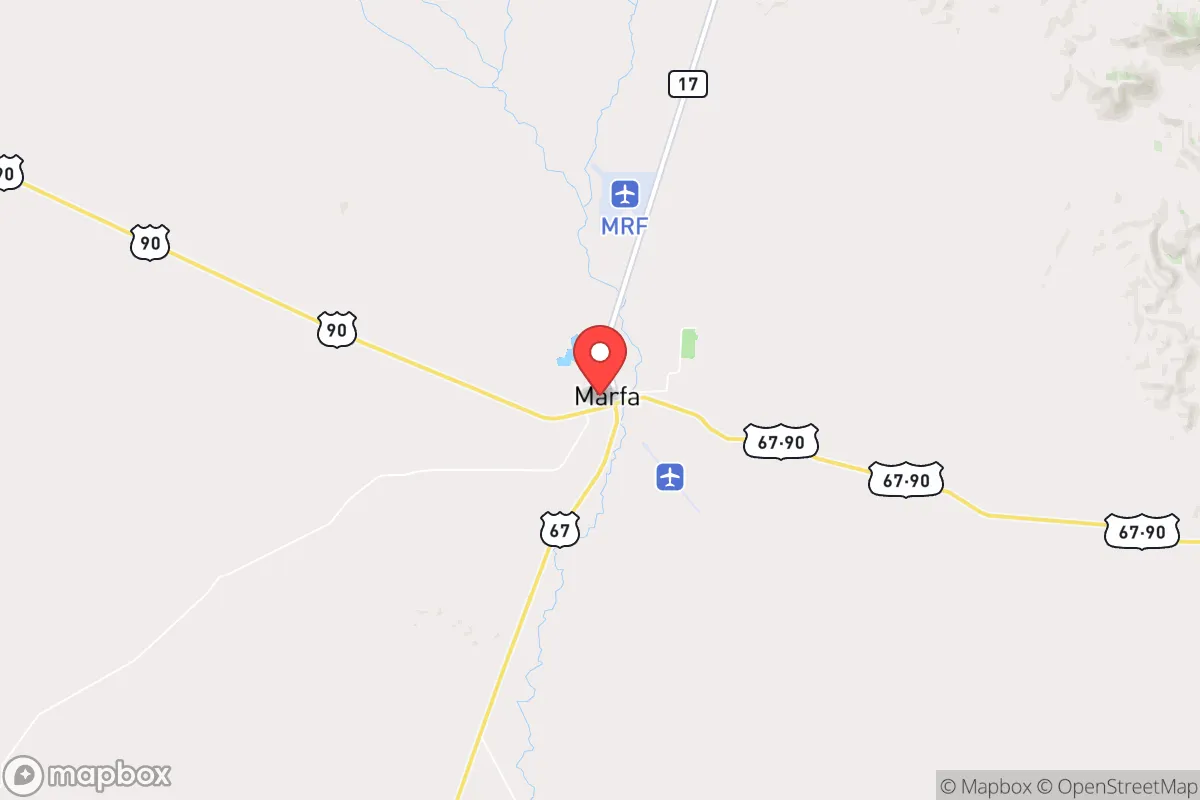
Photo: Wikipedia
Quality of Life in Marfa, TX
Above-average quality of iife. The area offers a reasonable cost of living, decent mobility, and a mix of neighborhood amenities.
What does Quality of Life tell us?
Quality of Life blends cost of living, nearby amenities, socioeconomic signals, and neighborhood character. City-level scores represent the whole municipality; individual neighborhoods can differ.
What does this tell us?
Quality of Life blends cost of living, nearby amenities, socioeconomic signals, and neighborhood character. City-level scores represent the whole municipality; individual neighborhoods can differ.
Cost of Living
The Real Cost of Living in Marfa, TX for 2026
| Tier | Individual | Family (4) |
|---|---|---|
| Survival | $9k | $17k |
| Comfortable | $42k | $62k |
| Luxury | $69k+ | $107k+ |
| Elite (Top 5%) | $139k+ | $215k+ |
61%
The Area Signal
A metric tracking the socioeconomic signals of the area.
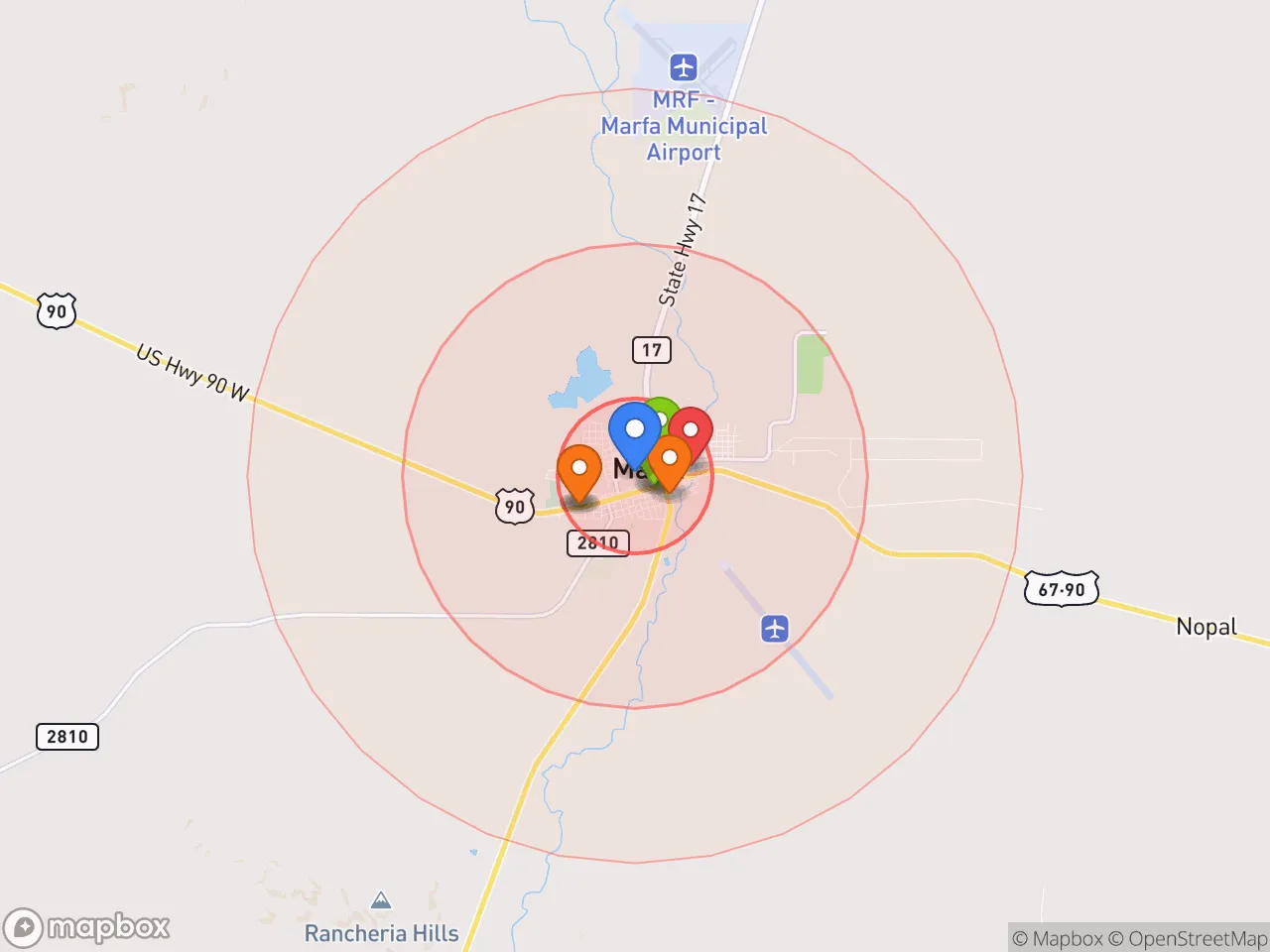
Hobbies
Explore the areaGroceries
0 within 10 miles
Gas
4 within 10 miles
Hospital
0 within 20 miles
Airport
LAS — Las Cruces International
Post Office
USPS — Marfa, TX
Critical Amenities
Quality-of-Life Analysis
Marfa, Texas, presents a unique quality-of-life paradox: it is a remote, high-desert town of roughly 1,800 people that has become an internationally recognized arts destination, yet its cost of living remains well below the national average. The population is a blend of longtime ranching families, minimalist artists drawn by the Chinati Foundation, and a growing number of remote workers seeking solitude and space. This convergence creates a social fabric that is simultaneously insular and cosmopolitan, where a $20 gallery opening might stand next to a livestock auction.
Cost of living, housing, and affordability compared to Alpine and Fort Davis
Marfa’s overall cost of living index sits at 51—roughly half the U.S. average—making it one of the most affordable places in the country for basic goods and services. The median home value is $217,600, which is notably lower than the Texas statewide median of roughly $300,000, though it is significantly higher than in neighboring Alpine (median ~$175,000) or Fort Davis (~$160,000). Renters benefit from a median monthly rent of just $395, a figure that reflects the town’s limited rental stock and older housing units rather than a glut of cheap apartments. The average one-way commute is 26.7 minutes, driven largely by the fact that many workers live in Marfa but commute to jobs in Alpine (26 miles east) or to remote ranch properties. However, housing supply is extremely tight: inventory is low, and properties often sell within days to out-of-state buyers, which has pushed prices up roughly 40% since 2020. For those willing to buy, the math works in their favor compared to Austin or Dallas, but the lack of available units and the need for cash offers in many transactions can be a barrier.
What daily life is like for families: amenities, schools, and local rhythm
Daily life in Marfa revolves around a small core of businesses along San Antonio Street and Highland Avenue. The town has one full-service grocery store (Marfa Food Basket), a hardware store, a post office, and a handful of restaurants and coffee shops that double as social hubs. The Marfa Independent School District serves roughly 300 students across one elementary, one middle, and one high school, with a student-teacher ratio of about 11:1. Extracurricular options are limited compared to suburban districts—there is no public swimming pool or multiplex cinema—but the town’s safe streets and open spaces allow children a degree of unsupervised freedom rare in larger cities. Healthcare is a notable gap: the nearest hospital with an emergency room is Big Bend Regional Medical Center in Alpine, 26 miles away. For specialized care, residents drive 200 miles to El Paso or Odessa. The town’s rhythm is slow and weather-dependent; summer highs often exceed 95°F, while winter nights can drop below freezing. The Marfa Lights viewing platform and the Chinati Foundation’s open-house weekends provide the main cultural anchors, but most daily life is quiet, self-directed, and heavily reliant on personal vehicles.
Marfa is best suited for individuals or couples who value solitude, creative community, and low overhead over career mobility, nightlife, or comprehensive services. Remote workers, retired artists, and second-home owners will find the affordability and cultural cachet compelling. Families with school-age children should weigh the limited extracurriculars and healthcare access carefully, while anyone dependent on a steady local job market may struggle—the town’s economy is heavily tied to tourism, the arts, and a small number of ranching and government positions. For those who can adapt to its isolation and embrace its peculiar blend of frontier pragmatism and avant-garde ambition, Marfa offers a quality of life that is genuinely unlike anywhere else in Texas.

Crime in Marfa, TX
Lower crime rates than 96% of comparable U.S. locations.
Violent CrimeViolent Crime Analysis
Property CrimeProperty Crime Analysis
Crime Analysis
Marfa, Texas, presents a mixed safety profile for prospective residents. The town's violent crime rate of 342.3 per 100,000 residents is slightly below the national average but notably higher than the Texas state average, while its property crime rate of 1,780.9 per 100,000 significantly exceeds both state and national benchmarks. These figures place Marfa in a category where property theft and vandalism are more pressing daily concerns than violent confrontations, though the overall risk is not negligible.
Crime in context
When compared to broader data, Marfa's violent crime rate is roughly 8% lower than the U.S. average but approximately 15% higher than the Texas average. The property crime rate, however, is a more pronounced outlier: it is nearly 40% higher than the national average and about 25% above the Texas average. This disparity suggests that while serious physical harm is less common than in many other parts of the country, residents face a notably elevated risk of burglary, theft, and vehicle-related crime. The town's remote location in Presidio County, with limited law enforcement resources relative to its sprawling geography, likely contributes to these property crime figures.
What residents experience
Daily life in Marfa for most residents involves a heightened awareness of property security. Locking vehicles, securing outbuildings, and installing outdoor lighting are common practices. The town's small population—around 1,800—means that many crimes are not anonymous; victims often know or recognize the perpetrators, which can complicate reporting and prosecution. Burglaries of unoccupied homes and art studios are a recurring theme in local reports, reflecting the town's dual identity as a remote ranching community and a destination for artists and tourists. The presence of a progressive local government and judicial philosophy in Presidio County, which emphasizes rehabilitation over incarceration, has been cited by some residents as a factor that may reduce deterrence for repeat property offenders. This approach, while intended to address root causes of crime, can result in shorter sentences and quicker returns to the community, potentially increasing the risk of recidivism and creating a perception among victims that the justice system prioritizes offender welfare over public safety.
Neighborhood-level variation
Crime in Marfa is not uniformly distributed. The historic downtown core, centered around the Presidio County Courthouse and the Hotel Paisano, sees higher foot traffic and a correspondingly higher incidence of petty theft and vehicle break-ins, particularly during peak tourist seasons (spring and fall art events). Residential areas on the outskirts, such as the neighborhoods along Highland Avenue and the streets near the Marfa Municipal Airport, tend to experience fewer property crimes but are not immune. The area around the Marfa High School and the public housing units on West San Antonio Street has historically reported a slightly higher concentration of both property and drug-related incidents. For those considering a move, properties with good visibility from main roads and those within a block of a neighbor who is consistently home tend to fare better in terms of security.
* Values derived from national, state, county, city and local statistics and may differ in a specific area. Last updated: 2026-05-16T21:52:13.000Z
Narrative content on this page is AI-generated and may contain mistakes. Verify any details that matter before acting on them.
ReloMaps may earn a commission from affiliate links at no extra cost to you.

