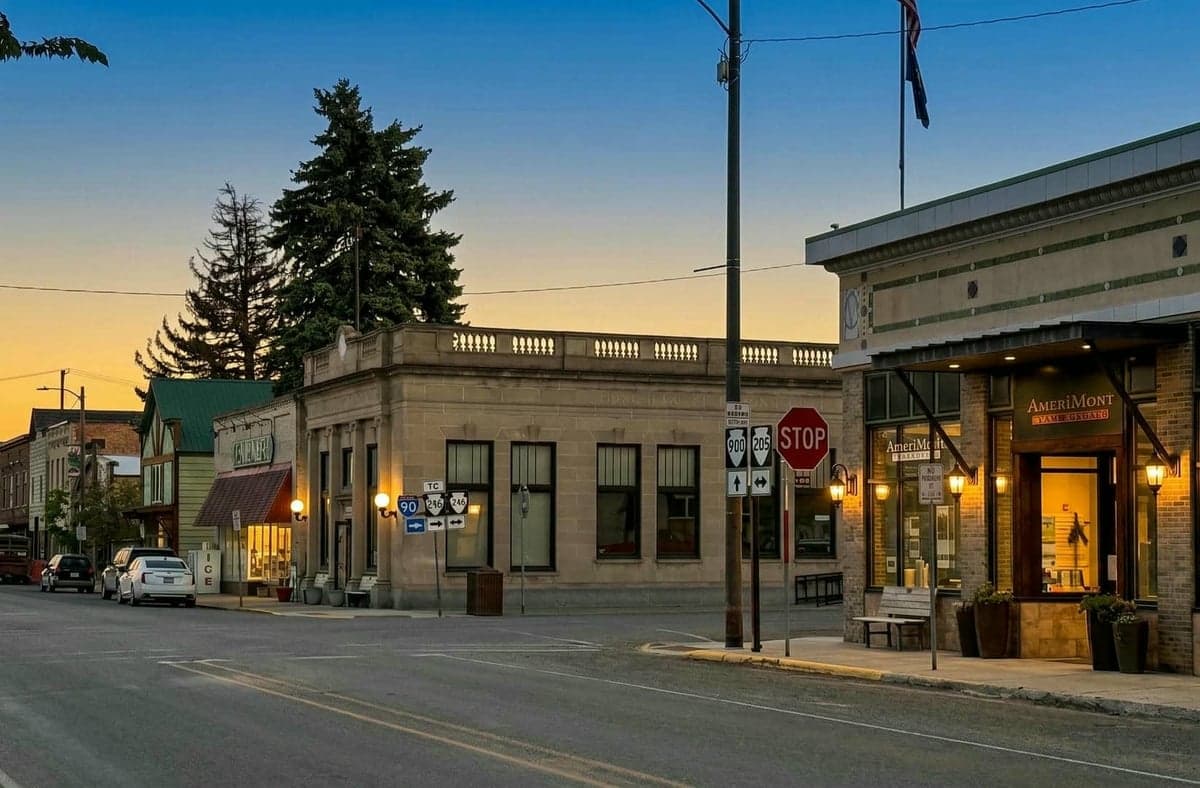
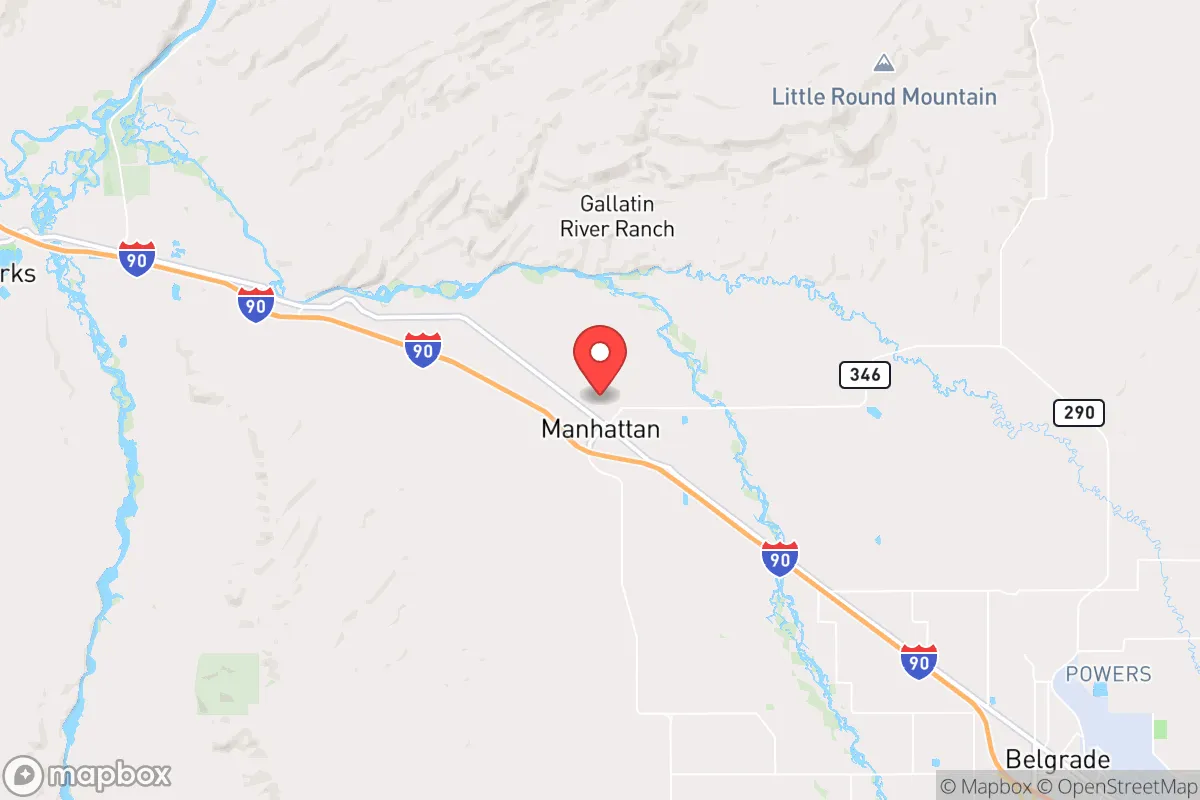
Strategic Assessment of Manhattan, MT
Workable tactical position. Some exposure to population density or targets, but generally defensible in a crisis.
What does the Strategic Assessment tell us?
Our Strategic Assessment grades tactical survivability of an area. Major population centers, military targets, fallout zones, natural disasters, and border exposure all drive risk — lower exposure means a more defensible position in a crisis.
This is heavily inspired by Joel Skousen's Strategic Relocation book. Highly recommended you checkout the book ($)What does this tell us?
Our Strategic Assessment grades tactical survivability of an area. Major population centers, military targets, fallout zones, natural disasters, and border exposure all drive risk — lower exposure means a more defensible position in a crisis.
This is heavily inspired by Joel Skousen's Strategic Relocation book. Highly recommended you checkout the book ($)Strategic Pillars

Key Distances
Regional Safe Places
Below is our recommended "safe zones" in Montana and the surrounding area based on our strategic heuristics. For most people, it's unrealistic to live in a “safe zone” full-time due to work, family or other personal reasons. They tend to be more rural. However, many of these areas are perfect for second homes and retreat properties that double as a vacation home or even a short-term rental.
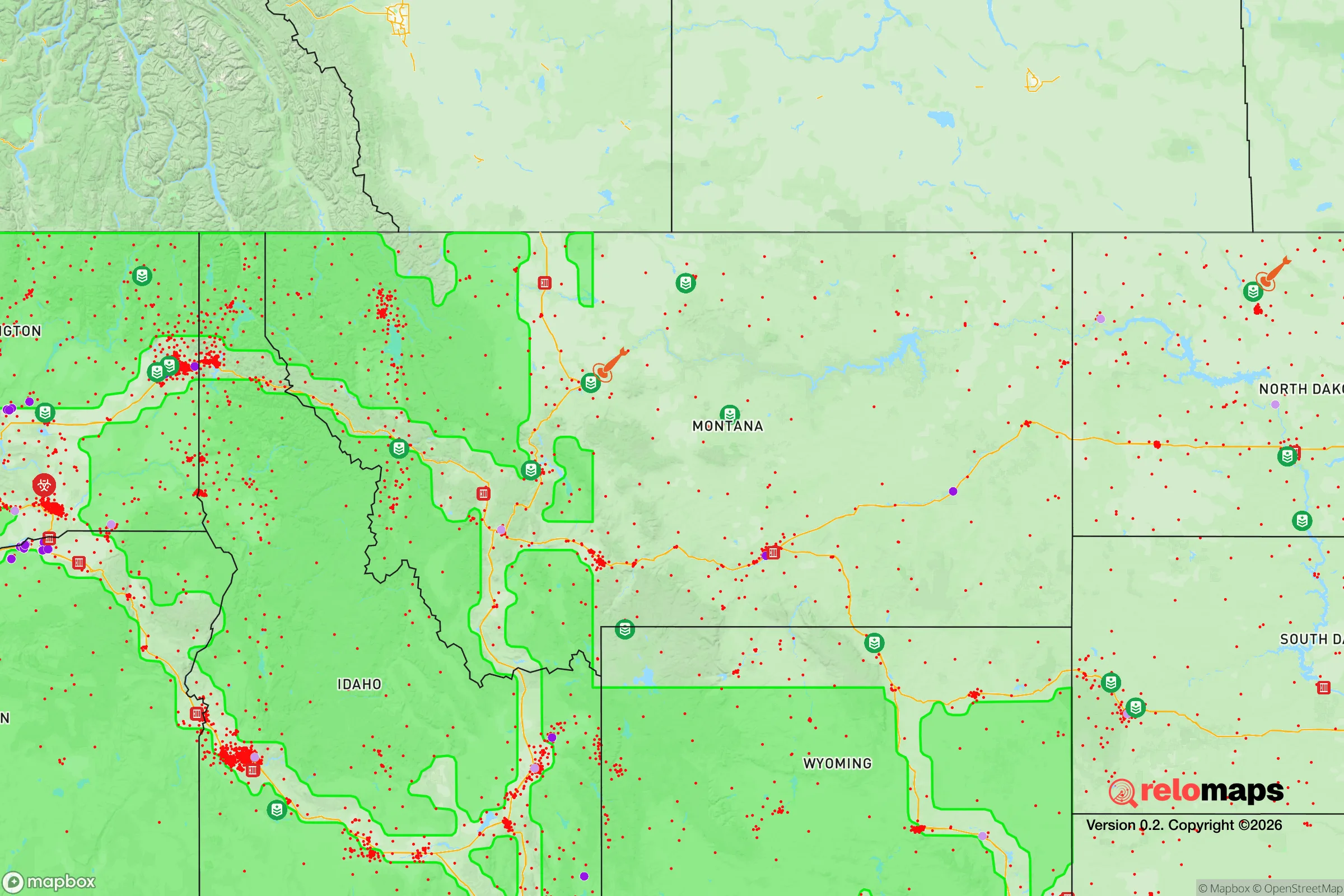


Important Note: For informational purposes only. This does not mean nothing bad ever happens in the green zones. Please use common sense. This is based on public data and modeled with AI. We tried to take a conservative approach but mistakes happen. We update this regularly as new information becomes available.
Solar Generator Recommendations
Backup power matters more here than in safer locations. We've picked three solar generators across budgets and capacity tiers — start with the budget unit if you only need a few essentials, or step up if you want to run a fridge and HVAC for days at a time.

Jackery Portable Power Station Explorer 300
Budget OptionPower on the Go: Weighing only 11 lbs, it's convenient to set up and store with book-sized foldable solar panels

BLUETTI Portable Power Station AC180
Designed for both indoor and outdoor scenarios, AC180 is highly capable as it has a robost capacity and continuous output power.

EF ECOFLOW DELTA Pro Ultra Power Station
Upgraded PickEcoFlow DELTA Pro Ultra is a whole-home energy system designed to grow with your family. Integrated with the Smart Home Panel 2, it scales to meet your evolving energy needs — keeping your home powered, intelligent, and secure through every stage of life.
We earn a commission, at no additional cost to you.
Strategic Assessment Analysis
Manhattan, Montana, offers a compelling strategic position for those prioritizing resilience and self-sufficiency, sitting in the Gallatin Valley roughly 60 miles from Bozeman and 15 miles from the smaller hub of Belgrade. Its location provides a buffer from the immediate chaos of a major metropolitan collapse while still granting access to essential supplies and medical care during stable periods. The area’s agricultural base, low population density, and distance from high-value targets make it a viable candidate for a long-term relocation strategy focused on weathering civic unrest, supply chain disruptions, or larger-scale disasters.
Geographic position and natural advantages for long-term security
Manhattan’s placement in the Gallatin Valley is a double-edged sword in the best sense: it’s close enough to Bozeman’s resources—hospitals, hardware stores, and fuel—but far enough that you won’t be caught in the first wave of panic-driven gridlock. The valley itself is a natural fortress, ringed by the Bridger, Gallatin, and Madison mountain ranges, which funnel travel through a handful of chokepoints. The Madison River runs nearby, providing a reliable water source, and the surrounding farmland means local food production isn’t a fantasy—it’s the backbone of the economy. For a relocator, this translates to a defensible position where you can monitor approach routes and maintain a low profile. The elevation (around 4,200 feet) and cold winters also act as a natural deterrent for transient populations, which is a serious consideration if you’re worried about mass displacement events.
Risks, exposures, and proximity to fallout-relevant landmarks
The primary strategic weakness is proximity to Bozeman, which sits about 60 miles south. While that distance is a solid buffer, Bozeman’s growth—fueled by tech money and tourism—means it’s a potential flashpoint for civil unrest, especially if economic collapse or resource shortages hit. The city’s airport (BZN) and the nearby Malmstrom Air Force Base (about 100 miles northeast in Great Falls) are both plausible targets in a conflict scenario, though Manhattan is far enough to avoid direct blast effects. More concerning is the rail line running through the valley, which carries freight and could become a target for sabotage or a vector for hazardous material spills. The area’s seismic risk is low, but the region does see occasional wildfires, particularly in dry summers, which could threaten rural properties if you’re not firewise. For a prepper, the biggest exposure is the single main highway (I-90) that connects Manhattan to the rest of the state—if that gets blocked, you’re relying on secondary gravel roads that can become impassable in winter.
Practical resilience for a relocator: food, water, energy, and defensibility
Manhattan’s agricultural character is its strongest card for long-term survival. The valley is home to grain farms, cattle ranches, and hay operations, meaning local food production is a reality, not a hobby. You can buy directly from farmers, and the town’s small size (around 2,000 residents) means community ties are tight—helpful for bartering or mutual aid in a crisis. Water is accessible via wells, but you’ll need to drill deep (200-300 feet is common), and the Madison River offers a surface source if you have filtration. Power comes from NorthWestern Energy, but the grid is vulnerable to winter storms and wildfire-related outages; solar panels with battery storage are a smart investment here, given the 300+ days of sunshine. Defensibility is decent: the town is laid out on a grid, but the surrounding rural properties offer standoff distance. You’ll want a property with a clear view of approach roads and a backup heat source—wood stoves are common, and firewood is plentiful from the nearby national forests. The local sheriff’s office is small but responsive, and the general attitude leans heavily toward self-reliance and Second Amendment rights, which aligns with a conservative survivalist mindset.
The overall strategic picture for a conservative relocator
Manhattan, MT, isn’t a bug-out location for the unprepared—it’s a long-term play for someone willing to invest in infrastructure and community relationships. The area’s isolation from major cities is a net positive, but you’re not completely off the grid; you’re in a buffer zone that gives you options. The biggest threats are economic instability hitting Bozeman and spilling over, or a natural disaster like a wildfire that could force a temporary evacuation. For a single individual or family with a prepper mindset, the calculus works: low crime, strong local food production, defensible terrain, and a population that shares your values. The trade-off is the harsh winter and the need to be proactive about water and energy independence. If you’re looking for a place to ride out the coming storms—whether they’re economic, political, or environmental—Manhattan offers a solid foundation, provided you come prepared to work for it.

* Values derived from national, state, county, city and local statistics and may differ in a specific area. Last updated: 2026-04-30T03:30:33.000Z
Narrative content on this page is AI-generated and may contain mistakes. Verify any details that matter before acting on them.
ReloMaps may earn a commission from affiliate links at no extra cost to you.

