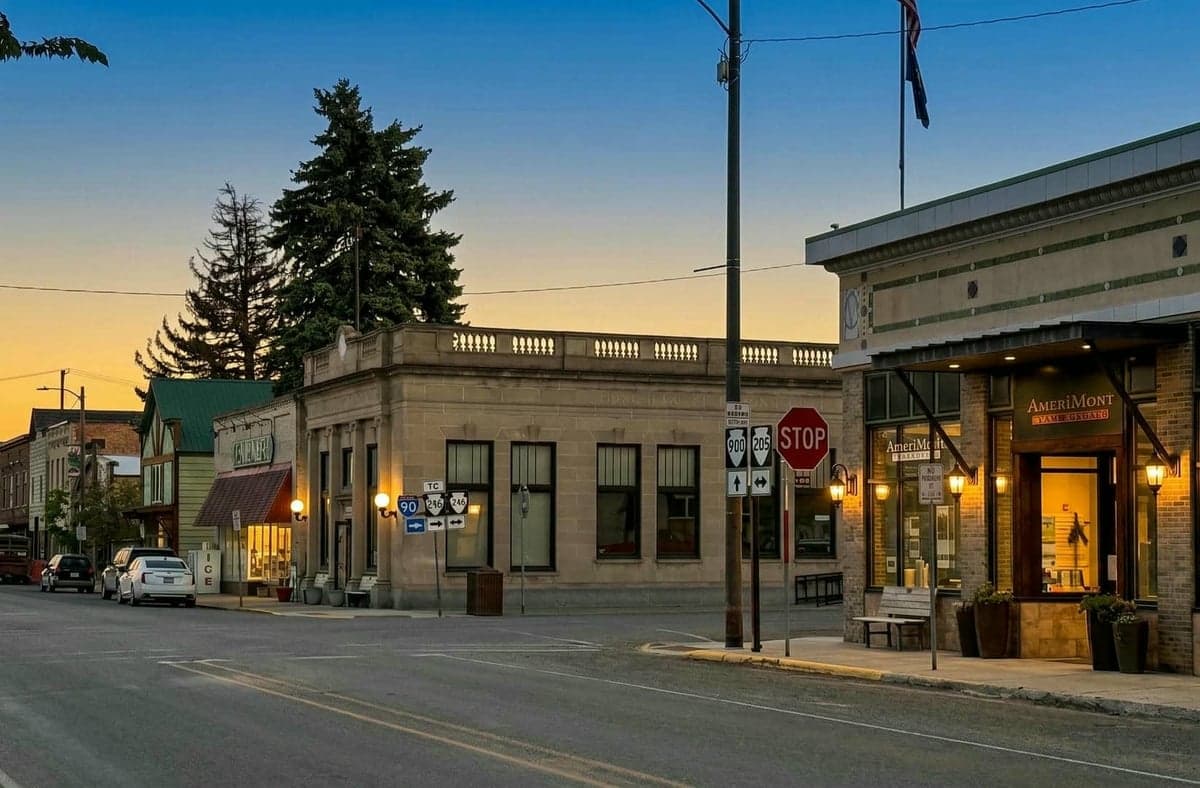
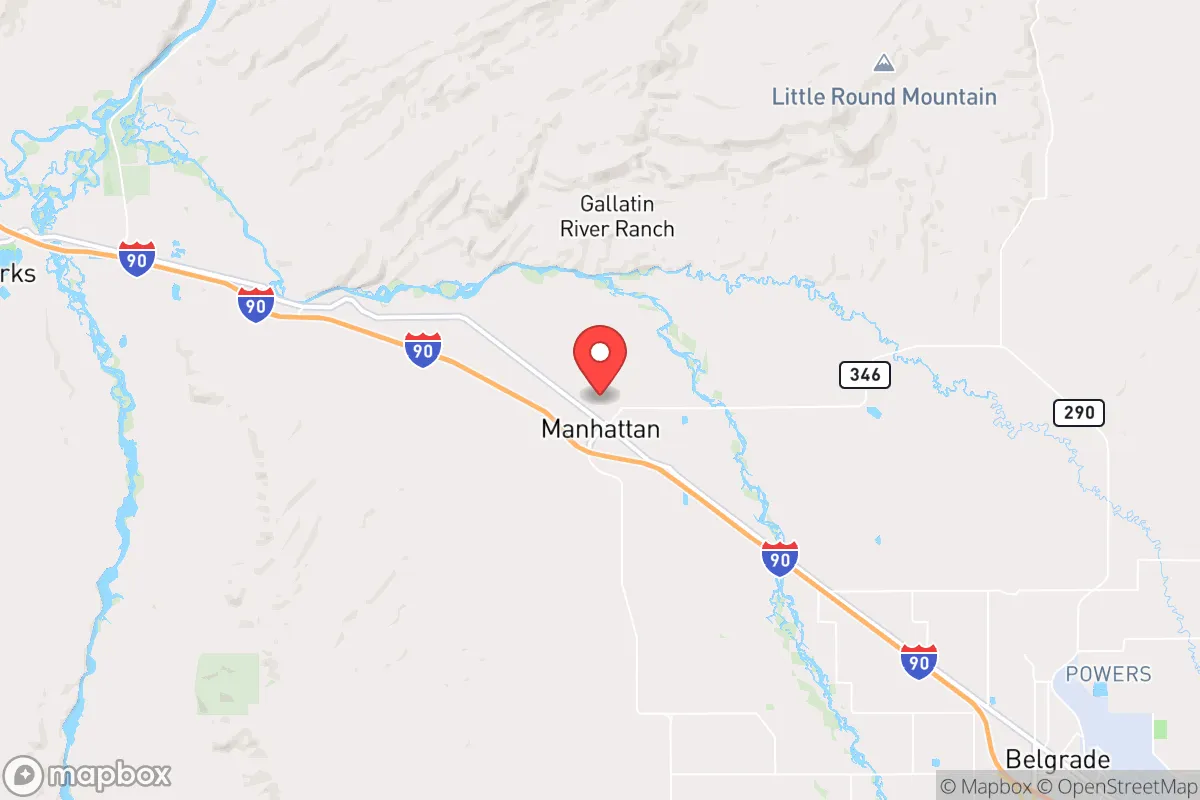
Personal Sovereignty in Manhattan, MT
Viable for self-reliance. Generally workable, though some barriers may limit total independence.
What does Personal Sovereignty tell us?
Personal Sovereignty measures your capacity for self-reliance and independence with minimal government friction. Higher scores mean fewer barriers between you and the way you want to live... but it assumes you have the space you need and good neighbors.
What does this tell us?
Personal Sovereignty measures your capacity for self-reliance and independence with minimal government friction. Higher scores mean fewer barriers between you and the way you want to live... but it assumes you have the space you need and good neighbors.
State Policy
Energy independence: Net exporter (120% of energy produced in-state)
Personal Liberty
Homesteading

Personal Liberty Analysis
Manhattan, Montana, offers a level of personal sovereignty that is increasingly rare in the modern United States, largely because the state’s constitutional and statutory framework deliberately limits government intrusion into daily life. For the survivalist or prepper mindset, this small Gallatin County town sits at a critical intersection: it provides the legal and cultural space to live by your own rules, yet it remains close enough to Bozeman’s resources and infrastructure to be practical. The key question is whether the local regulatory environment and community norms actually support the kind of self-determined, low-government life that many conservative-leaning individuals and families seek. Based on the state’s overall posture, Manhattan delivers a strong foundation for autonomy, but with some important nuances around local zoning and proximity to a growing urban center that could affect long-term independence.
Tax burden and regulatory posture: how much government is in your wallet
Montana’s tax structure is a major draw for those seeking to minimize government overreach. The state has no sales tax, which means every dollar you earn stays in your pocket unless the state decides to tax it directly. Income tax is a flat 6.75% for most earners, which is moderate but not negligible—though the lack of a sales tax effectively lowers your overall cost of living compared to states with both income and sales taxes. Property taxes in Gallatin County are around 0.8% of assessed value, which is reasonable for the region, though they have been creeping up as Bozeman’s growth pushes values higher. For a prepper or homesteader, the real win is Montana’s light regulatory touch: there are no state-level building codes in unincorporated areas, no mandatory energy codes, and no state income tax on Social Security benefits. This means you can build a shop, a root cellar, or a off-grid cabin without layers of permits and inspections that would slow you down in more regulated states. However, Manhattan itself is an incorporated town, so you will deal with local zoning and building permits within city limits—something to factor in if you plan to buy land inside town rather than on the outskirts.
Self-defense and gun law specifics: what you can carry and where
Montana is a constitutional carry state, meaning you can carry a concealed firearm without a permit as long as you are legally allowed to possess a firearm. This is a bedrock principle for anyone who believes the right to self-defense is non-negotiable. There is no state-level waiting period, no universal background check law beyond federal requirements, and no ban on standard-capacity magazines or common semi-automatic rifles. The state preempts local gun ordinances, so Manhattan cannot pass its own restrictions that are stricter than state law—a critical protection against the kind of patchwork regulation seen in states like Colorado or Washington. Stand-your-ground laws are in effect, and there is no duty to retreat in any place you are lawfully present. For the survivalist, this means your ability to defend your home, your family, and your property is legally robust. The only notable limitation is that Montana does require a permit to carry concealed in a vehicle if you are under 18, but for adults, the path is clear. If you are coming from a state with heavy gun control, the shift to Montana’s legal environment will feel like a return to constitutional sanity.
Self-reliance and homesteading viability: lot sizes, zoning, and off-grid feasibility
Manhattan’s location in the Gallatin Valley provides fertile soil and a growing season long enough for a serious garden, but the real question for a prepper is whether you can actually live off-grid and self-sufficiently. Within the town limits, lot sizes are typically small—quarter-acre to half-acre—and the town has basic zoning that requires connections to municipal water and sewer. This means full off-grid living (no utility connections) is not practical inside Manhattan proper. However, the surrounding rural areas of Gallatin County are a different story. Outside town, you can find parcels ranging from 5 to 40 acres, and county zoning is minimal. There are no county-level restrictions on rainwater collection, composting toilets, or solar panels. You can drill a well, install a septic system, and generate your own power without fighting a bureaucracy. The county does have some floodplain and subdivision regulations, but for a single-family homestead, the path is straightforward. The biggest practical challenge is water availability—the valley has good groundwater, but well drilling can be expensive and yields vary. For a serious homesteader, the ideal move is to buy 10+ acres outside Manhattan, where you can build a self-sufficient setup with minimal government interference.
Personal liberties: parental rights, medical autonomy, speech, and property
Montana has a strong track record on parental rights, with state law affirming that parents have the fundamental right to direct the upbringing, education, and healthcare of their children. There is no state-level mandate for COVID-19 vaccines for children, and the state passed legislation in 2023 prohibiting discrimination based on vaccine status, which protects both parents and individuals from being forced into medical choices they oppose. Medical autonomy is further supported by Montana’s lack of a state-run health insurance exchange and its resistance to federal healthcare mandates, though the practical reality is that most residents still rely on employer-based or private insurance. On speech and property rights, Montana’s constitution explicitly protects the right to keep and bear arms, the right to privacy, and the right to use property for lawful purposes. The state has no “red flag” law, no civil asset forfeiture without a criminal conviction, and no statewide mask or vaccine mandates. For the conservative individual worried about government overreach, Montana’s legal culture is one of the most protective in the nation. The only caveat is that Gallatin County is becoming more politically mixed as Bozeman grows, so local school boards and county commissions may see more progressive influence over time—something to watch if you are concerned about curriculum or local ordinances.
Overall, Manhattan, MT, offers a level of personal sovereignty that places it in the top tier of American towns for those who prioritize freedom from government intrusion. The combination of constitutional carry, no sales tax, minimal building regulations outside town, strong parental rights, and a legal culture that respects property and self-defense makes it a strategic relocation choice for the survivalist or prepper. The main trade-off is proximity to Bozeman’s growth, which brings both economic opportunity and the risk of creeping regulation. If you buy land outside the town limits and stay engaged with local politics, Manhattan can serve as a long-term base for a self-reliant, low-government life. Compared to states like California, New York, or even Colorado, the sovereignty differential is massive—you are trading a system that assumes government knows best for one that assumes you do. That is the core value proposition, and it is one that Manhattan delivers on.

* Values derived from national, state, county, city and local statistics and may differ in a specific area. Last updated: 2026-04-30T03:30:33.000Z
Narrative content on this page is AI-generated and may contain mistakes. Verify any details that matter before acting on them.
ReloMaps may earn a commission from affiliate links at no extra cost to you.

