
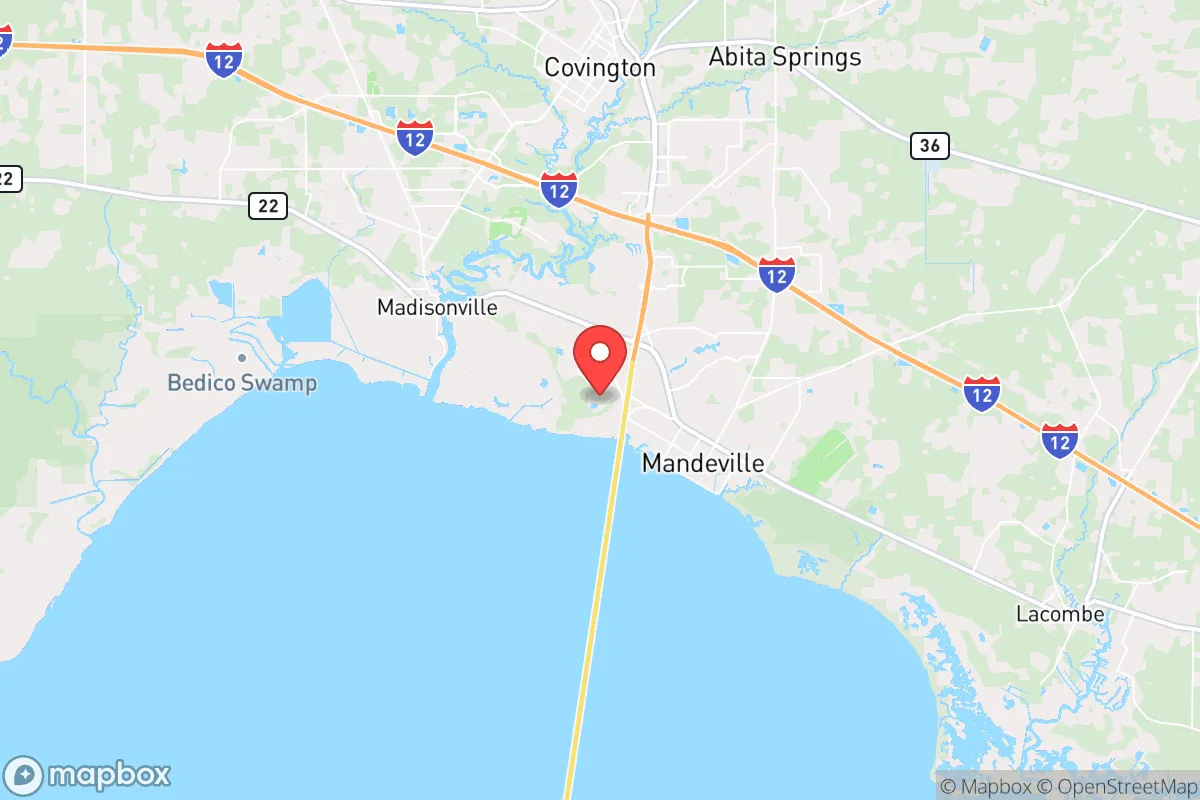
Political ClimatePolitical Climate in Mandeville, LA
District shown is the primary district for this city’s centroid. Cities may span multiple districts.
Local Political AnalysisPolitical Analysis of Mandeville, LA
Mandeville, Louisiana, has long been a stronghold for conservative values, and that hasn't changed much. The Cook Partisan Voting Index (PVI) of R+19 tells you everything you need to know about the area's political DNA—it's reliably Republican, and folks here like it that way. You see it in local elections, where school board and city council races are dominated by candidates who talk about fiscal responsibility, limited government, and protecting Second Amendment rights. The trajectory has been steady, but there's a quiet unease among long-time residents about creeping progressive influence from New Orleans and the more liberal pockets of St. Tammany Parish, like Covington's artsy downtown or the occasional activist group pushing for "equity" initiatives in the schools.
How it compares
Drive 20 minutes south across the Lake Pontchartrain Causeway, and you're in Orleans Parish, which votes blue by a landslide. That contrast is stark. Mandeville feels like a different world—and that's by design. Compared to nearby Slidell, which is also conservative but has a more working-class, blue-collar vibe, Mandeville leans more toward the country-club Republican side: think lower taxes, better-funded police, and a general distrust of Baton Rouge's meddling. Over in Covington, you'll find a similar conservative base, but it's a bit more libertarian-leaning, with folks who are just as skeptical of federal overreach as they are of local zoning rules. Mandeville sits right in the middle—solidly red, but with a pragmatic streak that keeps things from getting too ideological.
What this means for residents
For the people who live here, the political climate translates into a daily life that feels free from a lot of the nonsense you see in bigger cities. Property taxes are reasonable, there's no city income tax, and the local government generally stays out of your business—unless you're trying to build a dock without a permit, and even then, they're pretty reasonable. The school system, St. Tammany Parish Public Schools, is one of the best in the state, and that's because the community fights hard to keep curriculum decisions local and focused on academics, not social experiments. You won't find mask mandates or vaccine passports being pushed here; the parish council made that clear during the pandemic. The biggest concern among residents is that as more people move from blue states—attracted by the low cost of living and good schools—they might bring their voting habits with them. So far, the R+19 rating has held, but you can feel the pressure at the edges.
Culturally, Mandeville is still very much a place where the local VFW hall matters more than any city council resolution. The biggest policy fights you'll hear about involve coastal restoration, flood protection, and keeping the state from raising the gas tax. There's a strong "live and let live" attitude, but it's paired with a firm line on things like gun rights and parental control over education. If you're looking for a place where the government trusts you to make your own decisions, Mandeville delivers. Just keep an eye on those city council meetings—because the moment someone tries to bring in a "diversity, equity, and inclusion" officer or a new zoning rule that limits what you can do on your own property, you'll see the whole town show up to say no.

State Political ClimatePolitical Climate in Louisiana
State Political AnalysisPolitical Environment in the State
Louisiana is a deep-red state in presidential elections, voting for Donald Trump by over 18 points in 2024, but its political climate is far more complex than that headline suggests. The state has been reliably Republican for two decades, driven by a coalition of white evangelical voters, rural conservatives, and suburban families fleeing the Democratic brand. However, the state’s trajectory is not a straight line rightward — it’s a tug-of-war between a populist, culturally conservative base and a growing, increasingly organized progressive movement concentrated in a few key metros.
Urban vs. rural divide
The political map of Louisiana is a study in stark contrasts. The entire northern half of the state, from Shreveport to Monroe to the Florida Parishes, votes overwhelmingly Republican. The rural parishes — like Webster, Bienville, and Washington — routinely deliver 70-80% of their votes to GOP candidates. The real action is in the urban centers. New Orleans is the state’s progressive stronghold, voting over 80% for Joe Biden in 2020 and consistently electing Democrats to local and state offices. Baton Rouge is a battleground: East Baton Rouge Parish is split nearly 50-50, with the city proper leaning Democratic and the suburbs like Central and Zachary voting heavily Republican. Lafayette is a fascinating case — it’s a conservative city, but its growing university population and tech sector are slowly nudging it toward purple territory. The biggest shift is in the New Orleans suburbs: Jefferson Parish, once a Democratic bastion, has flipped hard to the right, voting for Trump by 15 points in 2024. This suburban exodus from the Democratic Party is the single most important political trend in Louisiana over the last 15 years.
Policy environment
Louisiana’s policy environment is a mixed bag for conservatives. On the plus side, the state has no income tax on Social Security benefits, a flat 4.25% personal income tax rate (down from 6% in 2021), and a relatively low property tax burden — the average effective rate is just 0.55%. The state is a right-to-work state, and its tort reform efforts in 2020 (Act 525) capped damages in some civil cases, which has been a win for business. On the education front, Louisiana has a robust school choice program — the Louisiana Scholarship Program and the Student Scholarships for Educational Excellence (a tax-credit scholarship) give families real options. However, the state’s regulatory posture is still heavy compared to Texas or Florida. The state sales tax is high (4.45% state rate, plus local add-ons that can push it over 10%), and the state’s Medicaid expansion under the Affordable Care Act (accepted by Governor John Bel Edwards in 2016) remains a point of contention. Election laws are solid: voter ID is required, and the state has no-excuse mail-in voting only for those 65+ or with a disability. The state’s constitution also includes a strong right-to-life amendment (passed in 2020), which triggered a near-total abortion ban after Dobbs.
Trajectory & freedom
Louisiana is in a tug-of-war between expanding and contracting personal freedom. On the positive side, the state passed constitutional carry (Act 74) in 2024, allowing law-abiding citizens to carry a concealed firearm without a permit — a major win for Second Amendment advocates. The state also passed a Parents’ Bill of Rights (Act 466) in 2023, which requires schools to notify parents about curriculum changes and prohibits instruction on sexual orientation or gender identity in K-6 classrooms. On the medical freedom front, Louisiana banned COVID-19 vaccine mandates for state employees and contractors in 2022. However, the state’s property rights record is mixed: the Louisiana Coastal Protection and Restoration Authority has broad eminent domain powers for flood control projects, which has frustrated landowners in coastal parishes like Terrebonne and Lafourche. The biggest red flag for liberty-minded residents is the state’s high incarceration rate — Louisiana has the highest imprisonment rate in the country, driven by tough-on-crime policies that some conservatives argue have gone too far. The 2017 criminal justice reform package (Act 261) reduced sentences for nonviolent offenses, but the pendulum is swinging back: the 2024 legislative session saw bills to increase penalties for carjacking and fentanyl trafficking.
Civil unrest & political movements
Louisiana has a long history of political activism, but the flashpoints have shifted. The most visible recent unrest was the 2020 protests in New Orleans and Baton Rouge following the death of George Floyd, which included property damage and clashes with police. These events galvanized a progressive activist movement, particularly in New Orleans, where groups like the New Orleans Workers’ Group and the local chapter of the Democratic Socialists of America have become more vocal. On the right, the Louisiana Republican Party has been energized by the state’s strong anti-abortion laws and the constitutional carry victory. Immigration politics are less of a flashpoint here than in border states, but the state’s Republican governor, Jeff Landry, has deployed the Louisiana National Guard to Texas under Operation Lone Star. There is no sanctuary city policy in Louisiana — in fact, the state passed a law in 2023 (Act 319) requiring local law enforcement to cooperate with federal immigration authorities. Election integrity is a live issue: the 2020 election saw no major scandals, but the state’s Republican-controlled legislature passed a law in 2024 requiring all ballots to be hand-counted in future elections, a move that has drawn both praise and criticism.
Projection
Over the next 5-10 years, Louisiana is likely to remain a reliably red state, but the margins could tighten. The biggest demographic shift is the continued exodus of young, college-educated residents from New Orleans and Baton Rouge to Texas and Florida, which hurts the Democratic base. At the same time, the state’s growing Hispanic population (now about 7% of the state, concentrated in the New Orleans metro and the Acadiana region) is not voting as monolithically as expected — many are conservative-leaning on social issues. The real wildcard is the state’s economic trajectory: if Louisiana can continue to cut taxes and reform its legal climate, it could attract more conservative-minded migrants from high-tax states. If not, the state risks becoming a poorer, older version of itself, which could lead to more populist, anti-establishment politics. The 2026 gubernatorial election will be a key test: if a moderate Republican wins, the state may continue its slow drift toward a more business-friendly conservatism. If a hardline populist wins, expect more fights over cultural issues and less focus on economic reform.
For a conservative moving to Louisiana, the bottom line is this: you’ll find a state that votes red, protects gun rights, and supports school choice, but you’ll also deal with high sales taxes, a heavy-handed state bureaucracy, and a legal system that still favors plaintiffs in many cases. The best places to land are the conservative suburbs of Baton Rouge (Central, Zachary) or the Lafayette area, where the politics match the lifestyle. Avoid Orleans Parish unless you’re prepared for a progressive urban environment. The state is trending in the right direction on many fronts, but it’s not Texas or Florida — yet. If you value low property taxes and a strong Second Amendment culture, Louisiana is a solid choice. If you want a truly limited government, you may find yourself frustrated by the state’s lingering big-government habits.
* Values derived from national, state, county, city and local statistics and may differ in a specific area. Last updated: 2026-04-23T04:53:41.000Z
Narrative content on this page is AI-generated and may contain mistakes. Verify any details that matter before acting on them.
ReloMaps may earn a commission from affiliate links at no extra cost to you.

