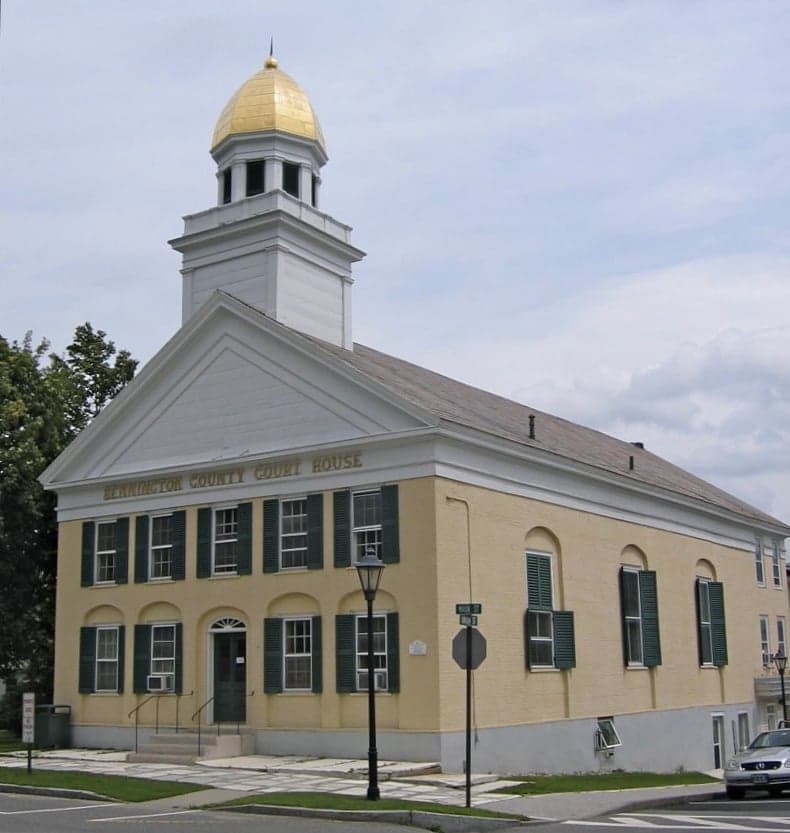
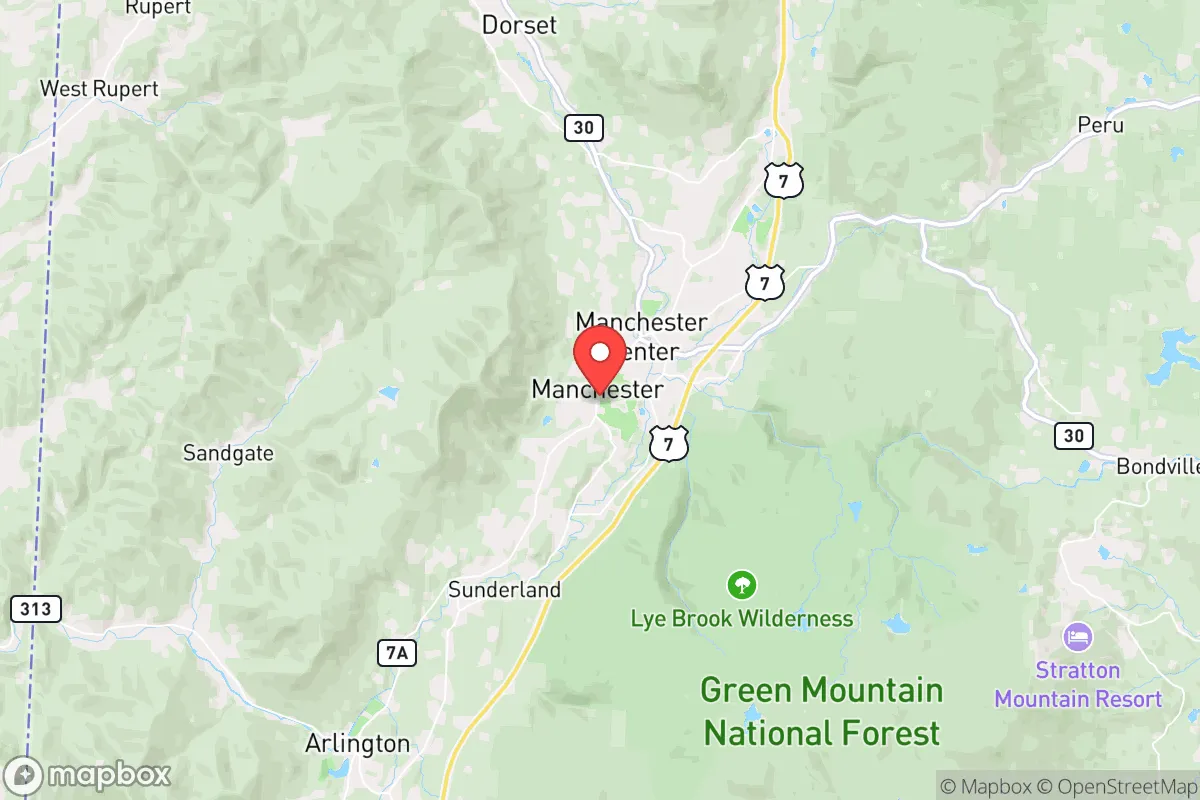
Photo: Wikipedia
Demographics of Manchester, VT
Affluence Level in Manchester, VT
A middle-class area roughly in line with national averages across income, home values, education, and employment.
People of Manchester, VT
The people of Manchester, Vermont, today form a small, predominantly white community of 642 residents, characterized by a high proportion of college-educated professionals (48.5%) and a notably low foreign-born population of just 1.4%. The village’s identity is shaped by its historic role as a resort and second-home destination, with a population that skews older and wealthier than the state average, yet remains ethnically homogeneous. Distinctive markers include a strong preservationist ethos, a concentration of cultural institutions like the Southern Vermont Arts Center, and a seasonal economy that swells with tourists and part-time residents, creating a quiet, curated atmosphere year-round.
How the city was settled and grew
Manchester’s human history begins with the Mohican and Abenaki peoples, who used the Batten Kill Valley as a seasonal hunting and fishing corridor before European settlement. The first permanent white settlers arrived in the 1760s, granted land by New Hampshire’s colonial governor Benning Wentworth, and established a farming and milling community along the Batten Kill. The village’s early growth centered on Manchester Center, where the first gristmill and sawmill were built, and Manchester Village, which developed as the civic and commercial core along what is now Main Street. The arrival of the railroad in 1852 transformed the local economy, drawing wealthy industrialists from New York and Boston who built summer estates, notably in the Equinox Mountain area and along the West Road corridor. These families, including the Lincolns and the Orvis family, established Manchester as a Gilded Age resort, and their descendants’ summer homes remain a defining architectural feature. The population remained overwhelmingly native-born white through the early 20th century, with small waves of Irish and French-Canadian laborers arriving to work in the marble quarries and hotels, settling in modest homes near Depot Street and the River Road area.
Modern era (post-1965)
After the 1965 Hart-Cellar Act, Manchester saw virtually no new immigration, consistent with its current foreign-born share of just 1.4%. Instead, the post-1965 period was defined by domestic in-migration of affluent retirees and second-home buyers from the Northeast corridor, drawn by the village’s historic charm and recreational amenities. These newcomers concentrated in Manchester Village and along the Batten Kill waterfront, often purchasing and restoring the grand Victorian and Federal-style homes that had been summer estates. The 1970s and 1980s also saw a modest influx of counterculture-leaning artists and craftspeople, who settled in more affordable pockets like East Manchester Road and the Bourn Pond area, though they never formed a large demographic bloc. The racial composition remained static: as of the most recent data, the population is 91.6% white, with a Hispanic share of 7.0% (likely reflecting seasonal hospitality workers from Central America, many of whom do not settle permanently), a Black share of 1.4%, and no recorded East/Southeast Asian or Indian subcontinent residents. The college-educated share rose sharply to 48.5%, reflecting the village’s transformation into a destination for educated professionals seeking a rural lifestyle, while the under-35 population declined as young adults left for job markets elsewhere.
The future
Manchester’s population trajectory points toward continued demographic stability and gradual homogenization. The village is not tribalizing into distinct ethnic enclaves; rather, it is consolidating as a predominantly white, affluent, and older community. The Hispanic share, currently 7.0%, may grow slightly if the hospitality sector expands, but the lack of affordable housing and year-round employment will likely prevent a large permanent immigrant population from forming. The foreign-born share is expected to remain below 5% for the foreseeable future. The most significant demographic shift is age-related: the median age is rising as retirees replace younger families, and the school-age population is declining. Over the next 10–20 years, Manchester will likely become even more of a resort-and-retirement destination, with a smaller year-round population and a larger seasonal one. For someone moving in now, this means a stable, low-crime environment with strong cultural amenities, but limited ethnic diversity and a social fabric that is more insular than cosmopolitan.
Manchester is becoming a curated, preservation-minded enclave for affluent retirees and remote workers who value historic character and outdoor recreation over diversity or urban energy. For a conservative-leaning individual or family seeking a quiet, safe, and culturally homogeneous community with excellent schools and low crime, it offers a compelling fit—but those looking for a growing, diverse, or economically dynamic population should look elsewhere.

* Values derived from national, state, county, city and local statistics and may differ in a specific area. Last updated: 2026-04-30T10:46:40.000Z
Narrative content on this page is AI-generated and may contain mistakes. Verify any details that matter before acting on them.
ReloMaps may earn a commission from affiliate links at no extra cost to you.

