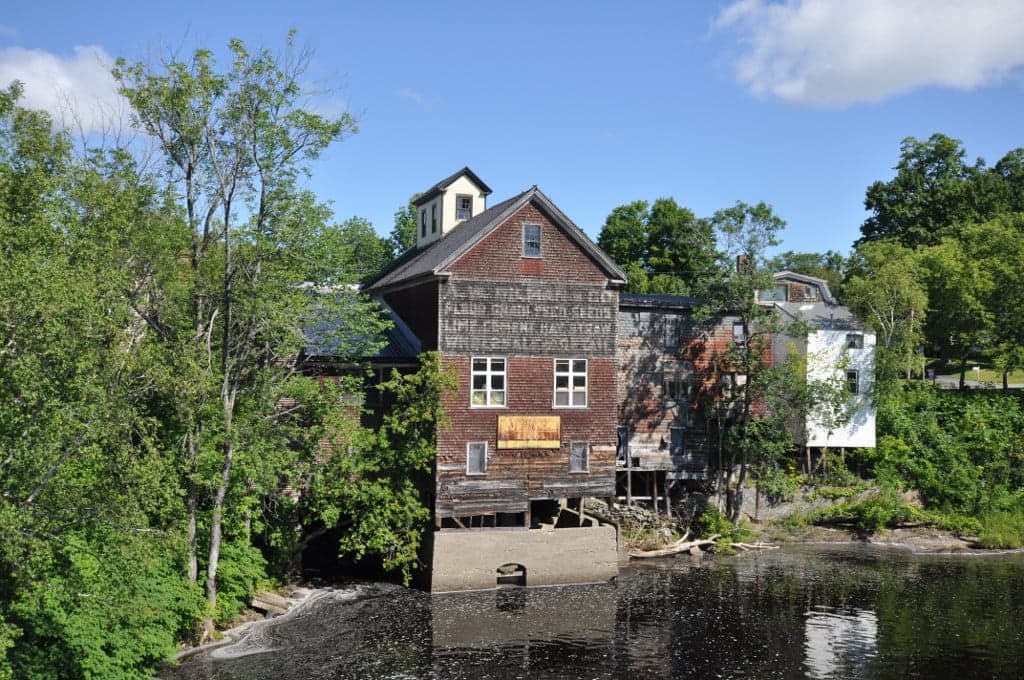
Photo: Wikipedia
Personal Sovereignty in Piscataquis County
Viable for self-reliance. Generally workable, though some barriers may limit total independence.
What does Personal Sovereignty tell us?
Personal Sovereignty measures your capacity for self-reliance and independence with minimal government friction. Higher scores mean fewer barriers between you and the way you want to live... but it assumes you have the space you need and good neighbors.
What does this tell us?
Personal Sovereignty measures your capacity for self-reliance and independence with minimal government friction. Higher scores mean fewer barriers between you and the way you want to live... but it assumes you have the space you need and good neighbors.
State Policy
Energy independence: Importer (27% of energy produced in-state)
Personal Liberty
Homesteading

Personal Liberty Analysis
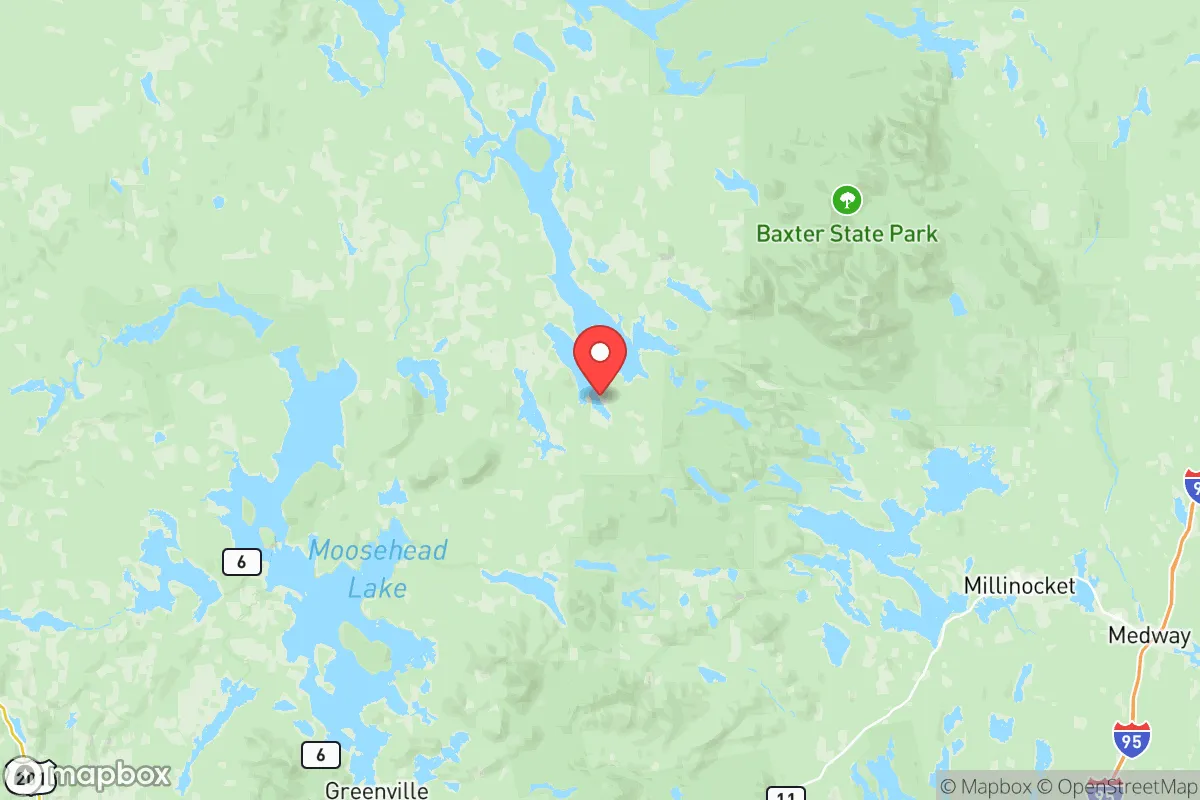
Piscataquis County, Maine, offers one of the most robust personal sovereignty environments in the Northeast, defined by a combination of low population density, minimal county-level regulation, and a state legal framework that generally supports self-reliance. With roughly 17,000 residents spread across 4,377 square miles—making it the state’s largest county by area and one of its least densely populated—the practical reality is that local government oversight is thin, and personal autonomy is the default. For a relocation-minded reader prioritizing freedom from overreach, the county’s towns and unorganized territories present a spectrum of options, from the relative services of Dover-Foxcroft and Greenville to the near-total solitude of townships like Bowdoin College Grant East or Lake View Plantation.
Tax burden and regulatory posture: How Maine’s state-level costs compare to local flexibility
Maine’s overall tax burden is moderate by national standards—ranking roughly 15th highest according to the Tax Foundation—but Piscataquis County’s local dynamics soften the impact. The state’s income tax is a flat 5.8% on most income, and the sales tax is 5.5%, with no local sales tax add-ons. Property taxes are the primary local revenue source, and the county’s median effective property tax rate hovers around 1.2% of assessed value, slightly below the state average. However, because property values in Piscataquis are low—median home values around $150,000—the actual dollar amount is manageable. Dover-Foxcroft and Greenville have the highest mill rates in the county due to their school and municipal services, while unorganized territories like E Township or Frenchtown have no local government and thus no municipal property tax, only county and state levies. The regulatory posture at the county level is light: there is no county-wide zoning, no county building code enforcement beyond state minimums, and no county health department imposing extra rules. Most land-use decisions fall to individual towns, and many smaller townships have no zoning ordinances at all. For a reader seeking minimal bureaucratic friction, the unorganized territories are the most hands-off option in the state.
Self-defense and gun law specifics: Constitutional carry, permitless carry, and local culture
Maine is a strong Second Amendment state, and Piscataquis County reflects that culture deeply. The state has permitless carry for both open and concealed firearms for anyone 21 or older who is legally allowed to possess a firearm. No permit, training, or registration is required. For those who want reciprocity with other states, a non-resident permit is available through the Maine State Police, but it is not needed for in-state carry. There is no state-level assault weapons ban, no magazine capacity limit, and no red flag law as of 2026. The county sheriff’s office in Dover-Foxcroft is known for a pro-Second Amendment stance, and local gun culture is pervasive—hunting is a primary activity, and firearm ownership is the norm in rural areas. Greenville, as the gateway to Moosehead Lake, sees heavy hunting traffic and has a strong sporting culture. Milo and Brownville are similarly firearm-friendly. The only practical limitation is that discharging a firearm within 100 yards of a dwelling without permission is prohibited, but given the vast tracts of private and public land, finding a safe and legal place to shoot is rarely an issue. For a reader prioritizing self-defense rights, Piscataquis County offers one of the most permissive environments in New England.
Self-reliance and homesteading viability: Lot sizes, zoning, and off-grid feasibility
Homesteading and off-grid living are not just possible in Piscataquis County—they are the norm for many residents. Minimum lot sizes vary by town: Dover-Foxcroft requires one acre for a single-family home, while Greenville requires two acres in most residential zones. However, in unorganized territories like Lake View Plantation or Bowdoin College Grant West, there are no minimum lot size requirements beyond state septic system rules, which typically demand at least two acres for a conventional septic system. Zoning is minimal or nonexistent in most of the county; only the larger towns have any form of land-use ordinances, and those are generally focused on commercial districts. Off-grid living is fully legal: there are no state or county laws requiring connection to a power grid, and solar panels, wind turbines, and generator systems are common. Milo and Brownville have a higher density of year-round off-grid residents. Water rights are favorable—Maine follows the “reasonable use” doctrine for groundwater, and surface water access is generally open for domestic use on your own property. The biggest practical challenge is the short growing season (Zone 4-5) and the cost of heating, but for a reader willing to invest in wood stoves and passive solar design, the regulatory barriers are near zero. The county’s vast tracts of forested land, much of it owned by timber companies and available for lease or purchase, make it one of the best places in the lower 48 for a self-reliant lifestyle.
Personal liberties: Parental rights, medical autonomy, speech, and property rights
Maine’s state-level policies on personal liberties are mixed, but Piscataquis County’s local culture and enforcement patterns tilt strongly toward individual freedom. Parental rights are broadly respected: Maine has no state-level vaccine mandate for school attendance beyond standard childhood immunizations, and religious and philosophical exemptions are available. The county’s school districts—SAD 41 in Milo and SAD 68 in Dover-Foxcroft—are small and community-oriented, with parents having significant influence on curriculum and policy. Homeschooling is legal and lightly regulated, requiring only a simple notice of intent and annual assessment. Medical autonomy is more constrained at the state level: Maine has a vaccine mandate for healthcare workers and certain public employees, but enforcement in rural Piscataquis is less aggressive than in Portland. The county has no hospital of its own—the closest is in Bangor, 45 minutes from Dover-Foxcroft—so medical freedom debates are somewhat academic. Speech and assembly rights are fully protected; the county is politically diverse, with a mix of libertarian-leaning independents, conservative Republicans, and a small progressive minority in Greenville. Property rights are strong: Maine has no statewide rent control, no inclusionary zoning mandates, and no transfer taxes on real estate sales. The county’s tax lien process is standard, but tax rates are low enough that few properties are lost to foreclosure. For a reader who values the ability to live without interference, Piscataquis County’s combination of low population density, minimal local government, and a culture of self-reliance makes it a standout in the Northeast.
Overall, Piscataquis County offers a level of personal sovereignty that is rare east of the Mississippi. While Maine’s state government imposes moderate taxes and some healthcare mandates, the county’s vast geography, minimal local regulation, and strong gun culture create an environment where individual autonomy is the default. Compared to more densely regulated areas like southern Maine or the Boston metro, Piscataquis provides a genuine alternative for those seeking to live on their own terms. For a relocation-minded reader, the choice between Dover-Foxcroft’s services and Lake View Plantation’s solitude is a matter of preference, but the freedom to make that choice is the county’s defining feature.

* Values derived from national, state, county, city and local statistics and may differ in a specific area. Last updated: 2026-11-21T23:32:22.000Z
Narrative content on this page is AI-generated and may contain mistakes. Verify any details that matter before acting on them.
ReloMaps may earn a commission from affiliate links at no extra cost to you.

