Photo: Wikipedia
Political ClimatePolitical Climate in Androscoggin County
Showing district-level results — no local-only data available.
Local Political AnalysisPolitical Analysis of Androscoggin County
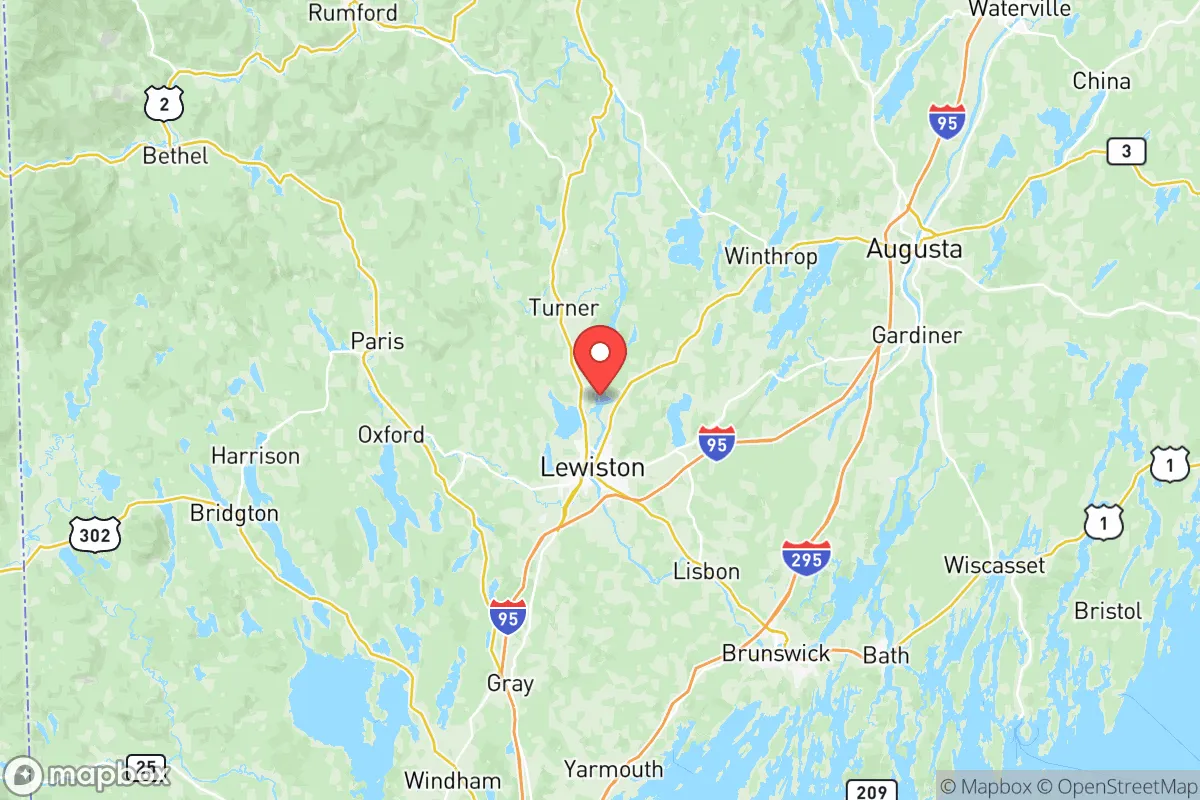
Androscoggin County, Maine, sits politically at a fascinating crossroads, leaning Republican with a Cook PVI of R+4, but that number only tells part of the story. The county is a genuine battleground within a state that has a reputation for electing centrist independents and splitting its tickets. While the county as a whole has trended redder in recent presidential cycles, the reality on the ground is far more nuanced, with deep blue pockets in the mill cities and solid red swaths in the rural towns, making it a true bellwether for the state's political mood.
How it compares
Compared to the rest of Maine, Androscoggin County is noticeably more conservative, but it's not a monolith. The county's R+4 PVI puts it to the right of the state as a whole, which has a slight Democratic lean in statewide races, largely driven by the heavily populated and liberal coastal counties like Cumberland (Portland). The real story is the internal divide. Lewiston, the county's largest city, is a Democratic stronghold, powered by a diverse population including a significant Somali immigrant community and a strong unionized manufacturing base. Just a few miles away, Auburn, the other half of the twin cities, is more of a swing area, often tipping Republican in statewide races. Head further out, and the picture shifts dramatically. Towns like Lisbon, Sabattus, and Wales are reliably red, with Trump winning them by wide margins in 2020 and 2024. The swing precincts that decide the county are often found in the more suburban and exurban parts of Auburn and the town of Poland, where moderate voters are heavily courted by both parties. This creates a dynamic where a Republican can win the county by running up the score in the rural towns, while a Democrat needs to turn out a massive vote in Lewiston and hope to split the vote in Auburn.
What this means for residents
For a conservative resident, living in Androscoggin County means feeling politically at home in most of the towns outside of Lewiston. Local government in places like Sabattus or Greene is reliably conservative, and you'll find strong support for the Second Amendment and lower taxes. For a liberal resident, the reality is more about living in a blue island within a red county. Lewiston provides a strong progressive base, with a city council that reflects its diverse population and a strong network of community organizations. However, the county-level government and state representation from the rural towns often lean conservative, meaning that policy debates on issues like education funding, land use, and social services can be contentious. The practical effect is that residents on both sides are used to a high level of political engagement and debate, as no single party can take the county for granted.
Culturally, this political split manifests in distinct ways. The county has a strong working-class identity, rooted in its history as a mill and manufacturing hub, which often transcends partisan labels. You'll find a deep skepticism of both Portland's coastal liberalism and the more extreme national rhetoric from either party. A key policy distinction is the county's relationship with the state's gun laws; while Maine has relatively permissive laws overall, the sentiment in Androscoggin's rural towns is strongly against any further restrictions, a view that often clashes with the more moderate stance in Lewiston. Looking ahead, the county's trajectory will likely be determined by demographic shifts in Auburn and the political engagement of Lewiston's growing immigrant community, making it a critical county to watch for anyone trying to understand Maine's political future.

State Political ClimatePolitical Climate in Maine
State Political AnalysisPolitical Environment in the State
Maine has long been known as a swing state with a libertarian streak, but over the past 10-20 years it has shifted from a purple battleground to a reliably blue state at the presidential level, while maintaining a fiercely independent and often divided state legislature. The Democratic coalition is anchored in the southern coastal counties and the largest metro areas, while the vast, rural northern and eastern regions remain deeply Republican. This split creates a unique political reality where a conservative relocating to Maine will find a very different environment depending on whether they settle in Portland or in Aroostook County.
Urban vs. rural divide
The political map of Maine is a study in contrasts. The Portland metro area, including Portland, South Portland, and Westbrook, is the engine of the state's Democratic vote, with precincts routinely delivering 70-80% for Democratic candidates. This is where the state's population growth and economic dynamism are concentrated. In contrast, the vast 2nd Congressional District, which covers the northern and eastern two-thirds of the state, is one of the most Republican districts in New England. Towns like Bangor, Lewiston, and Augusta are more moderate and can swing, but the rural interior—places like Presque Isle, Caribou, and Millinocket—vote overwhelmingly Republican. A key example of this divide is the 2020 presidential election, where the 2nd District split its electoral vote, giving one to Donald Trump while the state as a whole went for Joe Biden. This geographic split means that a conservative family moving to Scarborough will experience a very different political climate than one moving to Oxford County.
Policy environment
Maine's policy environment is a mixed bag that reflects its independent character. The state has a progressive income tax with a top marginal rate of 7.15%, and a sales tax of 5.5% that exempts most groceries and clothing. Property taxes are relatively high, especially in rural areas with a small tax base. On the regulatory side, Maine has some of the strictest environmental and land-use laws in the country, particularly around coastal development and renewable energy. Education policy is largely local, but the state has a strong tradition of school choice, including a robust charter school sector and the nation's oldest inter-district public school choice program. Healthcare is a major issue, with Maine being one of the first states to expand Medicaid under the Affordable Care Act. Election laws are among the most accessible in the nation, with same-day voter registration, no-excuse absentee voting, and ranked-choice voting for federal and state primaries and general elections.
Recent policy direction
The recent policy direction in Maine has been decidedly progressive, driven by Democratic control of the governorship and legislature for most of the last decade. On gun and self-defense law, Maine has historically been permissive, but in 2023, following a mass shooting in Lewiston, the legislature passed a 72-hour waiting period for gun purchases and expanded background checks for private sales. Parental and education rights have been a flashpoint, with the state passing a law requiring schools to affirm a student's gender identity without parental notification, which has drawn significant conservative backlash. On speech and privacy, Maine has one of the strongest internet privacy laws in the country, requiring ISPs to get opt-in consent before selling customer data. Medical and bodily autonomy is fully protected, with no gestational limits on abortion and a shield law protecting providers who serve patients from out of state. Property rights are constrained by strong environmental regulations, particularly the Shoreland Zoning Act, which limits development near water bodies. Taxation has been a battleground, with recent efforts to increase the estate tax and create a paid family leave program funded by payroll taxes. Voting and ballot access has been expanded, with ranked-choice voting now used in all federal and state primary and general elections, a system that has been controversial among conservatives who argue it dilutes their voting power.
Civil unrest & political movements
Maine is not known for widespread civil unrest, but it has a vibrant and visible activist scene on both sides. The most prominent recent flashpoint was the 2023 Lewiston mass shooting, which galvanized both gun control advocates and Second Amendment supporters. The state has a strong tradition of grassroots activism, from the anti-war movement of the 2000s to the more recent fights over tribal sovereignty and the Central Maine Power corridor. Immigration politics are a growing issue, particularly in Lewiston and Portland, where an influx of asylum seekers has strained housing and social services. The state has a sanctuary policy that limits local law enforcement cooperation with federal immigration authorities, a source of tension in more conservative areas. Election integrity has been a recurring topic, with the 2020 election seeing a push for a forensic audit in the 2nd District, though it was ultimately not conducted. The state also has a small but vocal secession movement in the northern counties, with periodic calls for the 2nd District to break away and form a separate state, though this remains a fringe idea.
Projection
Over the next 5-10 years, Maine's political trajectory is likely to continue its slow shift to the left, driven by in-migration to the southern coast and the Portland metro area. The state's population is aging and growing slowly, but the new arrivals tend to be younger and more progressive, particularly those moving from Massachusetts and New York. The rural Republican strongholds are losing population, which will further dilute their political power. However, the state's independent streak and the strong presence of libertarian-leaning conservatives in the northern counties mean that the political landscape will remain divided. A conservative moving to Maine now should expect to find a state where progressive policies are the norm in the southern third, but where a live-and-let-live attitude still prevails in many rural areas. The key battlegrounds will continue to be education, gun rights, and taxation, with the state likely to see further expansion of social services and environmental regulations.
For a new resident, the bottom line is that Maine offers a deeply divided political experience depending on where you settle. If you choose the Portland area, you will be in a progressive enclave with high taxes and strong regulations. If you choose the northern or eastern counties, you will find a more conservative, rural environment with lower taxes but fewer services. The state's independent character means that neither side dominates completely, and a savvy relocator can find a community that aligns with their values, but they should be prepared for a state that is increasingly leaning blue at the state level.
* Values derived from national, state, county, city and local statistics and may differ in a specific area. Last updated: 2026-08-23T18:55:46.000Z
Narrative content on this page is AI-generated and may contain mistakes. Verify any details that matter before acting on them.
ReloMaps may earn a commission from affiliate links at no extra cost to you.

