 Popular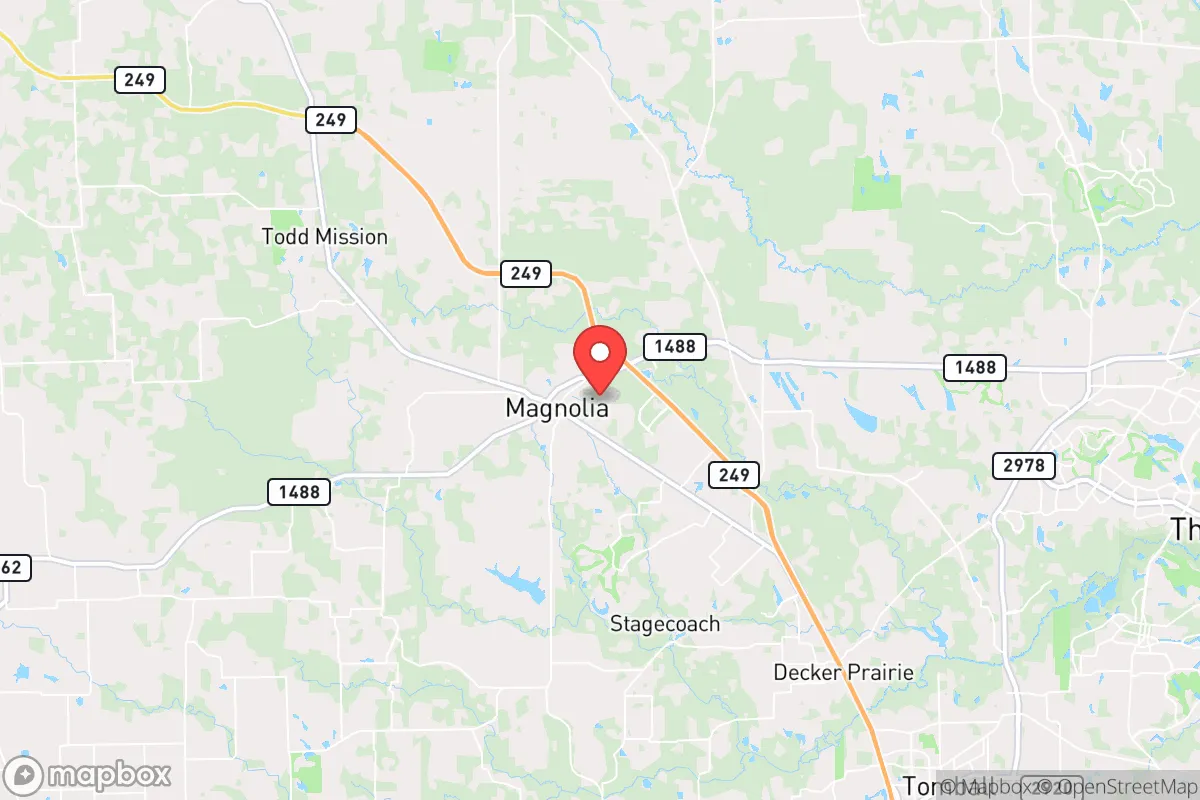
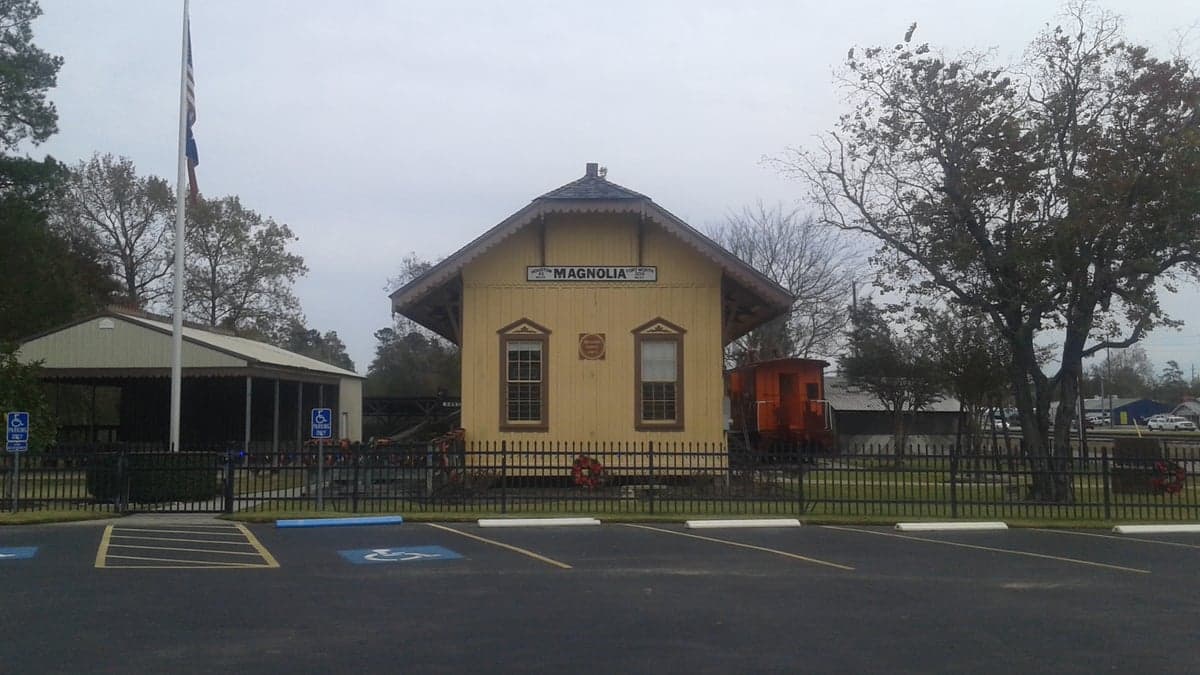
Photo: Wikipedia
Political ClimatePolitical Climate in Magnolia, TX
District shown is the primary district for this city’s centroid. Cities may span multiple districts.
Local Political AnalysisPolitical Analysis of Magnolia, TX
Magnolia, Texas, is one of the most reliably Republican corners of the greater Houston metro, anchored by a Cook PVI of R+16 — a full 12 points more conservative than the state of Texas as a whole, which sits at R+4. This isn’t a recent shift; the area has been trending red for decades, but the pace has accelerated since the mid-2010s as suburban and exurban growth from Houston pushed deeper into Montgomery County. If you’ve lived here since the 1990s, you’ve watched the old farm-to-market roads fill with subdivisions and the local GOP primary become the de facto general election. The trajectory is clear: Magnolia is getting redder, not bluer, even as the state’s overall partisan balance tightens.
How it compares
To understand Magnolia’s politics, you have to look at its neighbors. Head south toward The Woodlands or Conroe, and you’ll find a more moderate Republican tilt — those areas have a noticeable Democratic minority, especially in precincts near the lake or along I-45. Drive west to Waller County or north to Huntsville, and the partisan lean is similar to Magnolia’s, but with a stronger rural libertarian streak. The real contrast is with Houston proper, just 40 miles southeast, where Harris County has flipped from purple to solid blue in presidential elections. Magnolia’s R+16 rating means a Democratic candidate for statewide office typically loses here by 16 points or more, even in years when Texas as a whole is competitive. In 2024, for example, Montgomery County voted +24 for the Republican presidential candidate, while the state margin was +14. That gap is consistent and growing.
What this means for residents
For conservative residents, Magnolia is a comfortable place to live politically. Local government, school board meetings, and county commission races are dominated by Republican candidates, and conservative policy priorities — low taxes, limited regulation, strong Second Amendment protections — are the baseline. You’ll see Trump signs in yards year-round, and the local GOP club is active and well-funded. For liberal residents, the reality is more isolating. There’s no organized Democratic presence to speak of; the county party is small and mostly focused on fundraising for statewide races. Socially, it’s common to be the only person in a room who didn’t vote Republican. That said, Magnolia is not a place of open hostility — most people are polite and neighborly regardless of politics. The practical effect is that liberal residents tend to keep their views private or engage in politics only at the state or national level, where their vote still matters in the broader Texas context.
Culturally, Magnolia stands apart from the rest of Texas in a few notable ways. The area is deeply influenced by its rural roots — hunting, fishing, and church attendance are central to community life, and the local economy is still tied to agriculture and oilfield services, not tech or finance. Policy-wise, Montgomery County has been a leader in the state’s property tax reform movement, pushing for appraisal caps and tighter budget limits on school districts. You’ll also find a stronger strain of constitutional conservatism here than in the state as a whole, with residents more skeptical of federal mandates and more vocal about local control. For anyone moving to Magnolia, the political climate is less about drama and more about consistency — it’s a place where the political culture matches the pace of life: steady, predictable, and deeply rooted in a specific set of values.

State Political ClimatePolitical Climate in Texas
State Political AnalysisPolitical Environment in the State
Texas is a solidly Republican state with a Cook Partisan Voting Index of R+4, meaning it votes about four points more Republican than the national average in presidential elections. The dominant coalition is a mix of rural and suburban conservatives, fiscal conservatives, and a growing number of culturally conservative Hispanic voters, particularly in the Rio Grande Valley. Over the last 10-20 years, the state has shifted from a deep-red stronghold (where Democrats rarely won statewide) to a more competitive but still GOP-controlled environment, driven by explosive population growth in blue-leaning metros like Austin, Dallas, Houston, and San Antonio, while rural and exurban areas have hardened their Republican margins.
Urban vs. rural divide
The political map of Texas is a story of stark contrasts. The major urban centers—Austin (Travis County), Dallas (Dallas County), Houston (Harris County), San Antonio (Bexar County), and El Paso (El Paso County)—are reliably Democratic, often voting 60-70% for Democratic presidential candidates. These cities are home to diverse, younger, and more educated populations that drive the state's blue shift. In contrast, the vast rural and exurban areas—places like Lubbock, Amarillo, Midland, and Tyler—vote 70-80% Republican. The real battleground is the suburbs: counties like Collin (north of Dallas), Denton, Fort Bend (southwest of Houston), and Williamson (north of Austin) have been trending toward Democrats in presidential years but still elect Republicans locally. The 2020 election saw Bexar County (San Antonio) and Harris County (Houston) flip to Biden by wider margins than 2016, while Hidalgo County (McAllen) in the Rio Grande Valley swung sharply toward Trump, a sign of the growing Hispanic conservative vote.
Policy environment
Texas operates under a low-tax, low-regulation model that appeals strongly to conservative relocators. There is no state income tax, funded instead by high property taxes (averaging around 1.6-2.2% of home value) and a 6.25% state sales tax (local options can push it to 8.25%). The regulatory posture is business-friendly, with minimal zoning in many areas and a "right-to-work" law that limits union power. Education policy is decentralized: school funding is via local property taxes, and the state has a robust charter school and private school choice movement (though no universal voucher program yet). Healthcare is a flashpoint: Texas has the highest uninsured rate in the nation (around 18% as of 2024), having refused Medicaid expansion under the Affordable Care Act. Election laws have tightened: the 2021 Senate Bill 1 restricted mail-in voting, added ID requirements, and banned 24-hour and drive-through voting. For conservatives, this is a state where gun rights are expansive (permitless carry since 2021), abortion is banned (trigger law after Dobbs), and parental rights in education are prioritized (the 2023 "Parental Bill of Rights" law).
Recent policy direction
The last five years have seen Texas move decisively to the right on several fronts. Gun and self-defense law: In 2021, the state passed permitless carry (HB 1927), allowing most adults to carry a handgun without a license or training. Parental and education rights: The 2023 "Parental Bill of Rights" (HB 900) requires schools to notify parents of any changes to a child's mental or physical health, and the 2021 "Critical Race Theory" law (HB 3979) restricts how race and history are taught in public schools. Speech and privacy: The 2021 social media law (HB 20) bars platforms from banning users based on political viewpoints, though it's been partially blocked in court. Medical and bodily autonomy: Abortion is effectively banned after six weeks (SB 8, 2021) and completely banned after the 2022 trigger law (no exceptions for rape or incest, only for life-threatening conditions). Property rights: The state has strong eminent domain protections for landowners, but property taxes remain a top complaint. Taxation: No income tax, but property tax relief has been a recurring issue—the 2023 session passed a $18 billion property tax cut (Proposition 4). Voting and ballot access: SB 1 (2021) added strict ID requirements for mail ballots, limited drop boxes, and banned drive-through voting. For a relocator, this means a state that prioritizes individual liberty in some areas (guns, speech, taxes) while heavily restricting it in others (abortion, voting access, classroom content).
Civil unrest & political movements
Texas has seen its share of political flashpoints. The 2020 Black Lives Matter protests in Austin and Houston were large and occasionally violent, leading to a backlash that fueled the 2021 "defund the police" debate and subsequent state preemption laws barring cities from cutting police budgets. Immigration politics are a constant: the 2021 "Operation Lone Star" deployed state troopers and National Guard to the border, and the 2023 law (SB 4) makes illegal entry a state crime, though it's been blocked by courts. The "sanctuary city" ban (SB 4, 2017) prohibits local governments from limiting cooperation with federal immigration enforcement. Secession rhetoric, while not mainstream, has a vocal fringe—the "Texit" movement gained some traction after the 2020 election, but polls show only about 10-15% support. Election integrity controversies flared after 2020, with GOP officials pushing for audits in Harris County and Dallas County, though no widespread fraud was found. A new resident would notice the strong presence of both conservative and progressive activism: "Moms for Liberty" chapters in suburbs, and "Indivisible" groups in cities.
Projection
Over the next 5-10 years, Texas will likely remain Republican-controlled at the state level, but the margin will continue to narrow. In-migration from blue states (California, New York, Illinois) is adding hundreds of thousands of new residents annually, many of whom lean Democratic, especially in the suburbs. The Hispanic vote is the wild card: if the trend toward the GOP in the Rio Grande Valley and San Antonio suburbs continues, the state could stay red for another decade. If it reverts, Texas could become a true swing state by 2032. The state's policy direction will likely double down on cultural conservatism (abortion restrictions, education battles) while maintaining its low-tax, pro-business posture. A relocator moving in now should expect a state where the political temperature is high, but the practical reality is that most people live in their own bubbles—blue cities, red suburbs, and deep-red rural areas. The biggest practical change will be the continued growth of Austin, Dallas, and Houston, which will make the state more diverse and politically competitive.
For a new resident, the bottom line is that Texas offers a clear trade-off: low taxes, minimal regulation, and strong individual rights on guns and speech, but with significant restrictions on abortion, voting access, and classroom content. If you're a conservative, you'll find a state government that largely aligns with your values. If you're a liberal, you'll find vibrant blue cities where your lifestyle is protected, but you'll have little influence on state policy. The key is to choose your location carefully—Austin and El Paso feel like different countries from Lubbock or Tyler. The state's trajectory is toward more competition, but for the foreseeable future, the GOP will hold the levers of power in Austin.
* Values derived from national, state, county, city and local statistics and may differ in a specific area. Last updated: 2026-07-30T02:01:00.000Z
Narrative content on this page is AI-generated and may contain mistakes. Verify any details that matter before acting on them.
ReloMaps may earn a commission from affiliate links at no extra cost to you.

