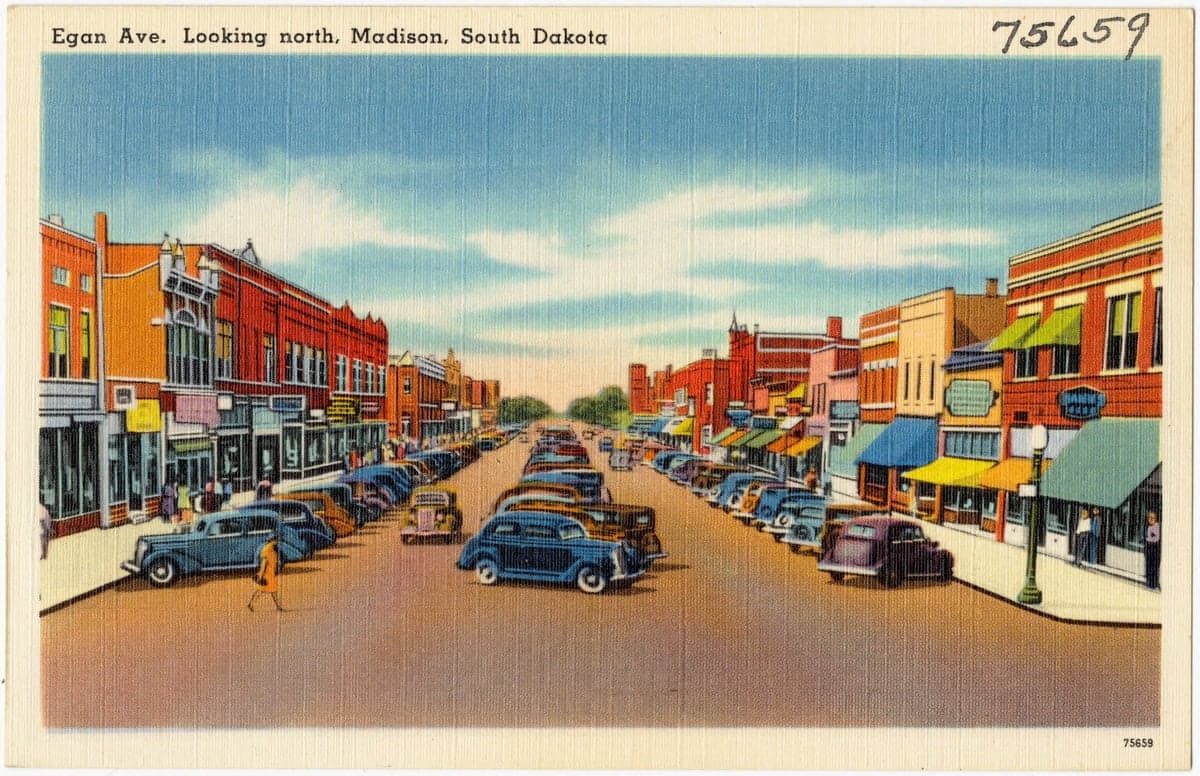
Photo: Wikipedia
Strategic Assessment of Madison, SD
Workable tactical position. Some exposure to population density or targets, but generally defensible in a crisis.
What does the Strategic Assessment tell us?
Our Strategic Assessment grades tactical survivability of an area. Major population centers, military targets, fallout zones, natural disasters, and border exposure all drive risk — lower exposure means a more defensible position in a crisis.
This is heavily inspired by Joel Skousen's Strategic Relocation book. Highly recommended you checkout the book ($)What does this tell us?
Our Strategic Assessment grades tactical survivability of an area. Major population centers, military targets, fallout zones, natural disasters, and border exposure all drive risk — lower exposure means a more defensible position in a crisis.
This is heavily inspired by Joel Skousen's Strategic Relocation book. Highly recommended you checkout the book ($)Strategic Pillars

Key Distances
Regional Safe Places
Below is our recommended "safe zones" in South Dakota and the surrounding area based on our strategic heuristics. For most people, it's unrealistic to live in a “safe zone” full-time due to work, family or other personal reasons. They tend to be more rural. However, many of these areas are perfect for second homes and retreat properties that double as a vacation home or even a short-term rental.
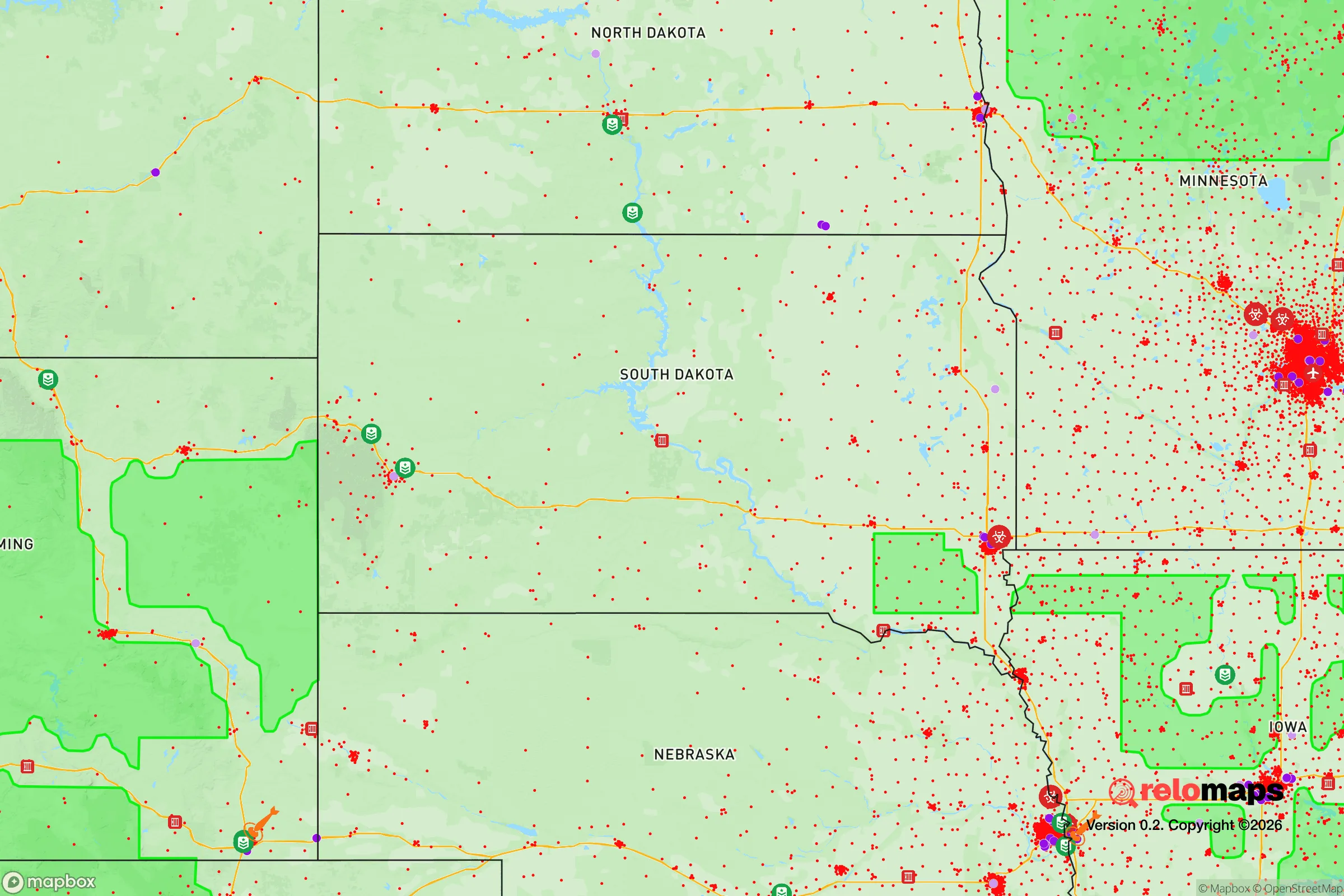


Important Note: For informational purposes only. This does not mean nothing bad ever happens in the green zones. Please use common sense. This is based on public data and modeled with AI. We tried to take a conservative approach but mistakes happen. We update this regularly as new information becomes available.
Solar Generator Recommendations
Backup power matters more here than in safer locations. We've picked three solar generators across budgets and capacity tiers — start with the budget unit if you only need a few essentials, or step up if you want to run a fridge and HVAC for days at a time.

Jackery Portable Power Station Explorer 300
Budget OptionPower on the Go: Weighing only 11 lbs, it's convenient to set up and store with book-sized foldable solar panels

BLUETTI Portable Power Station AC180
Designed for both indoor and outdoor scenarios, AC180 is highly capable as it has a robost capacity and continuous output power.

EF ECOFLOW DELTA Pro Ultra Power Station
Upgraded PickEcoFlow DELTA Pro Ultra is a whole-home energy system designed to grow with your family. Integrated with the Smart Home Panel 2, it scales to meet your evolving energy needs — keeping your home powered, intelligent, and secure through every stage of life.
We earn a commission, at no additional cost to you.
Strategic Assessment Analysis
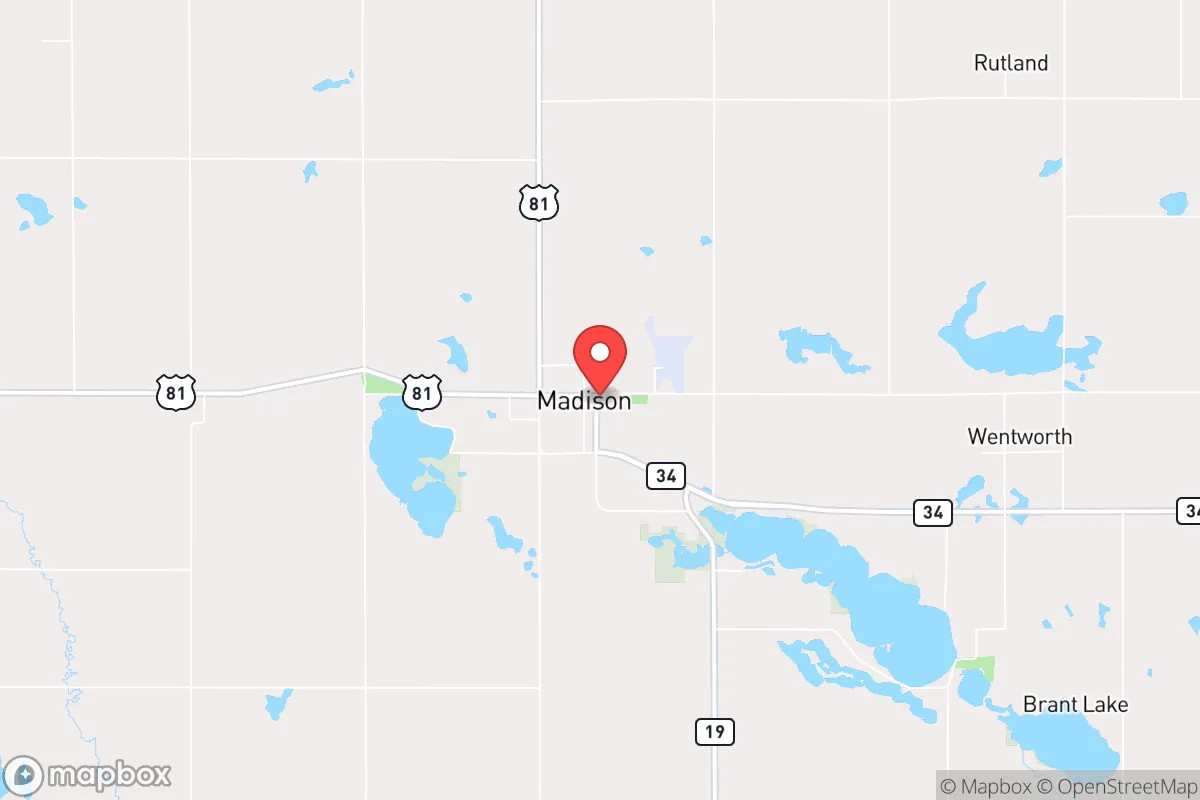
Madison, South Dakota, offers a strategic blend of geographic isolation and practical resilience that appeals to those prioritizing self-sufficiency and security. Located in Lake County, roughly 45 miles northwest of Sioux Falls and 90 miles south of Brookings, the town sits at the edge of the Coteau des Prairies, a region of rolling hills and glacial lakes that provides natural defensibility and resource access. With a population hovering around 6,500, Madison avoids the congestion and target risks of larger urban centers while maintaining essential infrastructure like a regional hospital, a university (Dakota State University), and a functioning downtown. For a relocator focused on weathering civic unrest, economic volatility, or mass casualty events, Madison presents a credible option—but one that requires clear-eyed assessment of its strengths and vulnerabilities.
Geographic position and natural advantages for long-term security
Madison’s location in eastern South Dakota places it in a sweet spot: far enough from major metropolitan areas to reduce exposure to cascading failures, yet close enough to access critical supplies and medical care when needed. The town sits within the Big Sioux River watershed, with Lake Madison and Lake Herman providing surface water sources that are less prone to contamination than groundwater in agricultural regions. The surrounding terrain is open prairie interspersed with wooded draws and lake basins, offering both agricultural potential and limited cover for movement. The area’s elevation—roughly 1,600 feet above sea level—keeps it above floodplains, and the region’s cold winters naturally deter transient populations and reduce the spread of communicable diseases. For a prepper, the key advantage is the low population density of Lake County (about 20 people per square mile), which means fewer competition for resources during a crisis. The glacial lakes also support fishing and small-scale irrigation, giving a relocator a head start on food security without relying on industrial supply chains.
Risks, exposures, and proximity to fallout-relevant landmarks
No location is immune to risk, and Madison has specific vulnerabilities that a strategic relocator must weigh. The most immediate concern is proximity to Sioux Falls, a regional hub of 200,000 people that would likely become a focal point for unrest, resource competition, or disease outbreak in a national emergency. While 45 miles provides a buffer, it’s not enough to prevent spillover effects—refugee flows, supply chain disruptions, or secondary hazards from infrastructure failures. Madison also sits within 150 miles of the Ellsworth Air Force Base near Rapid City, a potential target for strategic strikes, though the base’s distance and the lack of major military installations in eastern South Dakota reduce direct fallout risk. The area’s reliance on agriculture means pesticide and fertilizer storage facilities are common, and a major rail line (the BNSF mainline) passes within 20 miles, carrying hazardous materials through the region. Tornadoes are a seasonal threat, with Lake County averaging 5-7 tornado warnings per year, and the flat terrain offers little natural shelter from severe weather. For a prepper, the biggest strategic weakness is the lack of natural barriers—no mountains, dense forests, or major rivers—that could slow a determined threat or provide concealment.
Practical resilience for a relocator: food, water, energy, and defensibility
Madison’s practical resilience hinges on its agricultural base and community infrastructure. The town is surrounded by corn, soybean, and livestock operations, meaning local food production is abundant—but most of it is destined for commodity markets, not local pantries. A relocator would need to establish direct relationships with farmers or secure land for personal gardens and small livestock. The city’s water supply comes from the Big Sioux Aquifer, a reliable source with moderate recharge rates, but the municipal system is vulnerable to power outages and chemical contamination from upstream agricultural runoff. A well on private property is a strong hedge, though drilling depths in the area range from 100 to 300 feet, with costs around $15-$25 per foot. Electricity is provided by Lake Region Electric Association, a cooperative that sources power from the regional grid; solar panels are viable given the area’s 200+ sunny days per year, but battery storage is essential for winter months. Defensibility is moderate: the town’s layout is compact, with a grid of residential streets and a few choke points (Highways 34 and 81) that could be monitored, but the open prairie offers little natural cover for a retreat. The presence of Dakota State University (1,200 students) adds a transient population that could become a liability during a crisis, though the campus also provides potential infrastructure (dining halls, dorms, medical training facilities) for community coordination. Gun ownership is common in the area, and Lake County has a sheriff’s office with 12 deputies, but response times in rural areas can exceed 20 minutes.
For a relocator with a survivalist mindset, Madison’s overall strategic picture is one of cautious viability. It offers genuine advantages—low population density, abundant local food potential, a reliable water source, and a community that values self-reliance—but it lacks the natural fortifications and isolation of more remote locations like the Black Hills or the Missouri River breaks. The town’s proximity to Sioux Falls is a double-edged sword: it provides access to medical care and supplies in stable times, but it becomes a liability during a collapse. The best use of Madison is as a base for a networked community of like-minded individuals who can pool resources, share skills, and maintain mutual defense. For a single individual or a family willing to invest in a well, solar power, and food storage, Madison offers a solid foundation—but it’s not a bug-out location. It’s a place to build a life that’s prepared for disruption, not a fortress that can withstand a siege. The key is to treat it as a strategic asset: buy land outside town, establish relationships with local farmers and tradespeople, and maintain a low profile. In a world where the next crisis is always around the corner, Madison gives you a fighting chance without forcing you to live off-grid in a cave.

* Values derived from national, state, county, city and local statistics and may differ in a specific area. Last updated: 2026-04-30T02:04:53.000Z
Narrative content on this page is AI-generated and may contain mistakes. Verify any details that matter before acting on them.
ReloMaps may earn a commission from affiliate links at no extra cost to you.

