
Photo by TopSphere Media on Unsplash
Strategic Assessment of Madeira, OH
Multiple tactical vulnerabilities. Population density, target proximity, or disaster risk are likely compounding. A retreat property and exit planning is required.
What does the Strategic Assessment tell us?
Our Strategic Assessment grades tactical survivability of an area. Major population centers, military targets, fallout zones, natural disasters, and border exposure all drive risk — lower exposure means a more defensible position in a crisis.
This is heavily inspired by Joel Skousen's Strategic Relocation book. Highly recommended you checkout the book ($)What does this tell us?
Our Strategic Assessment grades tactical survivability of an area. Major population centers, military targets, fallout zones, natural disasters, and border exposure all drive risk — lower exposure means a more defensible position in a crisis.
This is heavily inspired by Joel Skousen's Strategic Relocation book. Highly recommended you checkout the book ($)Strategic Pillars

Key Distances
Regional Safe Places
Below is our recommended "safe zones" in Ohio and the surrounding area based on our strategic heuristics. For most people, it's unrealistic to live in a “safe zone” full-time due to work, family or other personal reasons. They tend to be more rural. However, many of these areas are perfect for second homes and retreat properties that double as a vacation home or even a short-term rental.

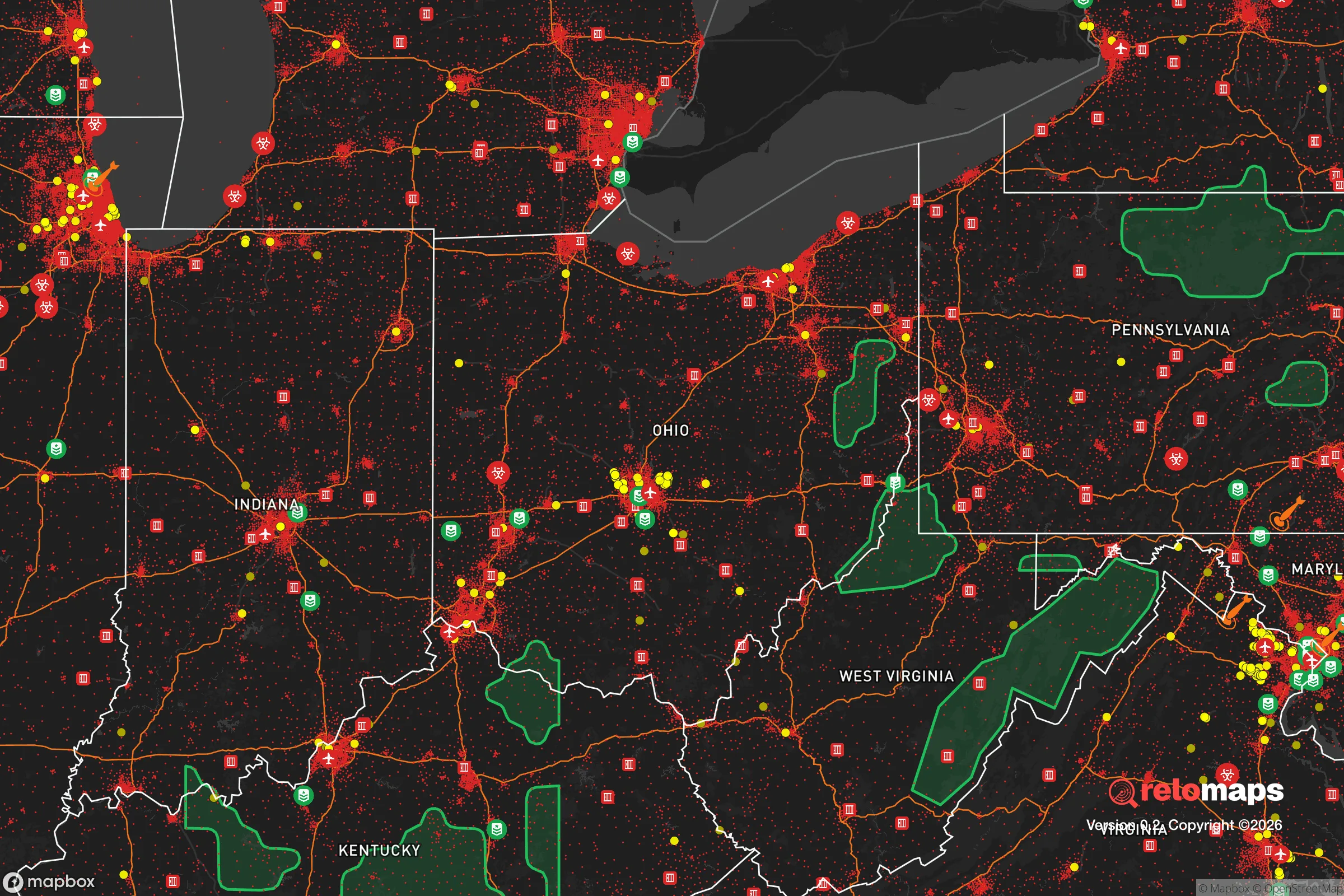


Important Note: For informational purposes only. This does not mean nothing bad ever happens in the green zones. Please use common sense. This is based on public data and modeled with AI. We tried to take a conservative approach but mistakes happen. We update this regularly as new information becomes available.
Solar Generator Recommendations
Backup power matters more here than in safer locations. We've picked three solar generators across budgets and capacity tiers — start with the budget unit if you only need a few essentials, or step up if you want to run a fridge and HVAC for days at a time.

Jackery Portable Power Station Explorer 300
Budget OptionPower on the Go: Weighing only 11 lbs, it's convenient to set up and store with book-sized foldable solar panels

BLUETTI Portable Power Station AC180
Designed for both indoor and outdoor scenarios, AC180 is highly capable as it has a robost capacity and continuous output power.

EF ECOFLOW DELTA Pro Ultra Power Station
Upgraded PickEcoFlow DELTA Pro Ultra is a whole-home energy system designed to grow with your family. Integrated with the Smart Home Panel 2, it scales to meet your evolving energy needs — keeping your home powered, intelligent, and secure through every stage of life.
We earn a commission, at no additional cost to you.
Strategic Assessment Analysis
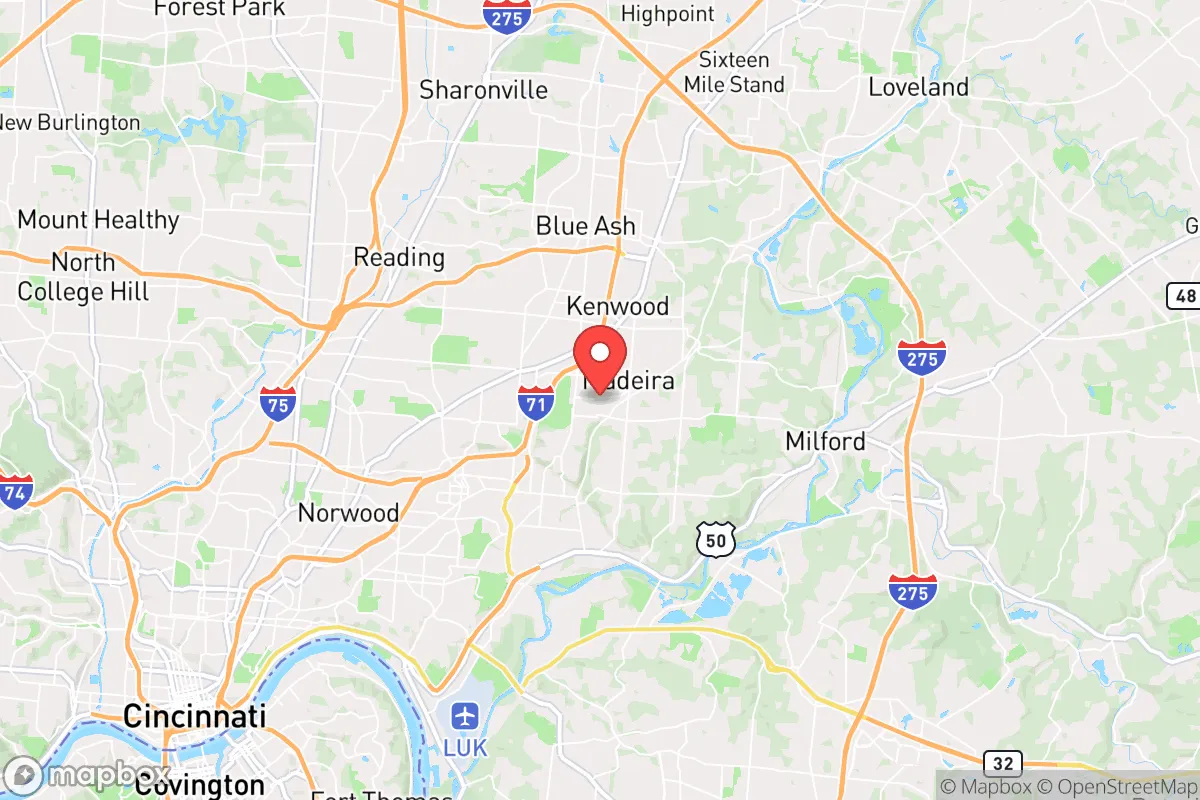
Madeira, Ohio, presents a mixed strategic picture for the conservative prepper: it offers solid day-to-day resilience and a strong community fabric, but its location within the Cincinnati metro area introduces significant vulnerabilities that cannot be ignored. The village sits on a hilltop in Hamilton County, roughly 15 miles northeast of downtown Cincinnati, providing a natural elevation advantage and a degree of separation from the urban core’s immediate chaos. For the relocator prioritizing preparedness, Madeira’s key strength is its proximity to rural escape routes—Interstate 71 and State Route 126 offer quick access to less populated areas in Clermont and Brown counties—while its weakness is the density of the surrounding suburban sprawl, which could become a liability during a mass evacuation or civil unrest event.
Geographic position and natural advantages for long-term survival
Madeira’s hilltop geography is its most underrated asset. Sitting at roughly 800 feet above sea level, the village enjoys natural drainage and cooler temperatures than the Ohio River valley below, which reduces heat-related risks during prolonged power outages. The surrounding terrain is a mix of wooded ravines and rolling hills, offering natural cover and defensible chokepoints along the few roads that lead into the village—especially on the eastern side near the Little Miami River corridor. The Little Miami River itself, a National Scenic River, provides a reliable freshwater source and a wildlife corridor for hunting or foraging, though it’s also a potential ingress route for those fleeing Cincinnati. The area’s karst geology means groundwater is plentiful but shallow, so private wells are feasible for those who can drill, though most homes are on municipal water. The village’s position atop a ridge also means it’s less prone to flooding than low-lying areas like Milford or Loveland, a real advantage in an era of increasing storm intensity.
Risks, exposures, and proximity to fallout-relevant landmarks
The biggest strategic liability is Madeira’s location within the I-71/I-75 corridor, a major north-south transportation artery that would be a primary evacuation route during any regional crisis. In a mass casualty event or civil unrest scenario, this corridor could become a parking lot or a target for looters moving outward from Cincinnati. The village is also within 20 miles of the Fernald uranium processing site (now a Superfund cleanup area), which, while no longer active, still contains residual contamination that could be disturbed by a natural disaster or deliberate attack. More immediately, Madeira sits less than 10 miles from the Cincinnati/Northern Kentucky International Airport (CVG), a major cargo hub and potential target for terrorism or military action. The nearby Wright-Patterson Air Force Base (about 50 miles northeast) is a high-value military installation that could draw retaliatory strikes or become a staging ground for martial law operations. For the prepper, these are not abstract concerns—they are concrete risks that demand a layered defense plan, including multiple bug-out routes that avoid the main highways and a well-stocked home base capable of sustaining a family for weeks without resupply.
Practical resilience for a relocator: food, water, energy, and defensibility
For the individual or family looking to establish a resilient homestead, Madeira offers a mixed bag. Food security is moderate: the village has a small but functional grocery store (Kroger on Montgomery Road) and a weekly farmers market in summer, but the real strength is the abundance of community gardens and backyard chicken ordinances that allow for limited self-sufficiency. The local soil is decent for vegetables, though the clay content requires raised beds. Water is the bigger concern—the municipal supply comes from the Ohio River via the Cincinnati Water Works, a single-point-of-failure system that could be compromised by upstream contamination or a cyberattack. A prepper should invest in a Berkey filter or a well-drilling permit (the village allows private wells with a variance). Energy resilience is better than average: Duke Energy’s grid is relatively stable, but the area is prone to ice storms that can knock out power for days. Solar panels are permitted with HOA approval, and many homes have natural gas hookups that can run generators indefinitely. Defensibility is the wild card. Madeira’s dense suburban layout—with narrow streets and close-set homes—makes it hard to secure a perimeter, but the village’s strong homeowners associations and neighborhood watch programs create a social fabric that can deter low-level crime. For a serious prepper, the best strategy is to buy a home on the eastern edge of the village, near the wooded ravines, where you have a natural buffer and a quick exit to rural Clermont County.
The overall strategic picture for the conservative relocator
Madeira is not a bug-out location—it’s a situational awareness play for the prepper who wants to stay connected to employment and amenities while maintaining a credible baseline of preparedness. The village’s conservative-leaning demographics (Hamilton County voted +14 for Trump in 2024, and Madeira itself is reliably red) mean you’ll find neighbors who share your worldview and are likely to form mutual aid networks. The local gun culture is strong, with several indoor ranges and gun shops within a 15-minute drive, and Ohio’s constitutional carry law is firmly in place. But don’t mistake comfort for safety. The proximity to Cincinnati’s urban unrest—the city saw significant protests and looting in 2020—means you need a plan for the first 72 hours of any crisis, when the suburban buffer zone will be tested by those fleeing the city. The bottom line: Madeira is a viable base of operations for the prepper who values community and convenience over isolation, but only if you’re willing to invest in hardening your home, stockpiling supplies, and building relationships with like-minded neighbors. If you’re looking for a true retreat, look further east toward Georgetown or Sardinia. But if you need to stay within commuting distance of Cincinnati’s jobs and infrastructure, Madeira is one of the better bets in the region—just don’t expect it to be a fortress.

* Values derived from national, state, county, city and local statistics and may differ in a specific area. Last updated: 2026-04-27T18:17:25.000Z
Narrative content on this page is AI-generated and may contain mistakes. Verify any details that matter before acting on them.
ReloMaps may earn a commission from affiliate links at no extra cost to you.

