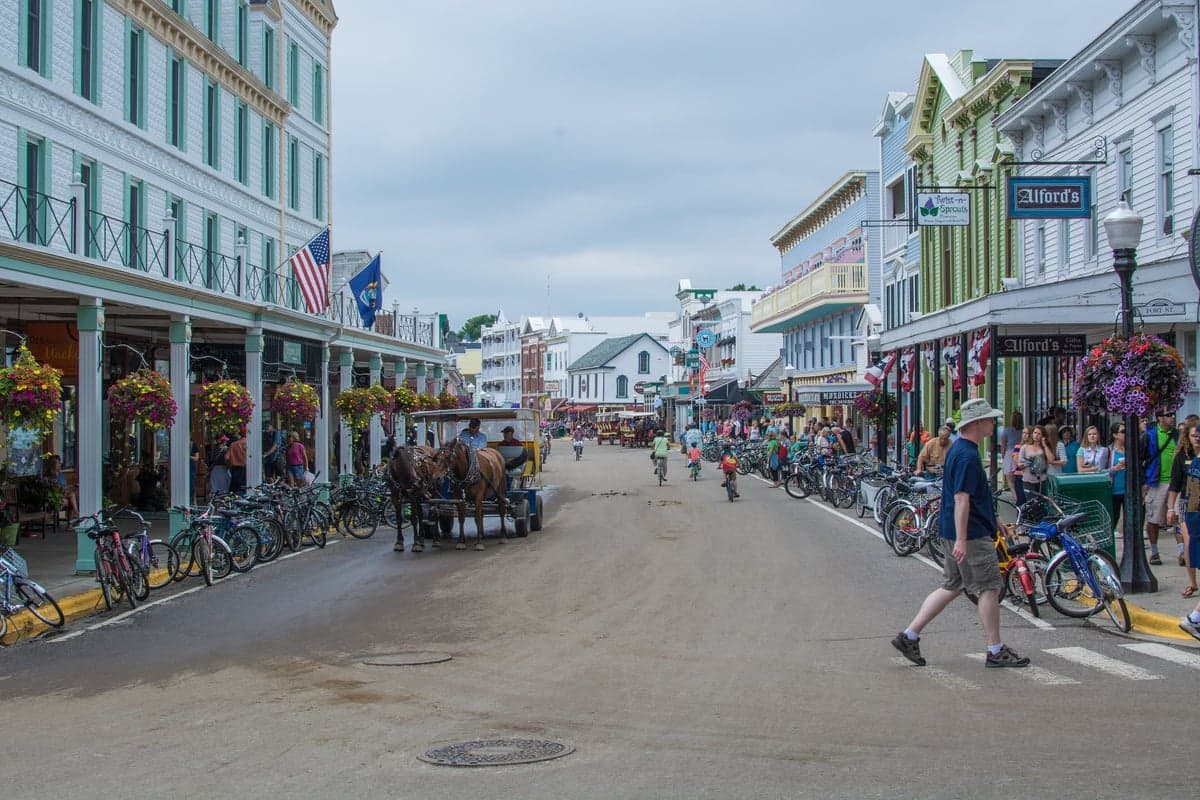
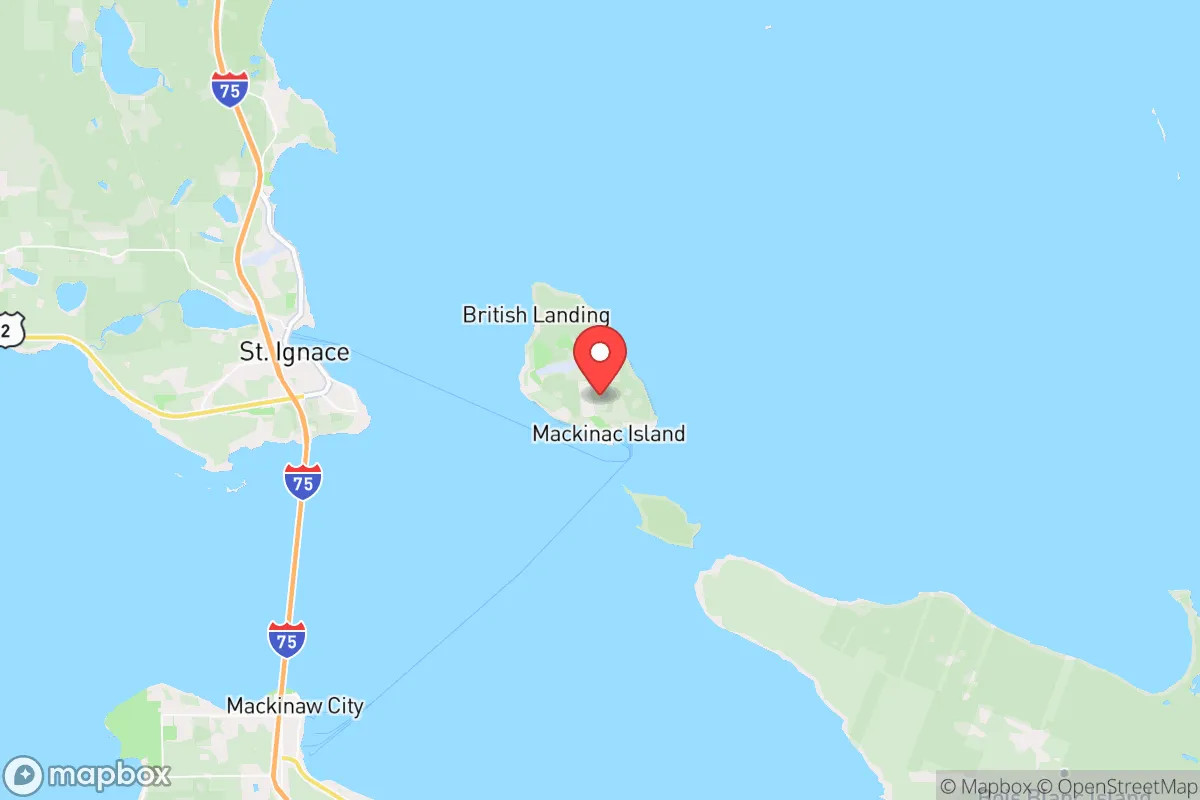
Photo: Wikipedia
Demographics of Mackinac Island, MI
Affluence Level in Mackinac Island, MI
An upper-middle-class area. Household wealth, education levels, and homeownership run ahead of national benchmarks.
People of Mackinac Island, MI
Today, Mackinac Island’s 663 year-round residents form one of Michigan’s most distinctive small communities—a tight-knit, service-oriented population where nearly 40% hold a college degree and the foreign-born share (13.3%) is notably higher than the state average. The island’s character is defined by its ban on motor vehicles, a seasonal tourism economy that swells the population to thousands each summer, and a racial and ethnic makeup that is 56.3% White, 13.6% Black, 11.9% Hispanic, and 0.0% East/Southeast Asian or Indian subcontinent. This is a place where generational island families live alongside a growing number of immigrant workers and second-home owners, creating a social fabric that is both insular and increasingly diverse.
How the city was settled and grew
Mackinac Island’s human history begins with Native American peoples, particularly the Ojibwe, Odawa, and Huron, who used the island as a fishing and trading hub long before European contact. The first permanent European settlement was established by French fur traders and Jesuit missionaries in the late 17th century, centered around what is now Fort Mackinac and the adjacent Market Street area. The British took control after the French and Indian War, and the island became a key fur-trading post for John Jacob Astor’s American Fur Company in the early 1800s. This trade drew a mixed population of French-Canadian voyageurs, Métis, and Anglo-American merchants, who built homes in the Huron Street and Main Street corridors. The island’s role as a military and trading outpost ended after the War of 1812, and by the mid-19th century, tourism began to replace fur as the economic engine. Wealthy industrialists from Chicago and Detroit built summer cottages in the West Bluff and East Bluff neighborhoods, while Irish and German immigrants arrived to work in hotels and service roles, settling in the British Landing area and along Cadotte Avenue. The population peaked at around 1,200 in the 1880s before declining as the fur trade faded and tourism became seasonal.
Modern era (post-1965)
The post-1965 period saw Mackinac Island’s year-round population stabilize at roughly 500–700 residents, with the 2020 census recording 663. The most significant demographic shift has been the growth of the Hispanic and Black populations, which now stand at 11.9% and 13.6% respectively—shares that are higher than in most rural Michigan communities. This change is driven largely by immigrant workers from Latin America (particularly Mexico and Central America) and domestic in-migration of Black families drawn to the island’s service industry jobs in hotels, restaurants, and horse-drawn carriage operations. These newer residents have concentrated in the Huron Street and Market Street areas, where affordable rental housing is available, and in the British Landing neighborhood, which has a mix of year-round homes and seasonal worker housing. The White population, while still the majority at 56.3%, has aged and declined as younger island-born residents leave for mainland jobs and education. The foreign-born share of 13.3% is nearly triple the Michigan average, reflecting the island’s reliance on J-1 visa workers and immigrant labor to sustain its tourism economy. The East/Southeast Asian and Indian subcontinent populations remain at 0.0%, a notable absence that contrasts with mainland Michigan’s growing Asian communities.
The future
Mackinac Island’s population is likely to remain small but become more diverse, with the Hispanic and Black shares continuing to rise as the White population ages and declines. The island’s housing shortage—driven by strict land-use regulations and the conversion of year-round homes to vacation rentals—will limit population growth, but the demand for service workers will sustain in-migration from Latin America and other regions. The West Bluff and East Bluff neighborhoods will remain predominantly White and wealthy, while Huron Street and British Landing will absorb most new immigrant and minority residents. The cultural identity of the island is evolving from a purely White, Anglo-American summer colony into a more multiethnic year-round community, though the seasonal tourism economy and the ban on cars will continue to shape daily life. Over the next 10–20 years, expect the foreign-born share to approach 20% and the White share to fall below 50%, making Mackinac Island one of the most ethnically diverse small towns in northern Michigan.
For someone moving in now, Mackinac Island offers a unique blend of historic small-town life and growing diversity, but it requires adapting to a seasonal economy, limited housing, and a community where newcomers—especially those in service roles—are concentrated in specific neighborhoods. The island is becoming less insular and more connected to global labor markets, but its core identity as a car-free, tourism-dependent community remains intact.

* Values derived from national, state, county, city and local statistics and may differ in a specific area. Last updated: 2026-10-20T08:17:16.000Z
Narrative content on this page is AI-generated and may contain mistakes. Verify any details that matter before acting on them.
ReloMaps may earn a commission from affiliate links at no extra cost to you.

