Photo: Wikipedia
Political ClimatePolitical Climate in Natchitoches County
Showing district-level results — no local-only data available.
Local Political AnalysisPolitical Analysis of Natchitoches County
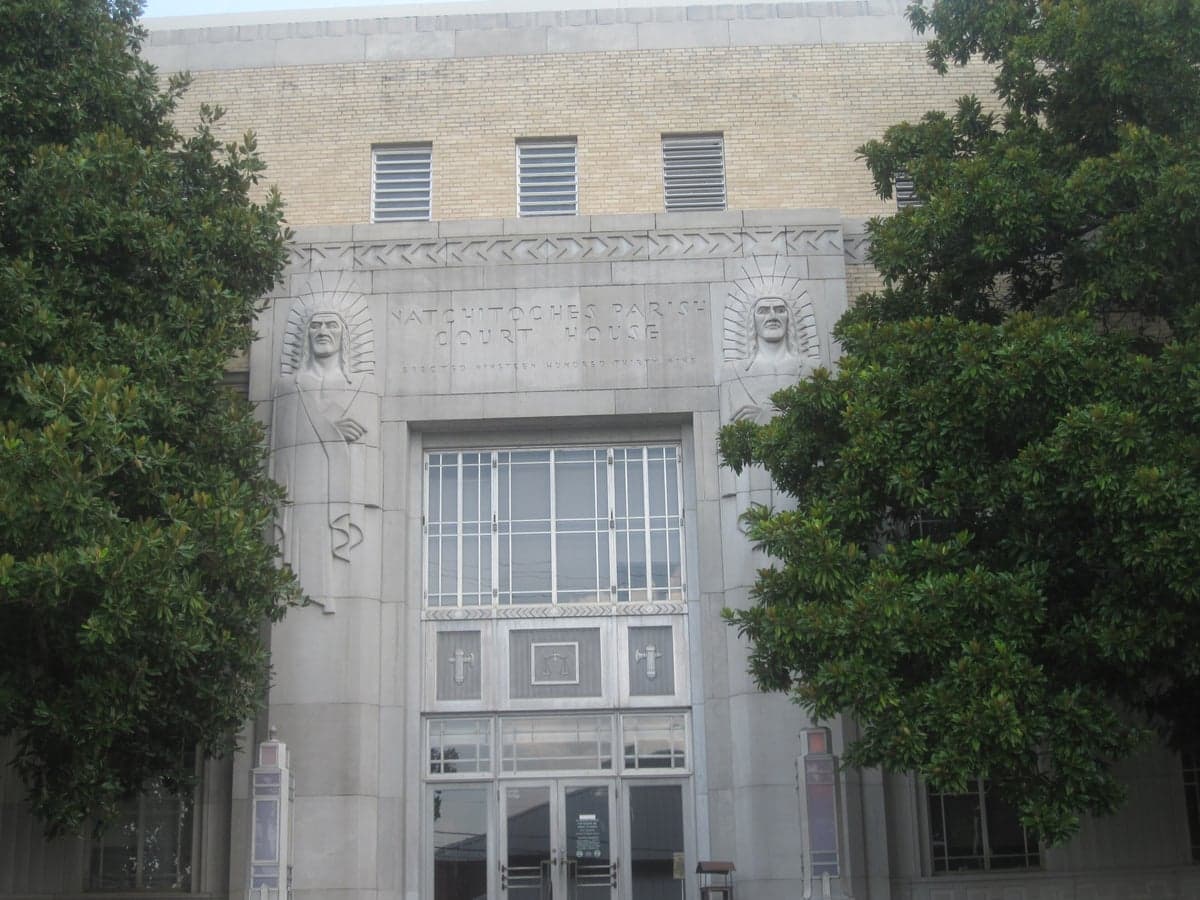
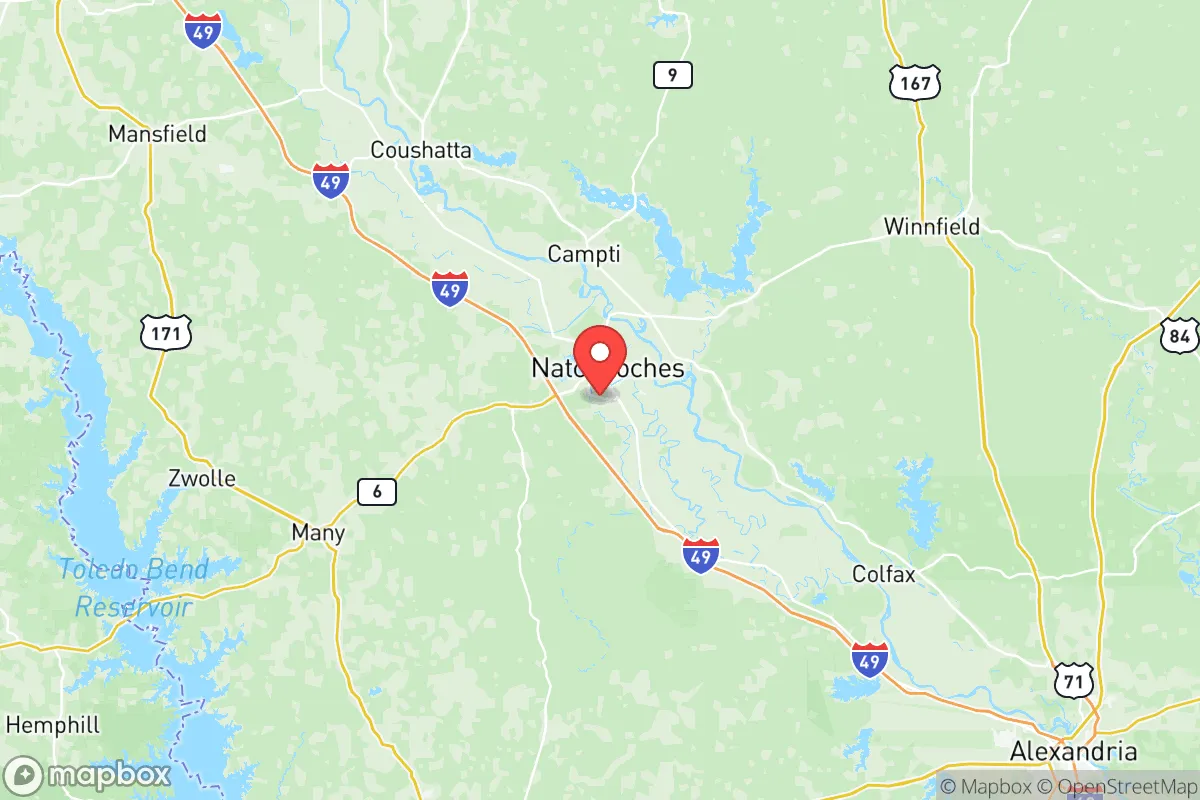
Natchitoches County, anchored by the historic city of Natchitoches, carries a Cook Partisan Voting Index of D+8, making it one of the more reliably Democratic-leaning areas in a state that has shifted sharply rightward over the past two decades. That D+8 rating means the county typically votes about eight points more Democratic than the national average, but the real story is more nuanced—the county has been trending redder in presidential elections, with Donald Trump improving his margins here from 2016 to 2020, even as local offices remain dominated by Democrats. The city of Natchitoches itself, home to Northwestern State University and a sizable African American population, provides the Democratic base, while the rural precincts around towns like Campti, Clarence, and Goldonna lean increasingly Republican, creating a political patchwork that surprises newcomers.
How it compares
Compared to Louisiana as a whole, Natchitoches County is a Democratic outlier. The state has no official Cook PVI but has voted Republican in every presidential election since 2000, typically by double-digit margins—Trump won Louisiana by 19 points in 2020. Natchitoches County, by contrast, voted for Joe Biden by a narrow margin in 2020, a shift from Hillary Clinton's 12-point win in 2016. The county's D+8 rating masks a clear urban-rural divide: precincts inside the Natchitoches city limits, especially around the university and the historic district, vote reliably blue, while the parish's northern and western rural areas—places like the small community of Marthaville—vote red by margins approaching 2-to-1. The swing precincts are in the suburban fringe of Natchitoches, particularly along Highway 1 south toward Cloutierville, where ticket-splitting is common and local Democratic candidates often outperform national Democrats by 10-15 points.
What this means for residents
For conservative residents, living in a D+8 county means their votes for president and U.S. Senate are usually in the minority, but they hold real power in local Republican primaries and in parish-wide races like sheriff and police jury, where conservative Democrats often win by running on culturally conservative platforms. For liberal residents, the county's Democratic lean provides a comfortable environment for local organizing, but the state's Republican dominance means their influence on state-level policy—like education funding or abortion restrictions—is limited. Practically, this creates a live-and-let-live atmosphere: you'll see Biden signs in the front yards near Front Street and Trump flags on pickup trucks in the parking lots of the Natchitoches Parish Fairgrounds, and both groups tend to coexist without the friction you'd find in more polarized suburbs. The university's presence also moderates some of the cultural tension, as students and faculty from across the state bring diverse perspectives to a small-town setting.
Culturally, Natchitoches County stands apart from much of Louisiana in its relaxed approach to certain policy debates. The city of Natchitoches has a notably higher tolerance for public events and festivals that draw diverse crowds—the Natchitoches Christmas Festival, for instance, is a major tourist draw that transcends political lines. On issues like alcohol sales and Sunday business hours, the parish is more permissive than its deeply conservative neighbors to the north and west, a legacy of its French Catholic heritage and the university's influence. Property taxes remain relatively low compared to the state average, a point of pride across the political spectrum, but the trade-off is visible in infrastructure—roads in the rural parts of the parish, especially around the small town of Provencal, are noticeably rougher than those in the city. The biggest political fault line locally isn't partisan but geographic: the tension between the city of Natchitoches, which wants to invest in downtown revitalization and the riverfront, and the rural precincts that prioritize keeping taxes low and resisting zoning changes. That's the real conversation at the coffee shops on Second Street, and it's one that both Democrats and Republicans in the parish can agree on, even if they disagree on everything else.

State Political ClimatePolitical Climate in Louisiana
State Political AnalysisPolitical Environment in the State
Louisiana has been a reliably Republican state in presidential elections since 2000, but it’s not a deep-red monolith — it’s a culturally conservative, working-class state with a strong Democratic tradition at the local level, especially among Black voters who make up about a third of the population. Over the last 20 years, the state has shifted from a competitive purple state (voting for Bill Clinton in 1992 and 1996) to a solidly red one at the federal level, with Donald Trump winning it by 19 points in 2020 and by 16 points in 2024. But the real story is the urban-rural split, the influence of Cajun and Creole culture, and a policy environment that’s more libertarian than the national GOP brand.
Urban vs. rural divide
The political map of Louisiana is a classic tale of two Louisianas. The major metros — New Orleans, Baton Rouge, and Lafayette — are the Democratic strongholds, but they’re not monolithic. New Orleans is the state’s most liberal city, with Orleans Parish voting 83% for Joe Biden in 2020, driven by a large Black population and a progressive white professional class. Baton Rouge is more split: East Baton Rouge Parish went 55% for Biden, but the surrounding suburbs like Denham Springs and Prairieville are deeply red. Lafayette, the heart of Acadiana, is a fascinating mix — the city itself leans slightly Democratic (52% Biden), but the surrounding parishes like Lafayette Parish outside the city limits are solidly Republican. The rural areas — places like Winn Parish (home of Huey Long’s birthplace, now Trump country), Franklin Parish in the northeast, and Allen Parish in the southwest — routinely vote 80%+ Republican. The biggest shift over the last decade has been in the Florida Parishes (north of Lake Pontchartrain), especially St. Tammany Parish (home to Covington and Mandeville), which has become a suburban Republican stronghold as New Orleans liberals have moved across the lake. The state’s only reliably Democratic congressional district is the 2nd, covering New Orleans and parts of Baton Rouge; the other five are safely Republican.
Policy environment
Louisiana’s policy environment is a blend of low taxes, weak regulations, and a hands-off approach to social issues that surprises many outsiders. The state has no state income tax on capital gains, and the corporate income tax rate was cut from 8% to 3.5% in 2021. Sales taxes are high — the average combined state and local rate is about 9.5% — but property taxes are among the lowest in the country, averaging 0.55% of home value. Education policy is a mixed bag: Louisiana has a robust school choice system, including the Louisiana Scholarship Program (vouchers for low-income students) and a thriving charter school sector, especially in New Orleans, which is nearly 100% charter. But the state consistently ranks near the bottom in K-12 outcomes. Healthcare is a sore spot: the state expanded Medicaid under the Affordable Care Act in 2016, but the uninsured rate remains above 8%, and rural hospital closures have been a persistent problem. Election laws are relatively permissive: no-excuse absentee voting is allowed, and early voting runs for 7 days. Voter ID is required, but a signed affidavit can substitute if you don’t have one. The state uses a unique “jungle primary” system for most state and local offices, where all candidates run on the same ballot regardless of party, and if no one gets 50%, the top two advance to a runoff. This system has historically favored moderate candidates and kept the state from swinging too far to either extreme.
Recent policy direction
Over the last five years, Louisiana has moved decisively to the right on several fronts, but with a distinctly Cajun twist — it’s less about culture war and more about practical libertarianism. In 2024, the state passed a near-total abortion ban with no exceptions for rape or incest, only for the life of the mother. Gun laws are among the most permissive in the country: constitutional carry (no permit needed) was signed into law in 2021, and the state has a “stand your ground” statute. On education, the 2023 “Grooming Act” (HB 81) banned classroom discussion of sexual orientation and gender identity in K-12 public schools, and the 2024 “Parental Bill of Rights” (HB 121) gave parents explicit authority over their children’s medical and educational decisions. Property rights are strong: Louisiana is a “home rule” state, meaning local governments have broad authority, but the state legislature has preempted local gun control and anti-discrimination ordinances. On voting, the state passed a voter ID law in 2022 that requires a photo ID for in-person voting, but it’s less restrictive than Georgia’s. The biggest flashpoint has been the 2024 “Don’t Say Gay” law (HB 466), which prohibits public school employees from using a student’s preferred pronouns without parental consent. On the economic side, the state has aggressively courted business with tax breaks and a right-to-work law, but it’s also maintained a generous homestead exemption that keeps property taxes low for homeowners. The overall direction is toward more individual liberty in economic and self-defense matters, but less in social and medical autonomy.
Civil unrest & political movements
Louisiana has a long history of political activism, from Huey Long’s populism to the Civil Rights movement in Baton Rouge and New Orleans. In recent years, the state has seen significant protests over police brutality, particularly after the 2016 shooting of Alton Sterling in Baton Rouge, which sparked weeks of demonstrations. The 2020 George Floyd protests were large in New Orleans and Baton Rouge, with some property damage and clashes with police. On the right, the “Cajun Navy” — a volunteer rescue group that formed after Hurricane Katrina — has become a symbol of grassroots conservative activism, and the state has seen a rise in “constitutional sheriff” movements, particularly in rural parishes like Livingston Parish. Immigration politics are less heated here than in border states, but the state has passed laws requiring local law enforcement to cooperate with ICE, and there are no sanctuary cities. Election integrity controversies flared after 2020, with some Republican legislators pushing for an audit of the 2020 election, but no major irregularities were found. The most visible political flashpoint for a new resident would be the annual “Battle of the Flags” at the Louisiana State Capitol, where Confederate monument debates and the removal of the Robert E. Lee statue in New Orleans in 2017 still resonate. The state’s unique “Code of Honor” culture means that political disagreements are often personal but rarely violent — it’s a place where you can argue politics over a crawfish boil and still be friends.
Projection
Over the next 5-10 years, Louisiana is likely to stay solidly Republican at the federal level, but the state’s internal dynamics are shifting. The biggest demographic trend is the continued growth of the Florida Parishes (St. Tammany, Tangipahoa, Livingston) as New Orleans liberals move across the lake, making those suburbs more competitive. At the same time, the Black population in New Orleans is declining (down 10% since 2010), which could weaken the Democratic base in the city. The state’s population is aging and growing slowly, with net out-migration of young professionals to Texas and Florida. The political trajectory is toward more conservative policies on education and social issues, but with a pragmatic streak — expect more school choice expansion, continued resistance to Medicaid expansion rollbacks, and a focus on coastal restoration and hurricane resilience that crosses party lines. The 2026 gubernatorial race will be a key test: Governor Jeff Landry, a conservative Republican elected in 2023, has pushed a hard-right agenda, but his approval ratings are middling. If a moderate Democrat wins in 2026, it could signal a return to the state’s long tradition of centrist governors. For a new resident, the practical takeaway is that Louisiana will remain a low-tax, low-regulation state with a strong sense of local identity, but the culture war battles will intensify in the suburbs and schools.
Bottom line for a new resident: If you’re a conservative, you’ll find a state that generally aligns with your values on guns, taxes, and school choice, but you’ll need to navigate a complex local political landscape where parish-level politics matter more than the national mood. If you’re a liberal, you’ll find strong communities in New Orleans and Baton Rouge, but you’ll face a state government that is actively hostile to your views on abortion and LGBTQ rights. Either way, the state’s unique culture — a blend of French, African, and American traditions — means that politics is just one part of a rich, complicated, and deeply local way of life. The best advice: pick your parish carefully, because the political reality in New Orleans is a world away from Winnfield.
* Values derived from national, state, county, city and local statistics and may differ in a specific area. Last updated: 2026-09-15T13:57:53.000Z
Narrative content on this page is AI-generated and may contain mistakes. Verify any details that matter before acting on them.
ReloMaps may earn a commission from affiliate links at no extra cost to you.

