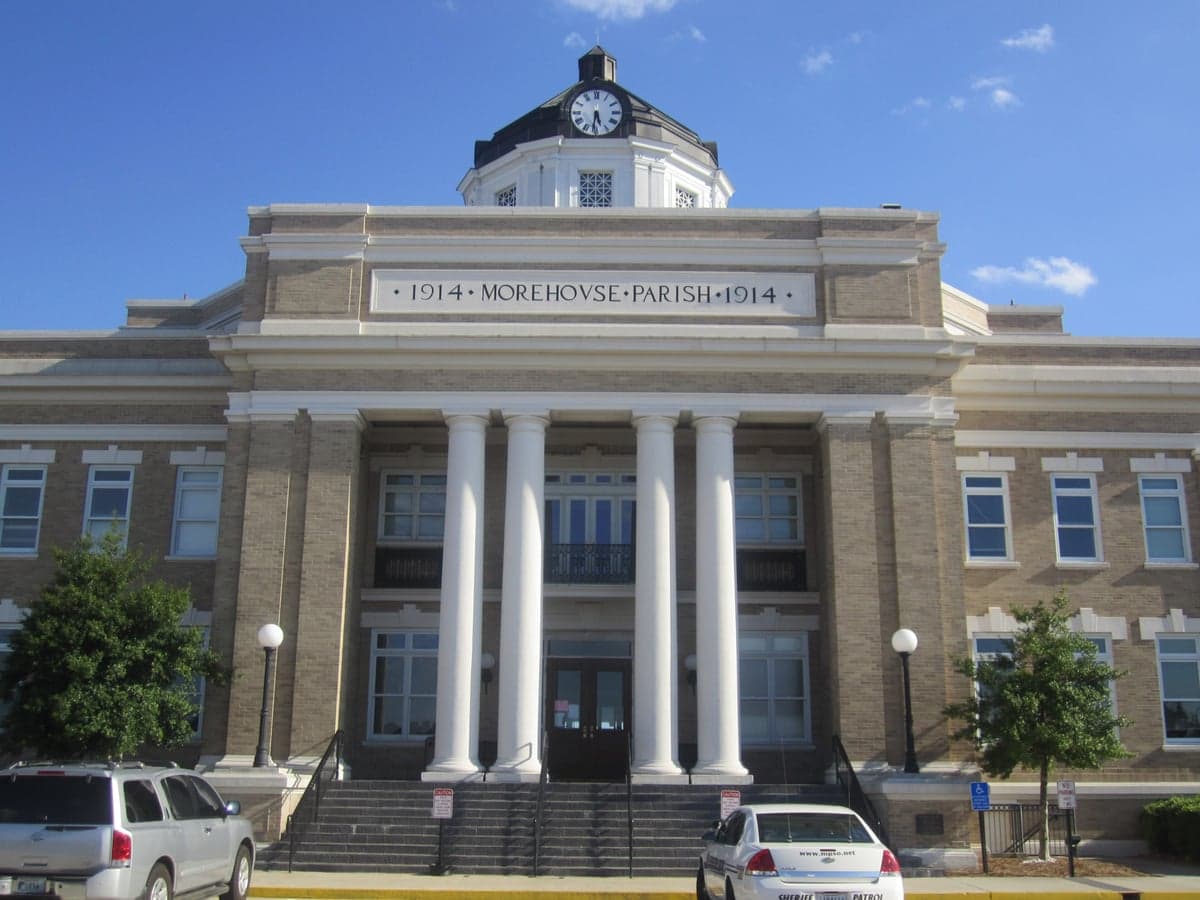
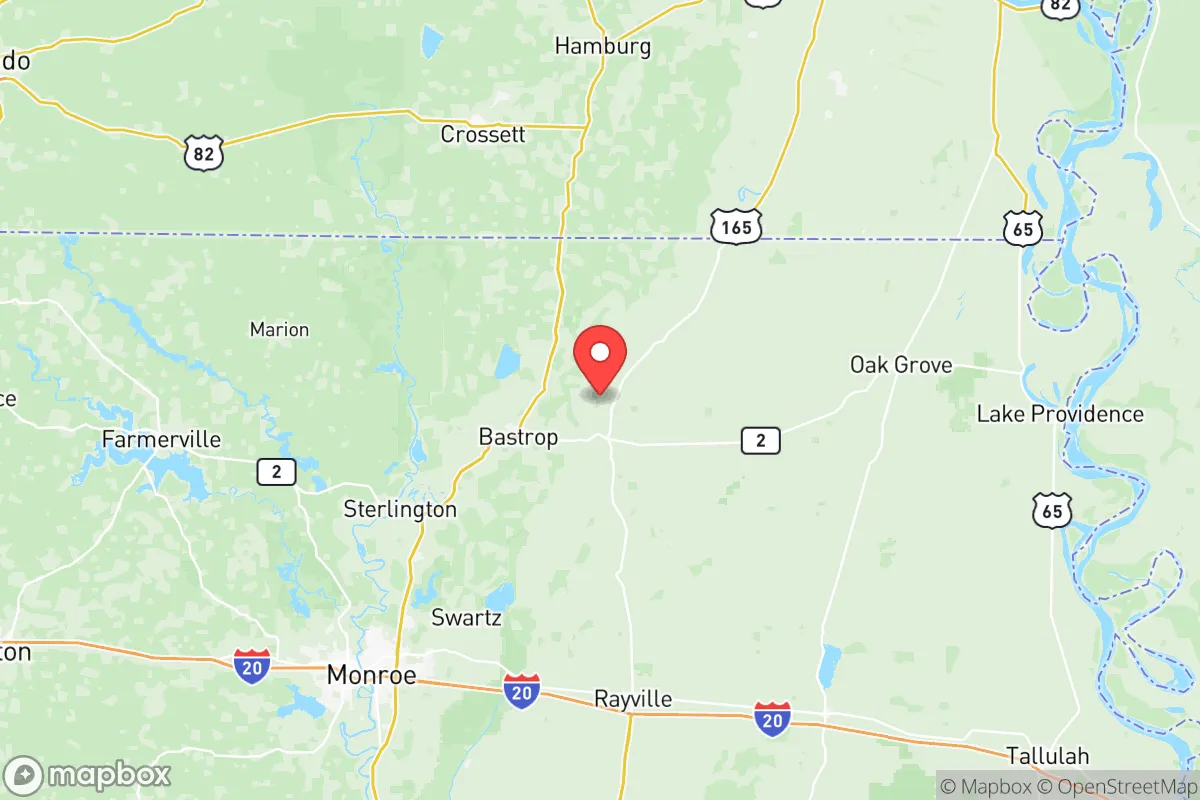
Photo: Wikipedia
Quality of Life in Morehouse County
A livable area that tracks near national norms for affordability, walkability, and neighborhood health.
What does Quality of Life tell us?
Quality of Life measures an area by evaluating factors like cost of living, nearby amenities, country club access, airport proximity, socioeconomic signals and neighborhood character. For large states, this is a general average — quality of life can vary dramatically between metro areas, suburbs, and rural communities within the same state.
What does this tell us?
Quality of Life measures an area by evaluating factors like cost of living, nearby amenities, country club access, airport proximity, socioeconomic signals and neighborhood character. For large states, this is a general average — quality of life can vary dramatically between metro areas, suburbs, and rural communities within the same state.
Cost of Living
44% below national average
115%
The Real Cost of Living in Morehouse County for 2026
| Tier | Individual | Family (4) |
|---|---|---|
| Survival | $13k | $24k |
| Comfortable | $22k | $32k |
| Luxury | $67k+ | $104k+ |
| Elite (Top 5%) | $107k+ | $165k+ |
Quality-of-Life Analysis
Morehouse County, Louisiana, offers a quality-of-life spectrum that ranges from the modest urban conveniences of its parish seat, Bastrop, to the quiet, deeply rural character of communities like Collinston, Mer Rouge, and Bonita. With a cost of living index of 56—well below the national average of 100—the county primarily attracts residents seeking affordability and a slower pace, though the specific experience varies sharply depending on whether one lives in the county’s largest town, a smaller village, or an unincorporated rural pocket. The county’s character is defined by its agricultural roots, the presence of the Louisiana Delta Community College, and its proximity to the Arkansas border, drawing a mix of retirees, agricultural workers, and commuters who work in Monroe or Bastrop itself.
Largest town(s) & population centers
Bastrop is the undisputed population and commercial center of Morehouse County, home to roughly 9,700 of the county’s 24,000 residents. Daily life in Bastrop centers around the courthouse square, regional retail along US-165, and the campus of Louisiana Delta Community College. The town provides the county’s primary grocery stores, a Walmart Supercenter, a hospital (Morehouse General Hospital), and a range of fast-food and local dining options. Housing is notably affordable, with a median home value of $108,700 and median rent of $795, making it one of the most budget-friendly parish seats in northeastern Louisiana. The average commute time of roughly 28 minutes reflects that many Bastrop residents drive to Monroe (about 25 miles west) for higher-paying jobs in healthcare, education, and manufacturing. Bastrop’s public schools, part of the Morehouse Parish School District, include Bastrop High School and the magnet Morehouse Magnet School, which draws families seeking stronger academic options within the parish.
Smaller towns & rural pockets
Beyond Bastrop, Morehouse County contains several smaller incorporated towns and unincorporated communities that offer a distinctly quieter, more agricultural lifestyle. Mer Rouge (population ~600) sits about 10 miles north of Bastrop and is known for its historic downtown, annual Mer Rouge Heritage Festival, and proximity to the Bayou Bartholomew. Collinston (population ~280) lies along US-165 south of Bastrop and functions as a bedroom community with a single gas station and a handful of churches. Bonita (population ~200) is the county’s northernmost incorporated town, near the Arkansas line, offering little more than a post office and volunteer fire department. Unincorporated areas like Jones, Oak Ridge, and Perryville are sparsely populated, with homes often set on multi-acre parcels used for hay farming, cattle, or timber. These areas lack municipal water and sewer in many cases, and residents rely on private wells and septic systems. Internet access can be limited to satellite or fixed wireless, though Starlink has improved connectivity for some rural households.
Cost & lifestyle range
The cost-of-living spread across Morehouse County is narrow by national standards but meaningful locally. At the low end, rural areas near Bonita and Collinston offer the cheapest housing in the parish, with some older homes selling for under $50,000 and rental rates as low as $500–$600 for a two-bedroom house. These areas trade amenities for space and privacy—residents may drive 20–30 minutes to Bastrop for groceries or medical care. At the higher end, Bastrop’s newer subdivisions (such as those near the golf course or along LA-133) feature homes in the $150,000–$200,000 range, with larger lots and access to municipal utilities. The median home value of $108,700 and median rent of $795 place the entire county well below the national median, but the gap between a $45,000 fixer-upper in rural Mer Rouge and a $185,000 brick home in Bastrop is significant in local terms. Property taxes are low—roughly 0.5% of assessed value—and no parish-level sales tax on groceries keeps everyday costs down. The trade-off is limited entertainment and dining; residents seeking movie theaters, sit-down restaurants, or shopping malls typically commute to Monroe.
Morehouse County is best suited for those who prioritize affordability and a quiet, rural lifestyle over urban amenities. Retirees on fixed incomes, agricultural workers, and remote workers who can tolerate limited broadband options will find the county’s low cost of living and slow pace appealing. Families who want a strong school option may gravitate toward Bastrop’s magnet program, while those seeking acreage and solitude will find value in the unincorporated areas around Jones and Oak Ridge. Commuters to Monroe will appreciate the 25-minute drive and the ability to own a home for a fraction of what it would cost in the city. The county does not offer nightlife, cultural venues, or diverse employment, but for those whose priorities are space, silence, and savings, Morehouse County delivers consistently.

Crime in Morehouse County
Crime rates similar to the national median for U.S. locations.
Violent CrimeViolent Crime Analysis
Property CrimeProperty Crime Analysis
Crime Analysis
Morehouse County, located in northeastern Louisiana, presents a mixed safety picture with crime rates that exceed both state and national averages, though conditions vary significantly between its incorporated towns and unincorporated areas. The county's violent crime rate of 362.3 incidents per 100,000 residents and property crime rate of 1,448.6 per 100,000 place it above the Louisiana state averages, which themselves are among the highest in the nation. Residents and prospective movers should understand that safety outcomes are heavily influenced by local law enforcement resources, judicial philosophy, and the economic conditions of specific communities within the parish.
Crime in context
Morehouse County's violent crime rate of 362.3 per 100,000 is roughly 1.5 times the national average of approximately 230 per 100,000, while its property crime rate of 1,448.6 per 100,000 is about 1.3 times the national average of roughly 1,100 per 100,000. Compared to Louisiana's statewide violent crime rate of approximately 550 per 100,000, Morehouse County fares better than high-crime urban parishes like Orleans or East Baton Rouge, but it remains elevated relative to safer rural parishes in northern Louisiana. The county's crime index places it in the bottom 20% of safest U.S. counties, meaning a resident's chance of becoming a victim of violent crime is roughly 1 in 276, compared to 1 in 400 nationally. Property crime odds are about 1 in 69, versus 1 in 90 nationwide.
What residents experience
The crime burden is not evenly distributed. Bastrop, the county seat and largest town, accounts for the majority of reported incidents, particularly aggravated assaults and burglaries. Bastrop's proximity to Interstate 20 and its role as a regional commercial hub contribute to higher property crime rates, including vehicle theft and shoplifting. In contrast, smaller communities like Mer Rouge and Bonita report significantly fewer incidents, though their populations are small enough that a single event can skew annual statistics. Oak Ridge and Collinston are generally considered quieter, with lower crime volumes, though residents still face risks from property crimes like theft from vehicles. The unincorporated areas of the parish, particularly along the Bayou Bartholomew corridor, see very low violent crime but occasional rural burglaries targeting farm equipment and hunting cabins.
A critical factor influencing safety in Morehouse County is the judicial environment. The 4th Judicial District Court, which serves Morehouse, Ouachita, and Union parishes, has seen a shift toward more progressive prosecutorial policies in recent years. District Attorney Steve Tew, elected in 2020, has emphasized diversion programs and reduced incarceration for nonviolent offenders. While intended to reduce recidivism, critics argue these policies have led to shorter sentences for repeat property offenders and a perception that crime carries fewer consequences. This is particularly concerning in Bastrop, where a small number of chronic offenders are believed to drive a disproportionate share of burglaries and thefts. Residents in the county's more conservative towns, such as Mer Rouge, have expressed frustration that lenient judicial outcomes in Bastrop spill over into their communities, as offenders travel between jurisdictions.
Neighborhood-level variation is pronounced. In Bastrop, areas west of Highway 165 near the industrial corridor experience higher property crime, while the historic district around the courthouse square sees more foot traffic and police presence, resulting in lower incident rates. The Morehouse Parish Sheriff's Office maintains a visible patrol presence in unincorporated areas, but response times can exceed 20 minutes in remote parts of the parish. For those considering relocation, the safest housing options are typically found in the smaller towns of Mer Rouge and Collinston, or in rural subdivisions with active neighborhood watch programs. Prospective residents should also note that the county's proximity to Monroe (Ouachita Parish) means some crime trends, particularly drug-related offenses, follow the I-20 corridor into Morehouse.
* Values derived from national, state, county, city and local statistics and may differ in a specific area. Last updated: 2026-08-05T00:04:23.000Z
Narrative content on this page is AI-generated and may contain mistakes. Verify any details that matter before acting on them.
ReloMaps may earn a commission from affiliate links at no extra cost to you.

