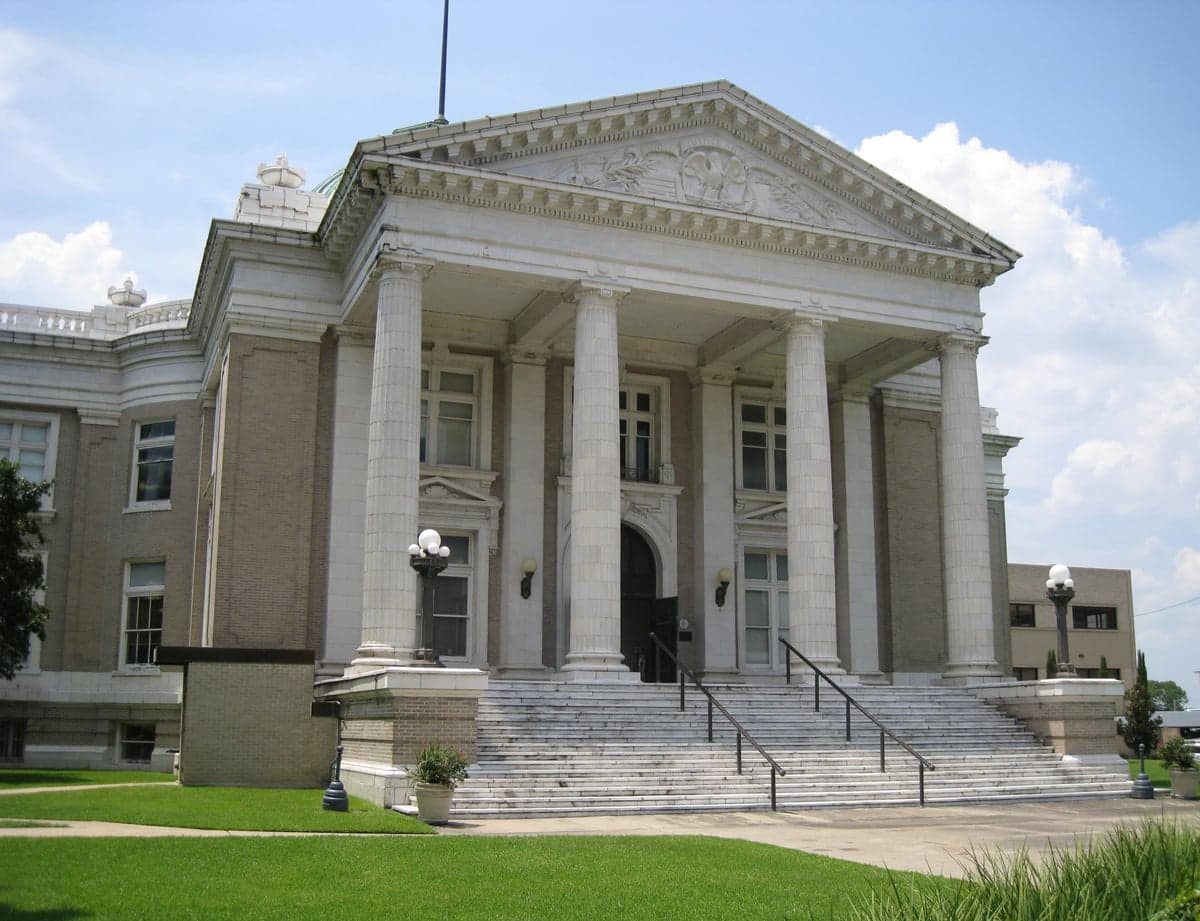
Photo: Wikipedia
Political ClimatePolitical Climate in Calcasieu County
Showing district-level results — no local-only data available.
Local Political AnalysisPolitical Analysis of Calcasieu County
Calcasieu County is one of the most reliably Republican strongholds in Louisiana, carrying a Cook Partisan Voting Index of R+26 — meaning it votes about 26 points more Republican than the national average. That’s a full 16 points redder than the state of Louisiana as a whole, which sits at R+10. The county hasn’t voted for a Democratic presidential candidate since 1996, and in 2024, Donald Trump carried it by a margin north of 40 points. The political center of gravity here is firmly conservative, but the intensity of that conservatism varies noticeably depending on which part of the parish you’re standing in.
How it compares
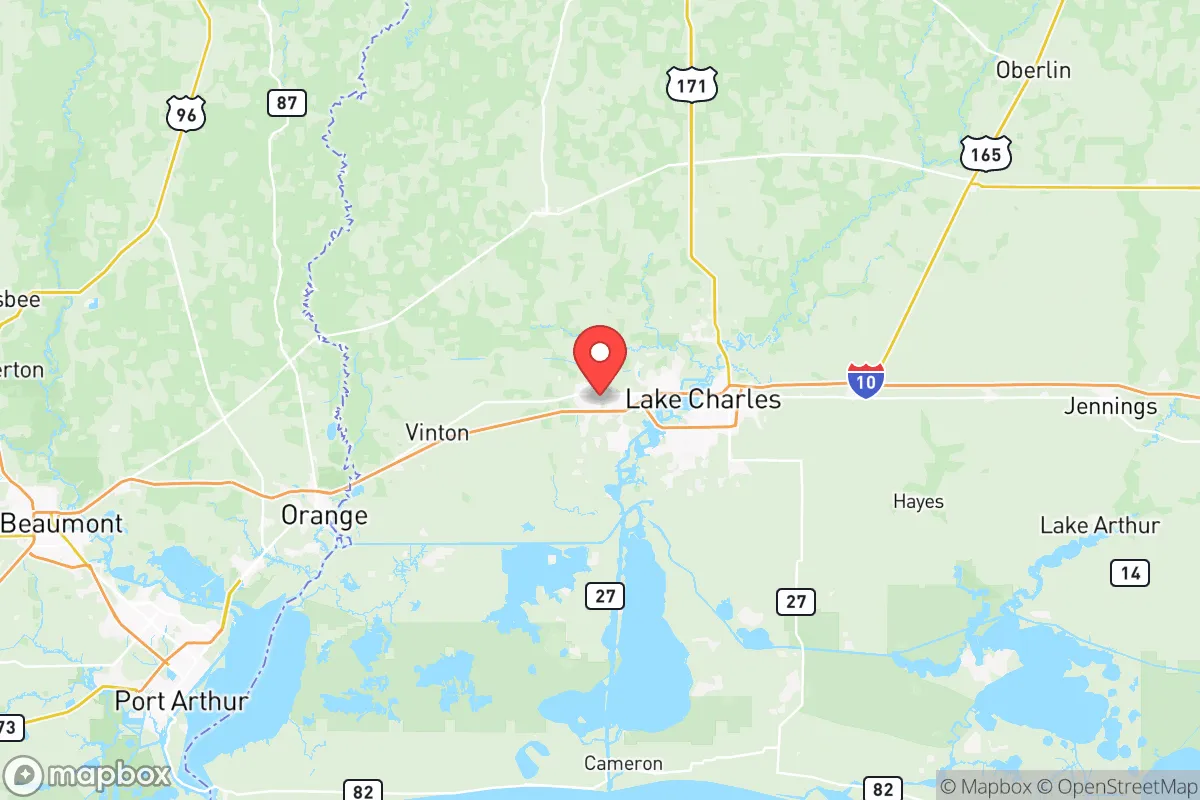
Louisiana as a state is a solidly red place, but it still has pockets of Democratic strength — New Orleans, Baton Rouge, and the Mississippi Delta parishes. Calcasieu County, by contrast, lacks any major Democratic stronghold. The city of Lake Charles, the parish seat and largest municipality, leans Republican overall, though its precincts near McNeese State University and the downtown core show more competitive numbers, occasionally breaking for Democrats in local races. The real contrast comes when you drive north. Towns like Sulphur, Westlake, and Vinton are deeply conservative, routinely delivering 70-80% of the vote to GOP candidates. To the south, the smaller communities of Hackberry and Cameron (technically in Cameron Parish but closely tied to Calcasieu economically) are even redder. There are no reliably blue towns in Calcasieu County — the closest thing to a swing area is the Lake Charles precinct around the Prien Lake Road corridor, where moderate Democrats can sometimes pull 45% in a good year. But even that is shifting rightward as the region’s industrial base — petrochemical plants, refineries, and LNG terminals — continues to expand and attract a workforce that leans conservative.
What this means for residents
For conservative residents, Calcasieu County is a comfortable place to live politically. Local offices — from the parish sheriff to the school board — are held by Republicans, and policy debates tend to center on tax rates, infrastructure, and hurricane recovery rather than social issues. The county’s Republican primary is often the de facto general election, especially in Sulphur and Westlake. For liberal residents, the picture is more complicated. They are a clear minority, but not an invisible one. The Lake Charles area has a visible Democratic presence, particularly among African American voters who make up roughly 25% of the parish population and tend to vote cohesively for Democratic candidates. Progressive advocacy groups are active around McNeese State and in the city’s older neighborhoods, but they face an uphill battle in countywide races. The practical effect is that liberal residents often find their political influence concentrated in city-level elections and school board races, where turnout is lower and a motivated minority can still swing a close contest.
Culturally, Calcasieu County feels more like East Texas than coastal Louisiana. The Cajun and Creole influences that define Lafayette and the bayou parishes to the east are present but muted here. The economy is dominated by heavy industry — the Port of Lake Charles, the Sasol and CITGO plants, and the Cheniere LNG terminal — and the political culture reflects that: pro-business, pro-energy, and skeptical of environmental regulation. The region’s repeated experience with hurricanes, especially Hurricanes Laura and Delta in 2020, has also shaped local politics, creating a strong consensus around disaster preparedness and federal recovery funding that occasionally cuts across partisan lines. If you’re moving here, the political climate is straightforward: it’s a deeply red parish with a small but resilient blue minority, and the real action is in the Republican primary.

State Political ClimatePolitical Climate in Louisiana
State Political AnalysisPolitical Environment in the State
Louisiana is a solidly Republican state with a Cook PVI of R+10, but its politics are far more complex than that number suggests. The state has shifted rightward over the past 20 years, driven by the realignment of white working-class voters and the decline of the once-dominant "Blue Dog" Democrat tradition. However, this is not a uniformly red state — it retains a strong Democratic presence in New Orleans and Baton Rouge, and a unique Cajun-Creole political culture that often defies national party labels. For a relocator, the practical reality is that Louisiana is a culturally conservative state with a libertarian streak, where local identity often matters more than party affiliation.
Urban vs. rural divide
The political map of Louisiana is a study in contrasts. New Orleans (Orleans Parish) is the state's Democratic stronghold, consistently voting 70-80% for Democratic presidential candidates and electing progressive leaders like Mayor LaToya Cantrell. Baton Rouge (East Baton Rouge Parish) is more competitive — the city itself leans Democratic, but the surrounding suburbs are deeply Republican, creating a purple metro area that often flips between parties in statewide races. Lafayette and Lake Charles anchor the reliably Republican Acadiana region, where oil-and-gas culture and Catholic social conservatism produce strong GOP margins. The rural "Florida Parishes" north of Lake Pontchartrain — places like Livingston Parish and Tangipahoa Parish — are among the most Republican areas in the South, often voting 75-80% for GOP candidates. The Mississippi River Delta parishes south of Baton Rouge, including Plaquemines Parish, are ancestrally Democratic but have trended Republican in recent cycles, though they still elect conservative Democrats to local office. The key takeaway: if you live in New Orleans, you're in a blue bubble; if you live in Shreveport or Monroe, you're in a red region with a significant Black Democratic minority; and if you're in the suburbs of Baton Rouge or Lafayette, you're in solidly Republican territory.
Policy environment
Louisiana's policy environment is defined by low taxes and limited government services. The state has no personal property tax, and the average effective property tax rate is just 0.55% — one of the lowest in the nation. The state income tax is a flat 3% for most earners, and the sales tax is high (state rate 4.45%, but local add-ons can push it over 10% in some parishes). Education policy is a mixed bag: Louisiana has one of the most robust school choice programs in the country, including the Louisiana Scholarship Program (vouchers) and a thriving charter school sector, especially in New Orleans. However, public school performance remains among the lowest nationally. Healthcare is a flashpoint: the state expanded Medicaid under the Affordable Care Act in 2016, but the system is underfunded and rural hospitals are closing. Election laws are relatively straightforward — no-excuse absentee voting is not permitted, but early voting is available for 7 days. Voter ID is required, but a wide range of IDs (including utility bills with a signature) are accepted. The state uses a closed primary system for most offices, meaning only registered party members can vote in party primaries — a system that tends to produce more ideologically extreme candidates.
Recent policy direction
Under Governor Jeff Landry (R), elected in 2023, Louisiana has moved aggressively to the right on several fronts. Gun and self-defense law: In 2024, the state enacted constitutional carry (permitless carry of concealed handguns) and strengthened "stand your ground" protections. Parental and education rights: The 2023 "Parents' Bill of Rights" (Act 468) requires schools to notify parents of any changes to a student's mental, emotional, or physical health, and prohibits instruction on sexual orientation or gender identity in K-12 classrooms (the "Don't Say Gay" law). Speech and privacy: The state passed a law in 2024 requiring age verification for adult websites and restricting minors' access to social media without parental consent. Medical and bodily autonomy: Louisiana has a near-total abortion ban with no exceptions for rape or incest, and in 2024, the state classified mifepristone (the abortion pill) as a controlled dangerous substance — a first-in-the-nation move. Property rights: The state has strong eminent domain protections for landowners, but oil and gas mineral rights often override surface owner interests — a perennial source of conflict. Taxation: In 2024, the legislature passed a bill to gradually reduce the corporate income tax rate from 7.5% to 5.5% by 2028. Voting and ballot access: In 2024, the state enacted a law requiring proof of citizenship to register to vote (challenged in court) and banned the use of private money for election administration. For a relocator, the bottom line is that Louisiana is moving toward a model of maximum individual liberty in some areas (guns, taxes, school choice) and maximum government restriction in others (abortion, LGBTQ+ rights, drug policy).
Civil unrest & political movements
Louisiana has a history of political turbulence, but recent years have been relatively calm compared to the 2010s. The Black Lives Matter protests in 2020 were significant in New Orleans and Baton Rouge, particularly after the death of Alton Sterling in 2016, but they did not escalate into the sustained unrest seen in Portland or Seattle. The state has a small but vocal secessionist movement in the Acadiana region, where some Cajun activists advocate for an independent "Republic of Louisiana" — but this is fringe, not mainstream. Immigration politics are less heated than in border states, but Governor Landry has deployed the Louisiana National Guard to the Texas border and signed a law requiring local law enforcement to cooperate with ICE. Election integrity controversies are muted compared to states like Georgia or Arizona; the 2020 election results were certified without major incident, though some Republican legislators have pushed for stricter voter ID laws. The most visible flashpoint for a new resident would be the Confederate monument debate — New Orleans removed its monuments in 2017, but many smaller towns still have them, and the issue remains culturally charged. In practical terms, you won't see daily political protests in most of the state, but you will hear passionate debates about local issues like coastal restoration, flood protection, and oil-and-gas regulation.
Projection
Over the next 5-10 years, Louisiana is likely to become more Republican, but not dramatically so. The state's population is aging and slowly declining, with out-migration of young professionals to Texas and Florida. The Democratic base is increasingly concentrated in New Orleans and Baton Rouge, while the suburbs and rural areas are solidifying as GOP strongholds. The Hispanic population is growing, particularly in the New Orleans metro and the Acadiana region, but it is not yet large enough to shift the political balance. The biggest wildcard is climate change and coastal erosion — as the Gulf Coast loses land, the state's political geography will literally shrink, potentially concentrating Democratic voters in the remaining urban areas. For a relocator, the realistic expectation is that Louisiana will remain a red state with a blue city, where state government is controlled by Republicans but local politics in New Orleans and Baton Rouge remain Democratic. The state's libertarian streak — low taxes, loose gun laws, and a "live and let live" attitude — is likely to persist, even as social conservatism tightens on issues like abortion and LGBTQ+ rights.
For a new resident, the practical takeaway is this: Louisiana offers a low-tax, culturally conservative environment with strong gun rights and school choice, but you'll need to accept limited public services, a struggling healthcare system, and a state government that is increasingly assertive on social issues. If you're conservative, you'll find a welcoming political climate and a government that shares your values. If you're liberal, you'll find a vibrant blue community in New Orleans and a smaller one in Baton Rouge, but you'll be living under a state government that opposes most of your policy preferences. The state's unique culture — its food, music, and festivals — transcends politics, and most residents, regardless of party, share a fierce pride in being Louisianan. That's the real inside scoop: politics here is important, but it's not everything.
* Values derived from national, state, county, city and local statistics and may differ in a specific area. Last updated: 2026-06-16T22:17:10.000Z
Narrative content on this page is AI-generated and may contain mistakes. Verify any details that matter before acting on them.
ReloMaps may earn a commission from affiliate links at no extra cost to you.

