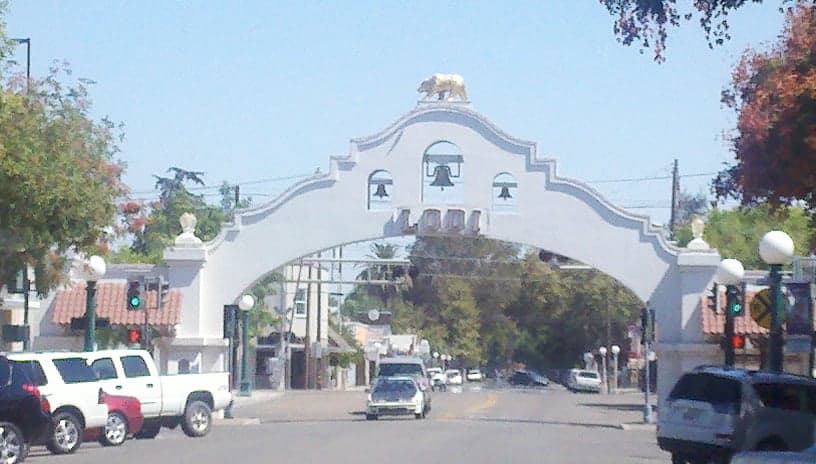
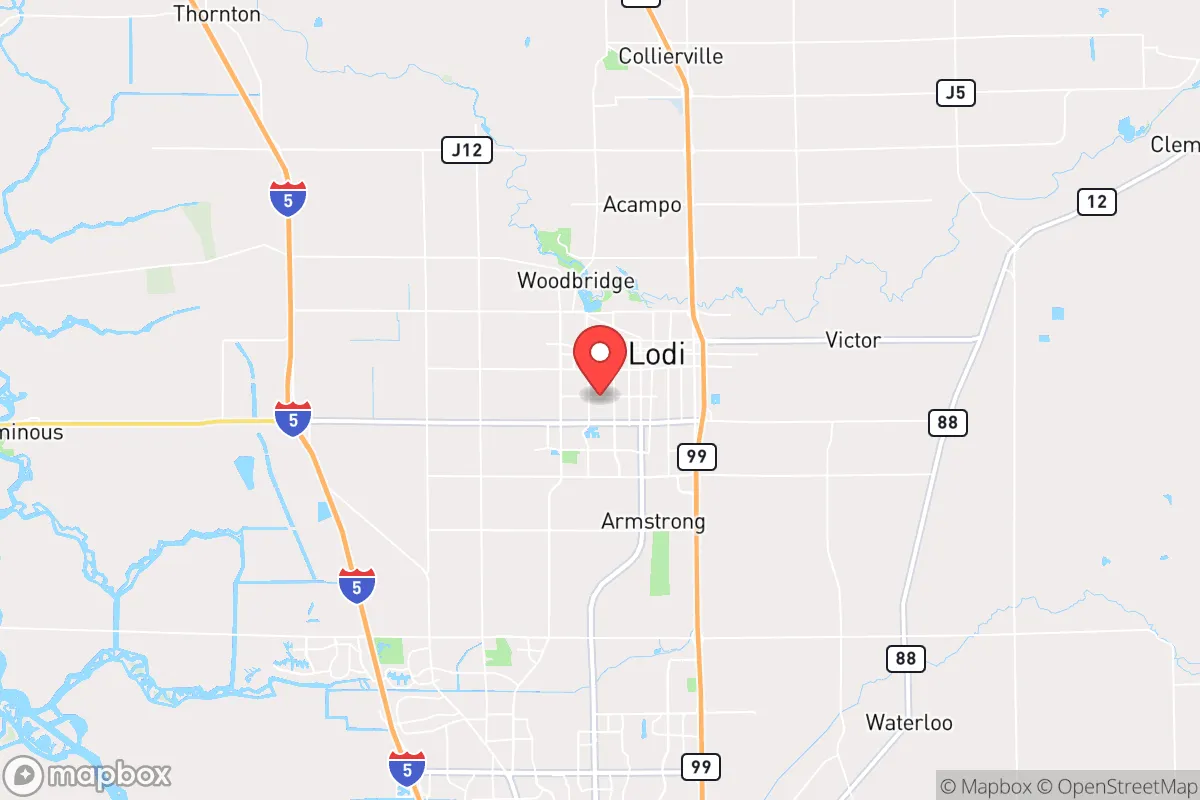
Photo: Wikipedia
Demographics of Lodi, CA
Affluence Level in Lodi, CA
A middle-class area roughly in line with national averages across income, home values, education, and employment.
People of Lodi, CA
The people of Lodi, California today form a community of 67,008 residents defined by a nearly even split between White (44.0%) and Hispanic (40.0%) populations, with a notable and growing Indian-subcontinent community (6.7%) and a smaller East/Southeast Asian presence (4.1%). The city carries a distinctive dual identity: a historic agricultural hub with deep roots in winegrape and cherry farming, and a growing bedroom community for commuters to Sacramento (35 miles north) and the Bay Area. With only 23.2% of adults holding a college degree, Lodi retains a blue-collar, family-oriented character that sets it apart from the more professionalized suburbs closer to Sacramento.
How the city was settled and grew
Lodi’s population history begins with the 1840s Mexican land grants, particularly the 48,000-acre Rancho Campo de los Franceses, which drew early ranchers and farmers. The city itself was formally founded in 1869 as a railroad stop on the Central Pacific line, and the first major wave of settlers were White Anglo-American and German farmers who planted wheat and later vineyards. These families built the downtown core around School and Sacramento Streets, where many of the original Victorian homes still stand. A second wave arrived in the early 1900s: Italian and Portuguese immigrants drawn by the booming wine industry. They settled in what is now the Eastside neighborhood, east of the railroad tracks, where they established small vineyards and the region’s first commercial wineries. By the 1920s, Lodi’s population had reached roughly 5,000, and the city’s identity as a conservative, agricultural community was firmly set. The Japanese American community also arrived in this period as farm laborers, concentrated near the Lodi Lake area and along Turner Road, though many were forcibly removed during World War II.
Modern era (post-1965)
The 1965 Immigration and Nationality Act reshaped Lodi’s population dramatically. The most significant shift was the arrival of Mexican and Central American immigrants who came to work in the region’s vineyards, cherry orchards, and food-processing plants. They settled heavily in the southwest quadrant of the city, particularly around Harney Lane and Thornton Road, an area that remains predominantly Hispanic today. By 1990, the Hispanic share of Lodi’s population had risen to roughly 25%, and it has since climbed to 40.0%. A more recent and distinct wave began in the 2000s: Indian-subcontinent immigrants, many of them professionals in healthcare and technology, began moving into newer subdivisions in northwest Lodi, near the intersection of Highway 99 and Kettleman Lane. This community now accounts for 6.7% of the population, a share that is unusually high for a city of Lodi’s size and far exceeds the national average. The East/Southeast Asian population (4.1%) is older and more established, with Filipino and Vietnamese families concentrated in the central neighborhoods around Mills Avenue. Domestic in-migration from the Bay Area has accelerated since 2010, with White and Asian professionals buying homes in the Lakewood area and newer subdivisions along the Mokelumne River corridor, pushing up home prices and gradually shifting the city’s political leanings from deeply conservative to more mixed.
The future
Lodi’s population is becoming more diverse and more suburban. The Hispanic share is projected to continue rising, potentially reaching 45-48% by 2040, driven by both natural increase and continued immigration from Mexico and Central America. The Indian-subcontinent community is the fastest-growing ethnic group by percentage, with new arrivals drawn by the area’s relatively affordable housing compared to the Bay Area and the presence of a growing tech sector in nearby Elk Grove and Sacramento. These families are dispersing across the city but are most concentrated in the northwest Lodi subdivisions and the newer Vineyard Estates development near Highway 99. The White population is declining as a share, though not in absolute numbers, as older residents age in place and younger White families are priced out by Bay Area transplants. The city’s cultural identity is evolving from a purely agricultural, wine-country town into a more diverse, commuter-oriented suburb. For someone moving in now, Lodi offers a relatively affordable, family-oriented environment with a growing multicultural character, but the trade-off is a slower pace of life and limited urban amenities compared to Sacramento or Stockton.
Bottom-line: Lodi is becoming a more diverse, more suburban version of its agricultural past, with a growing Indian and Hispanic presence reshaping neighborhoods that were once overwhelmingly White. For a conservative-leaning family or individual, the city still offers a strong sense of community, low crime relative to nearby Stockton, and a slower pace of life — but the demographic and cultural changes underway mean the Lodi of 2040 will look and feel noticeably different from the Lodi of 2000.

* Values derived from national, state, county, city and local statistics and may differ in a specific area. Last updated: 2026-08-23T00:48:20.000Z
Narrative content on this page is AI-generated and may contain mistakes. Verify any details that matter before acting on them.
ReloMaps may earn a commission from affiliate links at no extra cost to you.

